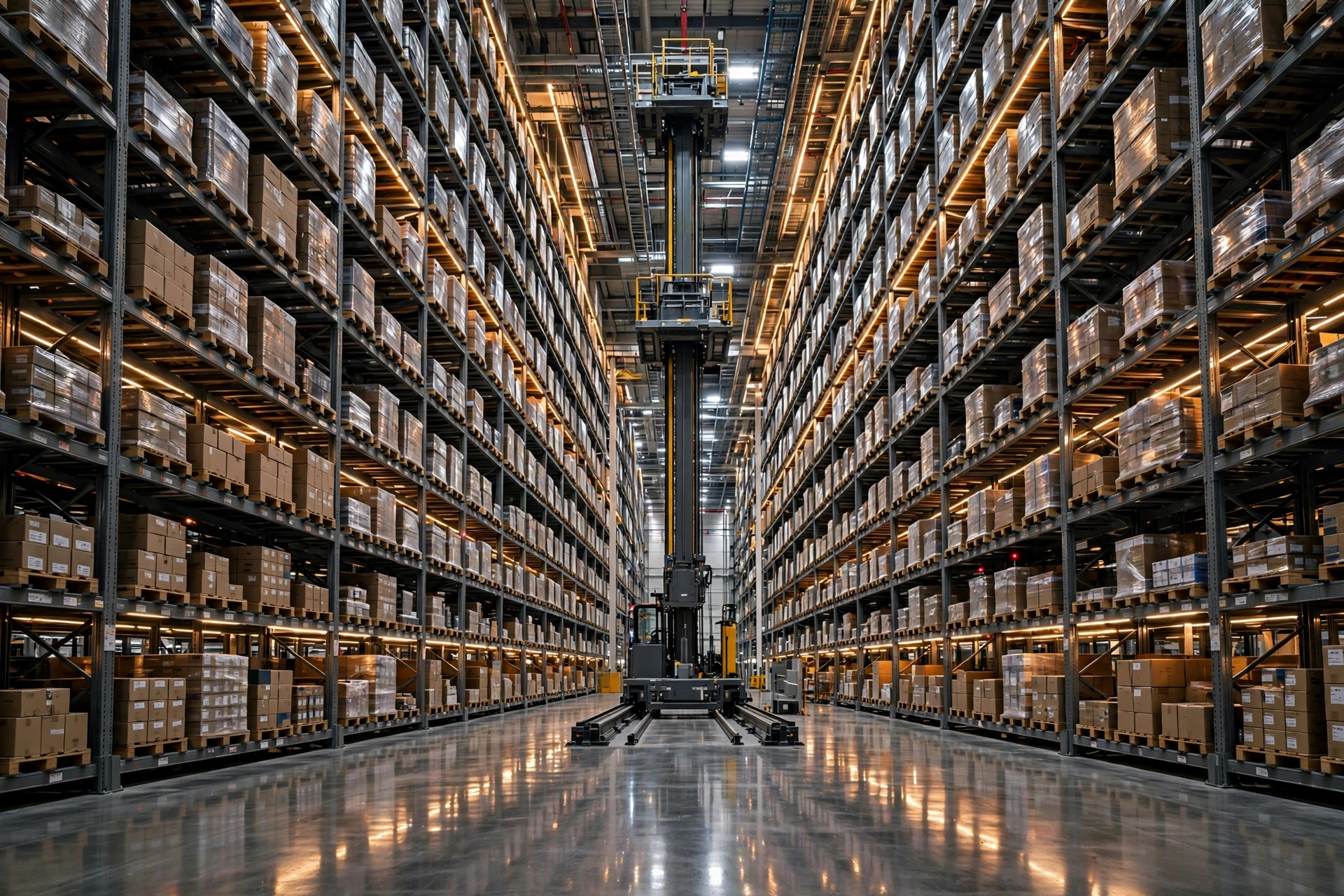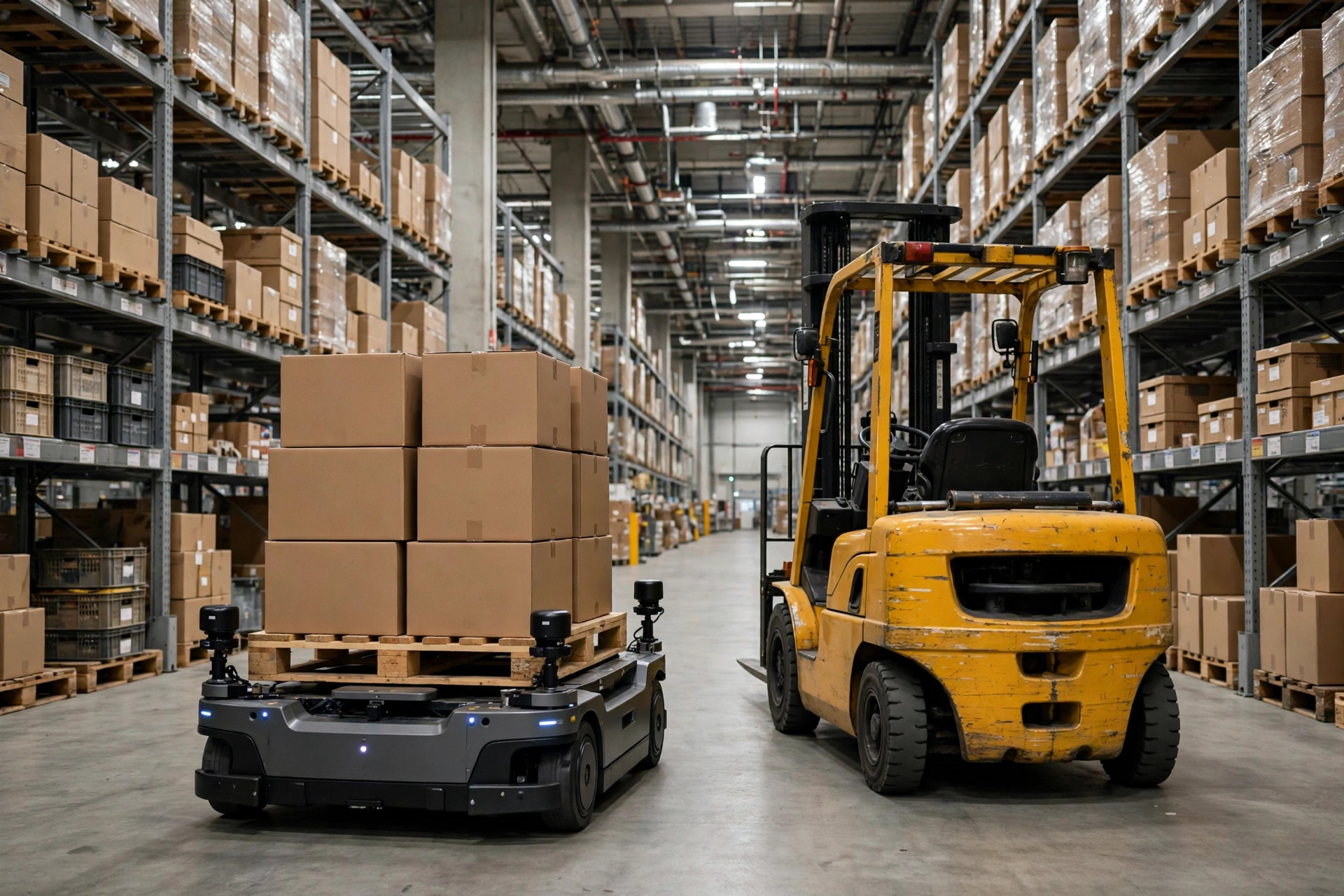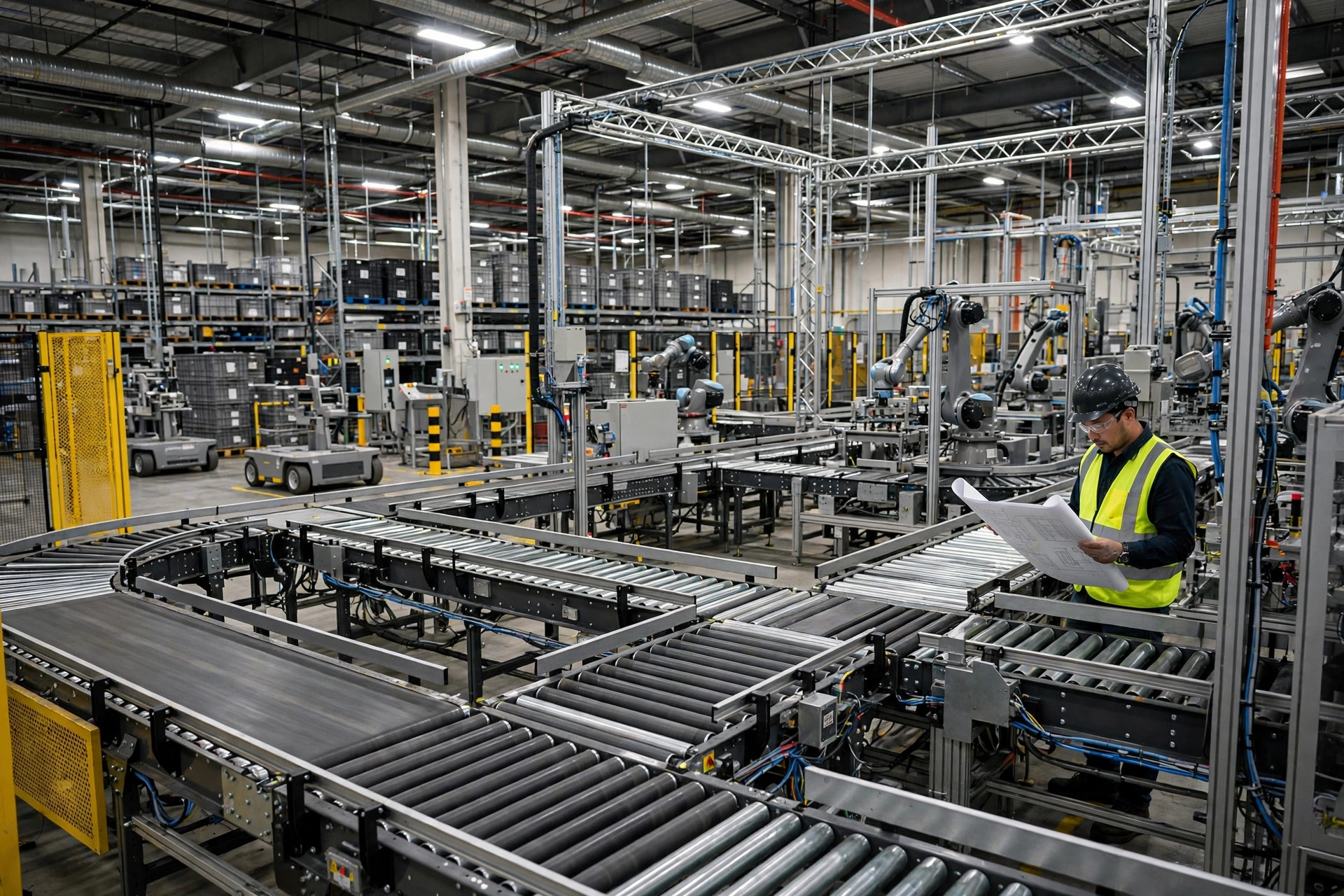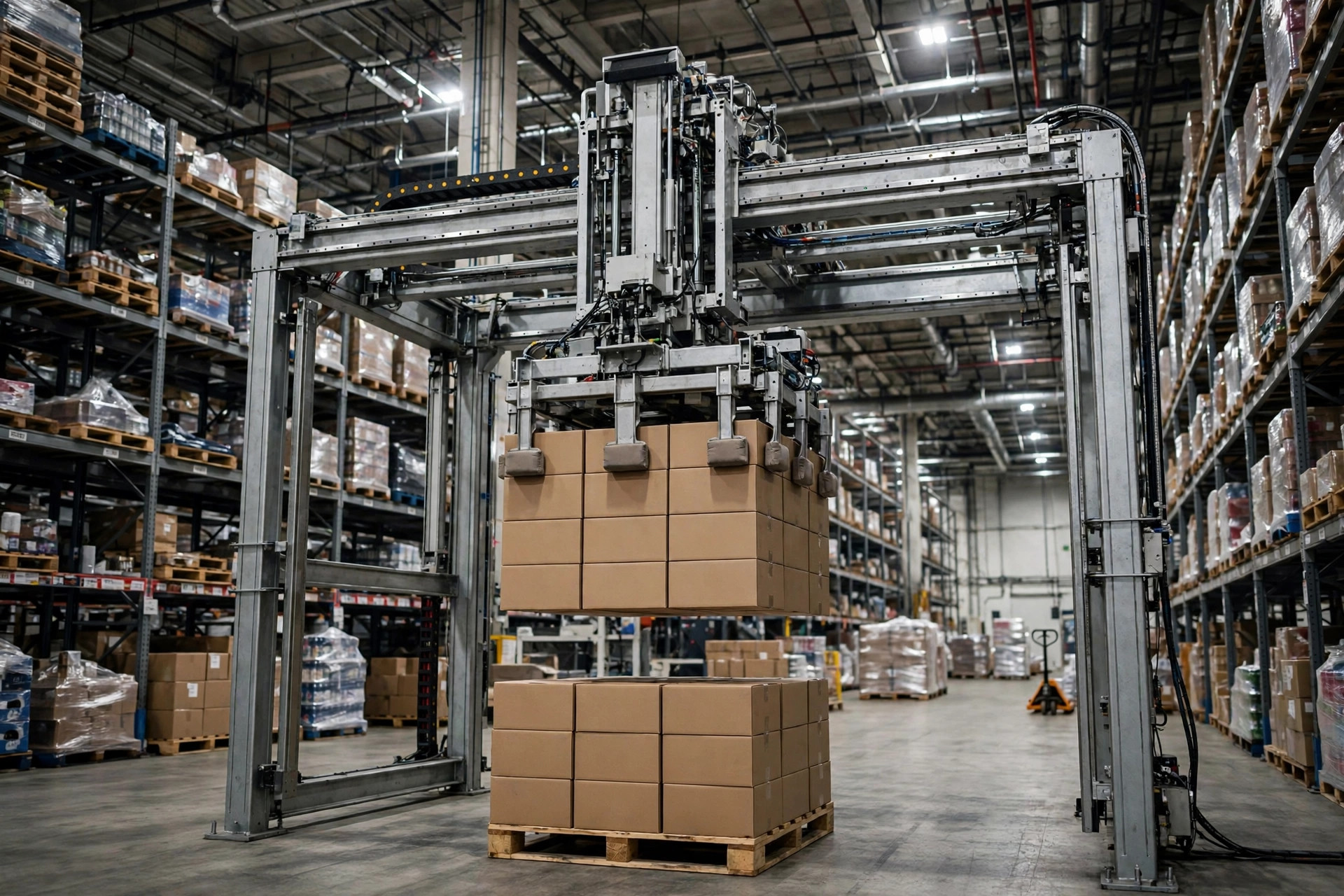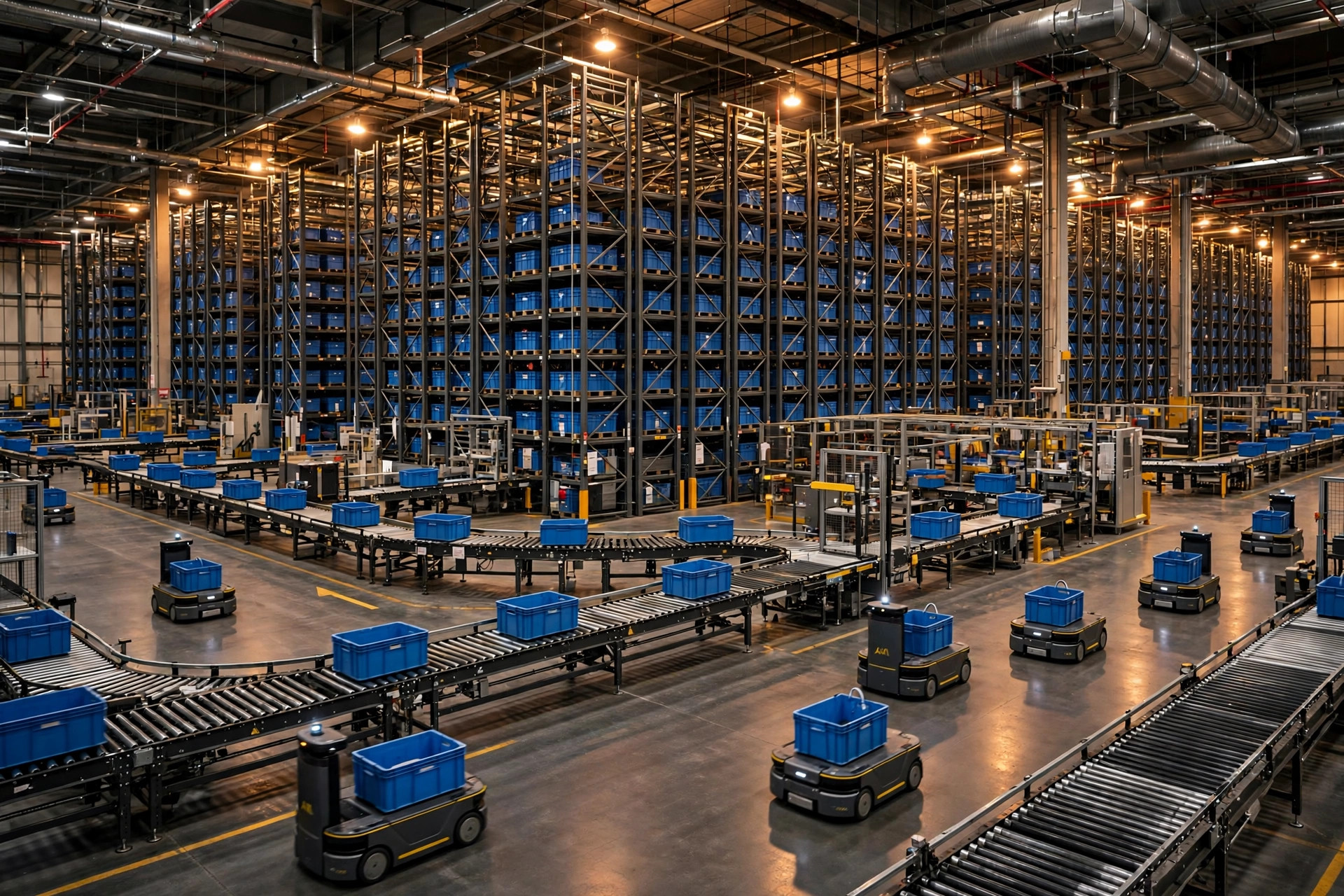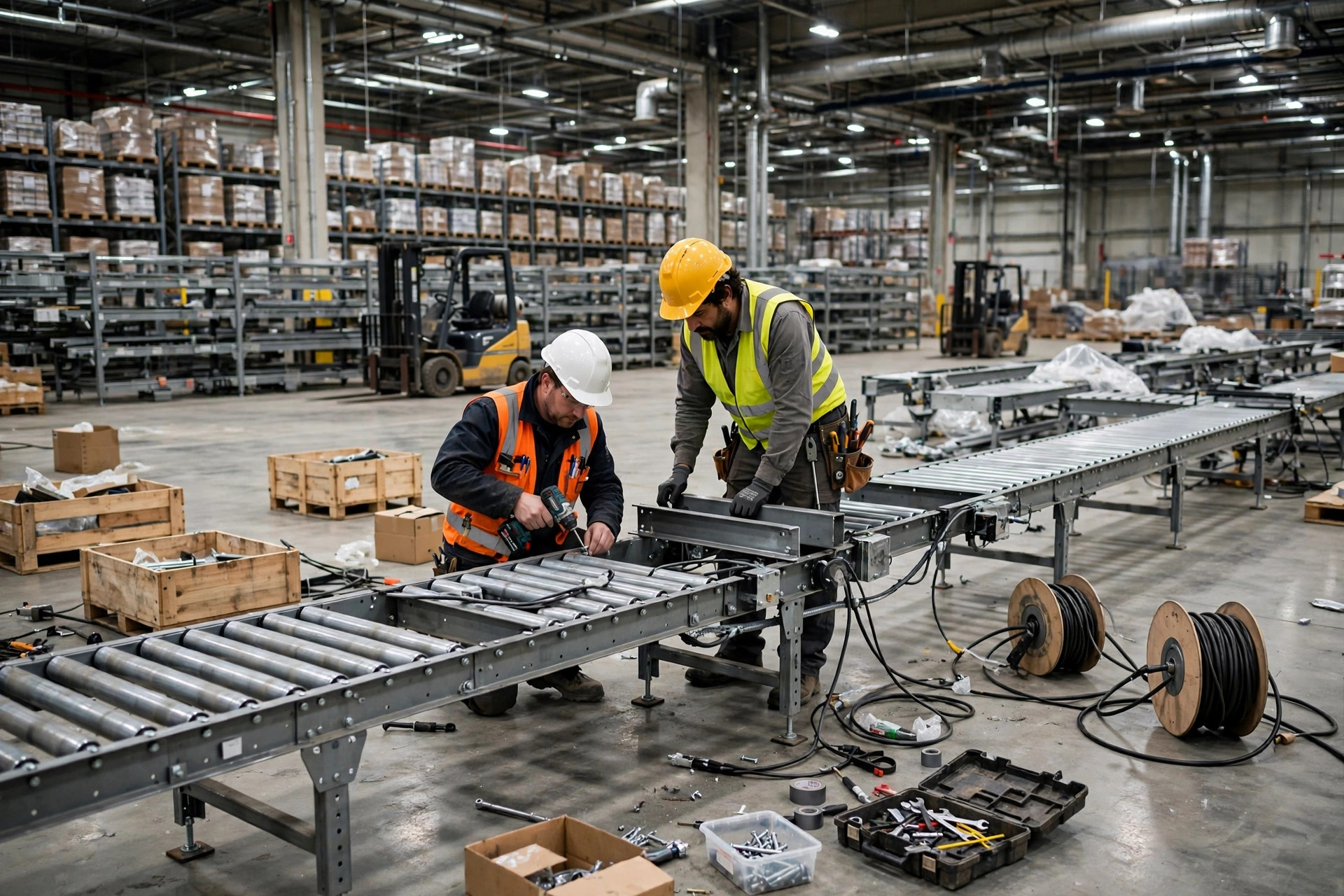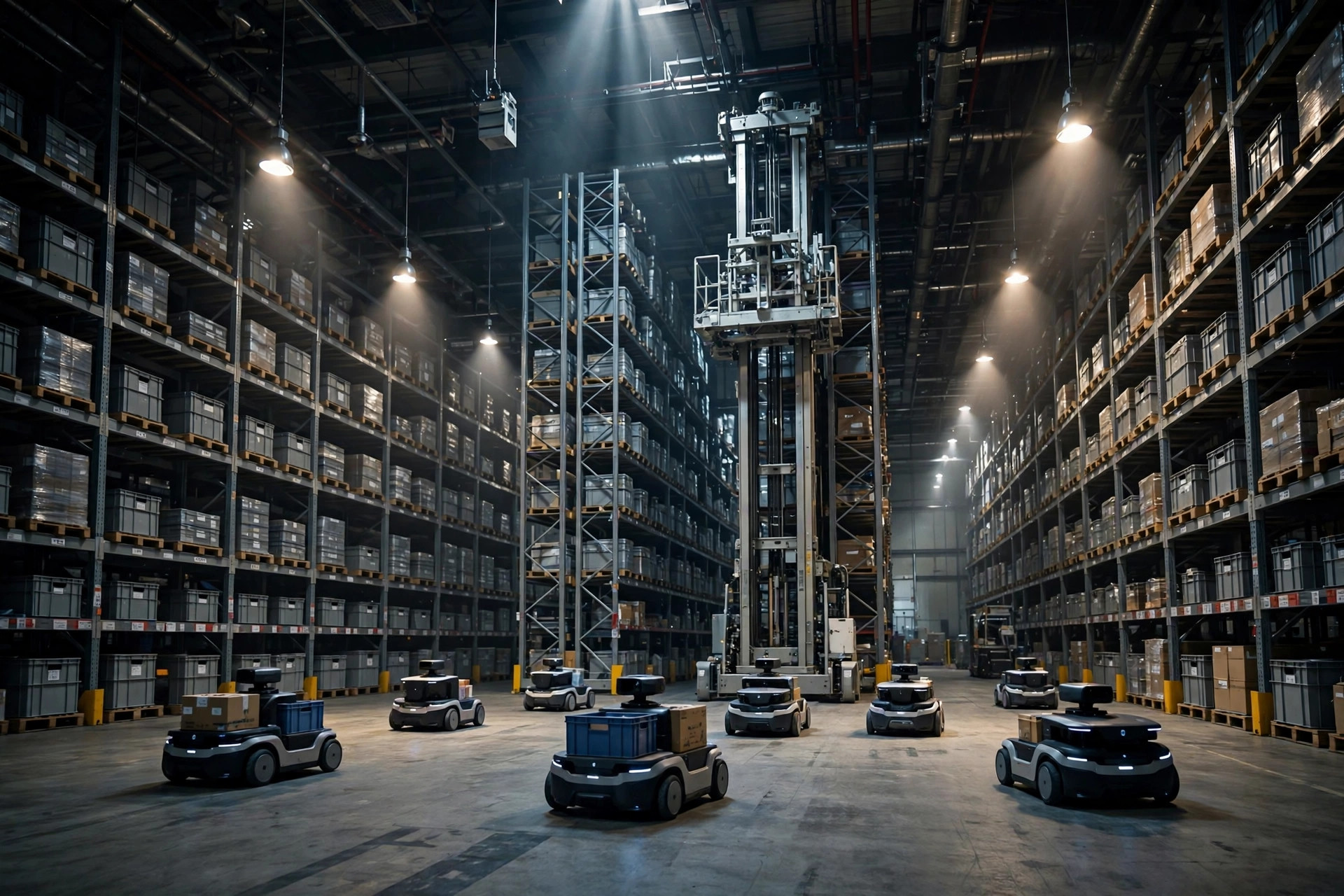
Same stacker crane, two ways to pay: $800,000 cash up front, or a five-year finance lease at about $15,000 a month. Five years later, the nominal totals differ by well over $200,000.
Don't call the lease a rip-off just yet. More than half of that gap is the time value of money — $800,000 in your hand today is not the same thing as $800,000 paid out over five years. The rest is tax: buying and leasing travel two completely different roads on your tax return.
The structure below comes from a real exercise I ran a few years ago for a 3PL warehouse in the Inland Empire (Ontario area, 120,000 square feet, e-commerce fulfillment). The numbers are scrubbed — don't use them as quotes — but the method is reusable. That's what this article is about: the method, not the hype.
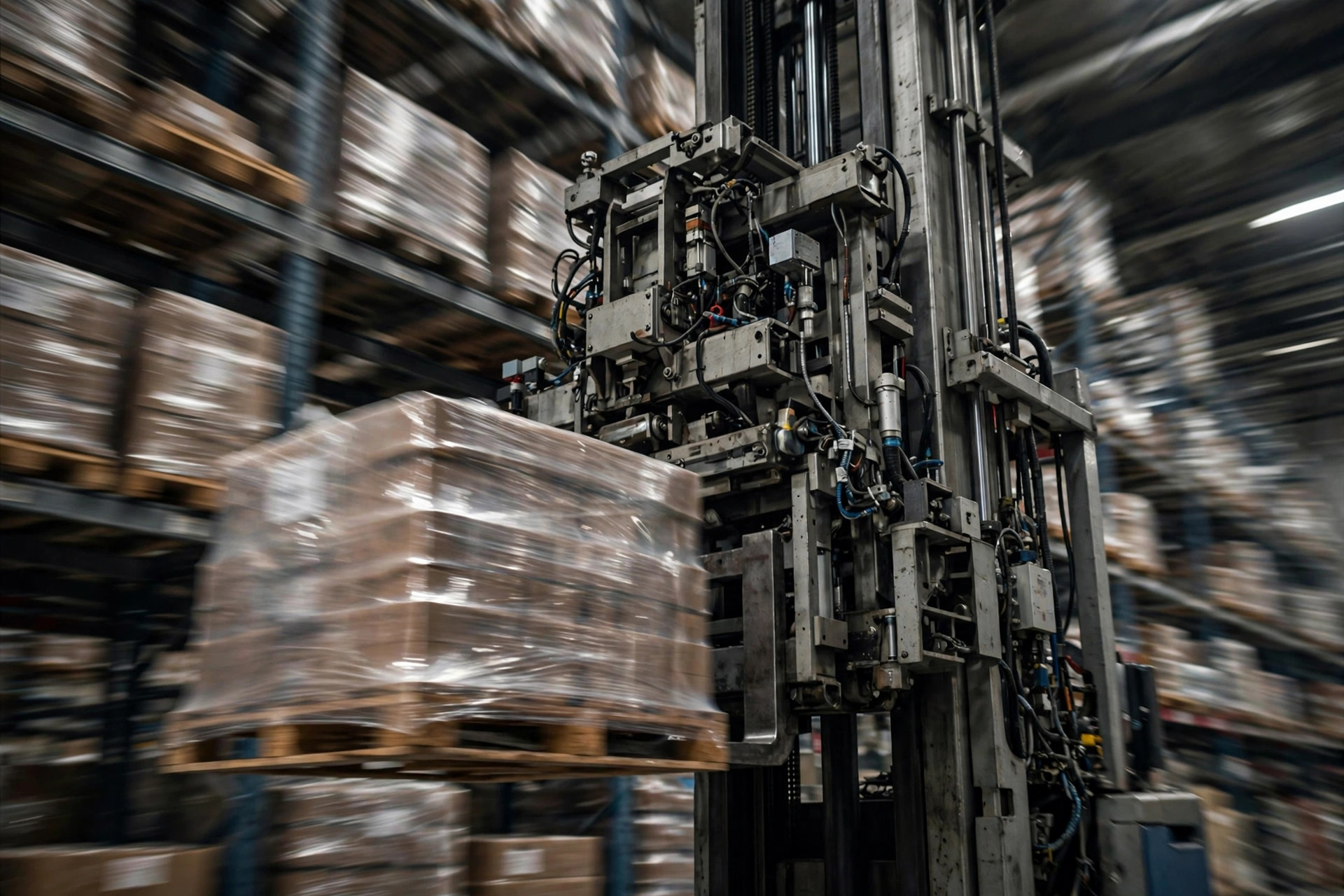
Three ways to pay, three cash-flow curves
There are three mainstream ways to pay for automation, and their cash-flow curves look nothing alike.
First, cash purchase. One big hole in your bank account on day zero, then just maintenance costs after that. Simple and clean — if you can afford it.
Second, equipment loan. Put 10–20% down, finance the rest over three to seven years, and the equipment is titled in your name from day one. Fixed monthly payments, the smoothest cash-flow curve of the three.
Third, finance lease, which comes in two flavors. FMV lease (fair market value): the lowest monthly payment, and at the end of the term you pick one of three — buy the equipment at its then-fair-market value, return it, or renew. $1 buyout lease: you take ownership for a nominal one dollar at the end; it's effectively an installment purchase, with payments a notch higher than FMV.
Picture the curves: cash is a cliff on day one, a loan is a gentle slope, a lease starts on flat ground. Which line you can climb depends entirely on what stage your warehouse is at.
Total cost isn't the sum of the payments
Comparing monthly payments is the most common — and most expensive — mistake. True total cost has four components, and skipping any one of them will burn you.
One: nominal total payments. Monthly payment times number of periods, plus down payment, plus any end-of-term buyout. Add it up and get a baseline.
Two: the time value of money — the easiest to ignore and the most dangerous. The math is simple: discount every future payment back to today using your own cost of capital, then sum them up. Note: your cost of capital, not the Fed's rate. Ask yourself: if I didn't buy this equipment, what loan rate could I get on this money, or what return could I earn investing it? That's your discount rate. Ten minutes in Excel with XNPV. If you'd rather skip the math, ask the vendor for an amortization schedule — principal and interest broken out per period, and the implied rate becomes obvious.
Three: the tax shield. Purchased equipment generates depreciation deductions; lease payments are generally expensed as paid. Tax rate times deductible amount — that's real money. One caveat: accelerated depreciation rules like Section 179 and bonus depreciation change all the time. Ask your CPA what you can actually deduct this year before you sign anything; don't guess the percentages yourself.
Four: end-of-term residual value — what the equipment is worth in five years, and who keeps it. Heavily customized equipment like stacker cranes has a thin secondary market, so don't book an optimistic residual. Fast-iterating tech like AMRs may be worth a fraction of the original price in five years. With an FMV lease, the equipment isn't yours at the end — the lessor carries the residual risk, and that is partly what your monthly payments are buying.
Put it together in one line: true total cost ≈ present value of payments − present value of tax shield − present value of any residual value that comes back to you. Run all three options through this formula. Lowest number wins. No gut feelings.
The residual clause is where leases are won or lost
In a finance lease negotiation, there's limited room to move the monthly payment. The real battlefield is the residual clause. I've seen too many operators shave 3% off the payment and lose 30% on the residual at the end.
First: who decides the "fair market value"? The contract must specify an independent third-party appraisal — never "fair market value as determined by the lessor." I've seen lessor-determined pricing come in far above the secondary market at buyout time, and the lessee had no choice but to pay. You signed those words yourself.
Second: the early buyout option. Say business explodes in year three and you want to own the equipment early — how is the buyout price calculated? Write the formula into the contract on day one: remaining principal plus an agreed premium. Don't write a fixed number; write the method. Without this clause, an early buyout means the lessor names the price and you pay it.
Third: never let the lease term outlive the equipment's technology life. A seven-year lease on AMRs is a trap — five years in, that fleet is likely two generations behind, and you're still paying top dollar for obsolete tech. Align the term with the technology refresh cycle. That's the floor, not the ceiling.
Fourth: spell out who carries insurance, maintenance, and property tax, line by line. And one more thing: under ASC 842, operating leases go on the balance sheet. "Off-balance-sheet financing" is ancient history — don't use it to sell the deal to your CFO.
My ranking for small and mid-size warehouses
Method first, verdict last. Different situations call for different structures; there is no silver bullet.
Cash tight but volume steady? Take the lease. Protect your cash through the winter — don't empty yourself before peak season. Equipment can be financed; rent and payroll cannot.
Stable profits and looking for deductions? Take the loan or buy outright, and harvest the depreciation.
Fast-iterating tech — AMRs, vision inspection, software — goes on FMV lease, no exceptions. Let the lessor hold the depreciation risk while you run the latest generation, then upgrade at term end without regrets.
Heavily customized, long-life assets — stacker cranes, racking steel, main conveyor lines — go on a loan or $1 buyout. Holding long-term is the cheapest path. This equipment won't be obsolete in ten years; don't pay extra for "flexibility" you don't need.
So here's my ranking for the small and mid-size warehouse: long-life heavy assets on installment loans, fast-iterating equipment on FMV leases, and always keep six months of operating cash on hand. Paying cash and draining your reserves is one of the most common ways I've seen small warehouses die — the equipment hasn't paid for itself before the cash flow kills you.
Next time a vendor quotes you, ask for three numbers: the cash price, the five-year loan payment, and the five-year FMV lease payment. Run them through the four-part math above yourself. Ten minutes of work that can save you hundreds of thousands.
But the trade-off has to be said out loud: a lease protects cash flow at the price of a higher nominal total cost — and the equipment still isn't yours at the end. Buying outright costs less overall but locks your cash into steel racking. There is no free option, only the price you can afford to pay.