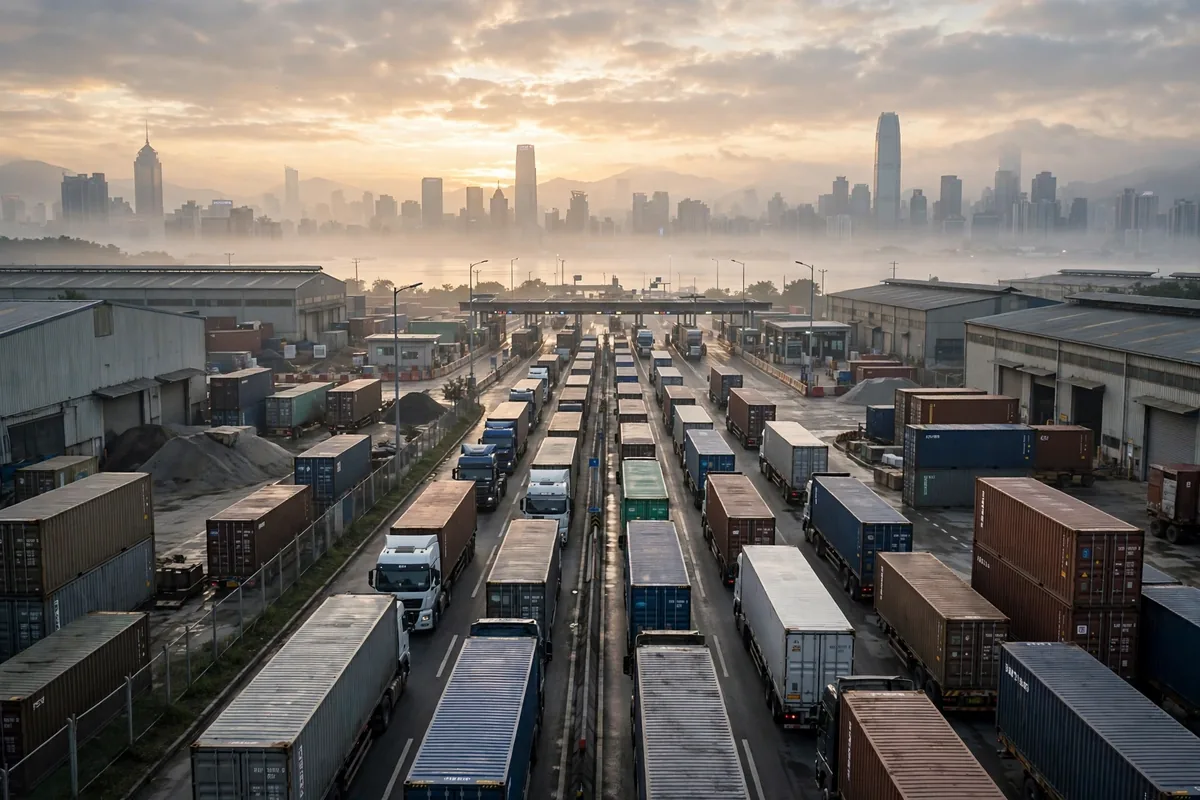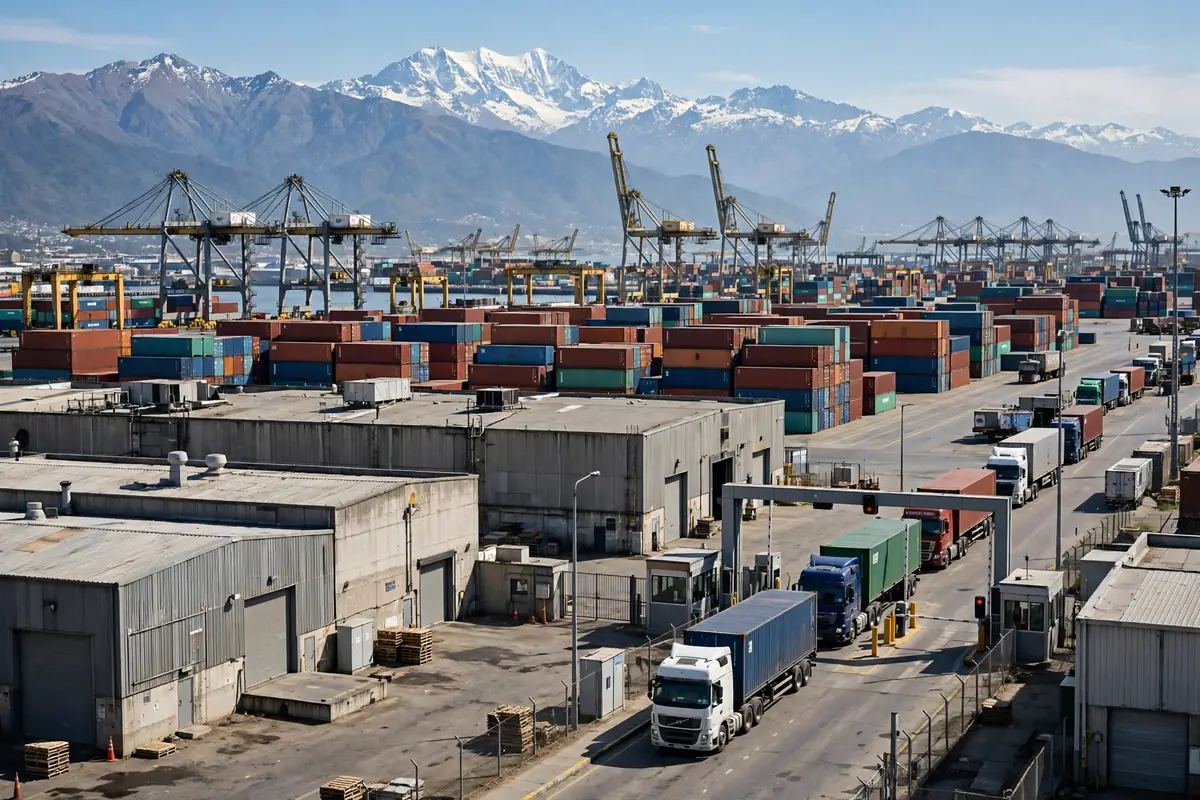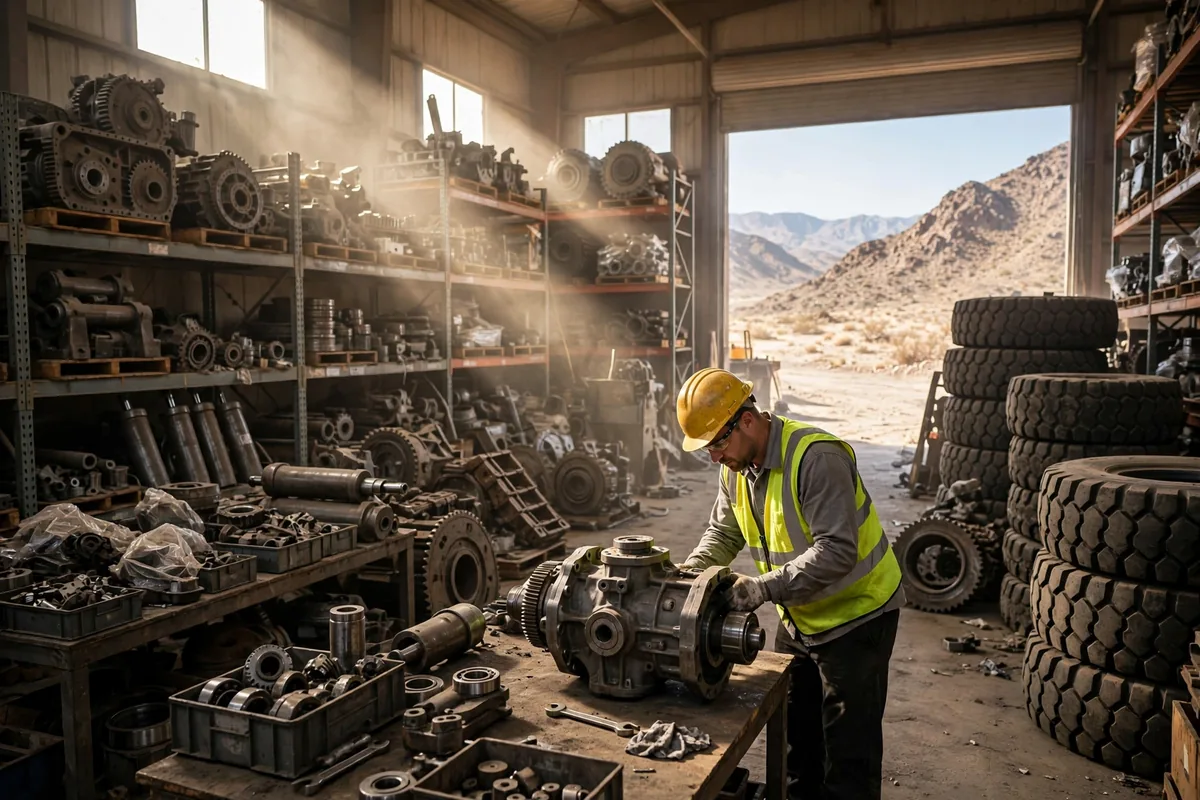
5:30 in the morning. The sky is not light yet, but the wind is already up. You roll the door open and fine sand walks in on the night crew's boots. Honestly, atacama chile mining warehouse logistics is not hard because of the warehouse. It is hard because of the desert outside it. Our warehouse sits at the edge of a mining area in northern Chile, feeding spare parts and consumables up to the mine sites. By midday the steel roof is baking. At night the temperature drops fast, and by morning there is a film of dust on every seal in the racks. Remember that picture. Everything follows from it.
Four things run our working life. First, dust. The Atacama is famously dry country, and when the wind gets up, fine dust gets into everything — carton seams, pallet bottoms, the backs of racks. Second, water is scarce. A city warehouse hoses down floors and pallets without thinking. We count every bucket, so our cleaning methods had to change. Third, altitude. Plenty of mine sites sit on high ground, well above two thousand metres in general terms, and people tire faster up there. You cannot roster a crew at altitude the way you roster at sea level. Fourth, distance. Warehouse, mine sites, and city and port supply points are all far apart. A resupply run is commonly the better part of a day, and wind or a closed road can stretch it further. Put those four together and most city lean practice stops working at our gate.
atacama chile mining warehouse logistics starts with sorting freight: a stopped truck is not a slow part
We sort everything into three grades, learned the expensive way. It is fixed practice now, and every new hand learns it in week one.
| Grade | What belongs there | If it runs out | What we do |
|---|---|---|---|
| Lifeline | Parts whose absence stops key equipment — core wear parts for haul vehicles, crushing and pumping gear | The machine stands, and the shift's work stands with it | Stock with us, plus a small emergency quantity at the mine site |
| Grind | Parts that turn a small fault into a big repair if they wait — filters, belts, common seals | Repairs slip, sick machines keep working | Stock against usage rate, with a floor level that triggers a same-day resupply report |
| Slow | General consumables — office, protective gear, ordinary tools | Annoyance, not a stoppage | Buy in bulk; never let them take lifeline space or money |
The grading question is not what a part costs. It is what stops when it is missing. Some lifeline parts are cheap — a seal kit, a dedicated belt — and look like nothing on a price list. Miss one and a very large machine stands idle. Other parts are expensive but can wait, because a backup machine exists. Those do not get lifeline slots. Grading by price is a finance habit. Grading by stoppage is a mine warehouse habit. It sounds backwards. We paid for that lesson once, and we never went back.
An illustrative example, with invented details rather than a real record: during one dry season, a haul vehicle at a mine site broke down on night shift needing a critical part. Our system showed stock. The crew searched half the night and found the shelf empty — the part had been borrowed by another site the month before and the issue was never recorded. The truck stood waiting until an emergency transfer arrived the next day, losing the better part of a shift. After that we set two hard rules. Lifeline issues are recorded on the spot, every time. And lifeline stock gets counted every week, not at month end.
Staffing follows the grading. When the mine calls at night, the duty hand has to find the part, load it, and finish the paperwork fast. So lifeline stock lives in the bays nearest the dock, under the best lights. Slow freight never parks there. Whoever moves a lifeline bay puts it back.
The consignment account at an Atacama mining warehouse: stock on your shelf is not money saved
Now the consignment and vendor-managed question. City warehouses use these deals to push inventory cost onto the supplier. Our problem is different. What matters here is not whose money the stock ties up. It is whether the part is within reach when a machine stops. So we split the conversation by grade. Lifeline parts we mostly buy and hold ourselves, because consignment replenishment runs on the supplier's truck schedule, and a stopped machine does not wait for a truck schedule. Grind and slow grades can go on consignment or scheduled replenishment, which frees our crew to watch the lifeline stock properly.
Be clear about the trade-off. Consignment looks free, but counting and reconciling do not disappear. The stock is theirs, sitting on your racks, so loss and damage responsibility has to be written into the agreement in advance — check the latest partner agreement for the exact terms, and never run it on a handshake. The other fixed practice is shutdown kitting. Before a planned shutdown, we build one kit per machine: every part on the job list, packed together, labeled with the machine number and the work order. On the day, the whole kit travels. No fitter wanders our aisles hunting parts. We build kits early, because resupply distance punishes late, and if the shutdown date moves, the kits stay built for the next round.
A second illustrative example, also with invented details: at one planned shutdown, the job list ran to dozens of parts. In earlier years the fitters collected parts themselves, which took the better part of a day and still produced wrong specifications. This time the warehouse built the kits a week ahead. On the morning, the kits changed hands in minutes and the fitters opened boxes and started work. The crew lead called it the smoothest shutdown start he could remember. The warehouse did one step earlier. The hill crew waited one step less.
One illustrative calculation, with invented numbers used only to show the method: take a lifeline part whose resupply run takes the better part of a day, longer in bad weather. Hold only one, and a single failure empties the shelf, and the machine stands for at least that resupply time. Our rule is to hold enough lifeline stock to survive two resupply cycles. Slow stock gets the opposite rule — better a rare stockout than a shelf of money that should have protected the lifeline grade. How much to hold is decided by the cost of running out, never by unit price.
Dust and water: how electronics and seals survive storage out here
Dust is the number one enemy, and electronics and seals suffer first. Control modules and sensors go into dust bags, then into lidded bins. Nothing electronic sits bare on a rack. Seals hate dust and sunlight both — dust on a sealing face means a leak after fitting — so they stay in original packaging inside a sealed bag, on the shaded racks, and issue as whole bags. Part-used bags get resealed on the spot. Cleaning changed too: vacuuming and dry mopping inside, water only where nothing else works, dust mats at the door, and pallets blown down before they reach the racks. One ruined electronic module costs more than a lot of dust bags.
And one more thing, plainly. In atacama chile mining warehouse logistics work, just-in-time fails. City zero-inventory thinking assumes short roads, frequent trucks, and supply points everywhere. Out here the roads are long, the trucks are few, and weather can close the route. Run a mine warehouse at zero stock and the first broken supply run stops the site. That is the counterintuitive part: in the desert, sensible overstock is not waste. It is the cheapest insurance you can buy. The real waste is money parked in slow stock while the lifeline shelf runs empty.
A word to fellow warehouse managers. If you take on atacama chile mining warehouse logistics, do not start by copying the best city warehouse you know. Start by reading your own ground: how hard the wind blows, what water costs you, how high the sites sit, and how long the road really is. Grade by stoppage. Hold lifeline stock in two places and count it weekly. Build shutdown kits early. Keep dust off the electronics and the seals. Do those things, and when the phone rings at night from up the hill, you can answer it calmly. Lights on, part findable, records straight — that is the best promise a warehouse like ours can make.
By Chen Feng, Warehouse Operations Manager