Two weeks before a big Chicago trade show, I got a panicked call from the owner of a Shenzhen company that builds forklift-style AGVs. Their demo unit was already crated and on a ship. Then their forwarder asked one innocent question: "Are you filing a formal import for this unit, or going in on an ATA?" Silence on the other end. He had no idea what ATA meant.
I told him to breathe — the forwarder had asked exactly the right question. For a demo unit that goes to a U.S. show and comes home afterward, a formal import is the most expensive and slowest route available.
Here's the short version: if the machine is only visiting the United States for the show and returning afterward, don't formally import it. Get an ATA carnet. Your unit enters as a temporary guest, not an immigrant. No duties, no import taxes. Ship it back on time and your security deposit comes home with it.
I've given this same advice to several equipment makers exhibiting in the U.S., and every one of them asked me the same follow-up questions.
So what exactly is an ATA carnet?
The name is a mouthful, but the idea is simple. ATA stands for "Admission Temporaire / Temporary Admission" — French and English for "temporary entry." People in the trade call it a passport for goods. It's backed jointly by the World Customs Organization and the International Chamber of Commerce, and it's accepted in more than 100 countries and territories.
One document does two jobs: it replaces the customs declaration and it serves as the financial guarantee. Your goods enter duty-free and tax-free on the single condition that they leave again. Show over, machine shipped home, case closed.
But it is not a universal pass. Only three categories of goods qualify: items for exhibitions and fairs, commercial samples, and professional equipment. An AGV rolling around a demo booth at ProMat fits squarely into the first bucket. Two things to keep out: anything you plan to sell or consume in the U.S. — the brochures and spare consumables riding along in the crate can't go on the carnet list — and anything headed for processing or repair, which the convention explicitly excludes. What if a buyer falls in love with the demo unit at the booth and wants to take it home? That's allowed, but you have to convert the shipment to a formal import and pay every dollar of duty owed first. A carnet cannot turn a visitor into a resident.
How do you get one, and what does it cost?
In China, carnets are issued by the China Council for the Promotion of International Trade (CCPIT), and the whole application runs online. The process is straightforward: log into the ATA application system and complete four sections — applicant details, carnet details, the security arrangement, and the goods list. The goods list is where people get sloppy, so don't be: every item needs its product name, brand, model, and serial number spelled out. The more specific the list, the smoother the inspection at U.S. customs. CCPIT calculates your security deposit using the destination country's guarantee rate; you pay, upload the receipt, and the carnet is issued within three business days of approval — often within one business day of the deposit landing.
How much? For the United States, the guarantee rate runs about 40% of the goods' declared value. Just as an illustration — not a quote — a demo unit declared at $200,000 would tie up roughly $80,000 in security. That sounds steep until you remember it's a deposit, not a tax: it comes back when the unit is re-exported on schedule. Compare that with a formal import, where duties and surcharges on that same $200,000 machine are gone for good, and getting them back after re-export means a drawback claim measured in months. You do the math.
A carnet is valid for up to one year from the date of issue, and within that year you can move the goods between member countries as many times as you like — Chicago in March, Hanover in the fall, same carnet. One caveat people miss: "valid for a year" does not mean "the goods can stay in the U.S. for a year." U.S. Customs sets its own re-export deadline when you enter, and the goods must leave before the carnet expires.
Don't skip the exit formalities either. When the unit leaves China, have Chinese customs stamp the exportation voucher and check every line of the goods list against the physical crate — one wrong serial number and you'll have an argument on the way home. The carnet is a passport for goods: every border crossing needs its stamp. A missing stamp breaks the chain, and the deposit refund gets stuck.
One more detail first-timers overlook: the stack of yellow vouchers in the carnet booklet. Those are transit sheets, for moving goods under customs control between ports — say, landing at Los Angeles and trucking to Chicago. Plenty of people receive the booklet, never learn what the yellow pages are for, and waste half a day asking questions at the port.
The carnet's in hand and the freight has landed — where does the money get lost?
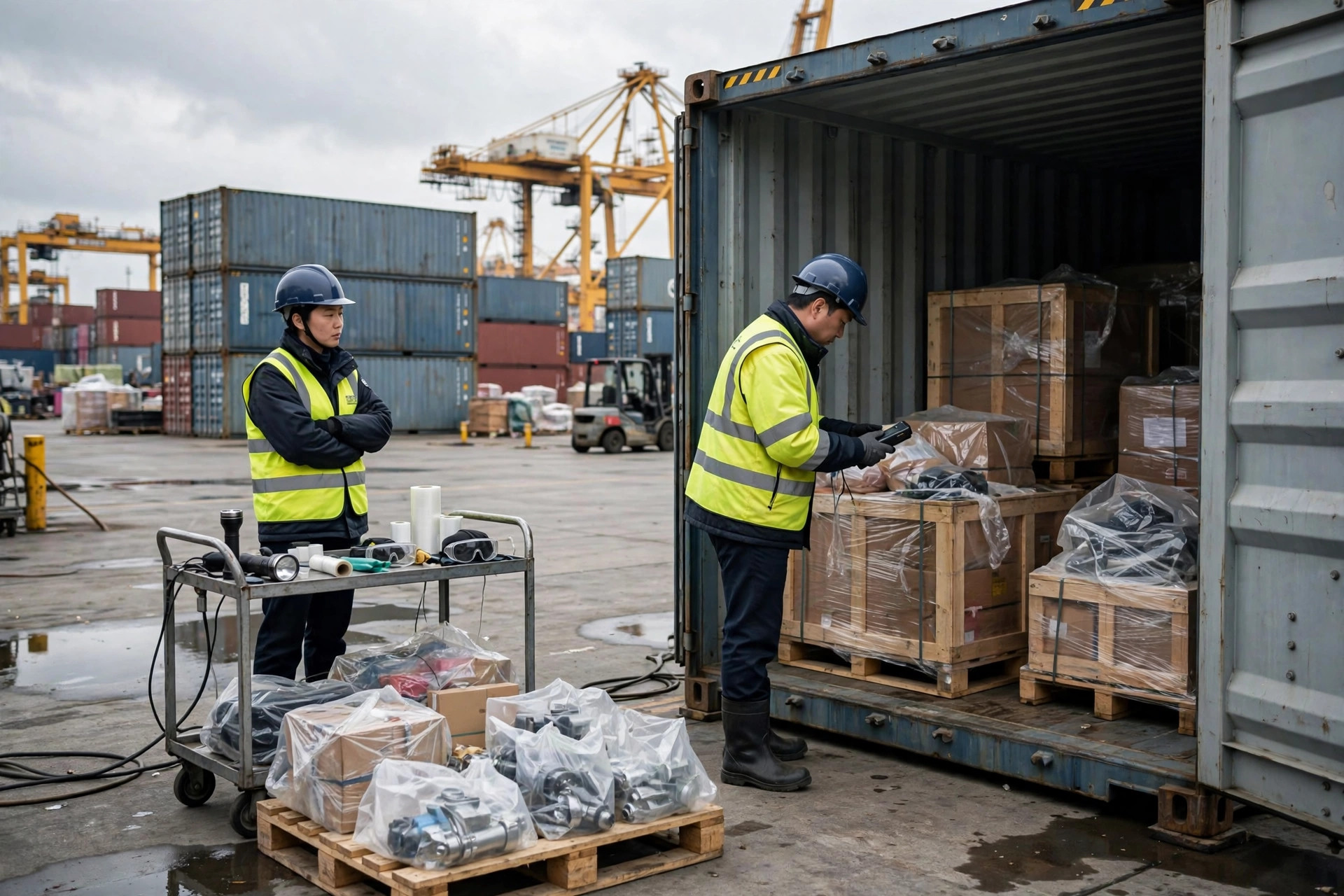
U.S. Customs welcomes carnet shipments: you clear the goods on the carnet alone, with no separate entry forms to file. "Welcoming" is not the same as "lenient," though. I've watched people lose real money on three mistakes.
The first is overstaying. If the unit isn't re-exported by the deadline customs gave you, the security deposit converts into duties — and penalties follow. Remember, that deposit is 40% of the goods' value. Losing it hurts more than paying the duty properly in the first place. Book the return freight the day the show ends. Don't linger.
The second is selling the demo unit at the show. A buyer wants it, cash in hand, right off the booth — I urge you to pause. Goods under a carnet cannot be sold locally. To sell, you must contact the issuing association and U.S. Customs, convert the shipment to a formal entry, and pay the full duty before handing it over. Sell it quietly with no re-export record on the carnet, and the U.S. guaranteeing association gets a claim from Customs — a bill that lands on your desk eventually.
The third is confusing the ATA carnet with a TIB. Temporary Importation under Bond is a U.S.-only procedure: the bond is twice the duties and taxes that would otherwise be owed, the initial term runs up to a year and can be extended to three, and it suits equipment that will stay in the U.S. a while and get worked on — testing, repair, processing. The carnet, by contrast, is one document for many countries with unlimited trips inside its year, built for the "show, go home, next show" rhythm. Exhibiting in the U.S.? The carnet is the right tool. But if your unit needs three months of testing at a customer site before anyone decides whether to buy it, get a U.S. broker to file a TIB instead of stretching the carnet past what it's for.
One last question to take with you: when the show ends, is that unit going home, or staying in the U.S. as a demo machine to keep running customer visits? If it's going home, make sure U.S. Customs stamps the re-exportation voucher — without that stamp, your deposit isn't coming back. If it's staying, then the security you posted back in China is about to become actual U.S. duty revenue. Run that arithmetic before the crate leaves Shenzhen.