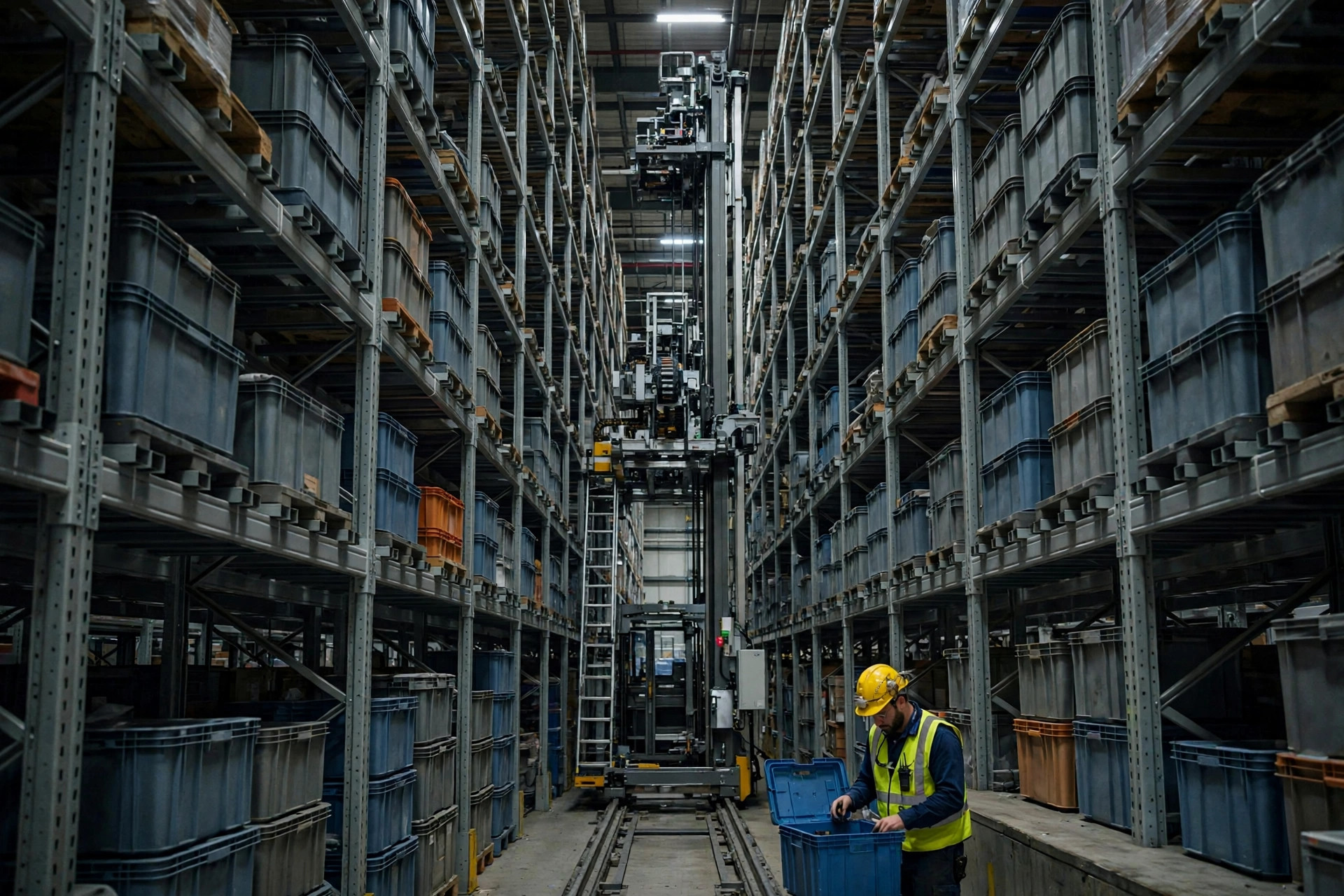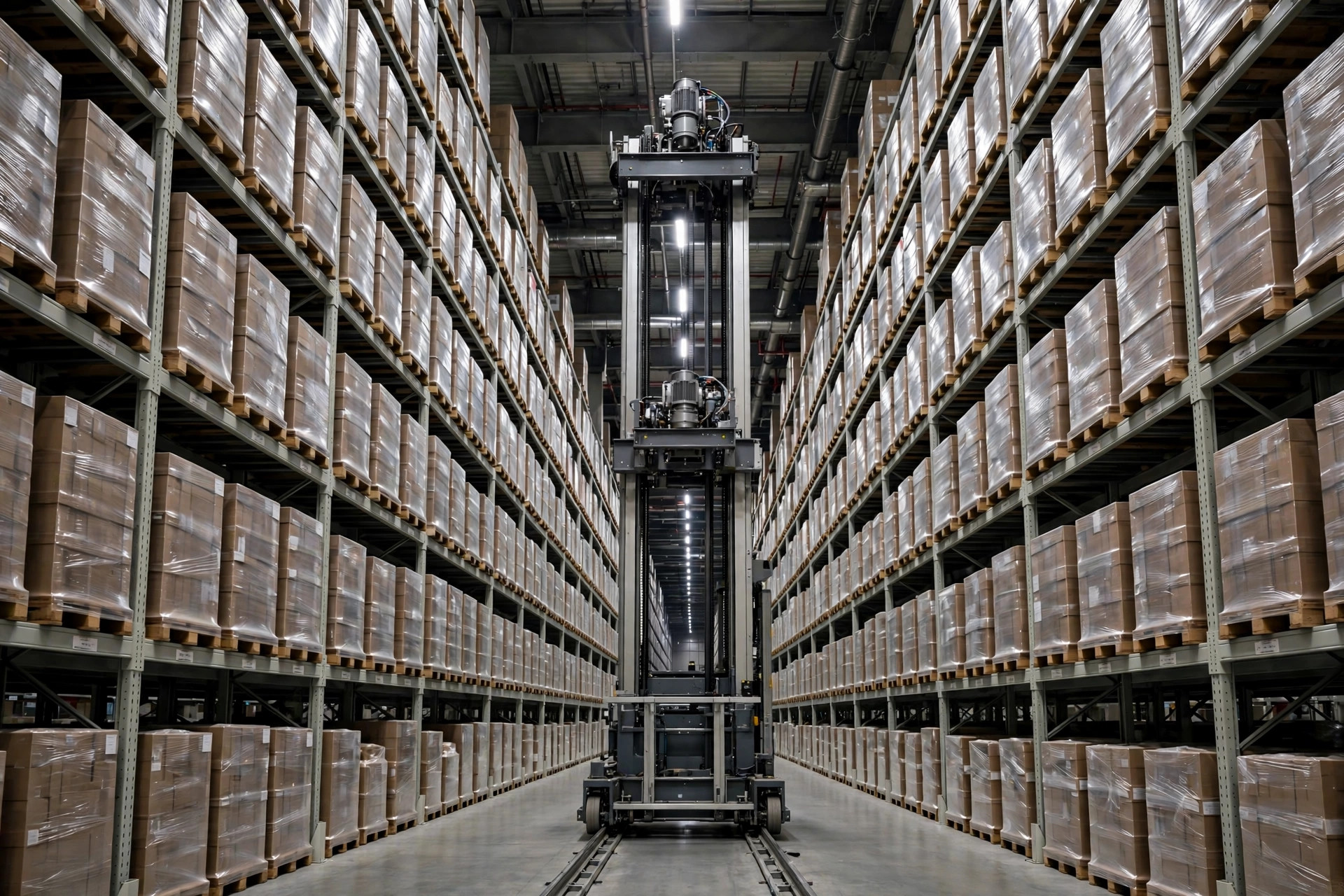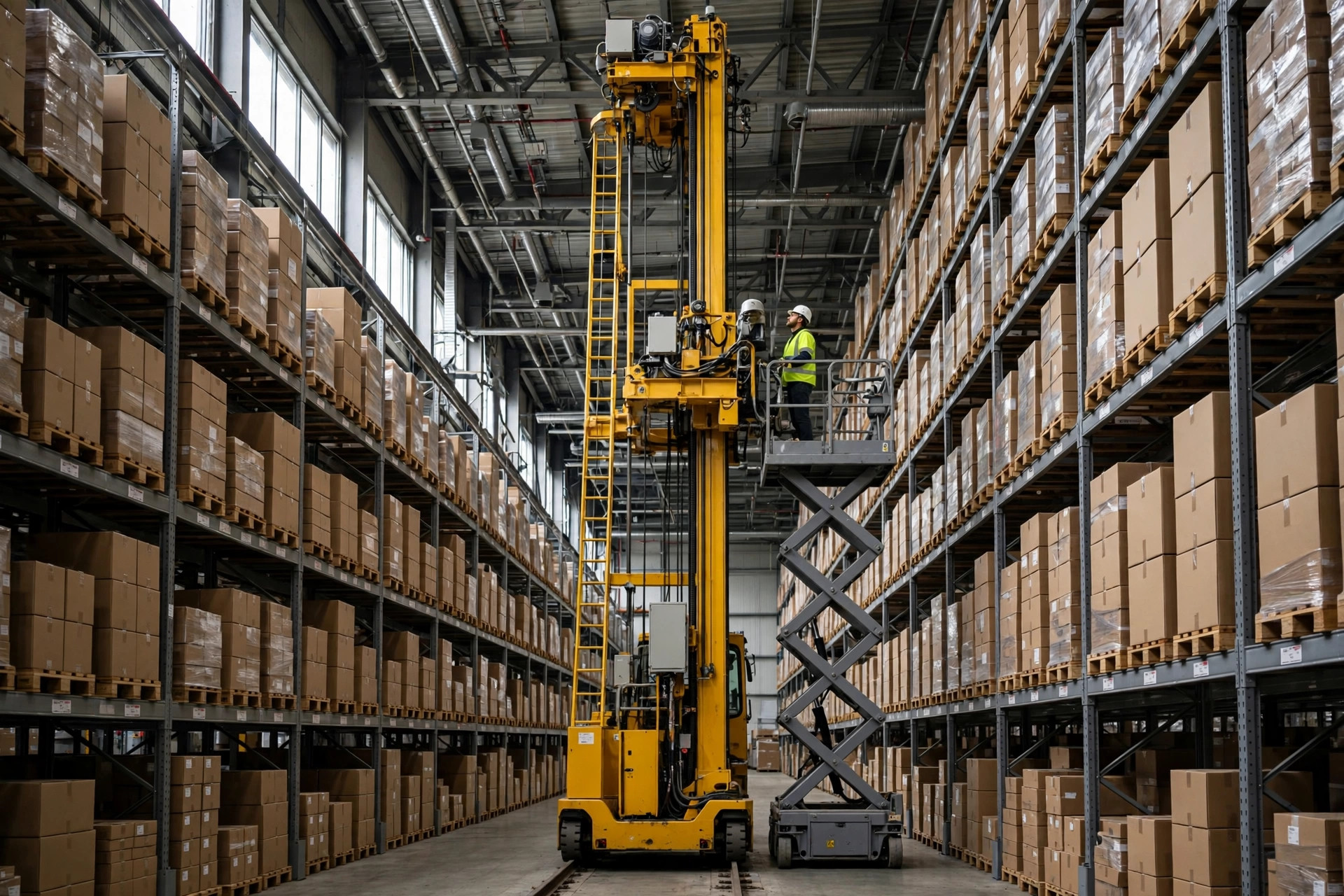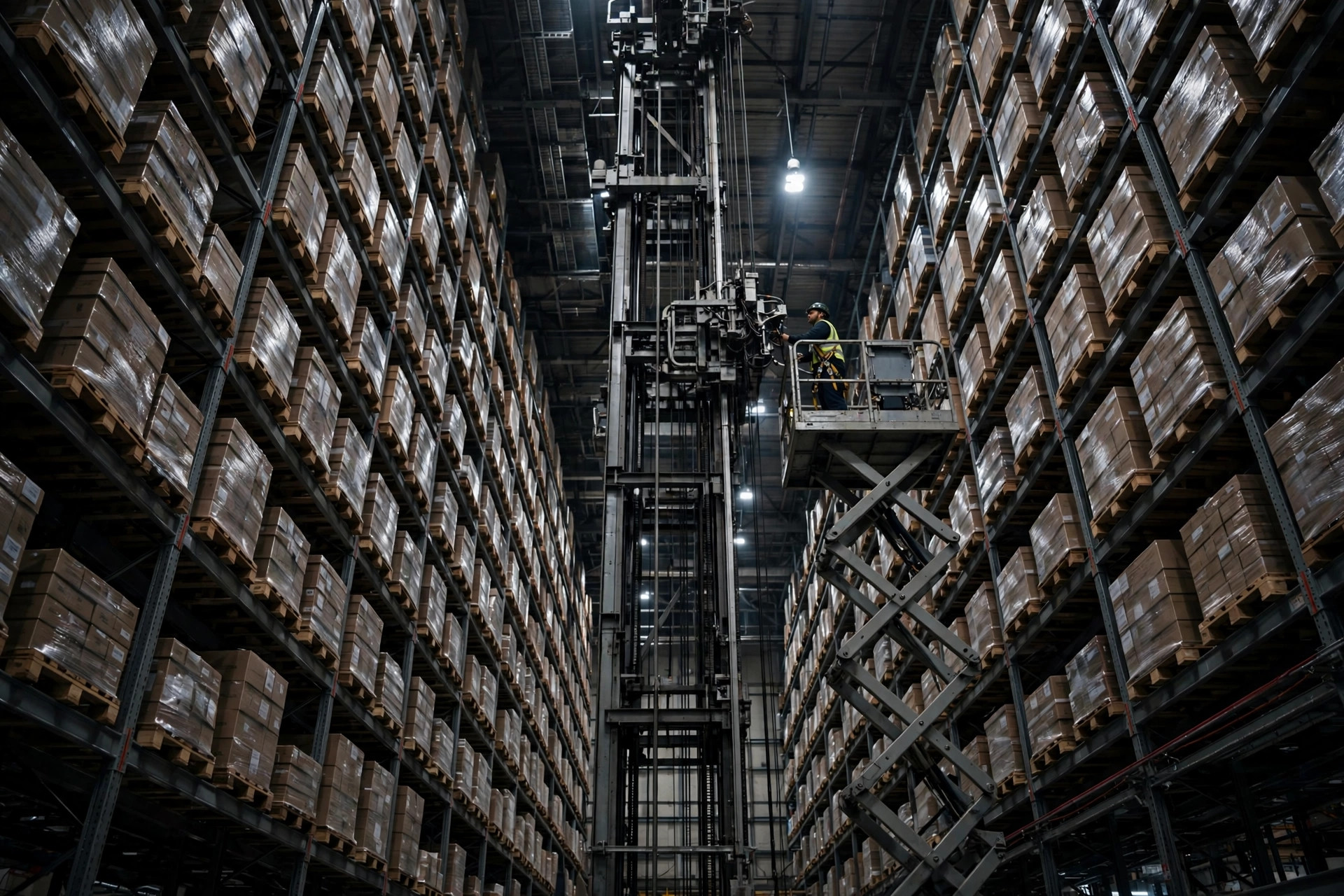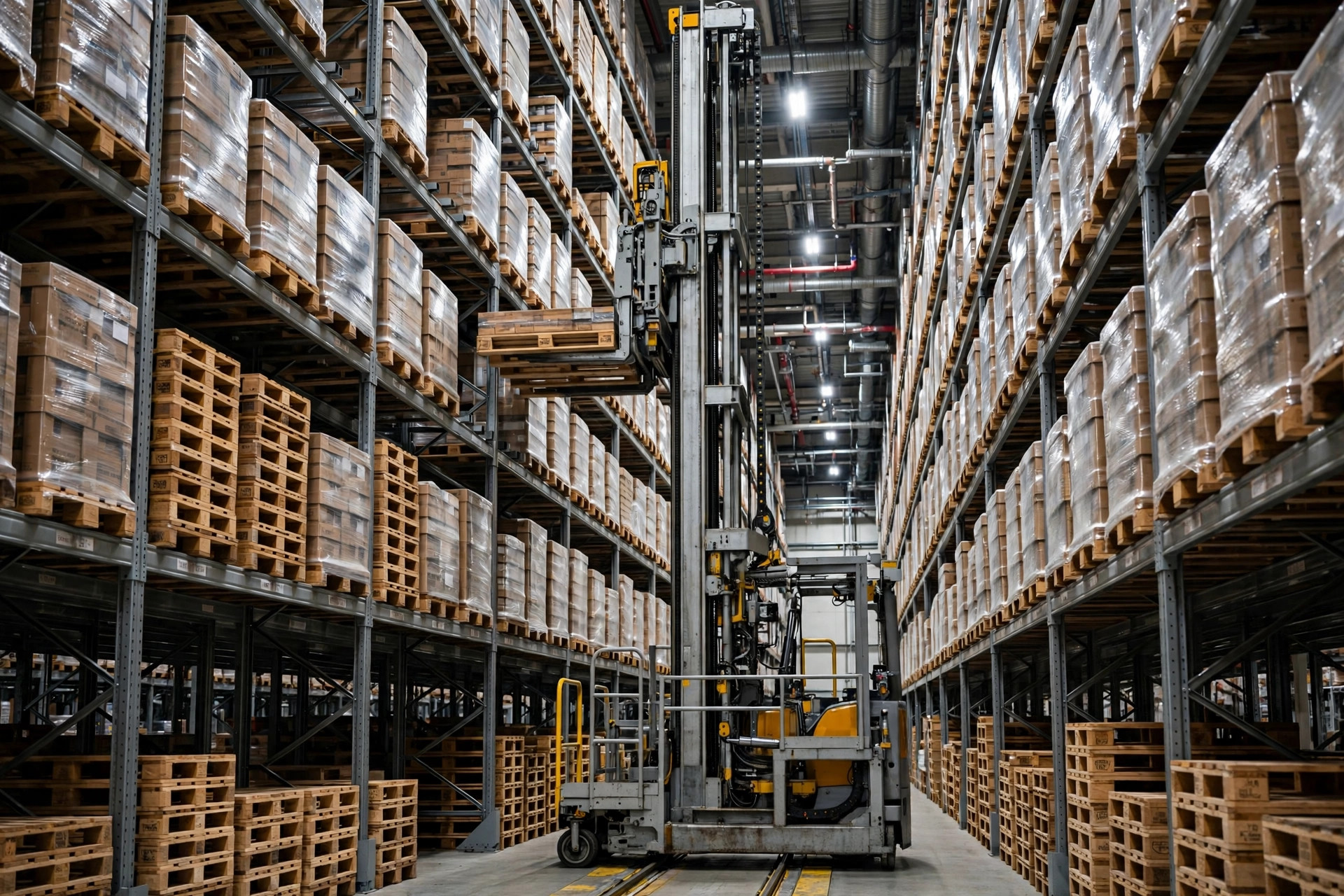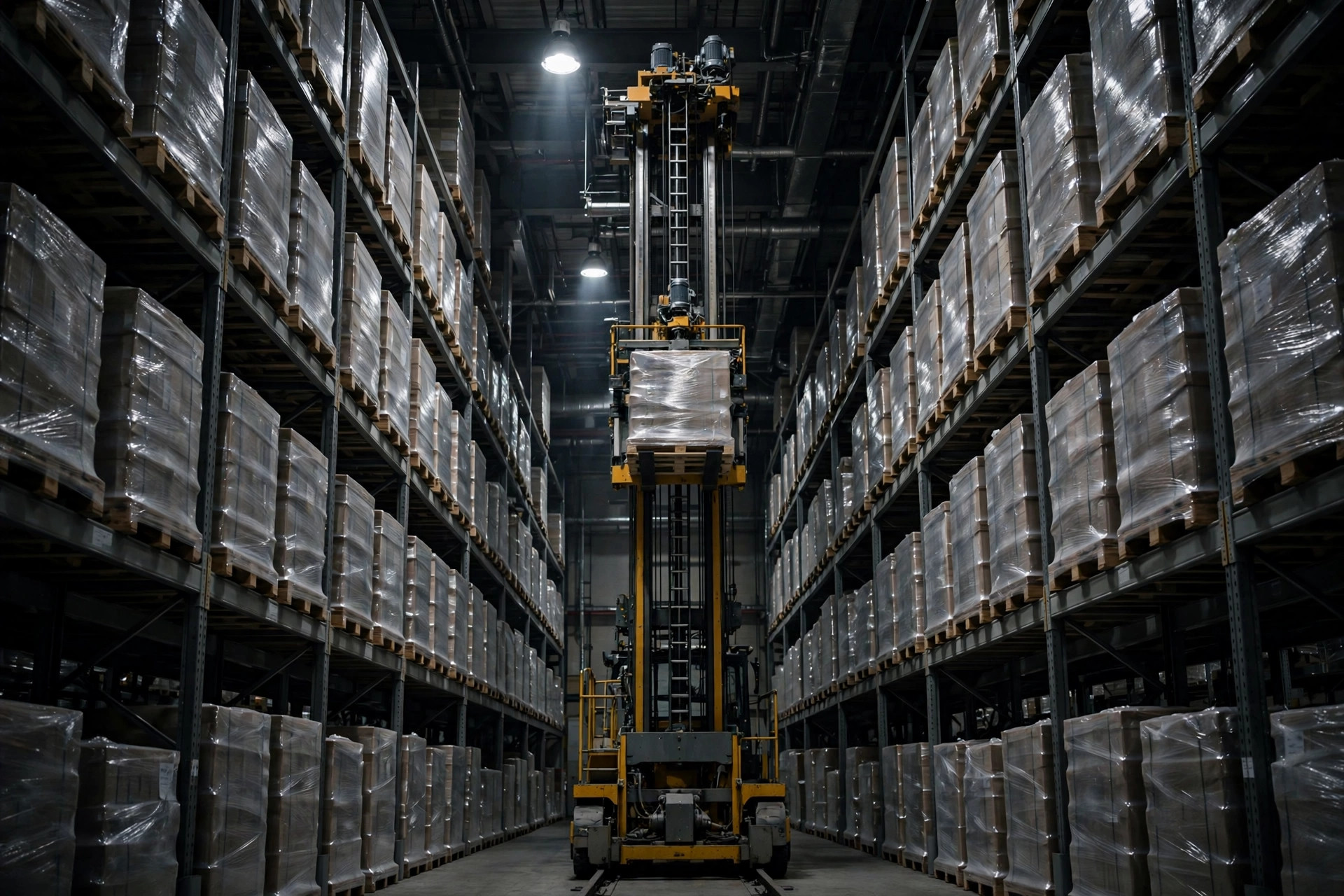
Let me give you the verdict first: the day your AS/RS goes live isn't the finish line. It's the day your maintenance tax bill starts accruing interest.
You can see the power bill. You can budget the service contract. But downtime is the hole you can't see. Last month I visited a 3PL in Fontana — 12 aisles, eight-high automated storage, running for seven years. One stacker crane went down for three nights, and the crew had to pull pallets by hand to keep peak-season orders moving. The owner's exact words: "Those three days cost me more than two years of full preventive maintenance would have."
Downtime Is the Real Money
Do the math on reactive versus preventive repair, and the picture gets clear fast.
Why is reactive repair so expensive? Not the parts — the time. When a stacker crane fails, you're waiting on a bearing or a burned-out motor, waiting on the OEM engineer to fly in, waiting on a part to ship from a depot. Every day that aisle sits idle, it burns money. One aisle represents tens of thousands of pallet positions, and people can't cover for it. In a warehouse with roughly 20,000 pallet positions, losing one stacker crane for a day means manual workarounds might recover a third of the throughput on a good day. The rest piles up or ships late.
Why does preventive maintenance feel expensive? Mostly because you're paying for work on a machine that "seems fine." But spread the numbers out: a few planned shutdowns a year, some wear parts swapped during routine inspections — versus one midnight emergency call-out plus lost production. The gap is an order of magnitude. There's a rule of thumb I've verified over and over: the same repair job done as an emergency call costs several times what it costs as planned work, because you're paying for "right now."
Then there's the quietest cost of all: running sick. Skip rail lubrication, let the travel wheels wear unevenly, and the crane doesn't stop — it slows down, vibrates, and its positioning drifts a couple of centimeters. No alarm goes off. Your put-away and retrieval rates sag, and you spend months blaming the software before someone finally checks the mechanics.
The Inspection Checklist: Just Work Down It
A stacker crane only has a handful of parts that matter: rails, forks, motors, cables. Intervals vary by model — what follows is common practice, and your OEM manual is the final word.
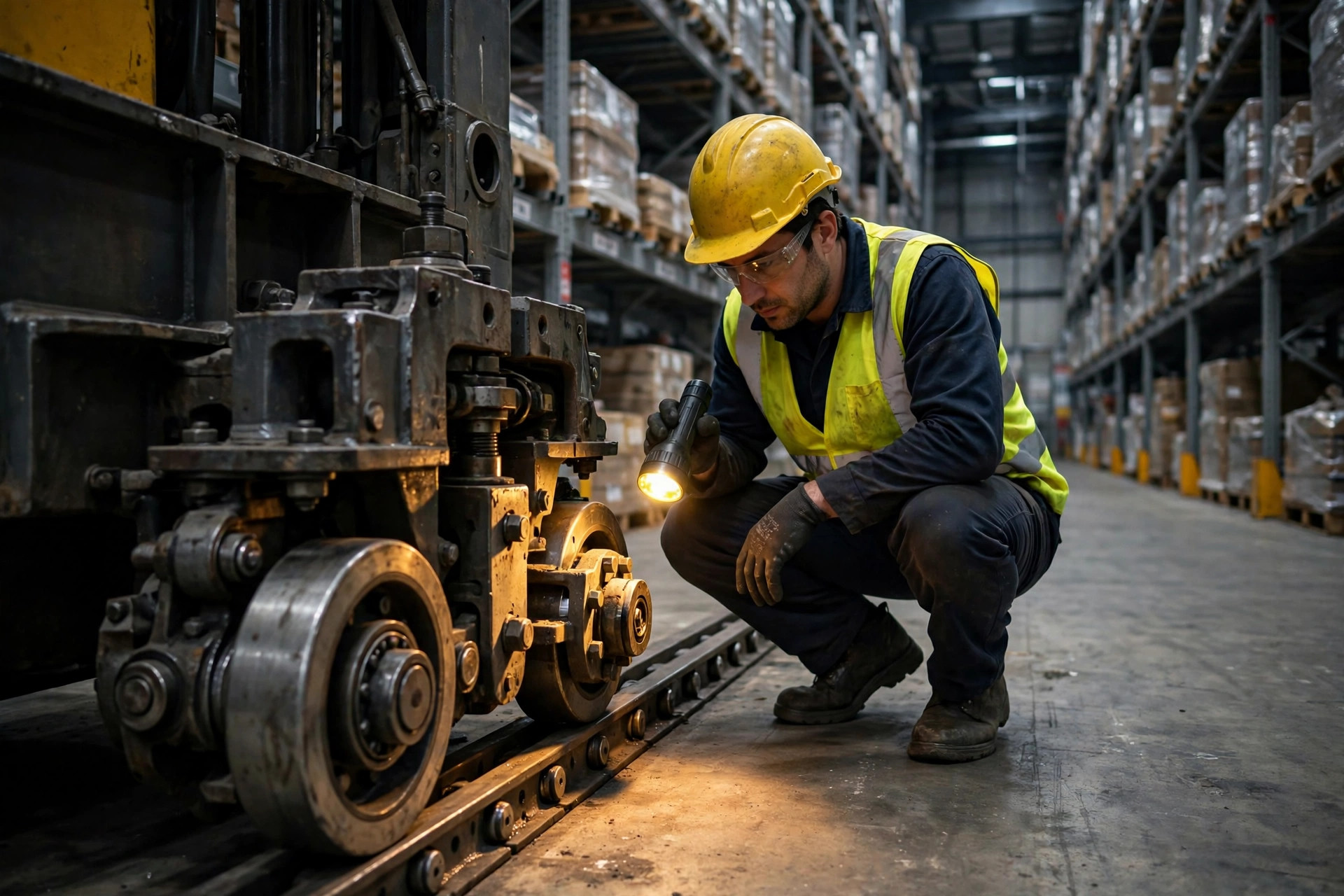
Rails and travel wheels: dirt and loose bolts are the two big enemies. The rail surface can't have built-up grime, and loose anchor bolts are a classic source of vibration. Common practice is a visual walk of the aisle at the start of each shift, with rail straightness measured and bolt torque checked monthly. Lubrication intervals in the manual are usually given in operating hours — don't fudge it by calendar month. A two-shift operation wears rails twice as fast as a single-shift one.
The telescopic fork is where most incidents happen. Chain tension, guide roller wear, fork deflection — all of it needs regular checks. Deflection is the sneaky one: one pallet strike bends it just enough that you can't see it, and the next extension shoves a load sideways. Common practice is monthly checks on chains and fasteners, quarterly measurement of fork straightness. And one iron rule: any time a forklift or pallet hits the crane, however lightly, it gets reported and the fork gets inspected. Most big accidents start with "it's probably nothing."
Motors and gearboxes: listen and touch. Unusual noise in operation or a gearbox housing that's hot to the touch are early warnings. Encoders and limit switches are the kind of parts that are invisible until they kill the whole line — test them functionally every quarter instead of discovering the failure the hard way.
The energy chain is a consumable, not a permanent fixture. Power and signal cables inside it flex thousands of times a day; jacket cracking and conductor fatigue are a matter of when, not if. Common practice is to open the chain and inspect cable jackets every six months, and to replace the cable set every two to three years depending on duty cycle. A broken chain link or a jammed chain will chew through cables too.
What Should Be Sitting in the Spares Room
The principle for the spares list: stock what you can't afford to wait for.
Tier one is "the aisle stops without it": travel wheels and guide rollers, fork chains and sprockets, the common limit switches and safety switches, replacement energy-chain links. When these fail there's no workaround — no stock on site means no operation.
Tier two is "you can wait, but it's expensive": motors, gearboxes, encoders. High unit cost, usually available from the OEM, so you don't need to stock complete units — but confirm the lead time. Three days is one thing. Eight weeks is a completely different risk calculation.
Tier three is consumables: grease, seals, brushes, fuses, common bolts. Cheap stuff — keep a year's worth so a fifty-dollar part never has to go through a full procurement cycle.
One more thing: manage spares against the equipment's life cycle. After seven or eight years of service, some parts go end-of-life at the OEM. Validate substitute part numbers ahead of time instead of discovering the part is unobtainable when you're already down.
In-House Crew or OEM Contract
I've seen three ways to run maintenance, and each has its trade-offs.
Full OEM contract: low hassle, fast diagnosis, genuine parts. The downside is cost — and response time is whatever the contract says. A "48-hour on-site" clause can quietly become a week when everyone's calling during peak season. Before signing, ask: where's the parts depot, where does the engineer fly in from, and is there a peak-season priority clause.
Your own maintenance team: fastest response, best daily coverage. The downside is that a technician who knows both the electrical and mechanical side of a stacker crane doesn't come cheap in the western US — and when they leave, the experience walks out with them. It pencils out for larger operations; above a dozen or so aisles, an in-house team usually wins.
The hybrid: your people handle daily inspections and first-level care, and you buy the OEM for deep repairs and the annual overhaul. This is the one I recommend most, especially for mid-size sites with six to twelve aisles. Your own crew walks past the equipment every day and catches small problems early; the OEM comes in twice a year for deep checks and software updates. Specialists do the specialist work.
Which one fits depends on three numbers: aisle count, equipment age, and the real skill level of your technicians. The older the equipment, the less I'd go full-OEM — aging machines develop chronic quirks, and the person standing next to it every day understands them better than an engineer who visits twice a year.
One question to take home: when was the last time someone climbed up and actually looked at your rails, or ran a hand along the fork chain? If you can't remember, the interest on that maintenance tax may already be compounding.