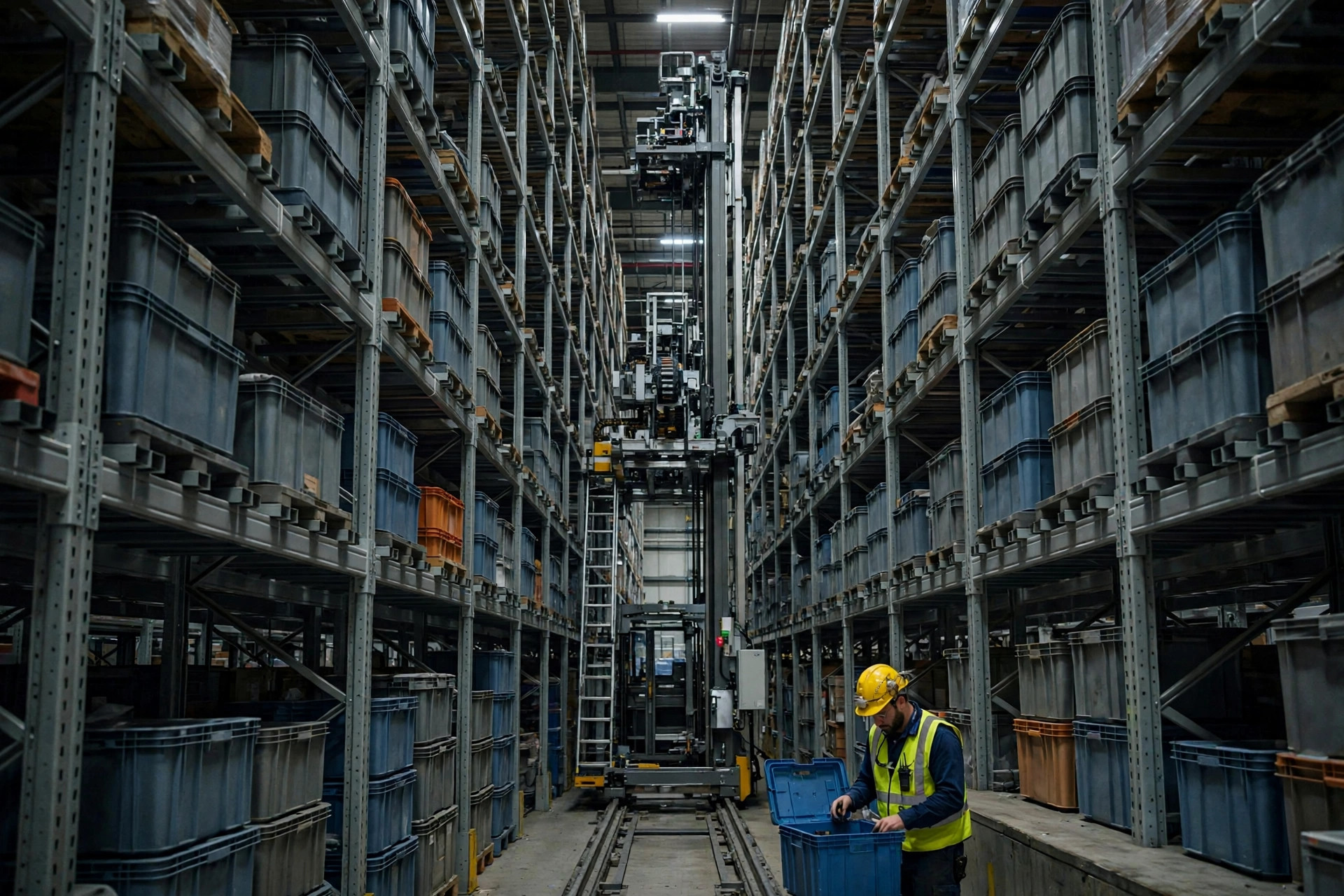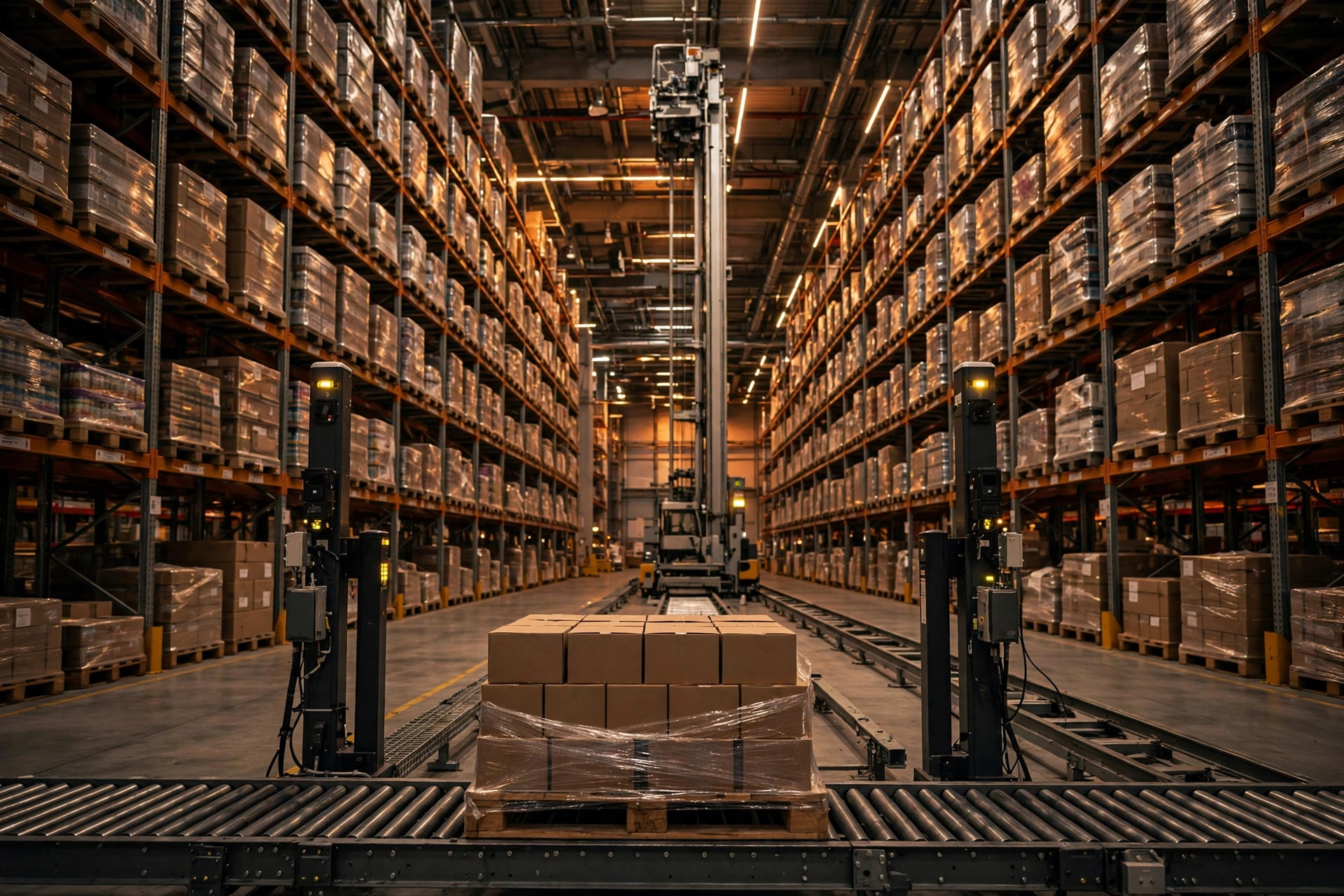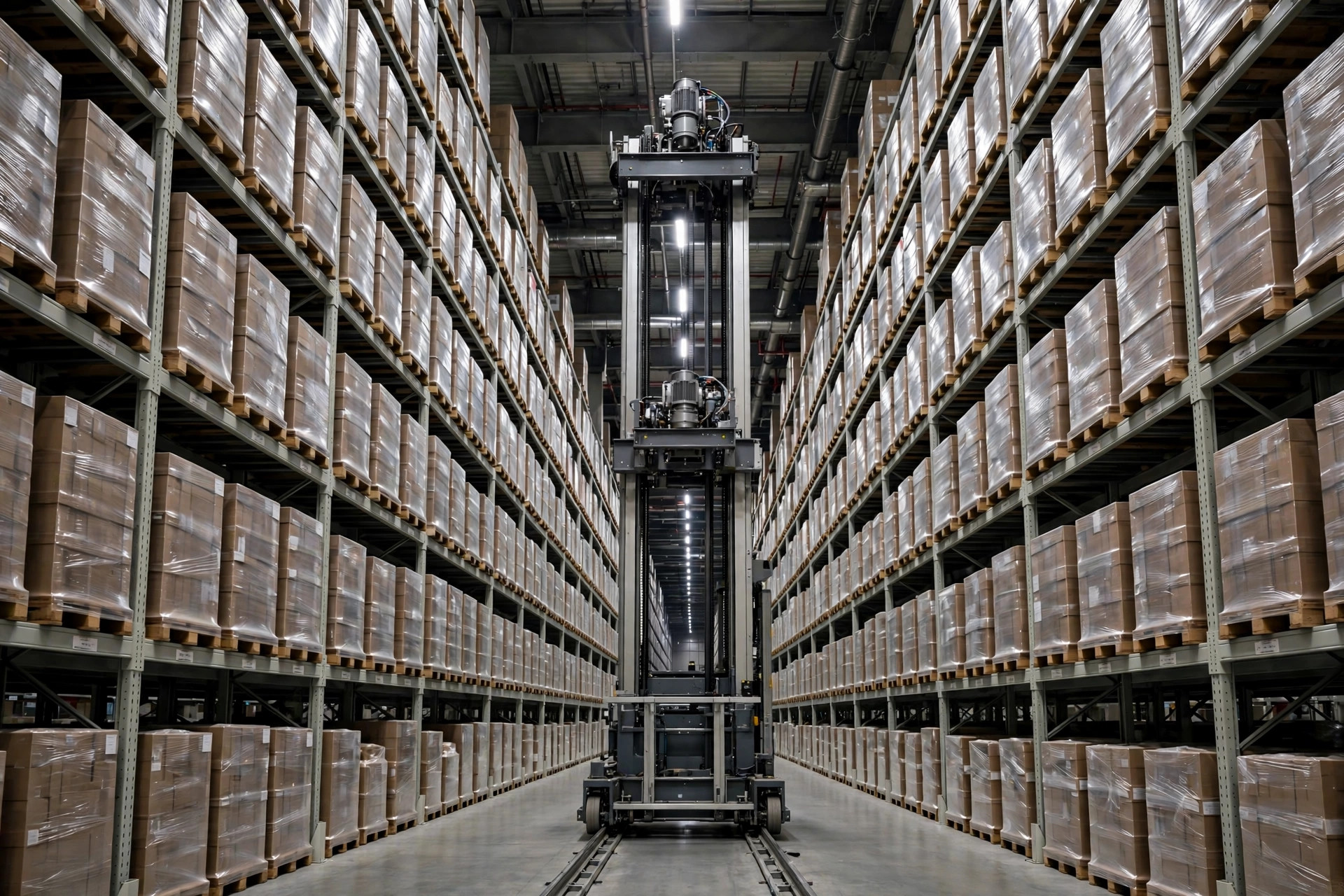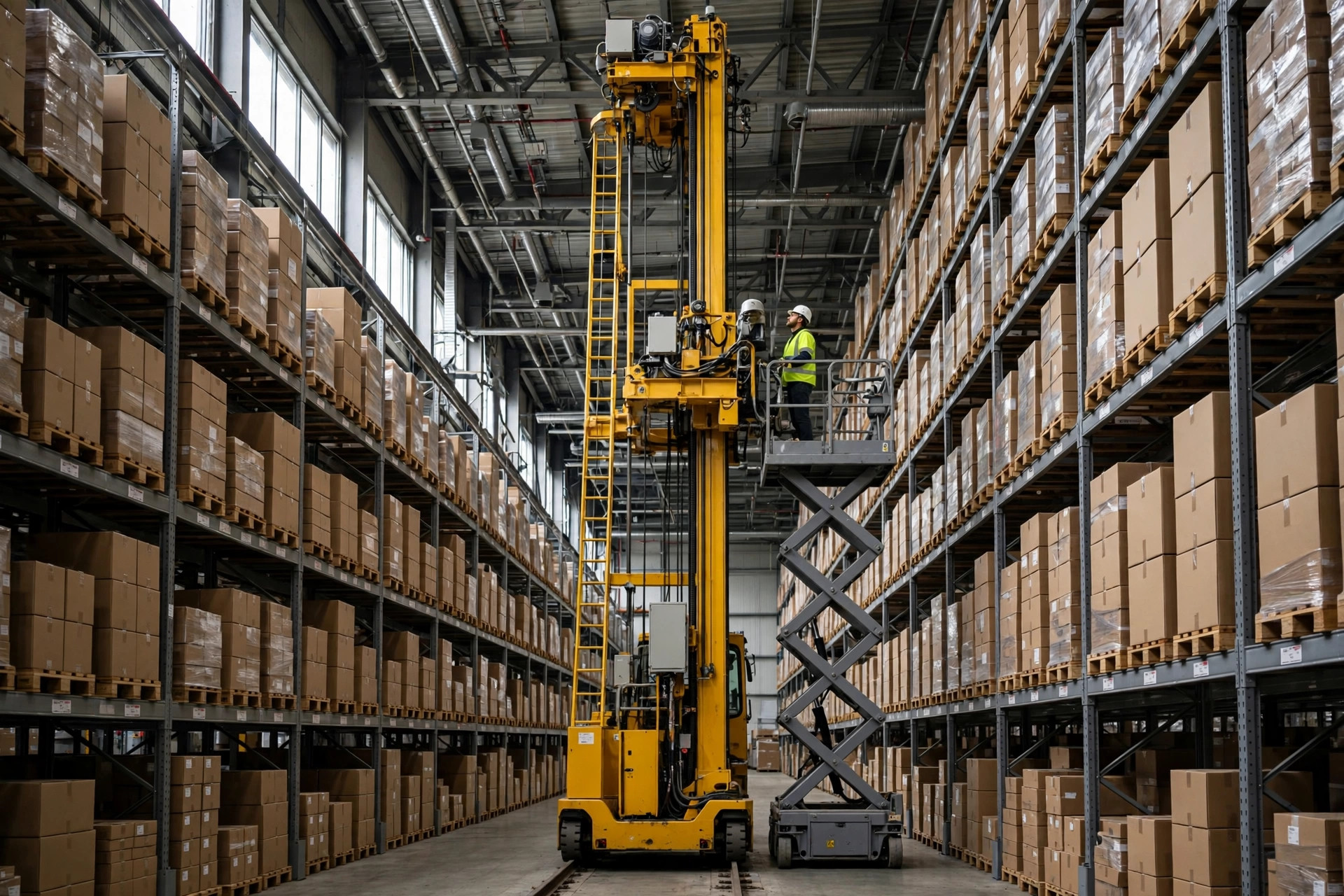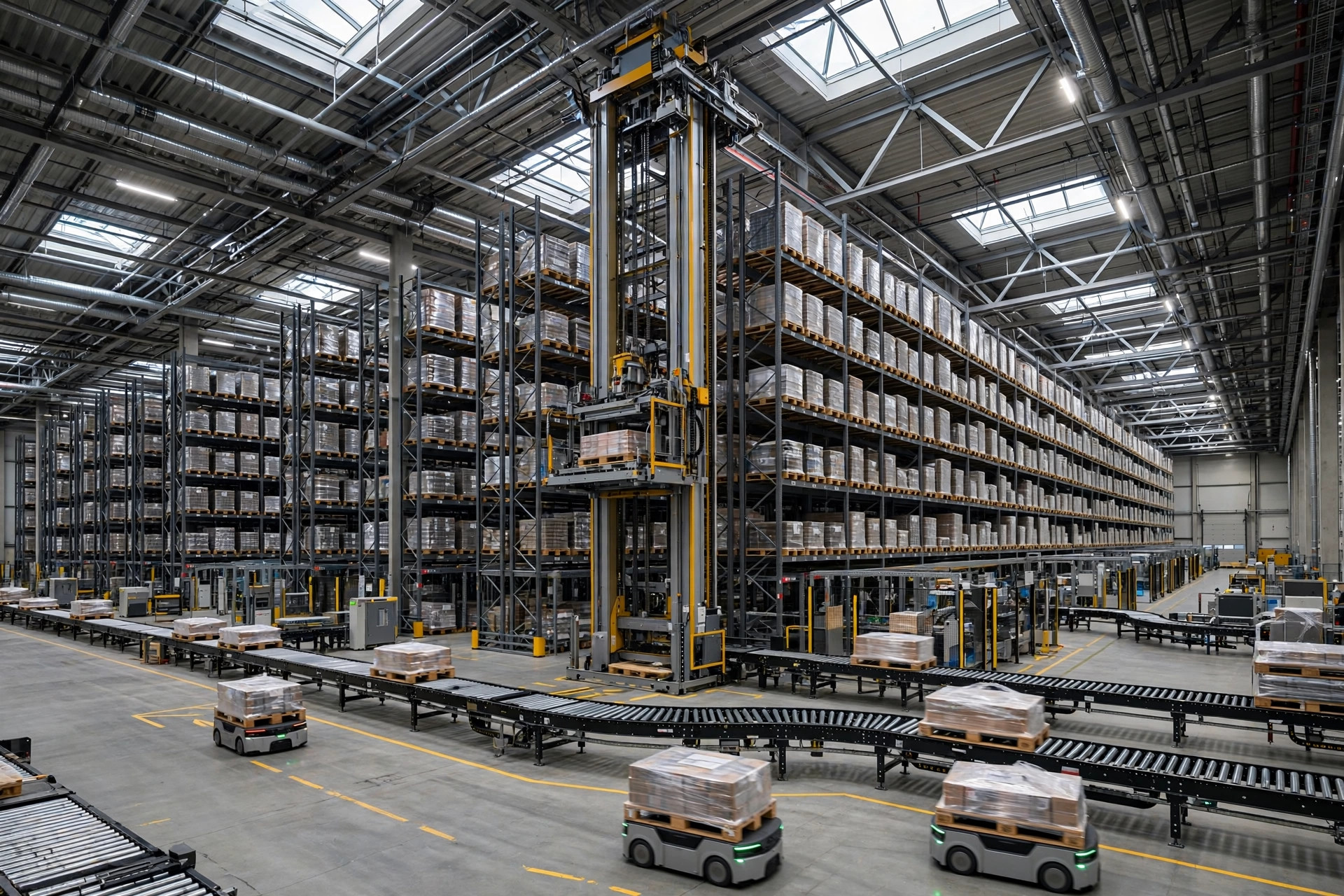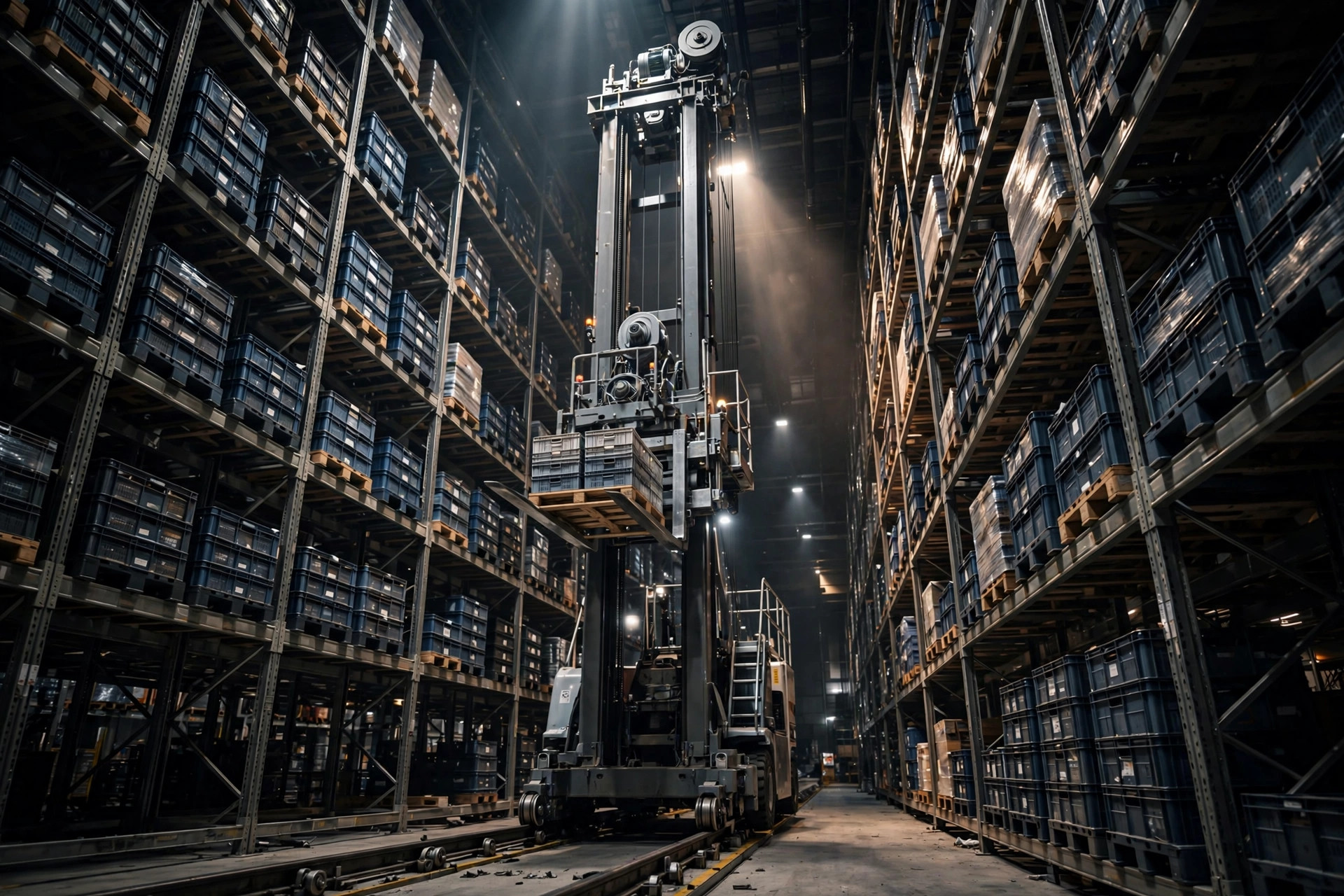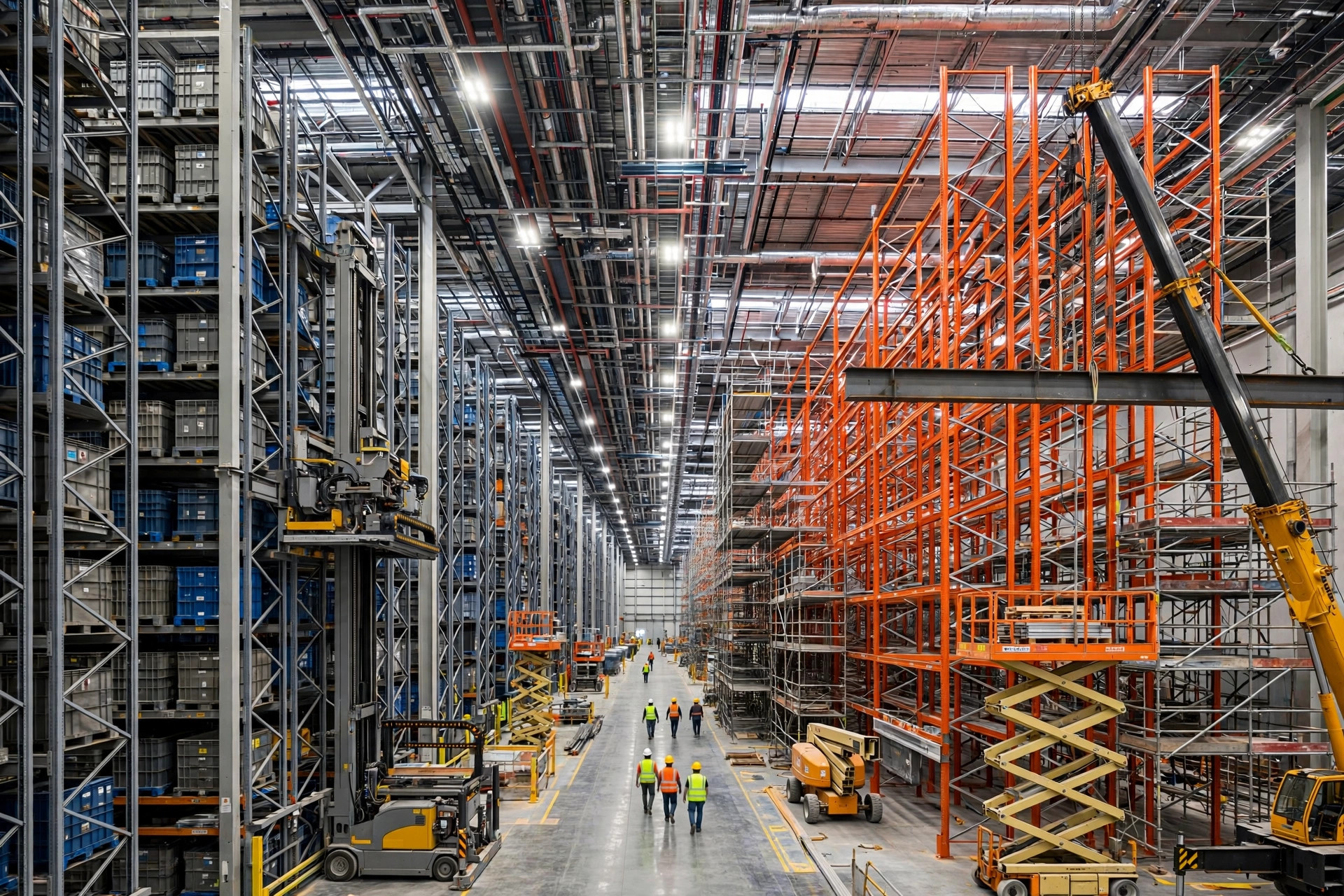
Last fall I was hauling a load of home goods into my regular warehouse in Ontario, California. I'd been running that lane five years, ever since the place had just six high-bay aisles. I turned into the yard and froze. The whole east lot was fenced off, a mobile crane was parked in the middle of it, steel columns twenty meters tall were already standing, and you could see welding sparks even in broad daylight. My stomach dropped. This was going to be months of gridlock, I thought.
Then the guard handed me a piece of paper — a hand-drawn detour map. "Driver, we're adding aisles to the high-bay. West gate for the next three months, east gate's a construction zone. Turn around at dock 3." From that day on, I watched that warehouse grow from six aisles to ten with my own eyes — and not a single one of my loads ran late.
I was in there two or three times a week, and you could watch it happen: month one, steel going up; month two, crossbeams in and new aisles taking shape; month three, new equipment rolling in and dry runs starting while the old aisles kept working like nothing was happening.
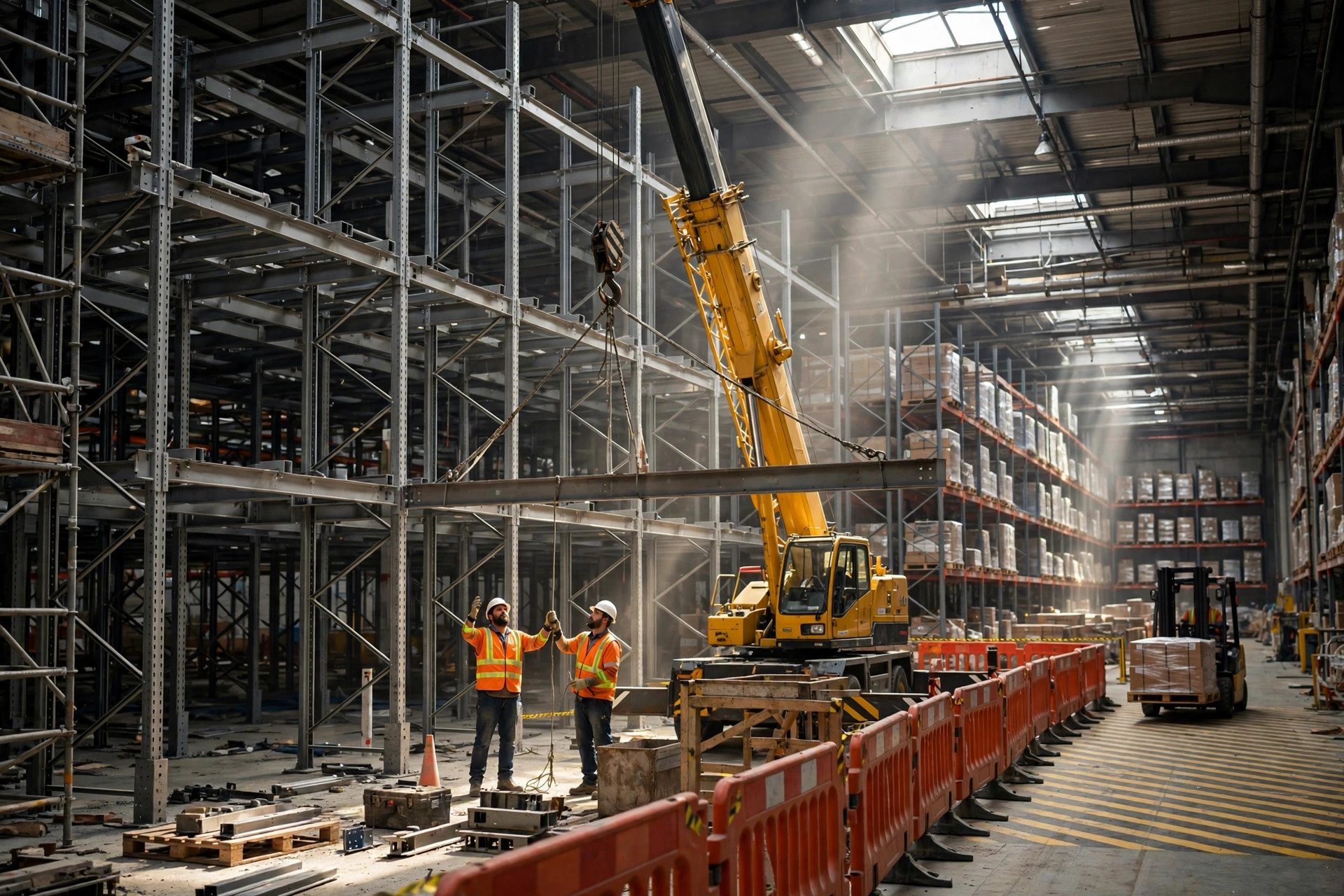
Their dispatcher, a young guy named Li, told me how they pulled it off. Three things. First, all the heavy work happened at night — 9 PM to 5 AM for the crane lifts and welding, anything loud or disruptive. Daytime, the construction crew only did small jobs that stayed out of the way, never competing with the forklifts. Second, the construction zone and the working warehouse were physically walled off from each other. Construction trucks used construction roads, freight trucks used freight roads, and never the twain shall meet. Third, that detour map — which gate in, which gate out, where to turn around, where to check in — drawn clearly and dropped into our regular drivers' group chat a full week before work started. I'm telling you, one sheet of paper saved everybody a mountain of grief.
I've Also Seen It Done Badly
Not every warehouse is that professional. Summer of 2022, an auto parts warehouse outside Phoenix was adding aisles too, and I delivered there three times. Three times I drove home wanting to curse.
Their "barrier" was a few strips of caution tape, with forklifts hauling freight and construction trucks hauling steel fighting over one lane — two sideswipes in a single week, lucky nobody got hurt. One day materials blocked half the fire lane just as an inspector arrived, and receiving shut down for half a day. Worst of all was the dock: they closed three doors without telling a single driver. That day a dozen trucks were backed up out the gate and down the frontage road. Highway patrol came by twice and nearly started writing tickets. A run that normally took 45 minutes gate-to-gate took me over four and a half hours that week, and the detention pay took a full week of arguing to settle.
I heard later that project was supposed to take two months and dragged past four. They lost two big shipper accounts over it. The owner was kicking himself — but there's no medicine for regret.
The Math Looks Different From the Driver's Seat
Zero-downtime expansion sounds beautiful, but the numbers have to pencil out. Let me show you the math a driver can see.
At the Ontario warehouse, before construction, I could get in and out in about 40 minutes on a smooth day. During those three months, with the detour and an extra security check, it averaged just over an hour. Call it 20 extra minutes per truck. At 30 trucks a day, that's 10 driver-hours burned daily, gone into thin air. Industry detention rates run tens of dollars an hour, so the warehouse was eating several thousand extra dollars a month in wait-time pay alone. And that's just the visible part.
Then the hidden costs: during commissioning, outbound slowed for a couple of days and they diverted freight to the bulk floor as a workaround — double handling, double labor, more damage risk. Every dollar of that lands in operating cost.
So here's the thing most people miss: in zero-downtime expansion, the expensive part isn't the steel. It's the detour. Put the two approaches side by side and it gets clear fast:
| Zero-downtime expansion | Shutdown expansion | |
|---|---|---|
| Timeline | Long, 3–4 months | Short, 1–2 months |
| Construction cost | 20–30% higher (night shifts, phased work) | Normal rates |
| Operations | Keeps running at 80–90% efficiency | Fully stopped |
| Biggest risk | Constant small frictions, tests your organization | Shippers move their freight — and maybe never come back |
Shutdown looks cheaper on paper. But shut down for real, and where does the freight go? Moving costs, weeks of breaking in a new building, lost orders — each one dwarfs a 20–30% construction premium. I've watched warehouses save on the spreadsheet and bleed in real life.
An Outsider's Take: Slow Is Fast
After watching it done both ways, here's my counterintuitive take: the harder you rush an expansion, the more likely something breaks; one breakdown stops the line, and you end up slower than if you'd taken it easy.
Why did Ontario go smoothly? Because they went "slow" — heavy work only at night, never racing the daytime operation; one section at a time, finish it, then move to the next. Looked slow. Finished in three months flat, not a day over. Phoenix tried to rush day and night, construction fighting operations for the same space, and got sideswipes, blockages, and an inspection shutdown. Four-plus months. Haste makes waste, as the old saying goes.
The night-versus-day trade-off is real: nights cost more and crews slow down after midnight; days are cheaper, but picture a crane swinging over running forklifts — what if a bolt drops? Every warehouse weighs it differently, but what I've seen is this: any warehouse with a full order book picks nights, nine times out of ten. A smooth shipping day is worth far more than the night premium. You can't have it both ways.
And one more piece of real talk: during expansion, the best progress tracker isn't the project manager, it's us drivers. Which gate flows, which detour works, whether a lane got blocked today — we run it daily, we know it cold. The smart warehouses set up a driver group chat and post one message every evening: "East gate closed tomorrow morning, use west. Forklift lane 3 goes one-way." One message like that saves I-don't-know-how-much in detention pay and cursing. Don't treat drivers like outsiders. During those months, we're your eyes.
A Few Straight Words, for Warehouses and Shippers
For warehouses, four things:
First, physically separate construction from operations — real barriers, each kind of truck on its own road. That's the floor, not the ceiling. Caution tape doesn't count.
Second, put the loud, heavy work at night and keep days to small jobs. Don't pinch pennies on the night premium. A smooth shipping day pays it all back.
Third, tell your regular drivers and carriers what's coming before it starts. Draw the detour map, drop it in the group chat, update it daily. Drivers aren't outsiders — during an expansion they're your eyes and ears.
Fourth, don't schedule dock appointments at full normal efficiency. Leave 20% slack. Running at max capacity during construction is digging your own hole — when it gridlocks, don't blame the drivers.
For shippers, three things:
First, while your warehouse is expanding, don't lock delivery dates tight — leave a day or two of cushion. Don't gamble on someone else's construction timeline to save a day; lose that bet and it's your customer you lose.
Second, never let a warehouse break ground in the two months before peak season. Expanding during peak is like changing a tire on the highway at full speed. If nothing goes wrong, that's luck. When something does, that's just physics.
Third, before you sign, ask one question: what's the contingency plan during expansion? If the line really does stop one day, where does my freight go? A warehouse that can answer that is one that actually takes shippers seriously.
Old trucker's saying: better to stop three minutes than rush one second. True behind the wheel, doubly true when you're operating on a live warehouse. Give the road room, do the work carefully, and slow turns out to be fast. Nobody on the road knows that better than a driver.
By Shifu Zhao, Trucking Veteran (15 yrs)