Start with the scale, because scale is what turns a small temperature slip into a large loss. According to IMARC Group's market report, Argentina exported 928,000 tons of beef in 2024, making it the world's fifth-largest beef exporter that year. That figure is worth quoting with its source and year attached, not as a timeless fact, because export volumes move with herds, prices, and destination-market access. But the implication does not move: at that scale, the chain from the Pampas to the destination port carries enough volume that a single weak handoff, repeated across many containers, becomes a structural cost rather than an accident.
The compliance gate at the Argentine end is SENASA, the National Service for Agrifood Health and Quality. Export beef facilities — slaughter, processing, and cold storage — must hold SENASA authorization, and destination-market access frequently turns on it. This is why cold-store capacity near Buenos Aires cannot be treated as generic space. Per Americold's own published facility pages, its Pilar site is authorized by SENASA for the export of beef, pork, and poultry, its Mercado Central facility offers about 13,500 pallet positions across frozen, chilled, ambient, and dry ranges, and Pilar offers about 9,000 frozen positions plus freezing tunnels. Treat those as the operator's published figures, to be reconfirmed against the latest official listing before signing, not as permanent capacity. The point for a shipper is structural: authorization is itself part of the warehousing resource, and a cheaper unauthorised room is not a substitute for an authorised node.
Argentina Beef Export Cold Chain: From Slaughterhouse to Export Cold Store
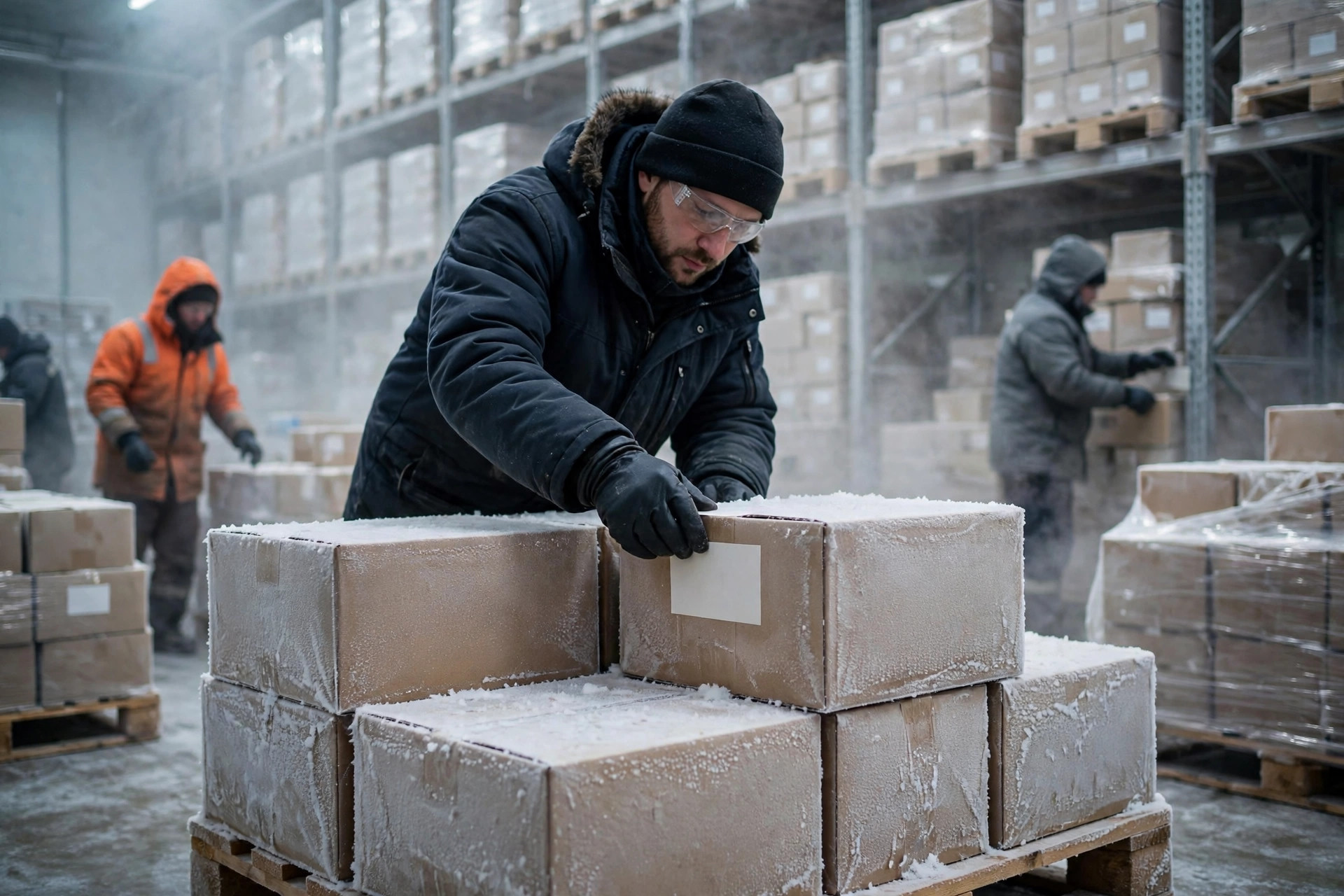
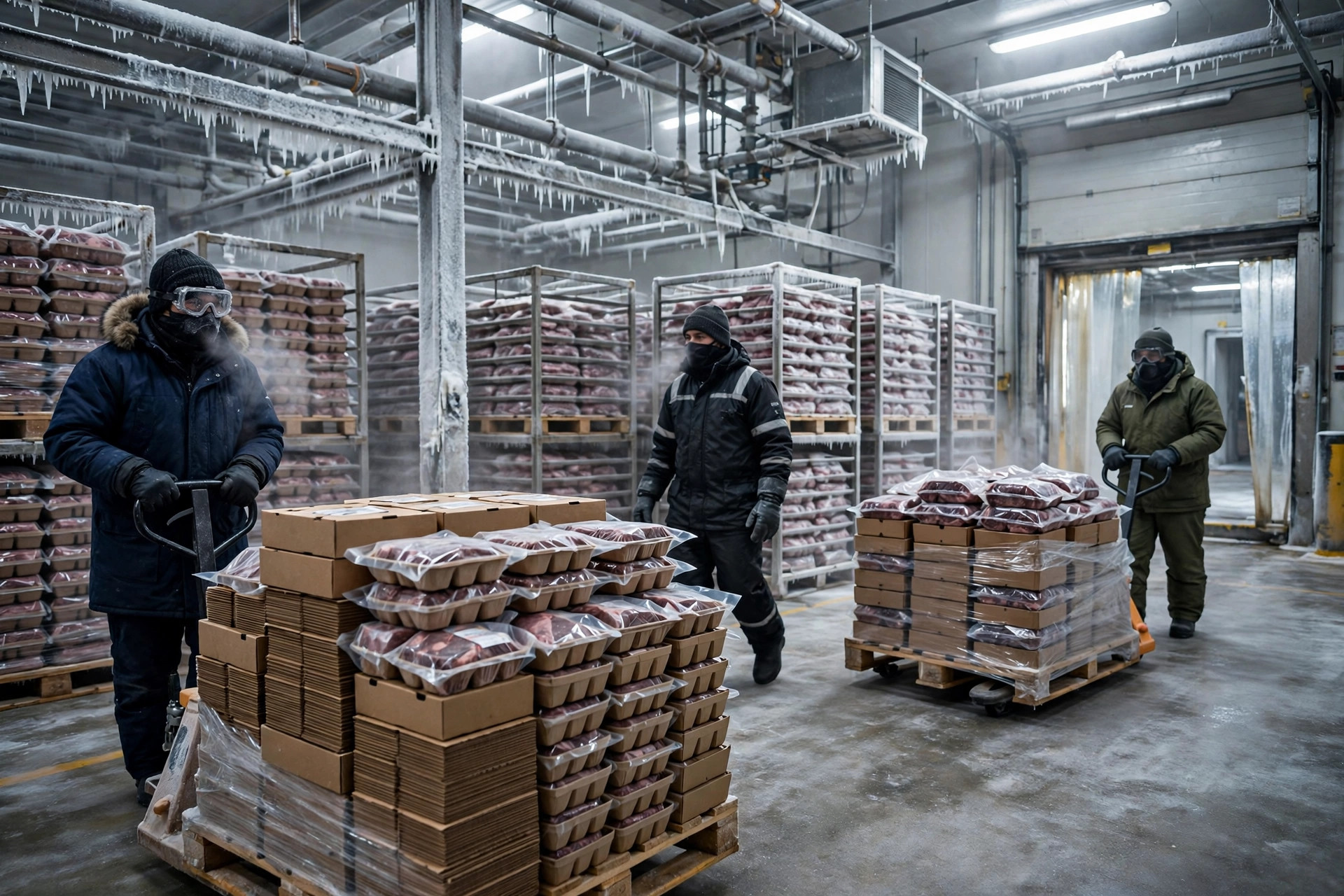
The chain breaks into four stages, and the breaks concentrate at the joints, not inside the rooms. Stage one is slaughter and pre-cooling. After slaughter, carcass core temperature must come down within its required window, and pre-cooling speed sets the shelf life that every later stage inherits. Stage two is cold storage, where the job is steadiness rather than extreme cold: temperature fluctuation, warm air admitted at each door cycle, and mixed batches stored without separation all erode consistency. Export lots should sit in their own zones, with labels and SENASA documentation travelling with the batch, so that a count checks documents before it checks cartons. Stage three is stuffing. A reefer container must be pre-cooled to its target temperature before loading; loading warm freight into a warm box asks the cargo to cool the container, and the first hours of the temperature curve are lost before the voyage begins. Cartons must leave airflow channels rather than being packed tight enough to block circulation, or the container develops warm pockets that only show up at destination. Stage four is handover at the destination port, where the temperature logger's full curve — every excursion, every gap, the opening temperature — is the core evidence. A verbal assurance that "it stayed cold" carries no weight in a claim negotiation; a complete logger file does.
Consider two cases that illustrate where the money actually goes. In the first, a load spent an extra half hour on an open dock between pre-cooling and cold storage during a warm afternoon. Core temperature recovered only slowly once the cartons were back in the cold room, and the lot's remaining shelf life shortened by more than a full day in the cold room would have cost. The dock, not the cold room, was the expensive room that day. In the second, a container was stuffed without pre-cooling because the loading schedule was tight. The logger showed a warm first leg, the buyer opened the container to a temperature record that contradicted the bill of lading's cold-chain claim, and the resulting claim negotiation consumed more management time than the freight itself. Both cases share a pattern: the failure was a handoff decision made under schedule pressure, and the evidence that decided the dispute was created — or not created — at that handoff.
When the Argentina Beef Export Cold Chain Breaks: The Three-Layer Loss Ledger
A break's cost should be counted in three layers, because counting only the first understates it. Layer one is direct product loss: downgraded or rejected lots, visible on the invoice. Layer two is consequential cost: destination-port detention, inspection, re-export or destruction charges, and the premium for emergency air freight to replace a rejected shipment, which routinely exceeds the cargo value it replaces. Layer three is authorization cost: if the break sits inside a SENASA-authorised facility's scope, remediation, re-inspection, and the risk of suspended export eligibility can reach every later lot, not just the broken one. Add the three layers together and the true price of a break emerges — and it is the reason prevention spending should be judged against all three, not against layer one alone.
Here is the counterintuitive judgement the data supports: the highest-return cold-chain spending is usually not a colder warehouse. Dropping a cold room from minus 18 to minus 22 degrees Celsius raises energy cost materially for a marginal quality gain. Closing the three handoff gaps — dock transfer time, container pre-cooling, and logger documentation — reduces break probability by far more, at far lower cost. The trade-off is between visible engineering (a colder room, a bigger compressor) and invisible process discipline (a dock timer, a pre-cooling checklist, a logger file). Buyers cannot see the compressor from the destination port. They can see the temperature curve.
Argentina Beef Export Cold Chain: Why Scale Makes Nodes More Valuable
Return to the opening figure. At 928,000 tons a year (IMARC, 2024), SENASA-authorised cold storage around Buenos Aires, pre-cooling capacity, and stuffing slots tighten and loosen with export seasonality. In peak season, an authorised room and a confirmed stuffing window are scarce resources, and locking them early costs far less than paying peak-season premiums or absorbing break risk later. For Chinese buyers and South American exporters, three practices follow. First, verify the cold store's SENASA authorization scope before contracting, matching authorised product categories and lots to the shipment. Second, write temperature standards and logger-data delivery into the contract, rather than the four words "full cold chain" with no measurable content. Third, lock cold-store space and stuffing windows four to six weeks ahead in peak season, moving break risk from post-hoc claims into advance prevention.
The story of Argentina beef export cold chain, in the end, is not really about beef. It is about trust at a distance. The destination buyer cannot see the Pampas grassland. The buyer can see a temperature curve and a file of documents. When the curve holds and the file is complete, trust holds. When the curve breaks once, the cost of rebuilding trust runs far above the price of that one container. Over the next few seasons, as export volumes continue to swing, the nodes that combine authorization, data, and process discipline may prove more valuable than raw cold-store capacity alone — a judgement worth testing before the next peak season arrives, not after it.
By Dr. Chen, Supply Chain Researcher