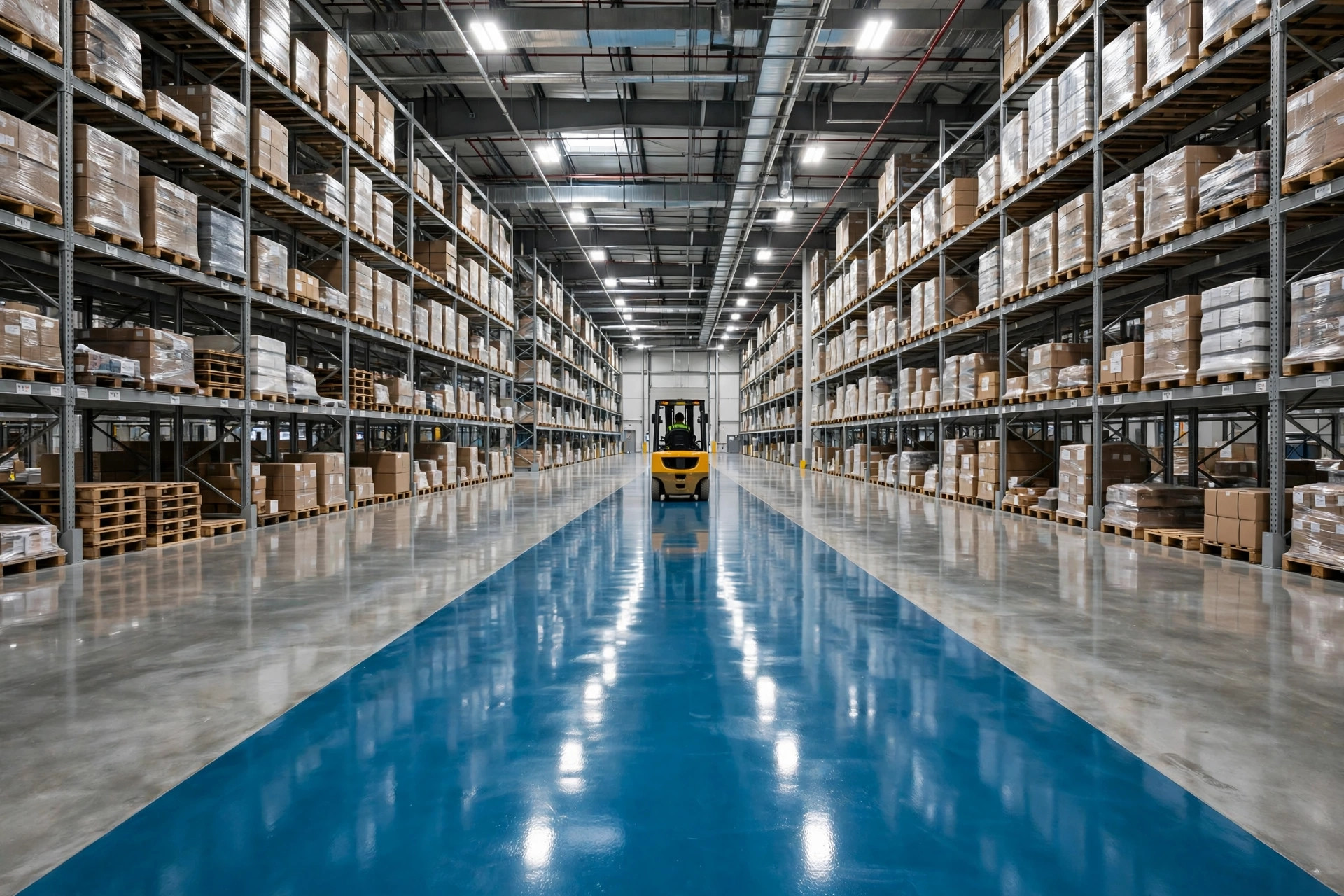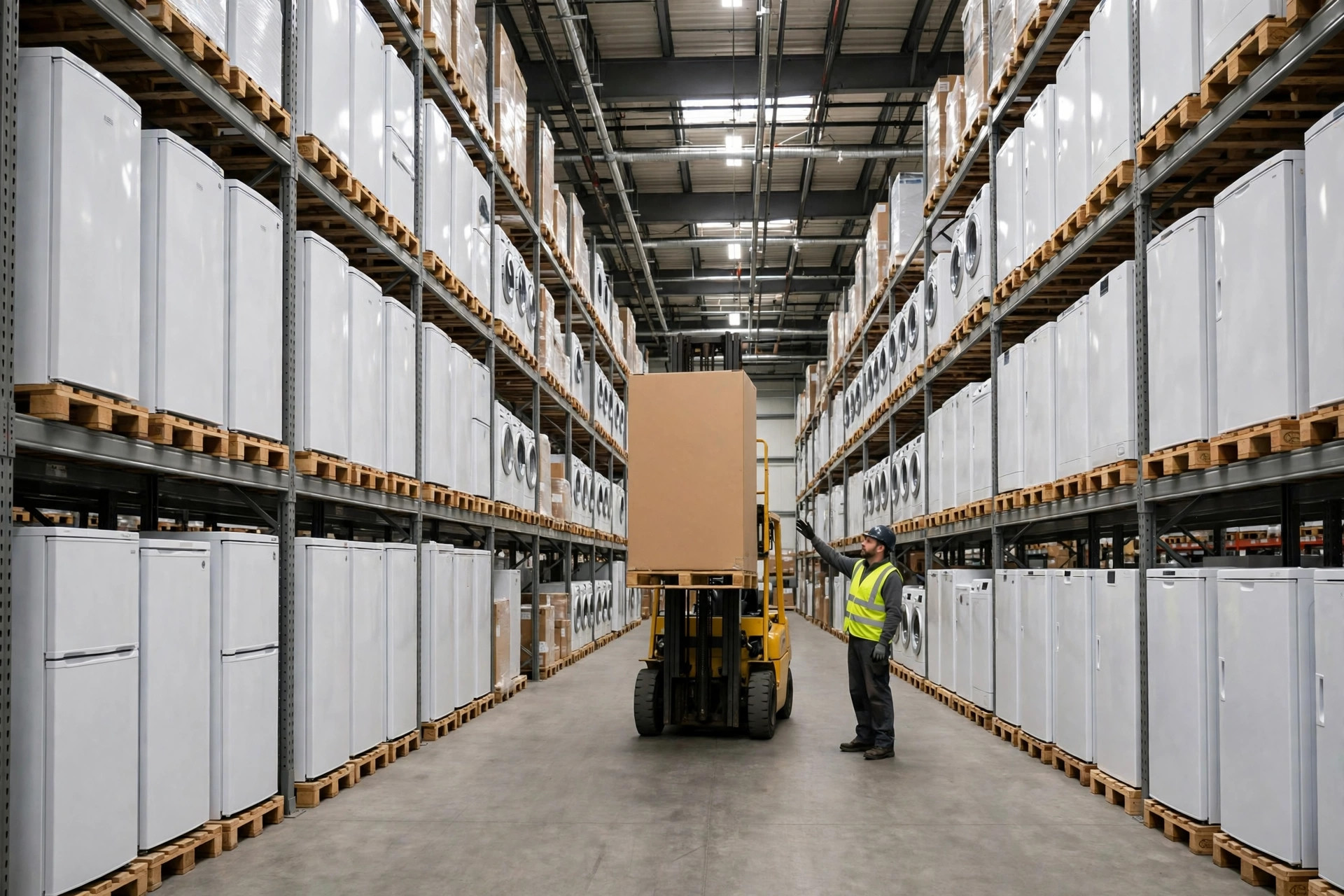
In large appliance warehouse storage handling, the damage usually happens before anyone notices anything is wrong. A side-by-side refrigerator comes off the rack, the forklift takes a corner a little fast, the cabinet sways once, and everything still looks fine. The carton is unmarked. The paperwork gets signed. The problem only shows up days later, in the customer's kitchen, when a door will not close properly. People who move big appliances for a living learn this early: most dents, crushed panels, and toppled units are not bad luck. They are a force applied in the wrong direction, somewhere between receiving and dispatch.
Large Appliance Warehouse Storage Handling Starts With Load Direction, Not Equipment
Think of a refrigerator as a machine wearing a metal shell, not as a solid block. Inside there is a compressor, pipework, glass shelves, and door hinges, all held in a cabinet that was designed to carry its own weight in one direction: straight down, while standing upright. Stand it up and the load travels through the frame the way the designers intended. Lay it on its side and that same weight lands on the hinges and the side panel. Leave it leaning against a rack for a week and the door may never sit flush again. A washing machine tells the same story in a different way. Its drum hangs suspended inside the cabinet. Shake it hard during a move and the suspension and feet take the punishment first.
You can understand the whole subject through one comparison: moving an appliance is like carrying a full bucket of water with a loose lid. The weight is not the hard part. Keeping it level, keeping it from sloshing sideways, and never letting it tip past the point of no return — that is the job. The moment the load shifts sideways, you have lost control, even if nothing has fallen yet.
Last summer, a home-appliance transfer warehouse in Foshan, Guangdong, gave me a textbook example. A side-by-side refrigerator had to fit into a truck that was already more than half loaded, so the crew laid the fridge on its side between two washing machines to save a second trip. The delivery team signed it off without a visible mark on the carton. At the customer's home, the door would not seal, and the customer refused the unit. Back at the warehouse, inspection found a hinge that had deformed under the sideways load, and the unit went to rework. The saved truck trip cost less than the rework, the second delivery, and the lost customer combined.
That is why the first rule in any appliance warehouse should be written where the crew can see it: check the load direction before choosing the tool. A cabinet air conditioner makes the point from another angle. It is tall, its center of gravity sits high, and its front panel is wide. Push it along and its worst enemy is a sideways knock against a rack upright. A panel crack from that kind of knock may be invisible at first and only show up after the vibration of transport. There is a related habit worth building: when a unit stands on a pallet, its full base must sit on the pallet. Half a base hanging over the edge hands the entire weight to one corner of the cabinet. It looks tidy on the rack. The damage is already booked.
The Selection Line in Large Appliance Warehouse Storage Handling
Warehouse managers keep asking me when a job stops being a two-person lift and starts needing a machine. My dividing line is blunt: the moment a unit needs a third person to steady it, stop lifting it by hand. Two people who can pick it up cleanly, carry it without changing grip, and set it down level are inside the manual range. That is the question large appliance warehouse storage handling has to answer before anyone signs a purchase order. A third person hovering to prop it, push it, or shout instructions means the center of gravity has already moved beyond what hands can control. Continuing by hand at that point is gambling, not working.
| Method | Best for | What it fears most | Cost feel |
|---|---|---|---|
| Two-person manual carry | Small units, short moves, flat floors | Changing grip on a turn, steps, a load leaning to one side | Cheap in labor, expensive in risk |
| Manual pallet jack plus pallet | Moving units across the floor, tail-lift loading | Uneven floors, pallets loaded past the edge, sudden stops | Low investment, right for modest throughput |
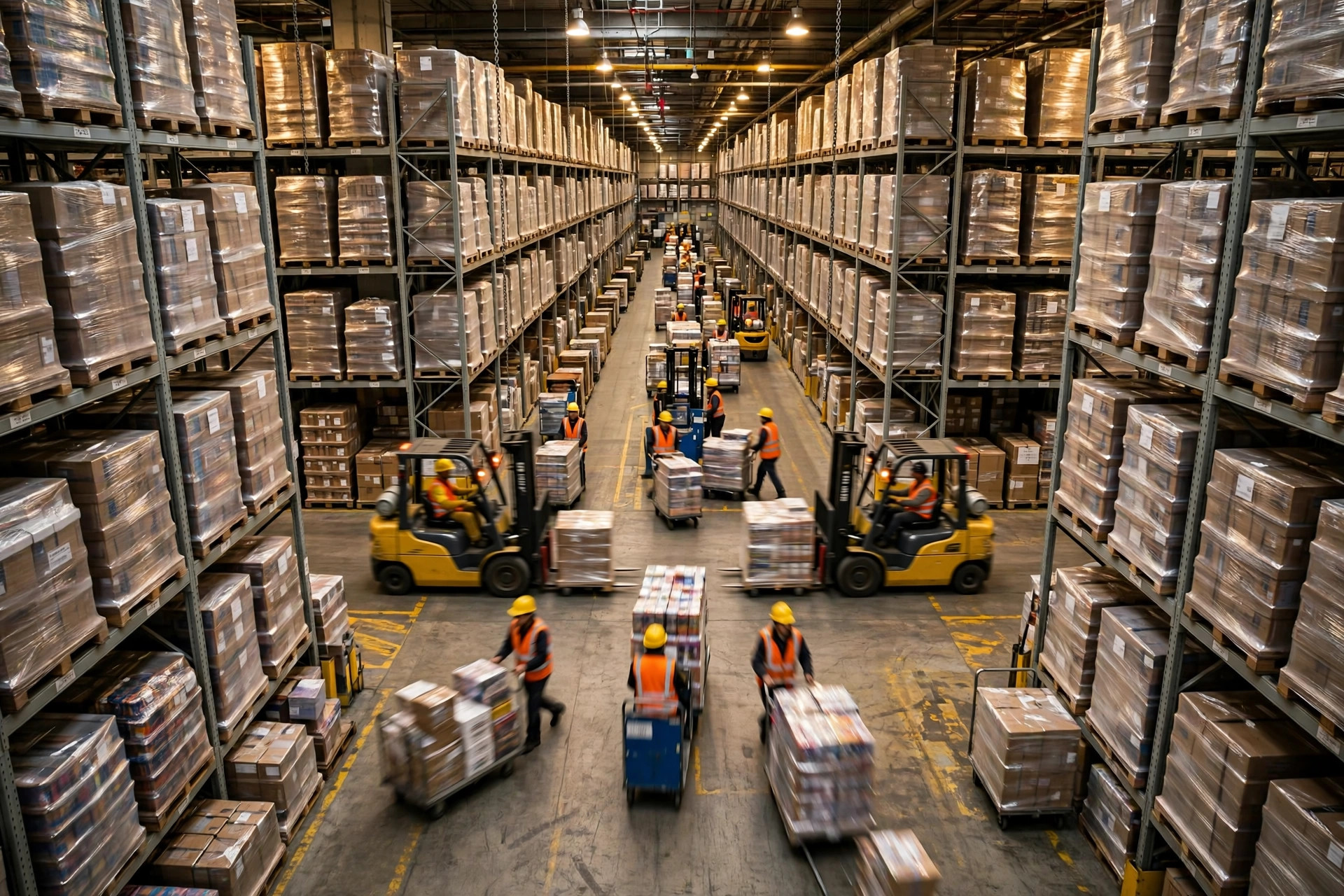
| Electric forklift with clamp or forks | Heavy units, high-bay putaway, bulk inbound and outbound | Sway at height, too much clamp pressure, temporary stock in the aisle | High investment, but one machine covers many models |
| Pallet plus rack storage | Everyday storage, first-in-first-out control | Stacking too high, overloading the lower unit, rework units mixed with good stock | One-time setup, saves hunting time for years |
Here is the counter-intuitive part: the biggest machine is often the wrong answer. A heavy forklift in an aisle crowded with temporary stock is less useful than a smaller machine on a clear, flat run with a properly sized pallet. Equipment has to be sized together with aisle width, rack height, and the dimensions of the models you actually carry. Buying on load capacity alone produces an expensive ornament.
A warehouse in eastern China learned the stacking version of this lesson during a rainy season. Short of floor space, the crew put two drum washing machines on a lower rack level and another small appliance on top of them. Days later, an outbound inspection found the lower machine's door seal deformed. The question nobody had asked before stacking was simple: which face of this machine is built to carry weight? The door face was not. Ask that question first and the loss never happens.
Three Pitfalls That Undo Good Handling
The first pitfall is stripping the packaging too early. Some warehouses open every carton at receiving to make inspection easy, then send bare machines through several more handling steps. Packaging is not just dust protection; it is the first layer of cushioning. My rule is to open only what inspection actually needs and leave the full packaging on until the last step before dispatch. Opening early saves a few minutes at receiving and adds risk to every move that follows.
The second pitfall is a pallet that is too small. A machine base that overhangs the pallet by a hand's width looks harmless until the forklift lifts and turns. The overhang becomes a lever arm, and the unit can shift or catch a corner. Pallets should be wider than the machine base, and straps should cross the center of gravity rather than just holding the top of the carton for show.
The third pitfall is mixing rework units with good stock. A rework refrigerator looks exactly like a good one from the outside, and once it drifts into the good-stock area, it can easily be shipped to a customer. Rework needs its own marked zone on the floor and a locked status in the WMS, so no picker can release it by accident. Memory fails when people are busy. A system lock does not.
There is one more number worth tracking, and it is not a purchase price: touches. Every extra transfer is another chance for a knock. Some warehouses move the same batch three or four times to save a little floor space, then pay for a deformed hinge that costs more than the space saved. The cheapest damage prevention is often not thicker packaging. In large appliance warehouse storage handling, fewer touches usually beat thicker packaging: one fewer transfer, a wider aisle, and a forklift route that does not force the driver to weave around temporary stock. Half a minute slower per move can mean one fewer ruined unit, and that arithmetic needs no ROI spreadsheet to understand.
New starters should learn this before they learn to drive: where the hinges sit on a refrigerator, how a washer drum hangs, why an air conditioner panel cannot take a sideways hit. Once people see the machine that way, their hands get more careful on their own. Driving skill can be trained. A sense of load direction has to be built first, or the training just teaches people to make the same mistake faster.
Is the money worth it? Watch one number: how many units land in the rework area each month. If that number falls, the warehouse is pointed the right way. If it stays flat, no new machine will fix the problem.
By Da Liu, Automation Engineer