Everyone's hyping dark stores right now. A store that never opens, 15-minute delivery — sounds like the next gold rush, right?
Hold on before you sign that lease. Ugly truth first: nine out of ten people can't do the math on a dark store, and half of those who can still die on SKU selection.
What a dark store actually is, in one sentence
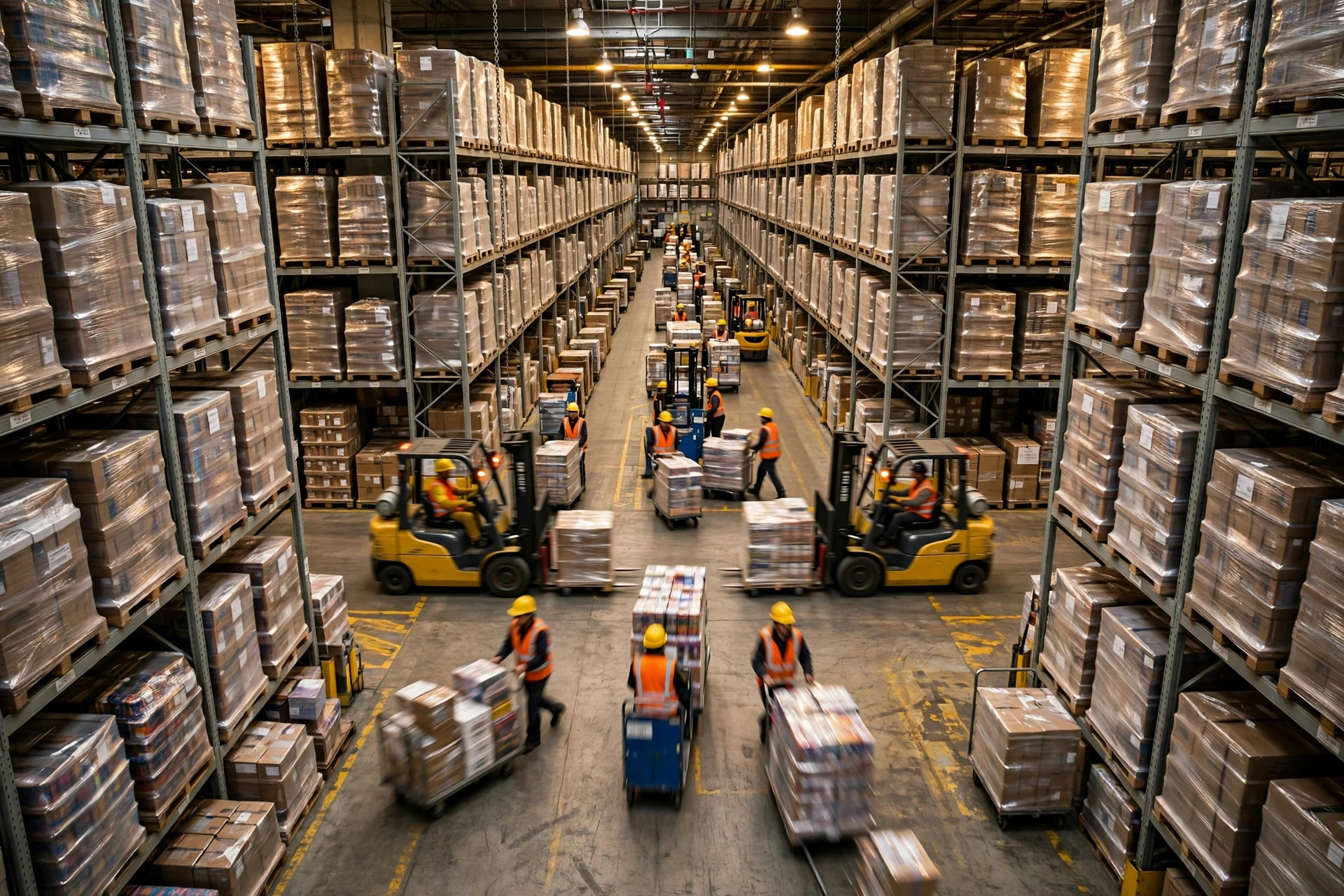
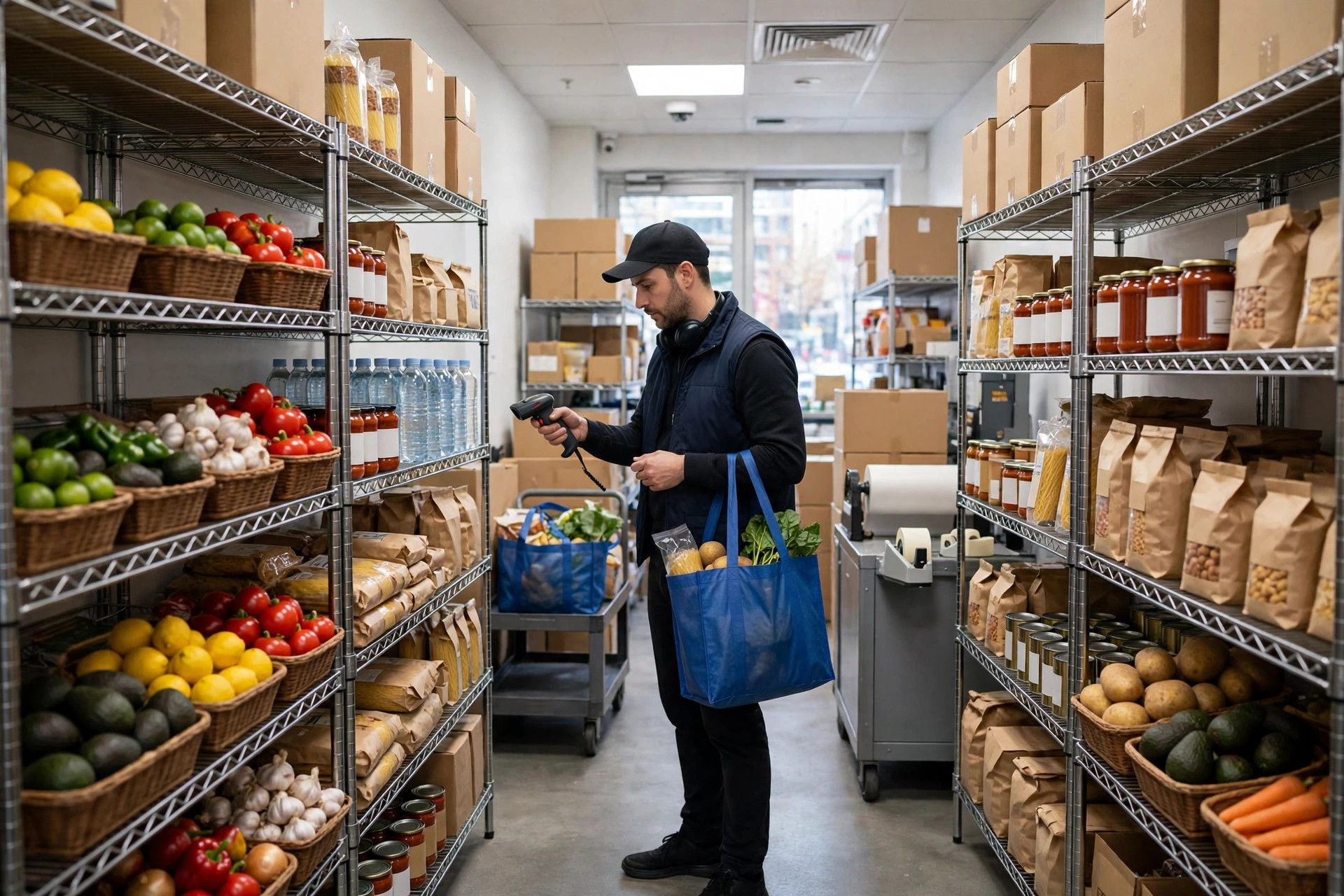
A dark store is a shop that doesn't let customers in. The shelves are for pickers, not shoppers. It does exactly one thing: take online orders, pick, pack, and deliver within 3–5 km in 15–30 minutes.
It's hot because quick commerce took off. Walmart started piloting dark stores in Dallas in June 2025 — no public access, no signage, stocked with its most popular online products, purely for fulfilling online orders, with another location planned for its Bentonville hometown (reported by Retail Dive and Grocery Dive). The CEO's stated goal: reach 95% of US households with delivery in under three hours by year-end. India is even crazier: Blinkit was operating 1,816 dark stores by Q3 2025, targeting 2,100 by year-end and 3,000 by March 2027 (per The Hindu BusinessLine). They're not playing the single-store game. They're playing density.
Get it? A dark store isn't a "small warehouse." It's a "fulfillment point that looks like a store." You don't judge it on sales per square foot. You judge it on cost per order and on-time rate.
Where the money actually goes
A dark store's cost structure has nothing in common with a suburban big-box warehouse:
Monthly fixed cost = prime urban/community retail rent + base labor (pickers and packers on shifts) + amortized systems (order intake, picking, dispatch)
Cost per order = monthly fixed cost ÷ monthly orders + variable cost per order (packaging + delivery fee)
See that division sign? That's the number-one killer of dark stores: the volume ramp. In the first 3–6 months, order volume is often only 30–40% of projections, but the landlord doesn't discount your rent one cent. During that stretch your cost per order runs two to three times what it'll be at full volume. Plenty of dark stores don't die on the model — they die on cash flow during the ramp.
A seller friend of mine in LA sells Southeast Asian snacks. In 2024 he converted a street-level shop in Koreatown into a dark store promising 30-minute delivery within 3 km. Rent, labor, systems — all set. Month one: he stocked 800 SKUs, pickers got lost between shelves, on-time rate barely cleared 70%, and every bad review said the same thing: "promised 30 minutes, took an hour." Month two he did one thing: cut to 350 SKUs, re-laid the pick path by sales velocity, moved every bestseller into the first third of the route. Same rent, same headcount, on-time rate back above 95%.
So yeah — rent is just the ticket to enter. The real variables are volume and SKU.
One hidden cost most people miss: delivery. Dark store orders need instant-delivery capacity — either your own rider team or a third-party on-demand fleet. Your own team gives you lower per-order cost but rigid scheduling; slow days mean you're paying idle riders. Third-party is flexible pay-per-order, but the per-order cut eats margin directly. My take: go all third-party during the ramp, and only build your own team after volume holds steady for three straight months. Don't hire an army on day one.
Dark store vs. MFC vs. 3PL, side by side
| Option | Investment | Speed | Control | Right for |
|---|---|---|---|---|
| Own dark store | High (rent + labor + systems) | You call the shots, 15–30 min achievable | Full | Own-brand sellers with dense order clusters |
| 3PL fulfillment | Low, pay per order | At the 3PL's mercy, peak season can mean queues | Weak | Early-stage sellers with unstable volume |
| Platform warehouse (e.g., FBA-style) | Medium | Reliable but no instant delivery | Medium | Standard products living off platform traffic |
| MFC / automated micro-fulfillment | Very high (equipment capex) | Extremely fast and consistent | Full | Players doing 10k+ orders a day with capital |
Don't compare a dark store against a 3PL on cost per order — they're not even the same sport. A 3PL answers "who ships my stuff." A dark store answers "can my customer get it in 30 minutes." If you need the second, a 3PL can't help you. If you need the first, a dark store is a sledgehammer for a nail.
The counterintuitive part: the biggest trap isn't rent, it's SKU selection
Everyone assumes the hard part is expensive downtown rent. Wrong. Rent is printed on the contract — you knew on signing day. The real hidden trap is SKU selection.
The more your shelves look like a "mini supermarket," the faster you die. More SKUs mean longer pick paths, more time hunting for items, higher stockout rates — and your 15-minute promise collapses. A dark store runs on "narrow and deep": stock only your top 300–500 proven sellers, not your entire catalog. Long-tail SKUs stay in your main warehouse or with your 3PL. Don't let them clutter the dark store.
Pick paths work the same way, in reverse. A retail store's layout is designed to make people browse and buy more. A dark store's layout is designed to make people walk less and pick faster. Bestsellers up front, frequently-bought-together items side by side, a single-loop route with no backtracking. Store-merchandising thinking applied to a dark store is a guaranteed way to lose money.
Who should do it, and who should stay away
Worth doing if you check all three boxes:
First, own brand with high-repeat categories — fresh food, daily essentials, baby products, snacks. Customers will pay a premium for speed or order often enough to make it work. If you sell one-off low-frequency stuff, speed buys you nothing.
Second, enough order density in the target zone. Pull your last 90 days of orders, plot them by delivery zip code on a heat map, and check whether a 3 km circle consistently produces dozens of orders a day. Without density, empty rider miles will eat you alive.
Third, unit economics that survive the ramp. Do the math yourself: gross margin per order minus cost per order has to stay positive — and use the ramp-period cost per order, not the full-volume one. Everyone who modeled on full volume died in the first six months.
Stay away if: you live purely off platform organic traffic with no owned audience (you can't control order density); you run thousands of SKUs with a heavy long tail (a dark store can't hold your ambition); your average order value is so low and margins so thin that a few dollars of fulfillment cost per order kills you (you can't afford fast).
One thing you can do tomorrow: don't sign anything yet — draw that order heat map first. If no 3 km circle shows dozens of daily orders, shelve the dark store idea and go get your 3PL math straight instead. I tested this approach myself — the rent money you'll save is very, very real.
By Ah K, E-commerce Seller (5 yrs)