In the last two years I have walked through more than thirty warehouses, from large 3PL facilities in California to self-operated e-commerce fulfillment centers in the Midwest. The most common complaint was not labor shortage, and not slow systems. It was: "Our warehouse has traffic jams every single day." Search how to reduce warehouse traffic congestion and you will find safety checklists and generic tips—but almost nothing that diagnoses why congestion happens in the first place. This article is my attempt at a diagnosis: five root causes, each with a way to find it in your own building, a way to fix it, and the trade-off nobody tells you about.
What the evidence keeps telling me is that warehouse congestion is rarely an accident. It is structural—the compound effect of five fixable problems running for months or years.
Root Cause 1: Appointment Bunching—the "Rush Hour" at Your Dock Doors
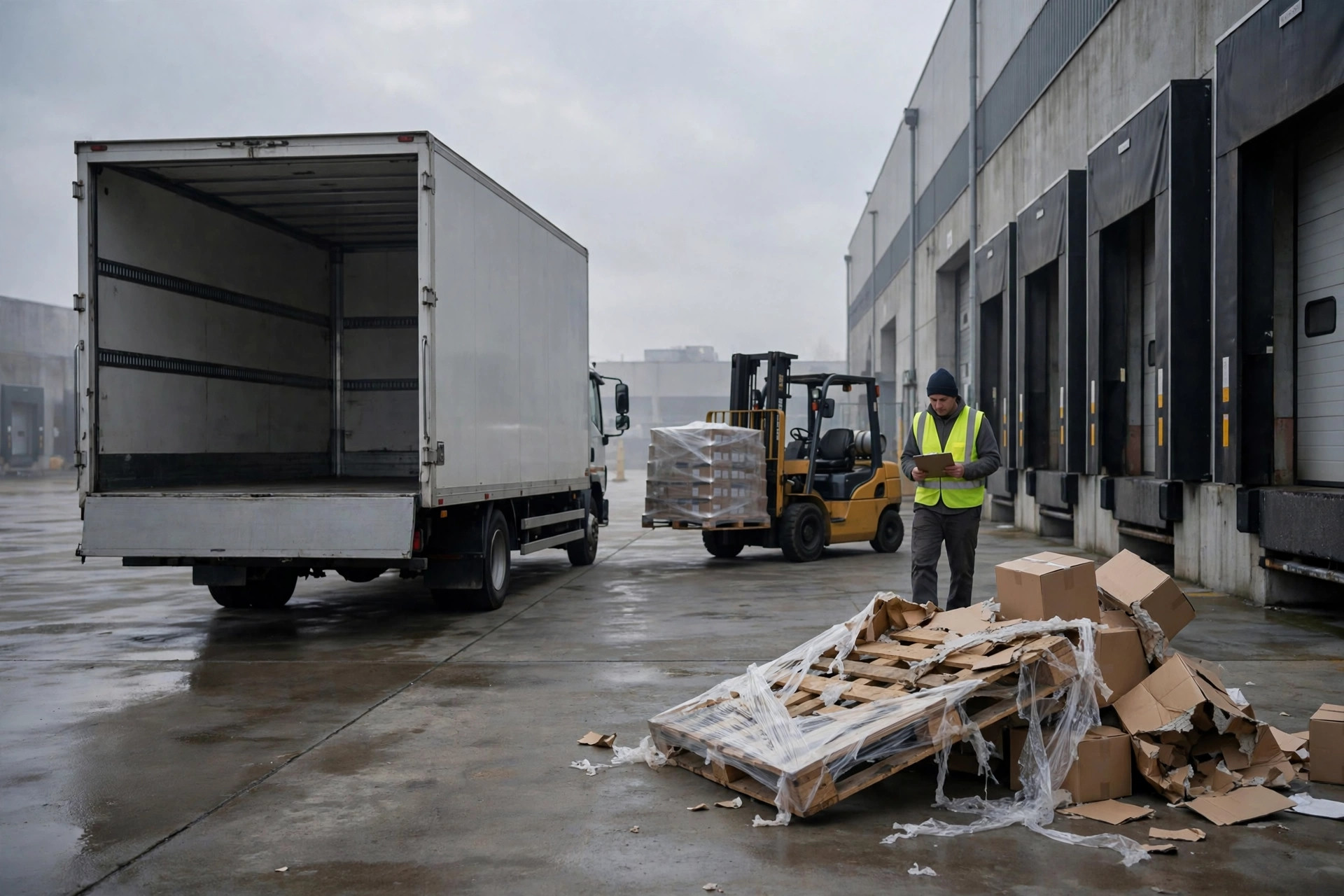
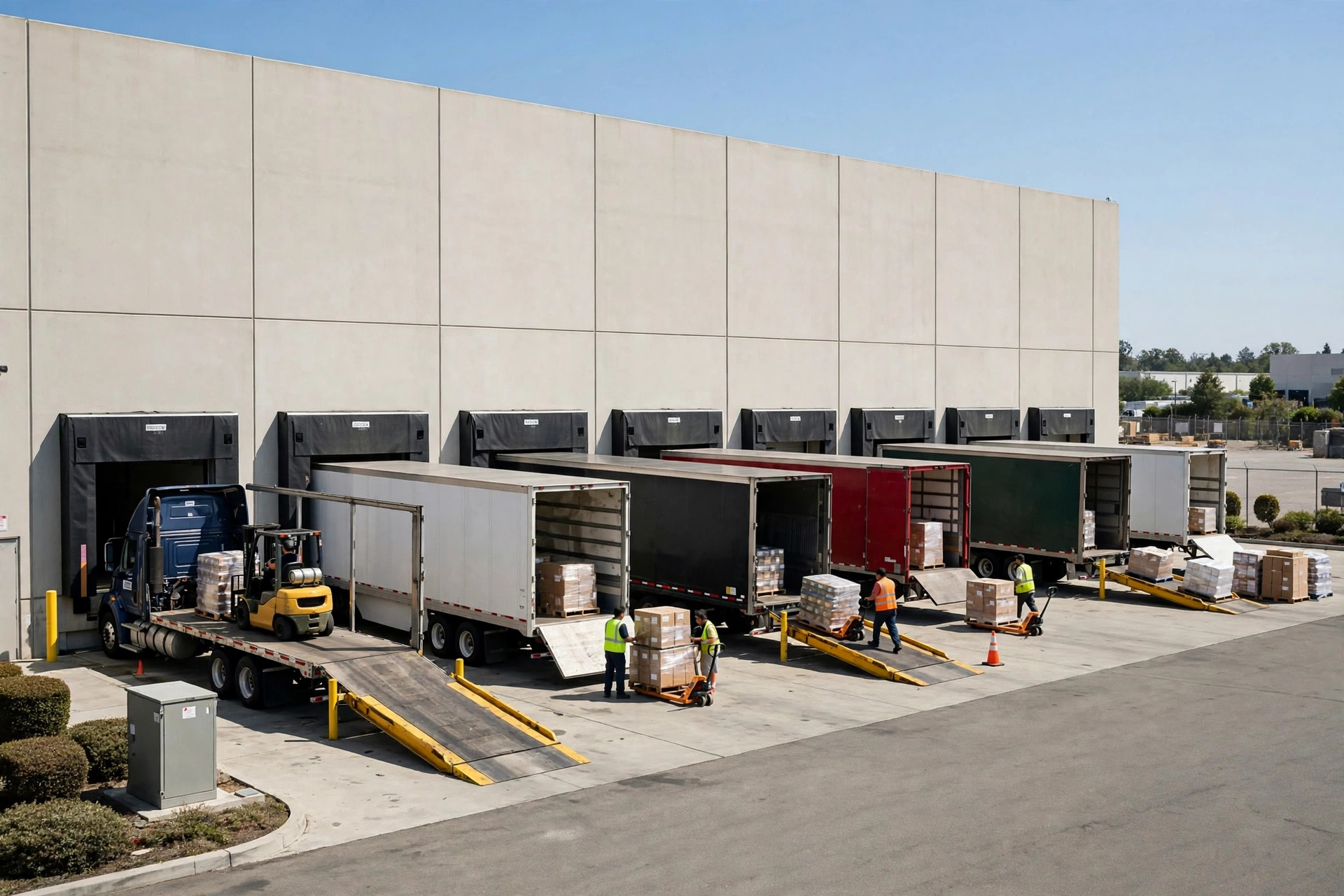
Most warehouses offer two-hour appointment windows. Carriers, chasing upstream cut-off times, all book between 8 and 10 a.m. Every dock door is jammed from 8 to 10 while drivers queue in the yard, and the same doors sit empty after 3 p.m. This is not a capacity problem. It is an arrival-distribution problem. Queuing theory has a robust result here: the more concentrated arrivals are, the longer the wait—largely independent of service capacity. More doors cannot fix everyone showing up at once.
Last fall I saw this at a 3PL in Ontario, California—roughly 120,000 square feet, 14 dock doors. The gate opened at 8 a.m., appointments stacked almost entirely between 8 and 10. We timed the choke point: drivers waited an average of 47 minutes from gate-in to start of loading, worst case 2 hours 10 minutes. One driver parked on the street while waiting, got a ticket, and mentally billed it to the warehouse.
The diagnostic is simple. For two weeks, record three timestamps per truck—arrival, start of loading, departure—and plot an arrival histogram. The bottleneck identifies itself; no software required.
The fix: cut slots from two hours to 30 minutes; open the yard at 6 a.m. to absorb the earliest arrivals; push late arrivals to the next open slot instead of letting them cut in. Two months later, average driver wait was under 15 minutes.
The trade-off: finer slots double the dispatcher's workload, and someone always runs late. Here is the counterintuitive part—a dock that "looks less busy" is the sign the fix worked. Once the peak flattens, the utilization curve flattens too, and the KPI report looks worse even as throughput and on-time performance climb. Explain this to management before they conclude you "lost business."
Root Cause 2: Slotting Drift—Your ABC Analysis Is a Year Old and Fast Movers Keep Drifting Farther Away
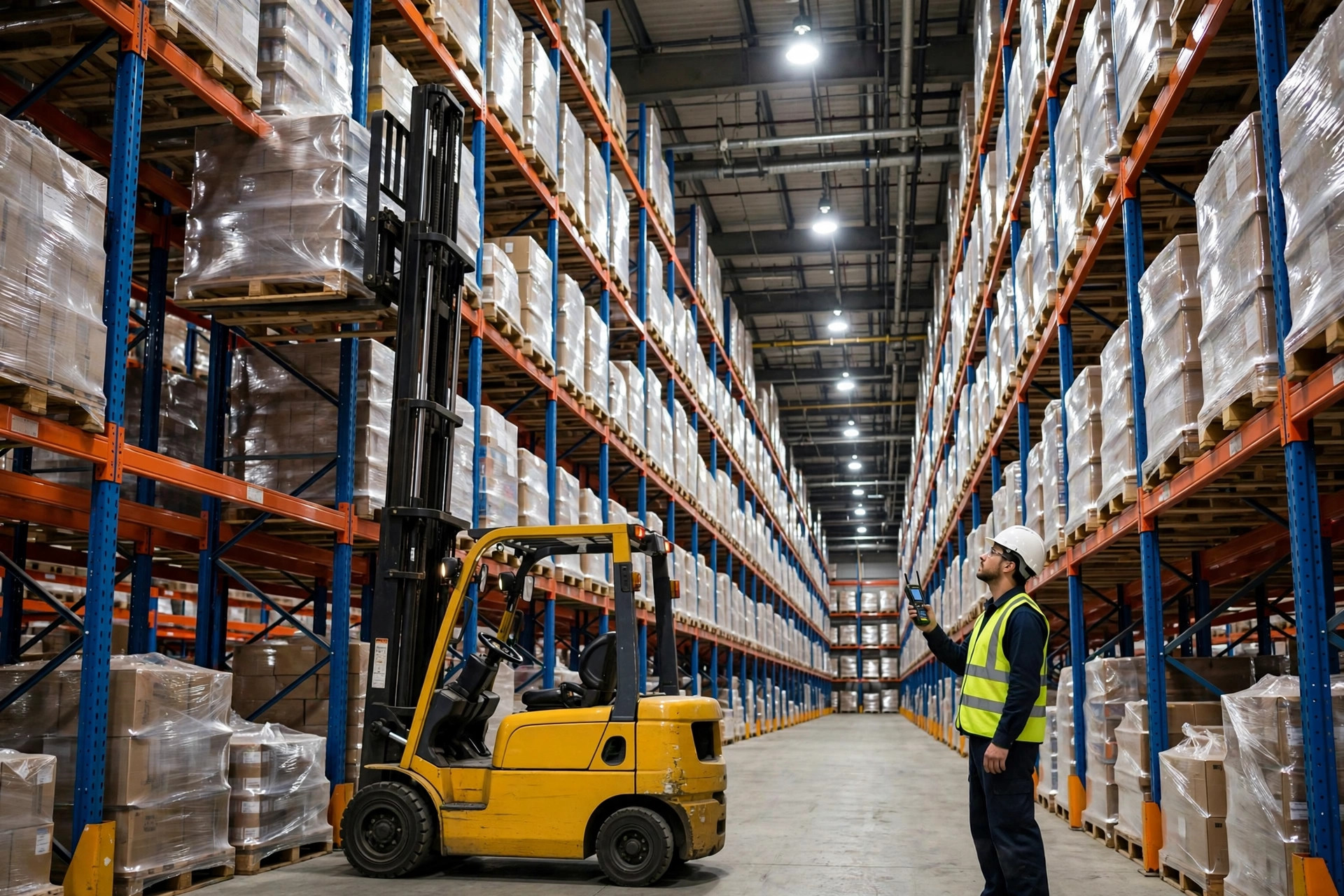
ABC classification is dynamic: winners fade, new products explode. But most warehouses slot once and leave it alone for a decade. Fast movers drift toward the far aisles, and pick paths get a little longer every year. I call this slotting drift—the congestion with no owner and no single dramatic incident. It never causes one big jam; it just makes every walk longer until aisle traffic doubles.
Before the 2024 peak, I helped a Midwest e-commerce warehouse—about 3,000 orders a day—read their data: of their top 50 SKUs by velocity, 31 sat in the two aisles farthest from packing. Pickers walked roughly 2.5 extra kilometers per person per day. Not an individual performance problem—a systemic lengthening of every route. Main-aisle traffic density doubled, yielding at intersections became routine, and congestion simply "grew" out of the layout.
Diagnose with a travel heat map; no software purchase needed. Print the floor plan, have a supervisor shadow shifts for a week, and color routes by frequency. Or export three months of pick lines from the WMS, aggregate by location, and apply conditional formatting in a spreadsheet. If the hot locations sit far from outbound, you have your evidence.
The fix: re-slot quarterly, but only the top 20% of SKUs—never the whole building. Do it on an off-peak weekend with temporary labor so veterans keep working uninterrupted.
The trade-off: re-slotting costs half a day of downtime and breaks veterans' "I know where everything is by memory" habit, so speed temporarily drops. One number decides: average pick distance of your fast movers. Two quarters of increase, and the payback covers the cost.
To Truly Reduce Warehouse Traffic Congestion, Look at the Schedule Before the Floor Plan
A pattern is emerging: congestion hides in timetables, not floor plans. The next three causes confirm it—each is too many parties wanting the same resource at the same moment.
Root Cause 3: Wave Timing—Pick Waves and Replenishment Waves Colliding in the Aisles
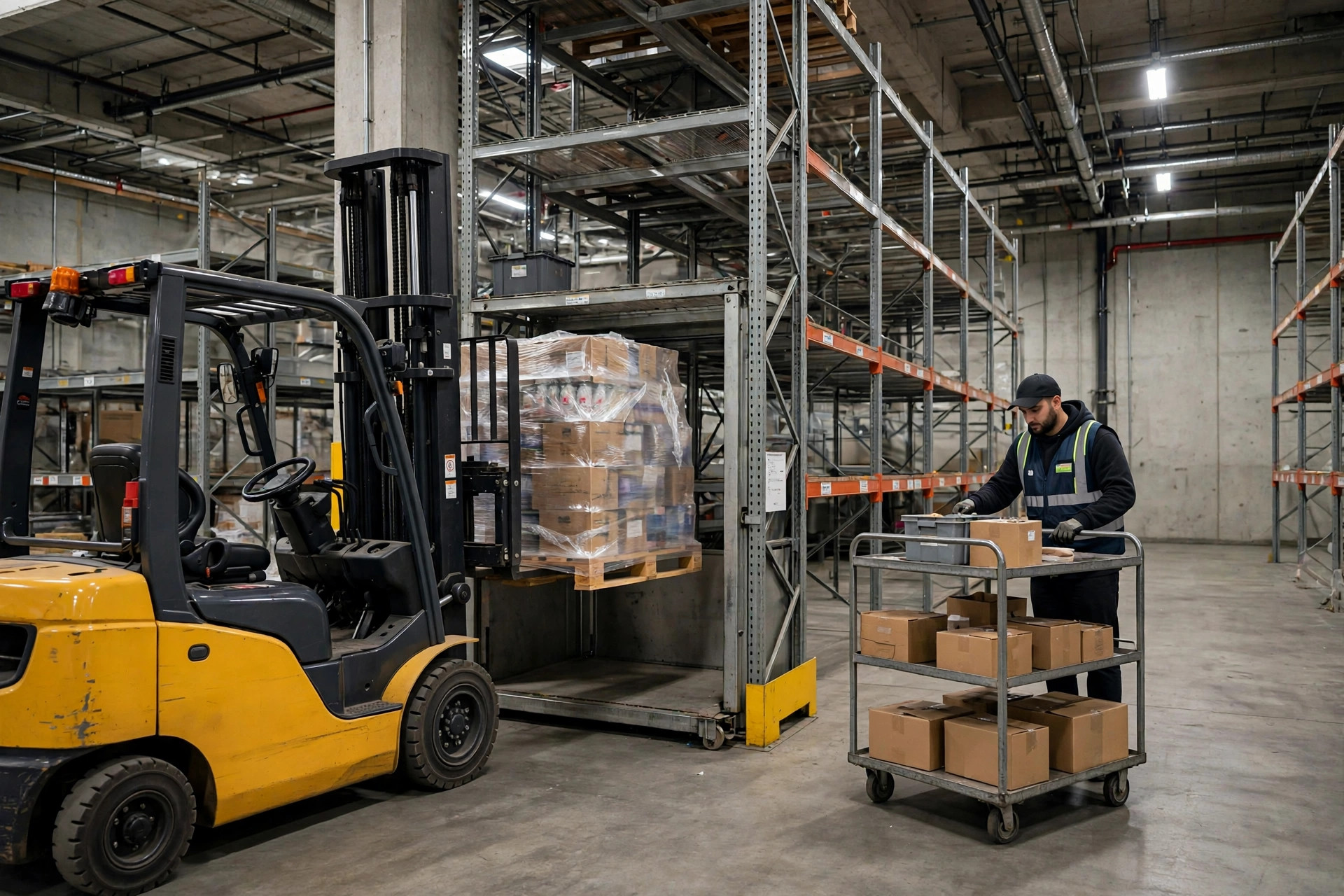
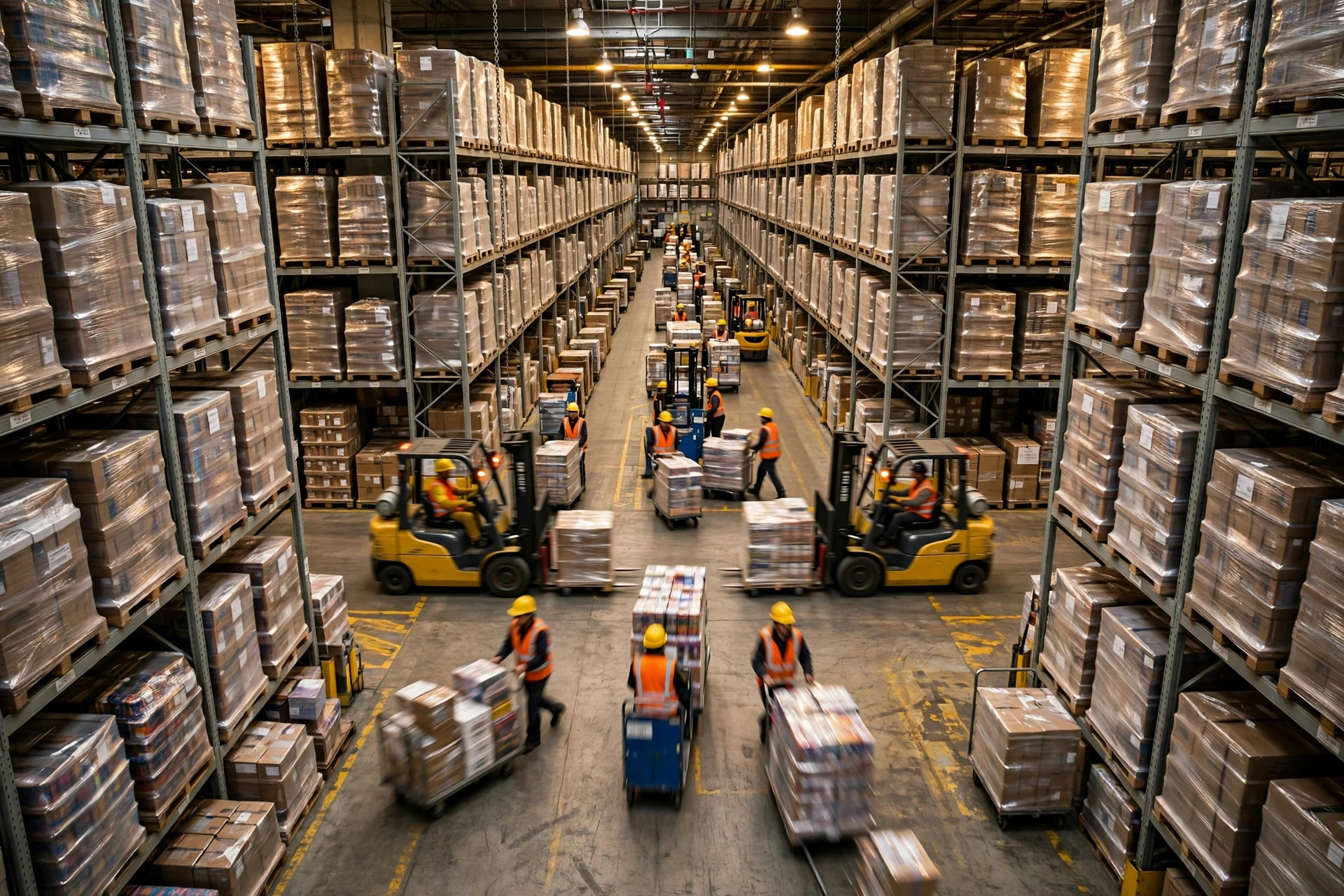
Picking and replenishment are two consumers of the same aisles and the same equipment. In many warehouses the WMS releases the pick wave at 8 a.m.—and the replenishment wave at 8 a.m. too. Forklifts hauling pallets meet pickers pushing carts head-on, and in a narrow aisle nobody moves. Classic resource contention, and the fix is not wider aisles. It is staggered timing—one of the cheapest answers to how to reduce warehouse traffic congestion.
Diagnose with choke-point timing. Take the two worst aisles and record equipment dwell time versus time lost to yielding, three days running. If yielding exceeds 30% of total time, you have a confirmed wave collision.
The fix: release replenishment an hour before the pick wave—or push it to nights. Daytime emergencies go as single-pallet direct drops, never riding the big wave.
The trade-off: earlier replenishment demands more accurate forecasting, or you re-handle mis-staged pallets. And the counterintuitive judgment: sometimes "late replenishment" is cheaper than "colliding replenishment." A picker waiting five minutes for a pallet beats jamming an aisle for 40 minutes a day. Judge by the total, not by the replenishment-on-time metric alone.
Root Cause 4: Staging Overflow—Your Staging Area Became a Permanent Storage Yard
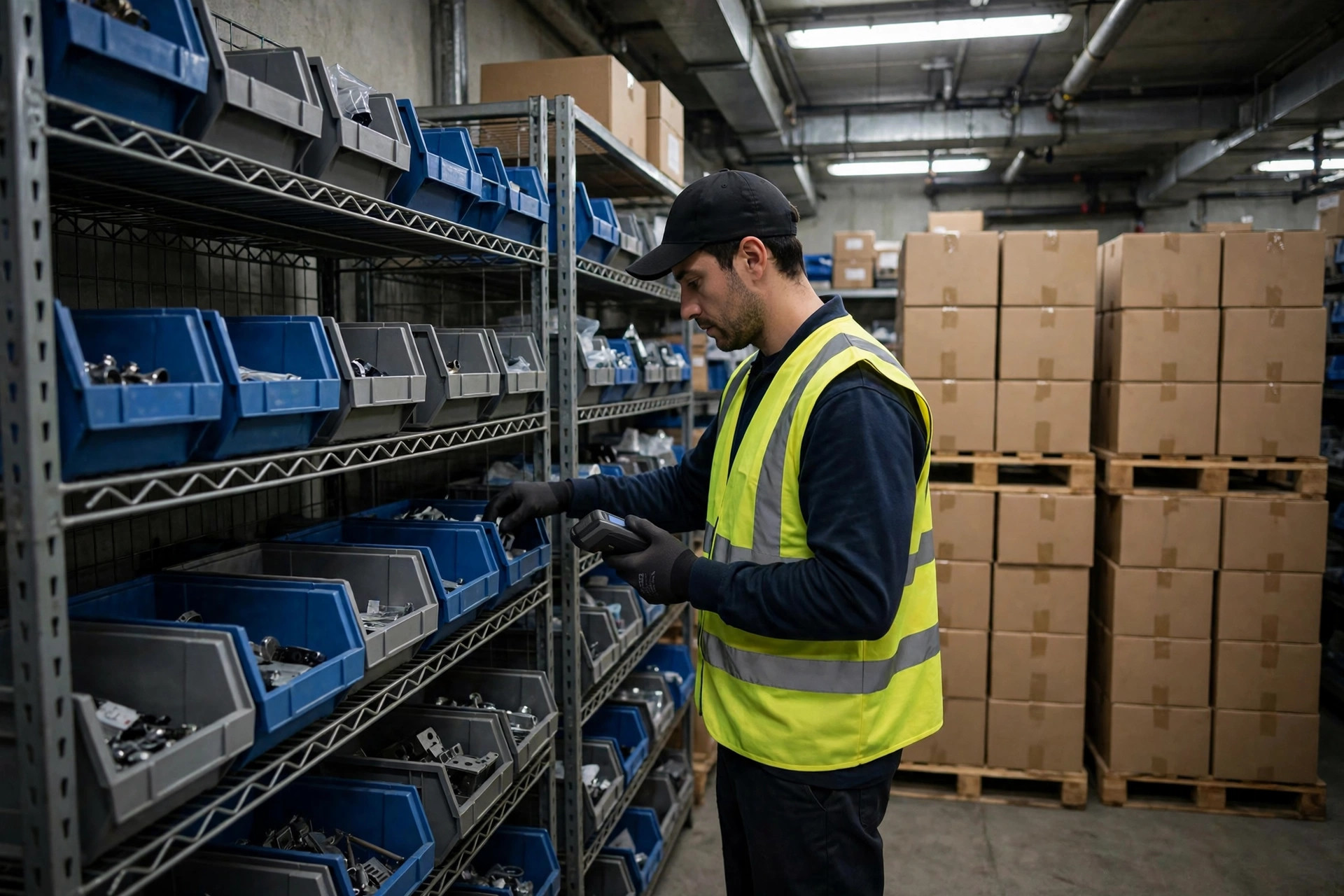
Staging areas are designed for flow-through. In many warehouses they quietly become "where freight goes when it fits nowhere else." Pallets sit two or three days, overflow eats half the main aisle, and forklifts go one-way. The bigger the staging area, the stronger the "just put it here for now" reflex—space shapes behavior, a finding organizational research keeps reproducing.
At an apparel e-commerce warehouse in late 2023, staging was designed for 80 pallets and routinely held 140 at peak, spilling into the main aisle. Before anything structural, they tried one thing: every staging pallet got a "birth tag" with its arrival time, and anything unmoved after 24 hours was called out in the morning huddle. Within a week the overflow was gone—not from added space, but from the concept of expiry.
Diagnose by counting staging pallets at end of shift daily for two weeks and plotting the curve. The share of days above 80% of design capacity is your overflow frequency. Above half the days, your staging area is no longer staging—it is the warehouse's appendix.
The fix: give staging a shelf life—24 or 48 hours—with escalation for overstays. Physically nail the boundary with striping and bollards: overflow equals violation.
The trade-off: strict discipline makes receiving complain about "nowhere to put things," and pressure migrates upstream. The key judgment: staging is both a shock absorber for congestion and an amplifier of it. An unmanaged buffer stores congestion and releases it all at once. Buffer size must match the discipline you will enforce.
Root Cause 5: Shift-Change and Meal Overlap—Labor Waves Out of Sync with Equipment Waves
Many warehouses change shifts on the hour and feed people on the hour. Several times a day this creates 30-minute windows when the outgoing crew has left, the incoming crew is not up to speed, and equipment keeps arriving on the old cadence—labor trough meets equipment peak, and aisles fill with "trucks but no people" or "people but no trucks." The most invisible of the five: it never jams one spot, it throws the whole rhythm off for half an hour.
Diagnose by plotting headcount-on-floor against equipment task volume on one timeline. The overlapping troughs are your root cause. The data already lives in timekeeping and the WMS—export and align timestamps, no new collection needed.
The fix: stagger shift changes by 15 to 30 minutes (Crew A at 7:45, Crew B at 8:15), split meals into two sittings, and let wave releases follow the labor curve instead of the clock.
The trade-off: staggered schedules complicate rostering and staff grumble at first. The payoff resists KPIs—"it feels less congested" does not chart well. Pilot the single worst shift-change window for two weeks, let the timing data make the case, then roll out.
Do the Math: What Warehouse Congestion Really Costs
Each fix above is cheap, but "how expensive is the congestion itself" deserves its own calculation. Without it, management will always feel "a little waiting is fine."
The framework: congestion cost = (minutes lost per person per day ÷ 60) × hourly wage × headcount × working days per year. An illustrative example—plug in your own numbers:
| Item | Assumption |
|---|---|
| Picking and material-handling staff | 30 people |
| Minutes lost per person per day (waiting, detours, yielding) | 40 min |
| Average hourly wage (fully loaded) | $20 |
| Working days per year | 300 |
| Annual cost | 30 × (40/60) × 20 × 300 = $120,000 |
The $120,000 is illustrative; the framework is real. And the contrarian judgment tying it together: congestion is rarely caused by "not enough equipment"—adding equipment usually makes it worse. Aisle capacity is fixed; one more forklift adds conflict points, not throughput. Sort out the right-of-way before buying vehicles. The cheapest and fastest lesson of the five, and the easiest to get wrong when "buy equipment to fix everything" thinking takes over.
Ranked by return on effort: appointment staggering (near-zero cost) → staging discipline (zero cost, pure management) → wave staggering (half a day of configuration) → shift staggering (two-week pilot) → ABC re-slotting (half a day of downtime plus labor). Start with the free ones, verify each with choke-point timing, then move on.
Closing Thought: What Exactly Is Stuck—Freight, or the Schedule?
Warehouse traffic jams follow the same laws as city traffic: congestion is rarely about too little road, almost always about too many people wanting the road at once. Four of the five root causes are scheduling problems; only one is a space problem. That ratio speaks for itself.
So the next time a forklift blocks the main aisle and you have to stand and wait, ask one question: what is stuck here—the freight, or the timetable we wrote ourselves? If the answer is the timetable, then how to reduce warehouse traffic congestion may cost far less than you think.
By Dr. Chen, Supply Chain Researcher