Let me be blunt up front: Angola coffee export warehousing is not a game a small warehouse like mine can win by out-spending the big players. We cannot afford fully automated drying lines or climate-controlled halls, and frankly, we do not need them. What decides whether Angolan coffee makes it from the highland growing areas to Luanda Port in sellable condition is much more basic: drying, grading, and moisture control, done by people who actually care. This is the small-team version of that chain, no corporate gloss.
Here is our predicament, so you know where I am coming from. We run a warehouse of a few thousand square meters with a team of about a dozen people, and every month's budget gets argued over line by line. Our first brush with Angolan coffee came through a friend in African trade who asked us to sort out a shipment: beans from the central highlands, arriving in wildly uneven condition. Some were dried brittle, some still felt damp. That one job taught me the lesson this whole article hangs on: coffee export warehousing is not a contest of warehouse size, it is a contest of respect for moisture and time. If moisture gets away from you, everything after that is just working for the mold.
Angola Coffee Export Warehousing, Step One: Drying Is About Moisture, Not Sunshine
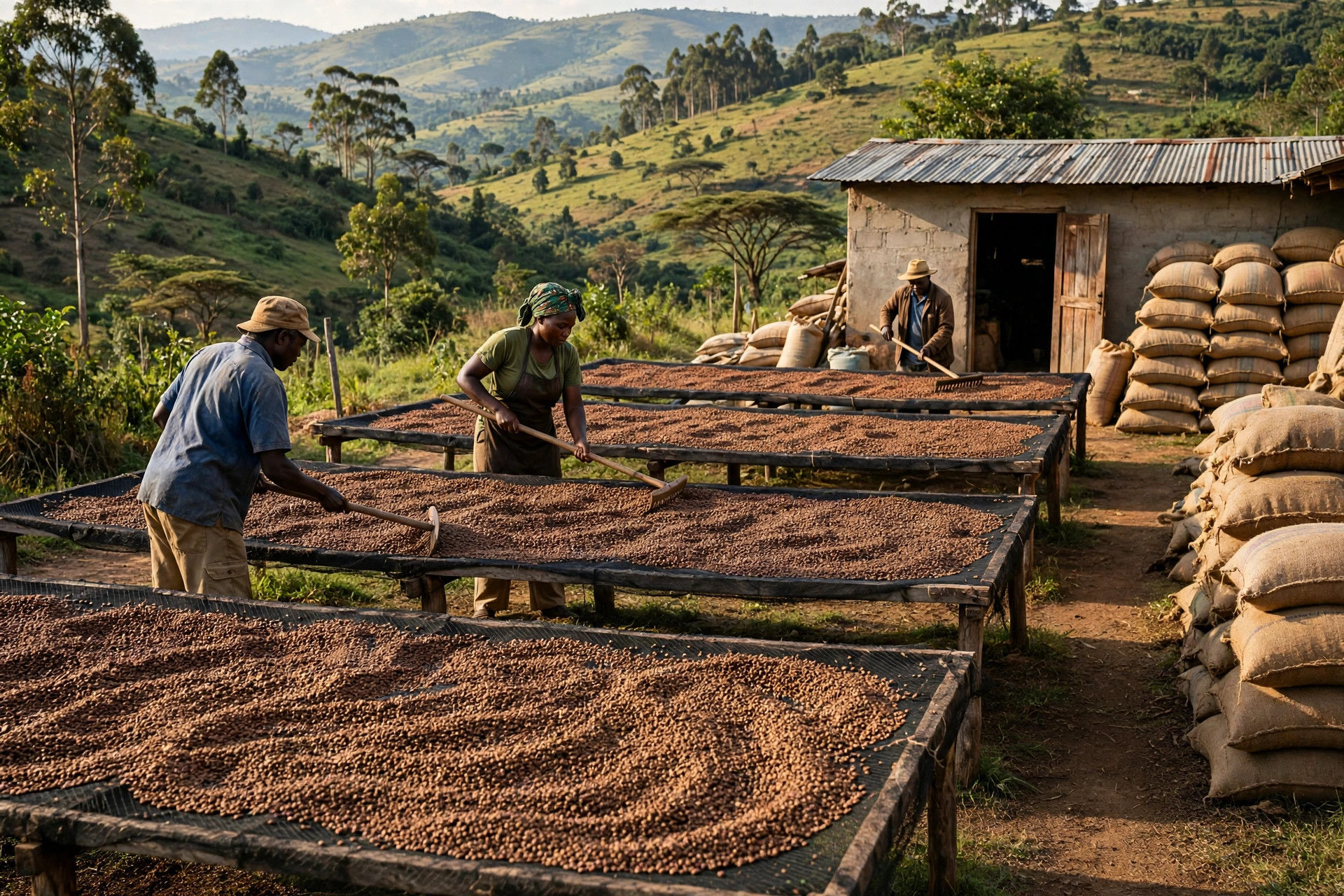
Here is the conclusion first: in drying, you are not drying beans, you are managing a moisture curve. The Angolan highlands give you strong daytime sun and cool nights, which is actually a gift for drying. What ruins it is laziness. Spread the beans too thick and the top dries while the inside stays wet. Leave them out too late and one afternoon rain can wipe out three days of work.
I once watched a highland cooperative do this beautifully, with no fancy equipment at all: raised drying beds, thin layers, frequent turning, and moisture checks at fixed times every day. Their rule was simple and non-negotiable: no bagging until moisture reached the range the buyer and the destination market required. When in doubt, they asked the buyer instead of guessing. That rule looks slow and old-fashioned, but it saves the biggest money in this business: rework and claims.
One detail trips up beginners more than any other: get the drying beds off the ground. Beans spread directly on the earth pick up ground damp, dust, and whatever else is down there. Racks, mats, raised mesh beds, anything works, as long as air moves and the beans stay off the soil.
Angola Coffee Export Warehousing, Step Two: Grading Is Pricing Power
Grading is where a lot of people shrug and say it is just sorting beans. It is not. It is pricing power. Mix a whole harvest together and you get a mixed-lot price. Separate it by size, defects, and uniformity, and the top grade earns a clearly better price while the lower grade can still find the right buyer, instead of dragging the whole lot down.
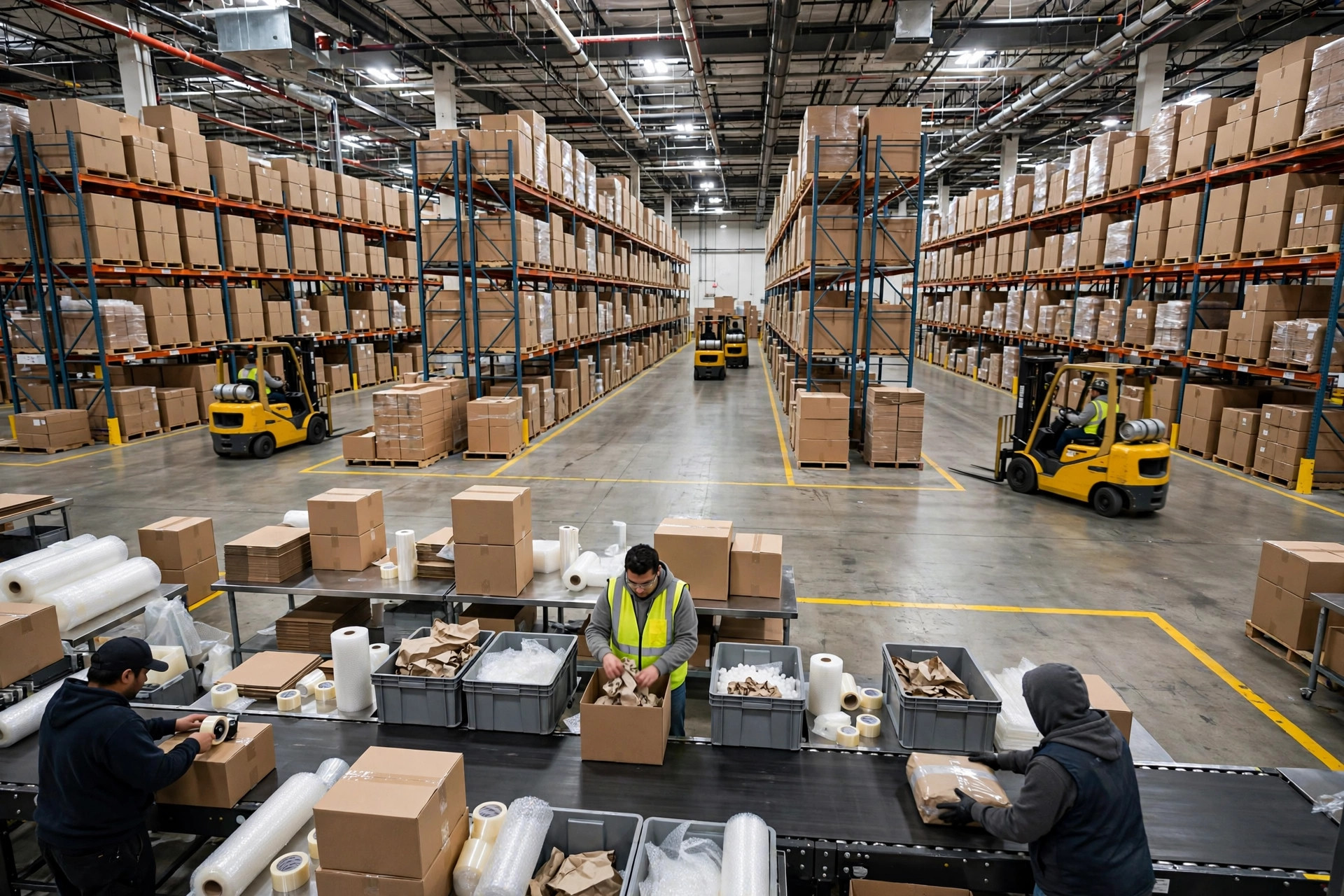
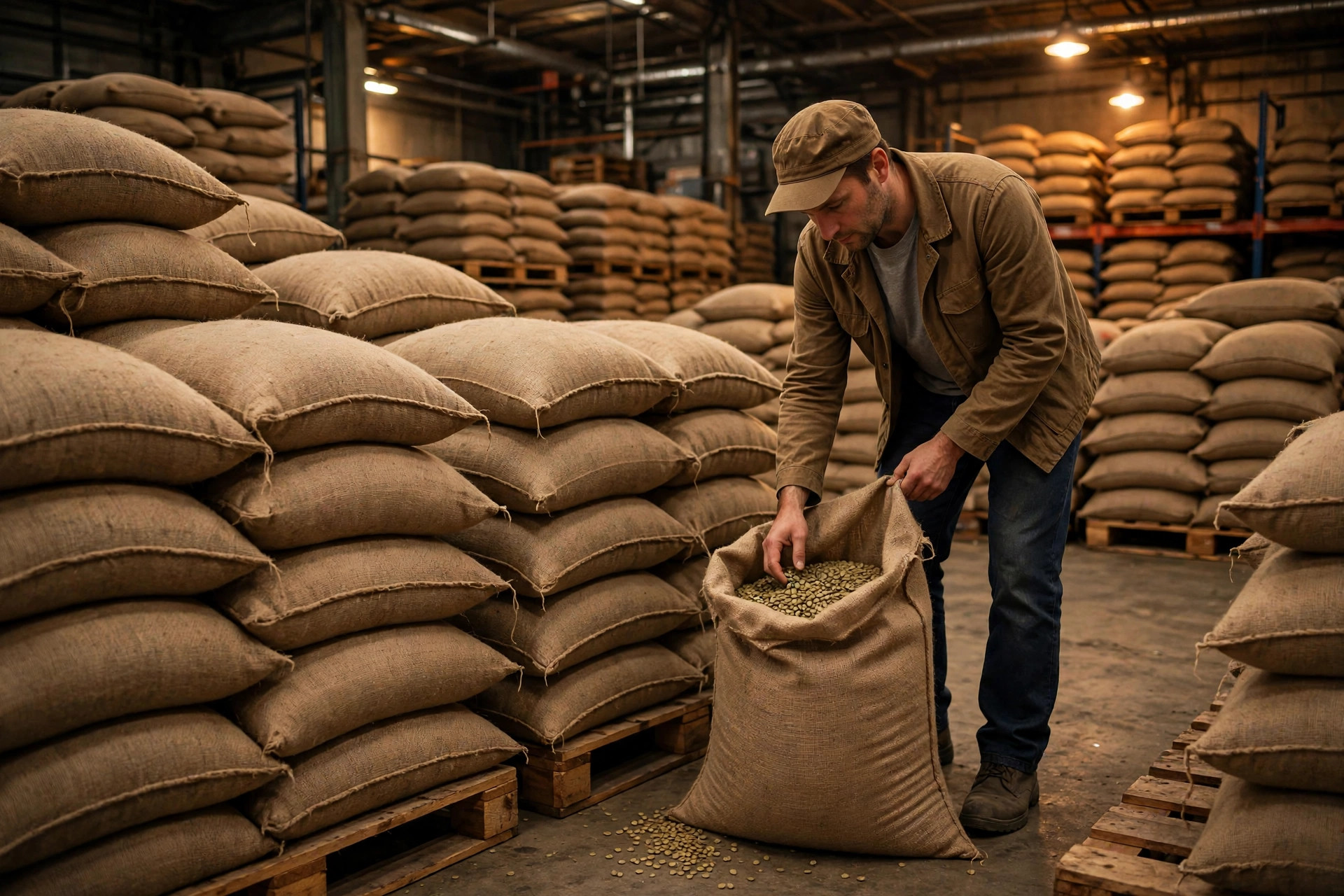
Our method is low-tech but it works: screen for size first, then hand-sort defects. When we sort, we log defects by type, not as a vague pile of bad beans: moldy beans, broken beans, immature beans, foreign matter. Logging by type pays off upstream. A lot heavy in immature beans tells you to flag harvesting. A lot heavy in breakage tells you to check whether hulling was set too aggressively.
Here is the second case, and it still stings to retell. A small exporter friend once mixed two lots from different growing areas to save time, reasoning that it was all Angolan coffee anyway. The buyer checked the shipment, found inconsistent flavor, docked the payment, and trusted him less on the next order. He learned the hard way: different areas, different lots, even different drying yards, get stacked separately, labeled separately, and shipped separately. Grading is not fussiness. It gives every lot a clear identity, and only then will a buyer pay for it with confidence.
Moisture Control in Storage: Coffee Fears Damp and Stale Air, Not Heat
Once beans reach the warehouse, the enemy is not heat. It is damp, stale air. Luanda is a port city and the air carries real humidity. In a poorly ventilated warehouse, beans absorb moisture, a musty note creeps in, and the lot is done. Mold damage cannot be fixed after the fact, no matter how nicely you repackage it.
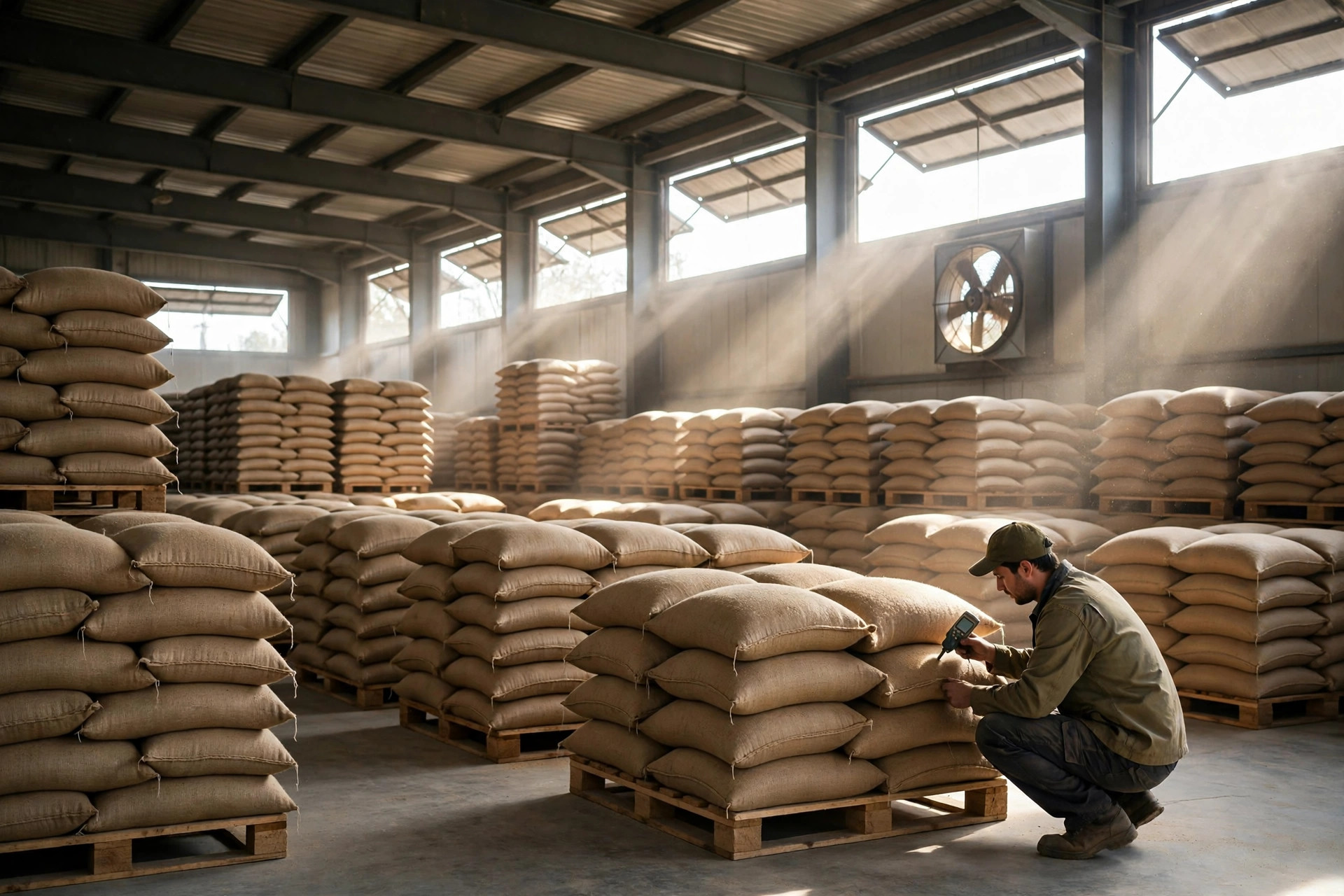
Our moisture-control checklist is one any small warehouse can copy. First, keep bags off walls and floors: pallets underneath, a ventilation gap along the wall, never stack bags flush against concrete. Second, put simple temperature and humidity gauges in the warehouse and log readings morning and evening; numbers do not flatter anyone. Third, do not use torn sacks: a little spilled coffee is trivial, but moisture uptake and odor pickup are not. Fourth, first in, first out, with no new stock piled on top of old stock, and the lot card traveling with the goods.
Consolidation and Port Handover: For Small Volumes, Shared Containers Are a Way of Life
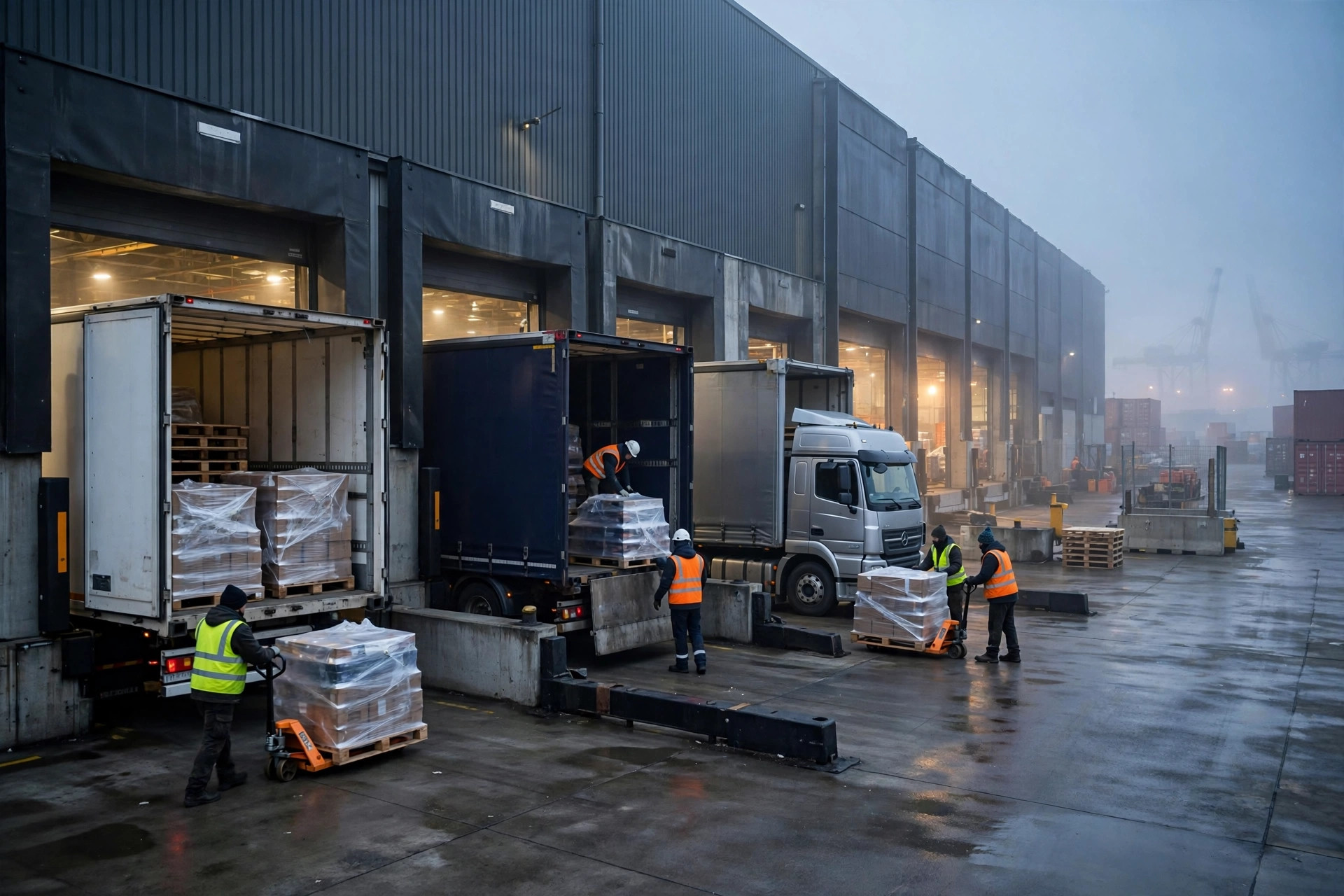
For a small team exporting Angolan coffee, consolidation is not a compromise, it is how you survive. A full container sounds great, but waiting months to fill one leaves beans sitting in storage, accumulating risk. With shared containers, the game is timing: when goods enter the port-area warehouse, when documents are complete, and when the container cutoff hits. Those three dates have to line up.
Our low-tech answer is a backward-planning sheet pinned to the wall: start from the sailing date and work backward. Packing must finish days before cutoff, grading re-checks and moisture re-tests must finish days before packing, and the document checklist must be ticked before that. On documents, export papers, origin-related materials, and buyer-required inspection files, always confirm the latest requirements against official sources, since policies change and an old checklist can leave cargo stuck at the port, racking up storage and demurrage risk.
Running the Numbers: Every Dollar on Moisture Control Saves a Claim
The table below compares two approaches for the same lot. Figures are illustrative working estimates, not official quotes; actual costs depend on your contracts and the port's published terms:
| Approach | Upfront effort | Biggest risk | Outcome |
|---|---|---|---|
| Moisture checks, graded lots, raised and ventilated storage | Labor, lot cards, simple gauges, low cost | A few extra days of work | Clear lots, buyers willing to reorder |
| Rough drying, mixed lots, bags stacked against walls | Looks cheaper in labor | Mold, payment deductions, lost buyers | One bad lot can eat several orders' profit |
The Counterintuitive Call: Slow Is the Fastest Way Out for a Small Warehouse
Here is the counterintuitive judgment, and I know some readers will not like it: for a small warehouse exporting coffee, slow is fast. Two extra drying days, half a day more grading, one more moisture re-test before port handover, all look like delays. In reality they spend risk early, when it is cheap. A big company can absorb one bad shipment across its volume. We cannot. One mold claim can eat a quarter's profit; one deduction for mixed lots can cost a buyer it took months to win.
So my advice to fellow small-warehouse owners is threefold. First, no bagging before moisture targets are met; that rule is not negotiable. Second, keep lots separate and let the card travel with the goods; that is the cheapest trust asset a small warehouse owns. Third, pin the backward-planning sheet to the wall and verify document requirements against official sources rather than memory. You may not become the biggest exporter on this route, but you will stay in business.
Small warehouses have their own way of surviving: no big-company equipment, no big-company system, but people who take the work seriously and a card that follows every lot. On the Angola coffee chain, from highland drying yards to Luanda Port, the final contest is not about who is richer. It is about who refuses to cut corners. On that score, small warehouses are not losing.
By Xiao Ma, Small Warehouse Owner