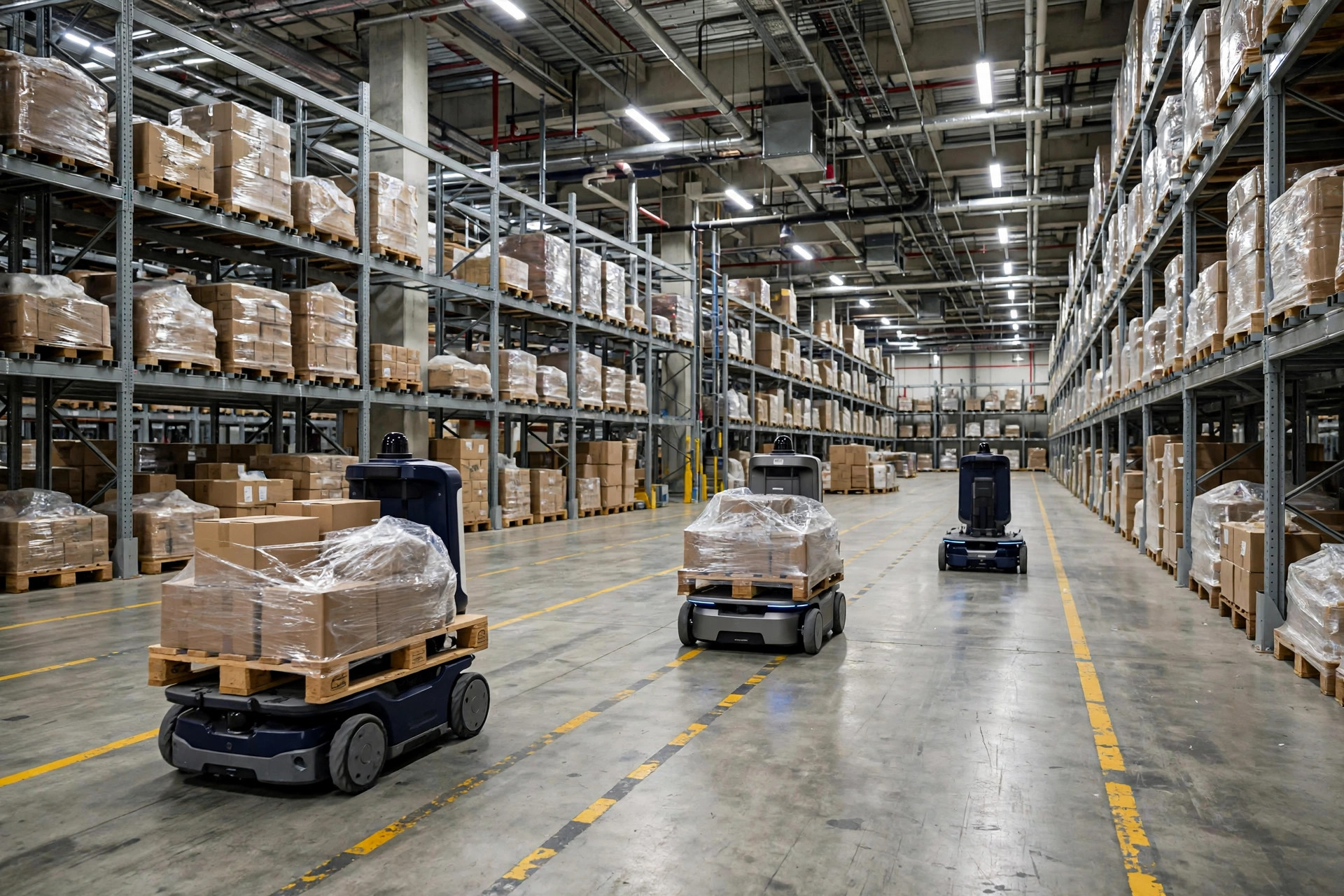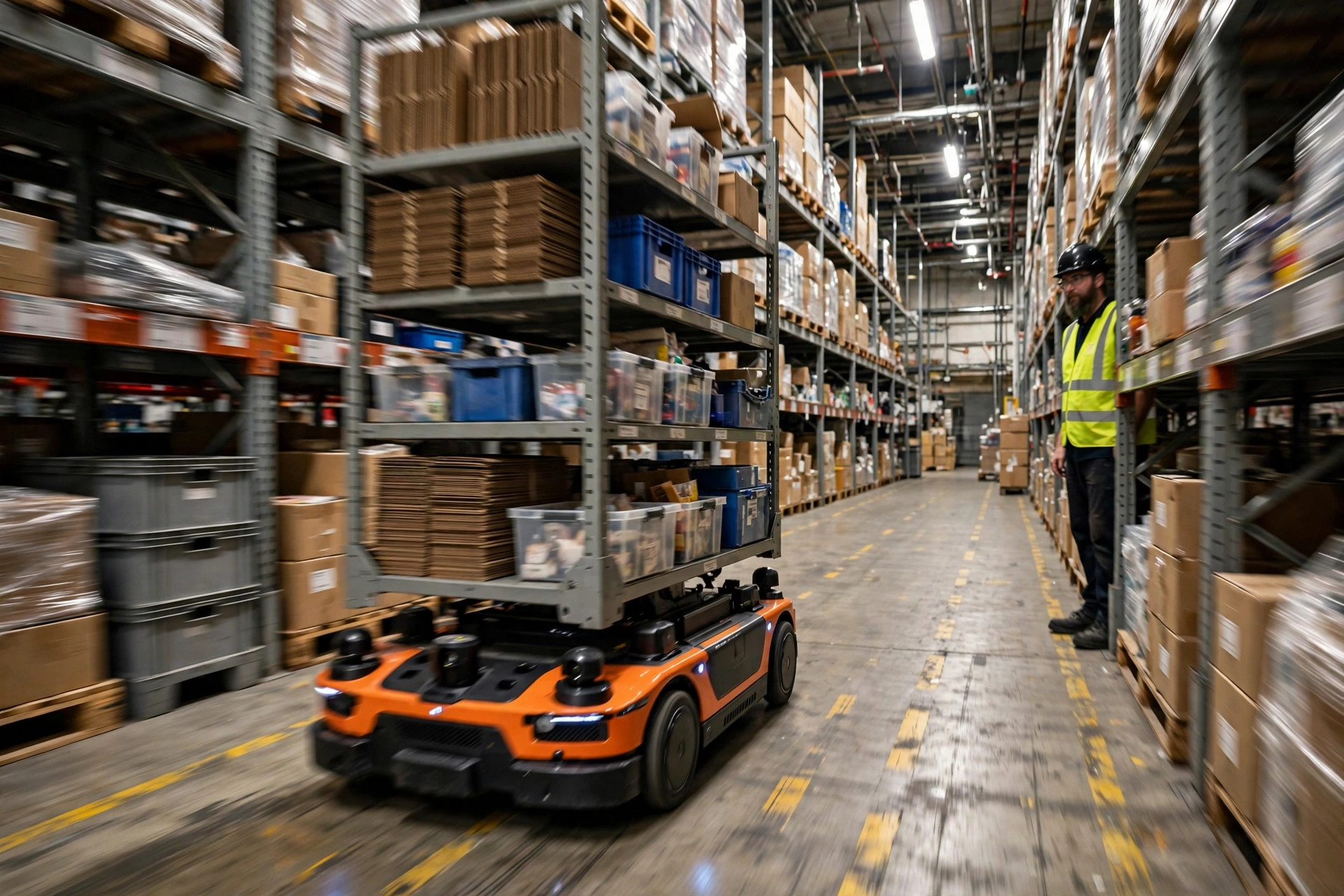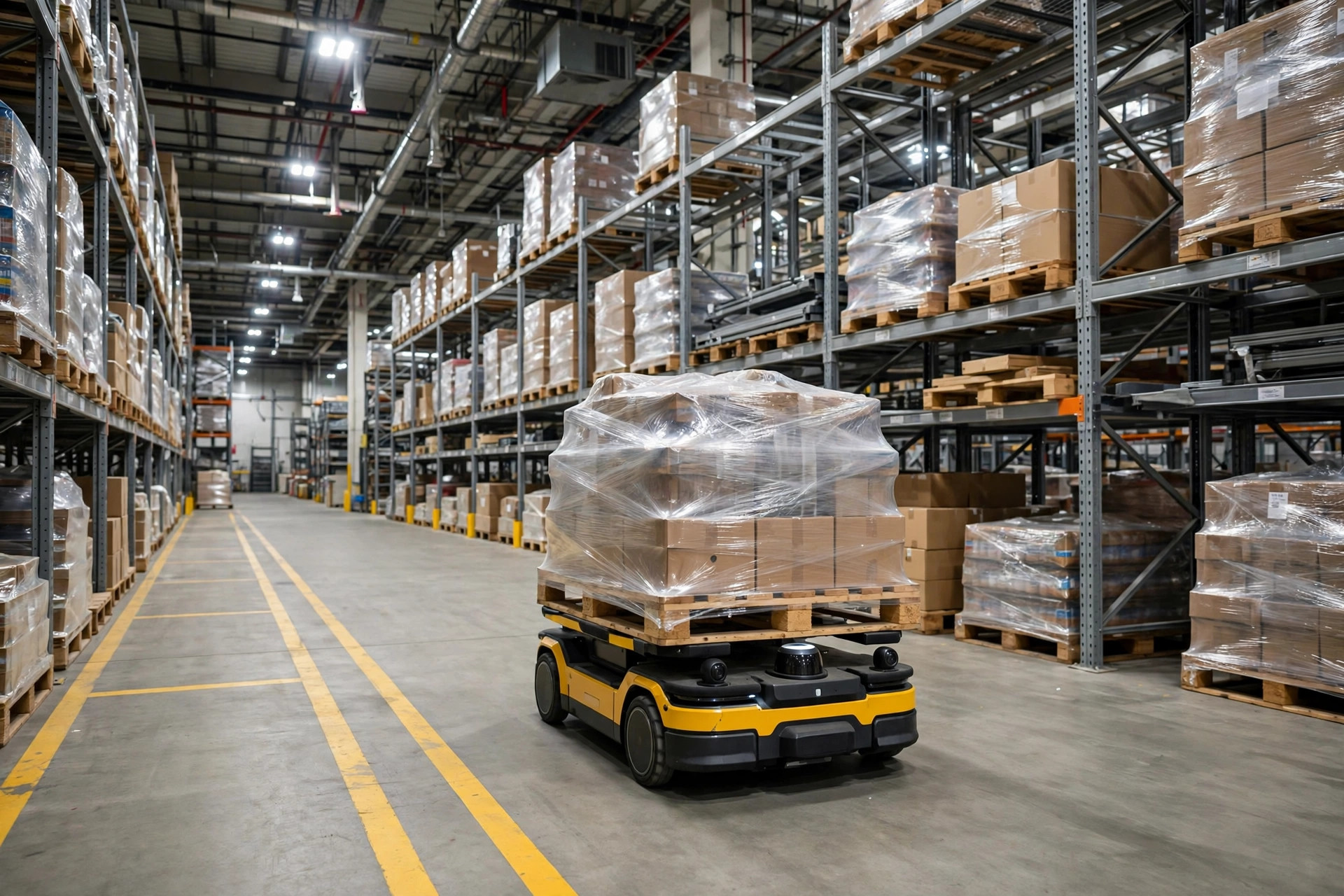
"Stops for people." That's the line every AMR salesperson leads with, and it's the line that lets a lot of owners sleep at night after signing the purchase order. I've walked more than a few warehouses where a dozen robots run the main aisle while pickers and QC techs walk the same lane, and management tells me the system is smart enough that nobody needs to yield. Sounds beautiful. Doesn't it?
I usually ask the floor supervisor one question, and the mood changes: do you know how high off the ground the LiDAR scan plane sits? Eight out of ten can't answer. Most 2D scanners ride a foot or so off the floor, sweeping a single horizontal plane. Anything above that plane, invisible. Anything below it, also invisible. A forklift's tines lying flat are only a few inches tall—slide one in from the side and the scanner sees empty air. A box that rolled into the aisle, a strip of fallen stretch film, same story: not in the robot's "line of sight."
Here's the part that stings: the scanner never sees a "person." It sees a reflective outline. A night-shift worker in a dark hoodie, head down in a phone, under half-lit aisle lighting, gives back a weak return. From detection to classification to a full stop, every step costs time. No matter how fast the machine reacts, it can't outrun physics—sensors scan in cycles, and a loaded robot needs distance to brake. That's not a quality defect. That's just how the world works.
Last year I watched a near-miss unfold on camera at a fulfillment center outside Columbus, Ohio—close to 400,000 square feet, about two dozen AMRs running nights. Around 2 a.m., with half the aisle lights dimmed to save power, a packer cut diagonally across the main AMR lane, eyes on his phone. A robot came around the rack corner, slowed, but didn't fully stop—halting less than a meter from the guy. He broke into a cold sweat. The robot paused two seconds, moved on, and the system log recorded one line: "obstacle avoidance." Nobody hurt. Nobody even filed a report.
I told the warehouse manager afterward: that's not "the system working great." That's a near-miss. Same maneuver, in a busier receiving area at midday, or with a slower-reacting veteran employee, and we'd be having a very different conversation. Luck is the most expensive consumable in a warehouse.
What the Scanner Can't See Is the Real Hazard
Before you draw a single safety zone, admit the scanner has three built-in blind spots. First, height: low obstacles are basically a coin flip, as I described. Second, corners: racks, columns, and stacked pallets block the scan line, so robots and people routinely "suddenly appear" to each other at intersections. Third, materials: dark clothing, clear stretch film, polished stainless steel all return poorly, and the system classifies them late.
So the professional approach is two concentric rings around the robot: an outer slowdown zone—something enters, the robot decelerates and lights up—and an inner stop zone—get closer and it brakes hard. The size of those rings isn't guesswork; it follows payload, speed, and floor conditions. A fully loaded robot on a slope needs dramatically more stopping distance than an empty one on flat concrete. Get the actual numbers from the equipment vendor's safety manual—not from the salesperson's pitch, and definitely not from your own tape measure. The manual, plus whatever OSHA expects on your site, is the only authority.
Let me say the unpopular part out loud: betting all of safety on software obstacle avoidance is like using brake pads as guardrails. Brake pads wear out. Software misclassifies. Guardrails don't.
Paint on the Floor Beats Code in the Cloud
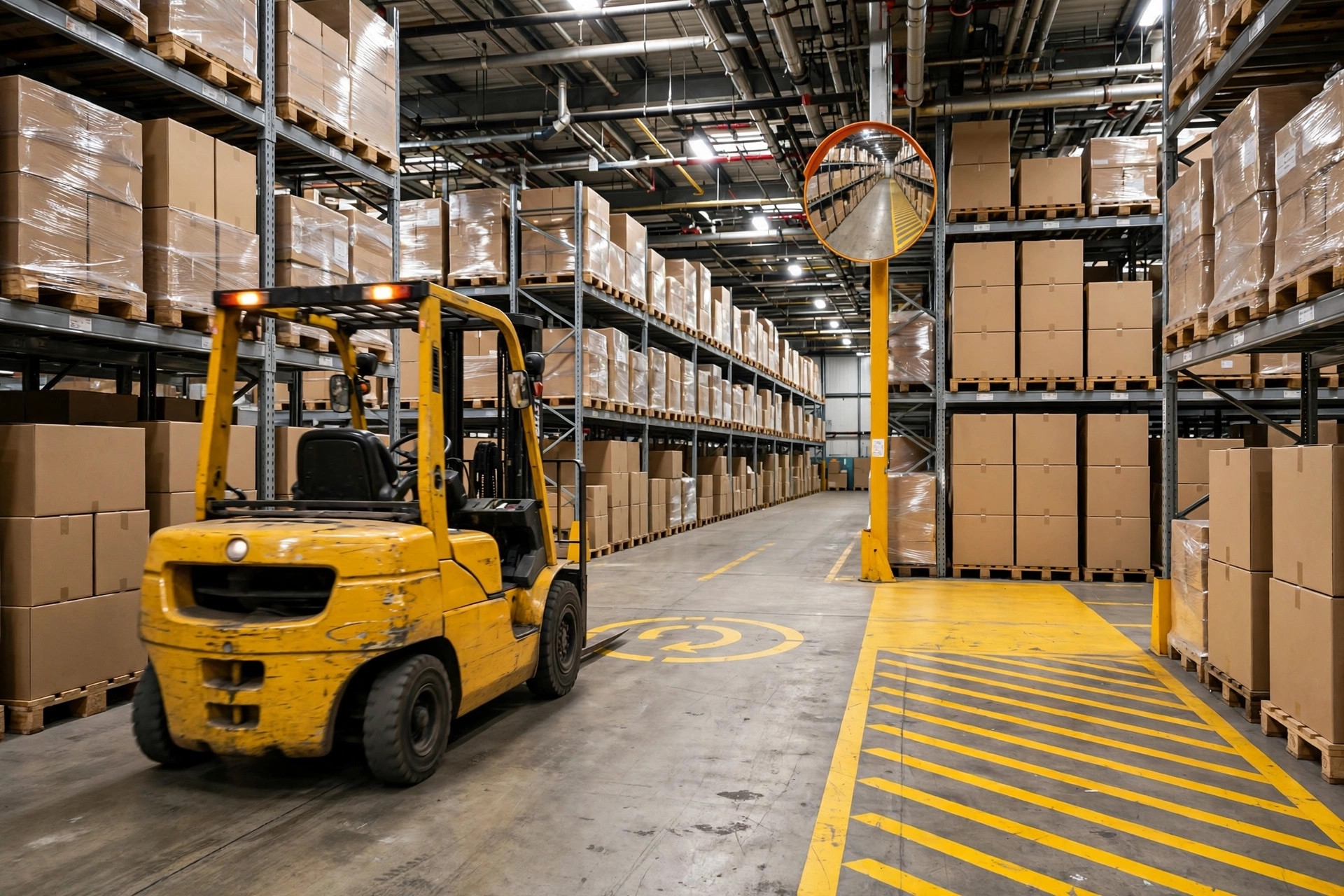
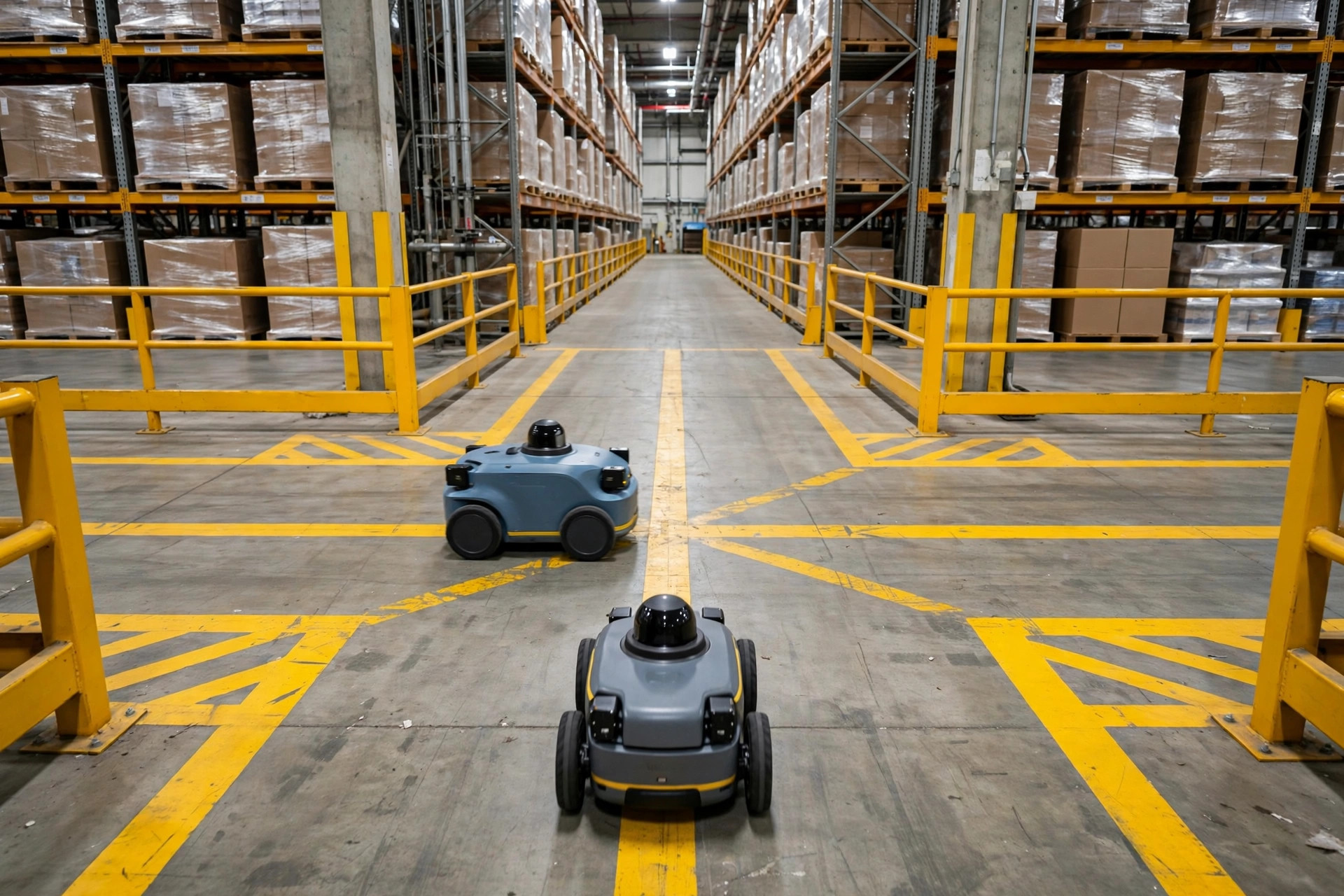
Pedestrian walkways and AMR routes follow one rule: separate them wherever you can, and where you can't, treat the crossing as an intersection—never as shared space. The methods are gloriously low-tech, and that's why they work: yellow floor markings for walkways, guard rails on critical stretches, zebra-style crossings at intersections, and one-way traffic wherever the layout allows. People and machines each get their own lane, so they never even get the chance to meet.
Intersections are where it gets real, and three cheap things pay for themselves fast: convex mirrors, slowdown signage, and audible-visual alerts. The robot decelerates and flashes before the turn; the pedestrian sees it coming from far away. Outfitting a 200,000-square-foot building with all of this lands in the low-to-mid five figures—pocket change next to one incident's downtime, investigation, and insurance hike.
I've seen three warehouses whose owners all said the same thing: "the software is smart enough, physical barriers are overkill." Later, one of their EHS managers told me privately that when the insurance carrier came for a site audit, the auditor's first question walking in was: how are pedestrian walkways physically separated from robot routes? If you can't answer that one, you already know how the premium negotiation goes. Even the people collecting the checks figured it out before we did: code keeps honest people honest; guardrails keep everyone alive.
The Three Dangerous Spots Are Never the Straightaways
On a straight aisle, with people and robots approaching head-on, the scanner sees everything—that's the safest place in the building. Incidents happen at handover points, where human and robot workflows cross at the same spot. I've boiled it down to three, and each one deserves ten minutes of your time standing on the floor watching.
First: the receiving staging area. People unloading by hand, pallets landing on the floor, forklifts coming and going, AMRs threading through it all pulling freight. Humans and robots compete for the same square footage. It's the messiest zone and the easiest to dismiss—because "it's only temporary."
Second: main-aisle intersections, especially rack corners. Pedestrians cross the AMR route where racks block the sightline completely, so both sides "suddenly appear." Run these like real intersections: mirrors, signage, slowdown. All three, no exceptions.
Third: charging and maintenance areas. Technicians walk between robots to swap parts and wipe sensors while units sit in "standby"—one command away from rolling. Servicing a robot without lockout and tagging is like cleaning a loaded gun.
Commissioning and daily operations need different playbooks. During commissioning, routes change daily and parameters get tuned constantly—keep someone on the floor watching, enforce reduced speeds, even close lanes temporarily. Three slow days beat one bad afternoon. In daily operations, fixed routes breed complacency. "Nothing's happened in six months" is the opening line of every incident report. What works then is two disciplines: walking the floor to check that safety zones haven't been colonized by pallets and trash bins, and pulling the "emergency stop" events from system logs. When e-stop counts creep upward, the system is sending you a warning letter in advance.
Here's a checklist for management. Tape it to the office wall and walk through it quarterly:
- Are pedestrian walkways and AMR routes physically separated? Are crossings managed as intersections?
- Have the LiDAR slowdown and stop zone parameters been re-verified against current payloads and speeds—using the vendor safety manual, not the salesperson's word?
- Do the three high-risk handover points (receiving staging, main-aisle intersections, charging and maintenance) each have an owner, and are they clear of clutter?
- Have night shifts and holidays gotten their own lighting and staffing risk review?
- Is anyone actually reading the emergency-stop log, and is the trend getting worse?
- Does new-hire training include a lesson on robot blind spots?
At the end of the day, the problem was never "does the AMR stop for people." It's "can the AMR see all of the people, all of the time." It can't. Admit what the machine can't see, and cover those gaps with rails, paint, and rules. Twenty years on warehouse floors taught me the order: physical separation first, intelligent avoidance second. Reverse it, and you'll pay tuition sooner or later—the only question is whether you pay it to the insurance company or to luck.