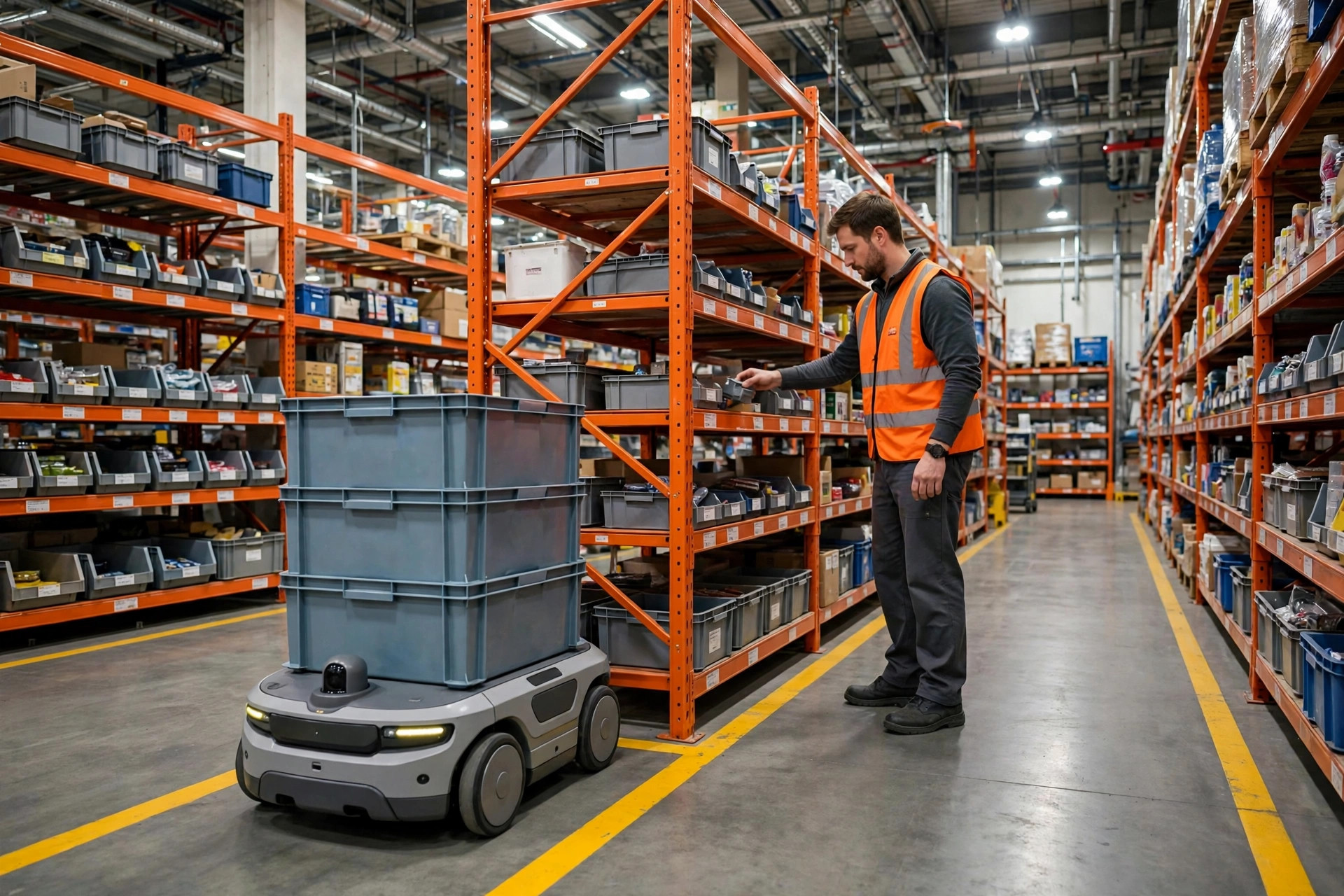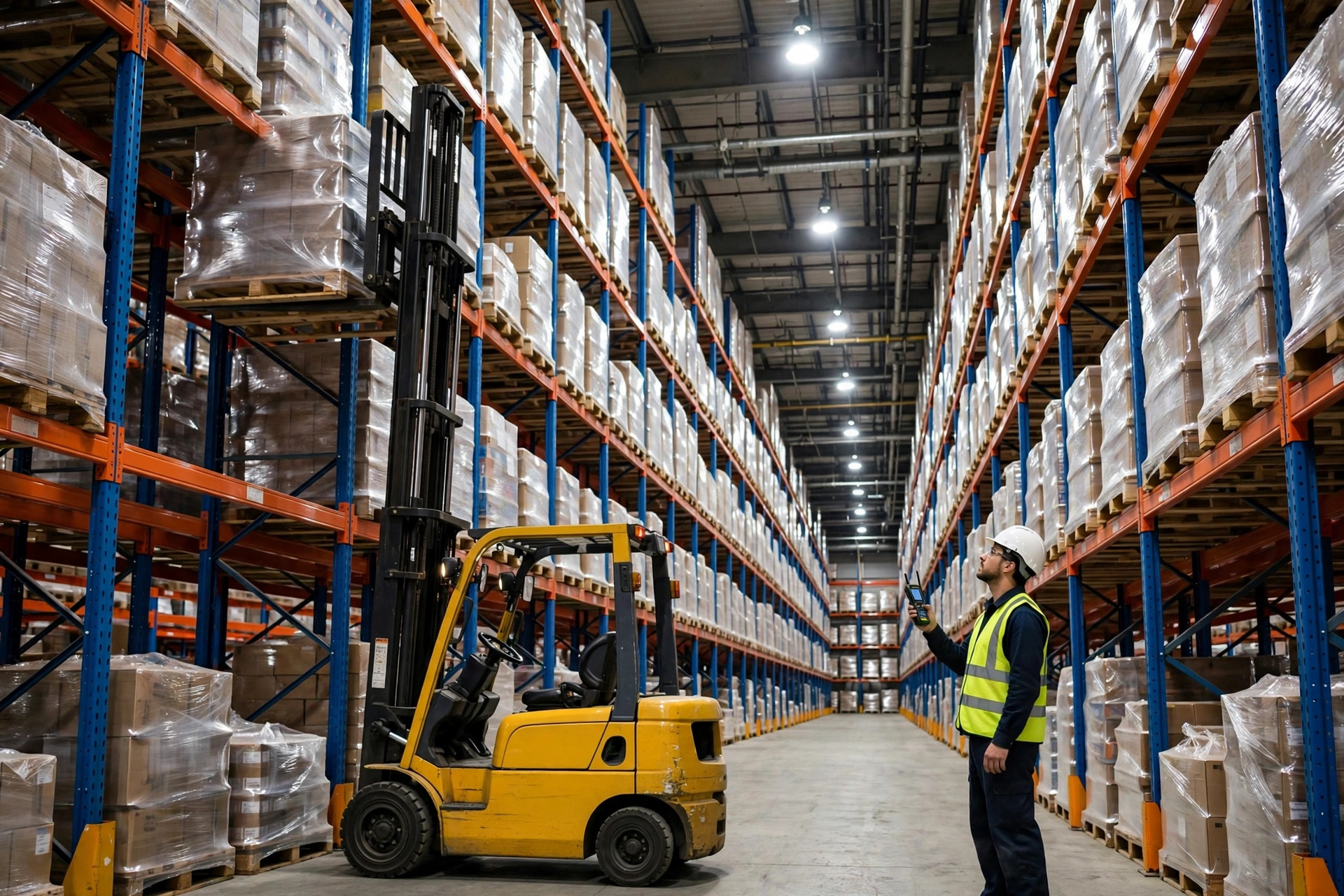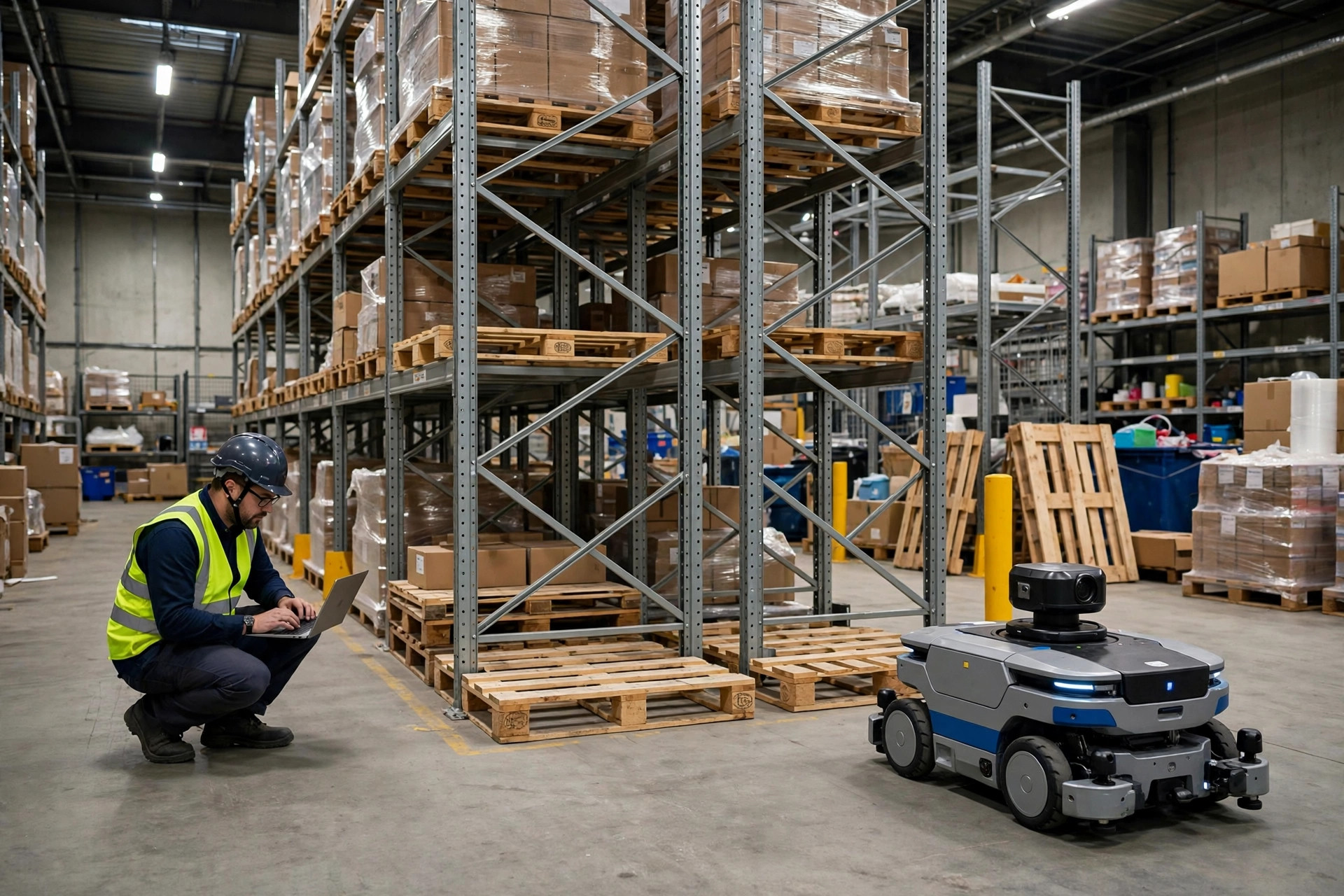
At 8 a.m. the fleet dashboard lit up red. Seven of twelve AMRs reported "localization lost"; the other five spun in circles like they were drunk. The tech's first instinct was a dead lidar — but it was spinning just fine. The real cause had been planted the night before: to make room for a new category, the night shift had relocated two full rows of heavy-duty racking in the east zone. Not a single column had moved, but the world as the AMRs remembered it was gone.
That was autumn 2024, at an auto-parts 3PL warehouse outside Suzhou, where I was the tech lead on the integrator side. The 4 a.m. call: "Your robots go blind every time we move a shelf?"
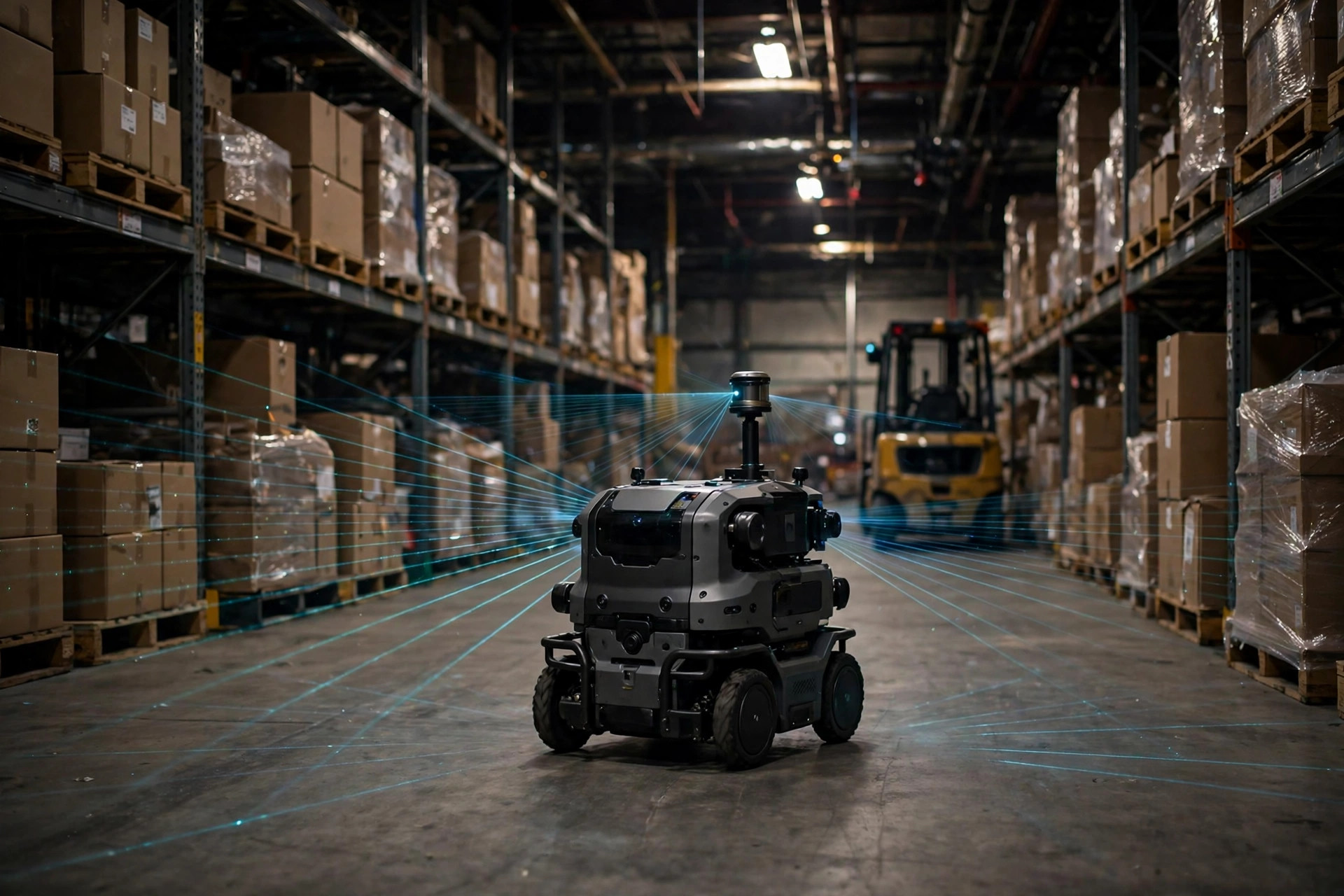
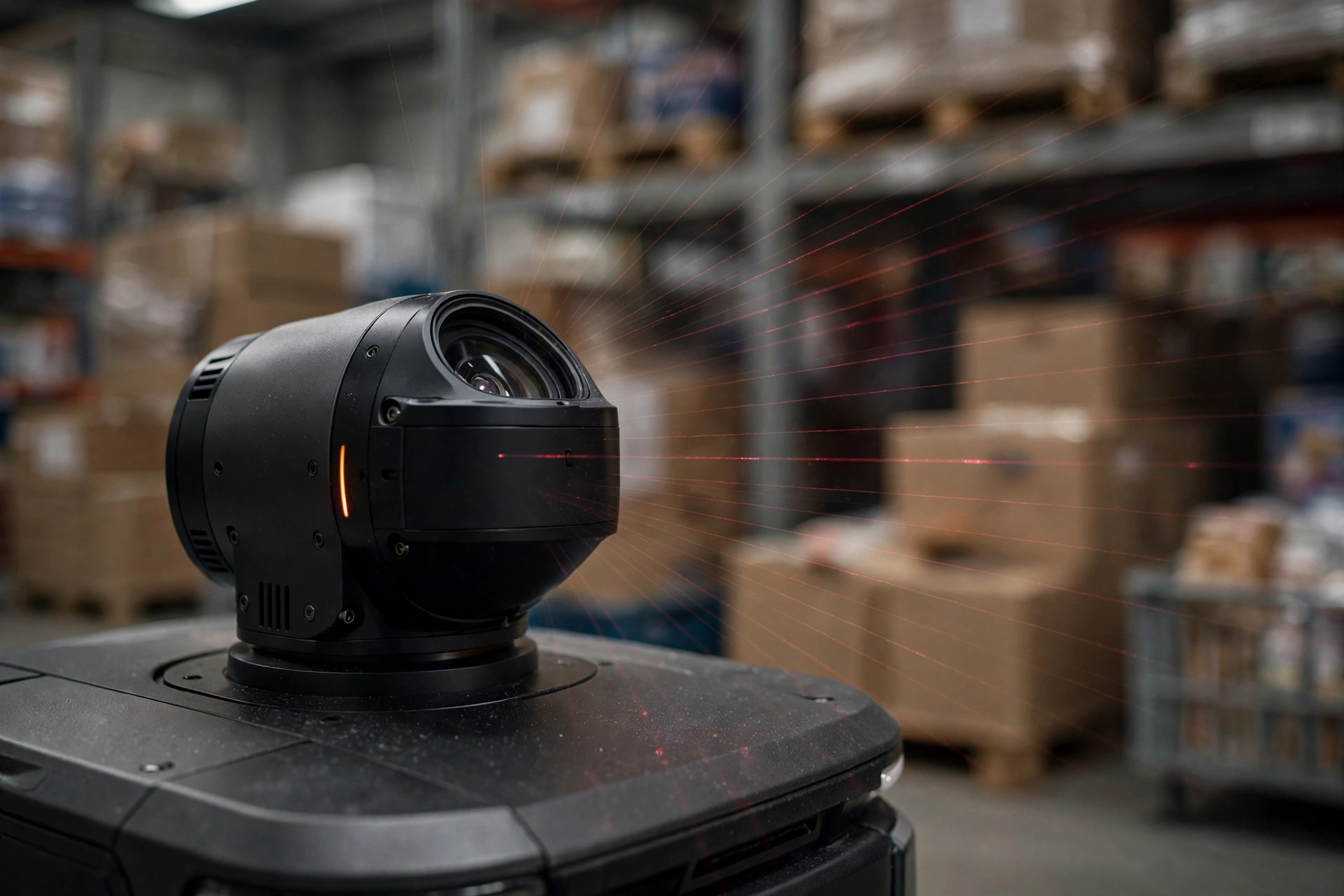
To be fair, the AMRs weren't blind. They had amnesia. Think of it this way: AMR navigation doesn't run on eyesight, it runs on memory. A lidar fires tens of thousands of points per second and stitches them into a contour map; while driving, the robot constantly matches live scans against that remembered map to figure out where it is. Good match: typically plus-or-minus 5 cm. Bad match: the robot is lost. Move the racks and every landmark in its memory changes. It's like your daily commute street overnight swapping every storefront sign and moving the lampposts — you'd stand at the intersection confused too.
Three navigation flavors, three ways to fear a move
Three mainstream flavors, three very different failure modes after a big slotting change. Principles first, then the dividing lines.
First, 2D lidar SLAM — the highest-volume flavor today. Memorize contours, match against them. Strength: stable, immune to lighting. Weakness: face-blindness. Fill a zone with identical racks and the algorithm oscillates between lookalike positions — confidence drops, the robot weaves, in bad cases it stops dead. That's what happened in Suzhou: the two relocated rows looked exactly like the neighboring rows, and the AMRs couldn't tell the aisles apart.
Second, visual navigation (VSLAM, cameras reading texture features). The most sensitive to a move. Lidar reads contours; vision reads details — carton print, tape glare, a floor scratch are all its anchors. Re-slot and the anchors are voided. Worse, lighting: day shift versus night shift, lights on versus lights off are two different worlds to it. I saw a cosmetics warehouse where visual AMRs ran fine by day and drifted half a meter at night under different lighting. Lidar navigation recognizes faces; visual navigation recognizes outfits — change the outfit and it doesn't know you anymore.
Third, fixed beacons: QR codes, magnetic tape, reflective posts. Dumbest principle, most move-proof: the map is bound to the beacons, so when racks move you just re-stick the codes and re-survey. The price is flexibility, and floor codes get chewed up by forklifts routinely. Maintenance is pure manual labor.
| Navigation | After a big slotting change | Rebuild effort | Notes |
|---|---|---|---|
| Lidar contour SLAM | Most face-blind; confidence drops in lookalike rack zones | Medium: night re-scan plus zone-by-zone validation | Highest volume; the focus of this piece |
| Visual VSLAM | Most sensitive; feature points voided, lighting shifts cause drift | High: rebuild feature database, ideally surveyed across shifts | Don't buy the "AI vision needs no map maintenance" pitch |
| QR / magnetic / reflective beacons | No false memories; line up the beacons and you're done | Low: re-stick plus re-survey, but it's sweat work | Floor codes getting run over is the long-term maintenance tax |
On that sales pitch — let me take a swing at a sacred cow. Some vendors now tell customers: "Our AI visual navigation is self-learning; re-slot all you want, no map rebuild needed." Nonsense. Vision is the flavor most sensitive to environmental change, and the first thing self-learning learns after a big change is the wrong thing: it locks wrong positions in as correct anchors and drifts further the longer it runs. There is no silver bullet here, only trade-offs. Want flexibility, accept map rebuilds as homework; want peace of mind, accept the sweat work of floor codes.
The 72-hour playbook
Back to Suzhou. It took us 72 hours to win navigation back, and the post-mortem became a fixed procedure for every slotting change since — zero repeats. Here's the timeline:
Hours 0–8: freeze and back up. Once the racks are moved and the floor is clean, don't rush a new scan — back up the old map and freeze its version. The first version of the new map will probably have issues; keep a rollback path. During these 8 hours, all AMRs go to escorted-manual mode or full stop — localization is already untrustworthy.
Hours 8–24: night re-scan. Pick the low-activity window and survey the new zone with a lidar rig, or run one AMR in mapping mode. Two details matter. First, the floor must be clean: stray pallets and parked forklifts get scanned in as permanent landmarks, and the day someone moves them the map mismatches — the most common cause of rework. Second, in lookalike rack zones add artificial features by hand — a reflective sticker on one upright gives the algorithm a one-of-a-kind anchor.
Hours 24–48: zone-by-zone go-live, empty runs before loaded runs. Open one zone, run empties, and watch two numbers: localization confidence and relocalizations per hour. Confidence persistently below threshold, or relocalizations climbing past single digits per hour — that map fails, send it back. Then loaded trials: a loaded pallet blocks the lower half of the lidar's view, so empty-OK does not imply loaded-OK.
Hours 48–72: full go-live, eyes on screens. All AMRs on the new map, with 24 hours of screen-watching for the two classic symptoms: clustered stoppages and weaving. At hour 72, review the three numbers — relocalization count, on-time task rate, manual interventions. All back to baseline, job done.
Mixed traffic: the safety plan matters more than accuracy
Here's the counter-intuitive call: during those 72 hours, the danger was never poor localization. It was everyone assuming localization was still good. A drifting robot doesn't know it's drifting: planned path and actual position can differ by half a meter, and the "empty space" its safety laser sees might hold a person.
So my transition safety rules are non-negotiable: cap all AMR speeds under 50 percent of normal during the rebuild; barrier off old/new zone boundaries and separate forklift and AMR traffic by time windows; bump every AMR's safety stop distance up a notch. Some call this overkill — let me run the numbers. One AMR clipping a rack upright costs repair plus downtime, counted in days. One AMR hitting a person, and it's not about money anymore. The safety plan costs 72 hours of reduced throughput; skipping it risks one incident stopping everything. You do the math.
One more counter-intuitive point: the slowest part of a map rebuild is never the scan. Surveying 5,000 square meters takes a practiced engineer two to three hours. What eats the clock is waiting — for the racks to finish moving, for pallets to clear, for the floor to reach surveyable condition. In Suzhou, the scan took 3 hours; waiting for cleanup took 11. So the AMR team must be in the room when the slotting plan is made — the day the re-slotting plan is finalized, the navigation rebuild schedule gets finalized alongside it. Map rebuilding isn't a technical job, it's an organizational one. The biggest hole is always "the racks moved and nobody told the AMR team."
The maintenance trap: maps expire
Many people treat a map rebuild as a one-time event. Wrong. Maps expire, and they expire quietly.
Carton stack heights, seasonal staging spilling into aisles, even winter-versus-summer sun angles erode the scan-to-map match a little at a time. The day it drops below threshold is your next mass amnesia. My practice: a quarterly map health check. Confidence and relocalization frequency trending down means scheduling a re-survey before robots start face-planting, not after. And maps need version control: who changed what, when, and why, written down. The nightmare scenario is a field engineer hand-tweaking the map with no record; three months later when things break, nobody can trace it.
Finally, the classic question: is the money worth it? Watch this one number — mean time to recover from a single localization failure (MTTR). For lidar-SLAM AMRs, a lost robot relocalizes itself, typically in tens of seconds. For visual ones after a big change, it may need human intervention — MTTR in hours. At selection time, don't just look at the per-unit quote — multiply re-slotting frequency by person-days per rebuild. For a warehouse that re-slots twice a year or more, the TCO gap between navigation flavors can cover the price of an extra robot. Parameters don't lie — what lies is a salesperson who only shows you half of them.
By Da Liu, Automation Engineer