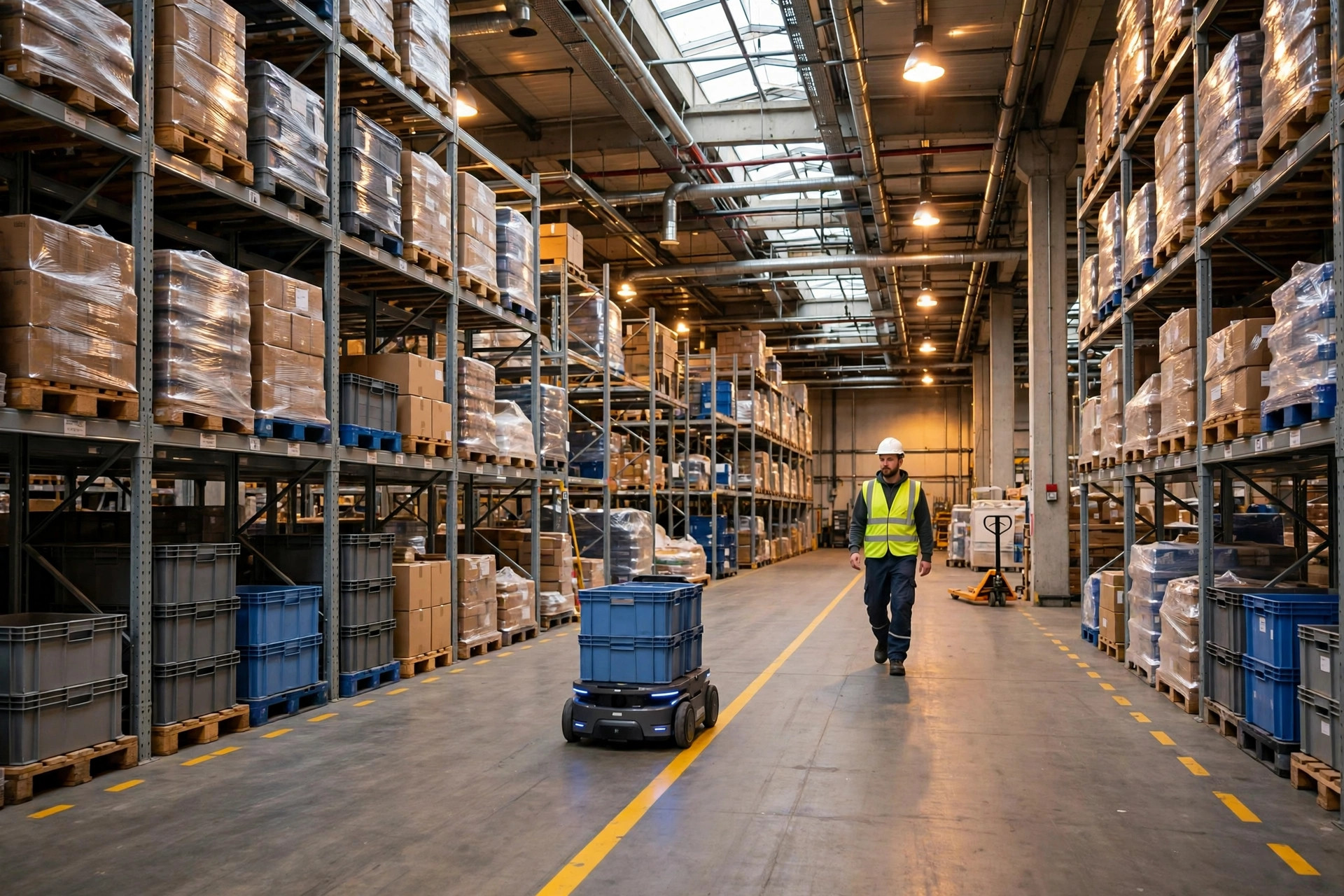
Here's my verdict up front: your first AMR should run the route you're most certain it can win — not the route that hurts the most.
Last year I helped an auto-parts warehouse in Dongguan pilot their first AMR. They wanted to throw it straight into the picking zone — "our pickers walk 20,000 steps a day." I talked them out of it. Instead, the first unit ran the receiving-to-putaway lane: a straight shot, no intersections, steady daily volume. Three months later, uptime was 96%, management was bought in, and only then did units two and three head toward picking. Had that first unit gone into the high-frequency, multi-branch, human-mixed chaos of the pick zone, it would almost certainly have failed — and the whole company would have concluded "AMRs don't work." That conclusion costs far more than one robot.
The First Unit Is for Validation, Not Labor Savings
A lot of owners buy their first AMR thinking, "Let's see how many people this can replace." That starting point is wrong.
The KPIs for unit number one shouldn't be about headcount. They're about three validations: can this route run stably under real production rhythm, can your team maintain the unit, and does the WMS-to-robot interface work. Once those check out, labor savings come naturally with units two, three, and beyond.
The worst case I ever saw: a food warehouse put its first AMR on the freezer replenishment lane — minus 18°C, frosty floors, spotty Wi-Fi. The unit died in week two. Lithium batteries drain shockingly fast in the cold, and laser navigation drifted on the frosty surface. The owner's takeaway was "AMRs aren't mature yet." The problem was never the robot — it was the route.
Remember this: the first unit exists to build confidence, not to prove ambition.
Four Candidate Routes, Ranked for Pilot Suitability
Here are the four common AMR routes in a warehouse, ranked by how suitable they are as your first.
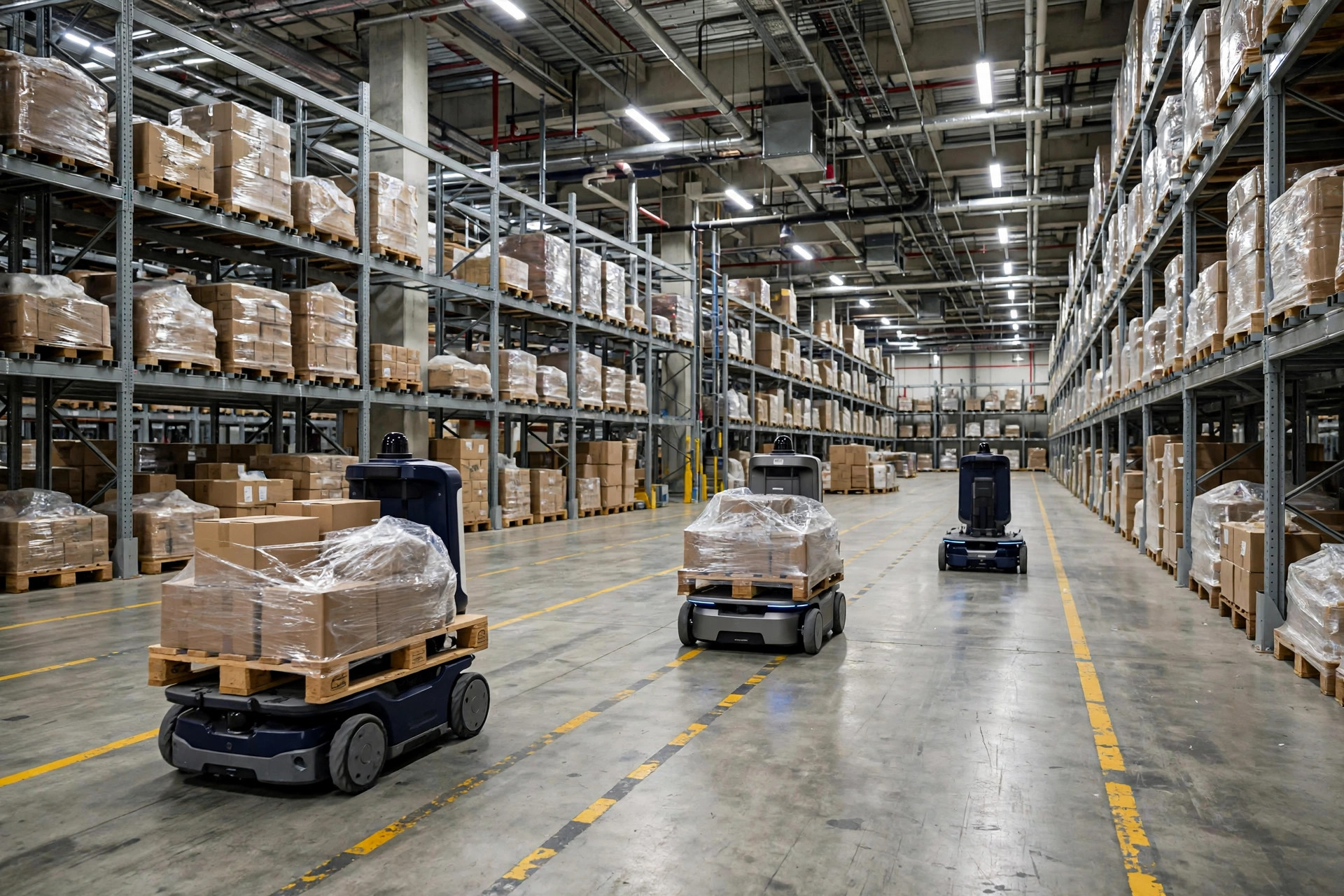
Receiving-to-putaway: the best first route. From the receiving staging area to putaway zones — fixed path, moderate distance (typically 50–150 meters), steady task rhythm, no picking-style peaks and valleys. The biggest advantage: if something goes wrong here, it doesn't directly hit outbound shipping. You have room to fail safely. Of the three pilots I've helped with, two started here. Both succeeded.
End-of-line: second choice. From the end of the pack line to outbound staging — again point-to-point and simple. Just check takt stability first: if packing is manual and the pace swings wildly, the robot either idles or queues. Measure a week of takt data before deciding.
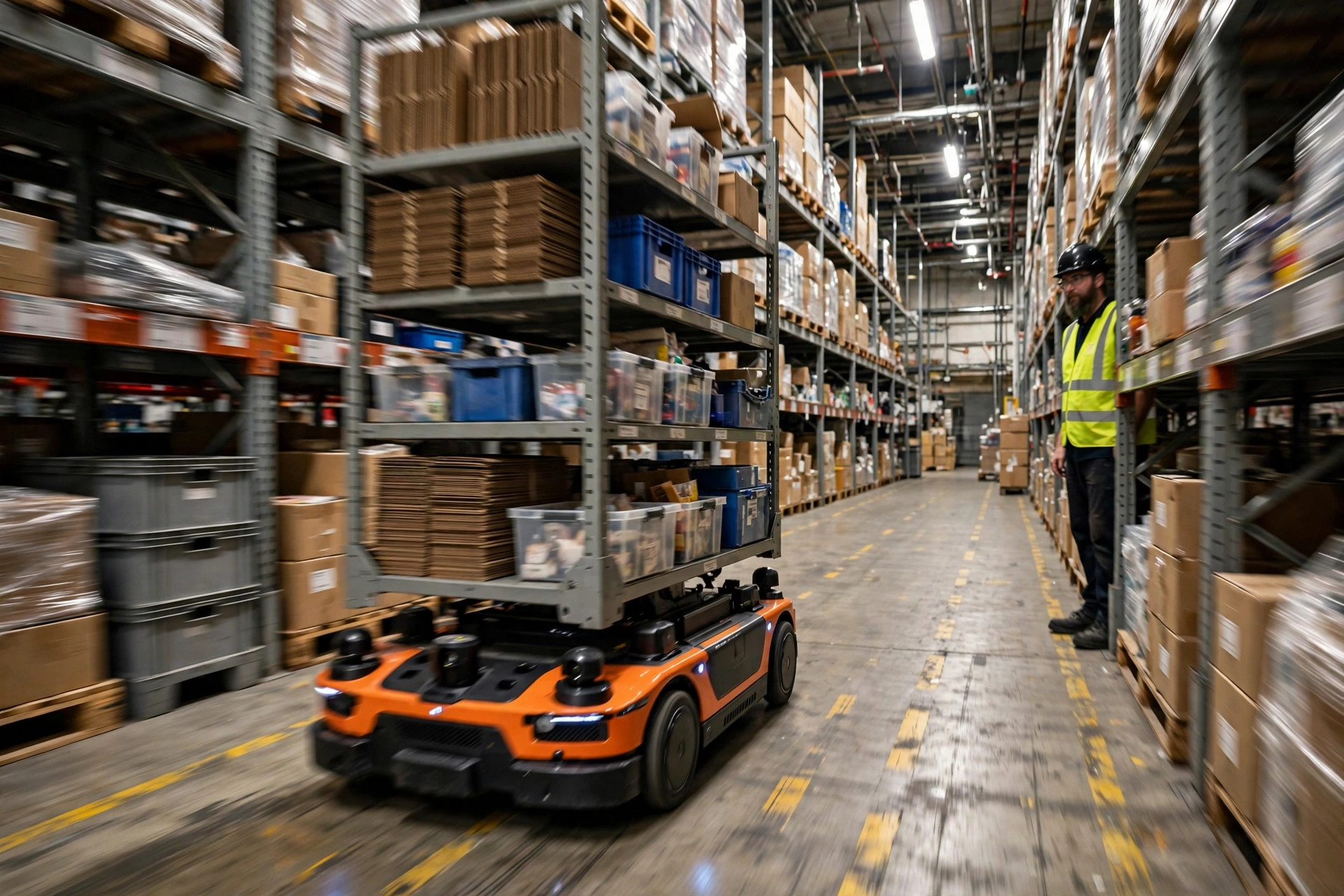
Replenishment: third, and only with conditions. From bulk storage to forward pick locations — more complex, with branch points and crossings with forklifts and pickers, but also the most visibly valuable: when replenishment is late, picking starves. Before committing, confirm two things: can replenishment tasks be released from the WMS two hours ahead, and are there high-traffic forklift intersections on the route (if yes, save this for later).
Pick support: hold off for now. Follow-me picking and goods-to-person workflows demand the most from obstacle avoidance, following behavior, and task scheduling — and carry the most variables. That's a job for units three and four, not unit one. Don't let vendor demo videos fool you — there's no peak season in a demo environment.
The Route-Selection Checklist: Five Dimensions, All Required
Before locking in a route, put data on the table for each of these five dimensions.
1. Order structure. Pull three months of outbound orders: how concentrated are your SKUs? If 80% of volume comes from 20% of SKUs, replenishment has real value. If orders are fragmented, a steady transport lane like receiving-to-putaway fits the first unit better. Don't guess — pull the report from your WMS.
2. Distance and frequency. Measure it for real, with a tape and a stopwatch: one-way distance, trips per day, payload per trip. My rule of thumb: 80–200 meters one-way, 60–150 trips per day. Shorter than 30 meters and a hand cart wins; longer than 300 meters and one unit can't keep up, which makes your pilot numbers look bad.
3. Takt stability. Track hourly task volume across five working days and plot the curve. If it swings more than 50%, don't start there — robot scheduling logic hates big swings. Stable routes produce the clean uptime numbers you need.
4. Labor pain points. Ask the floor supervisor: "Which position on this route is hardest to hire and keep?" Routes with high material-handler turnover face the least resistance when you scale up after a successful pilot. But a big pain point alone doesn't qualify a route — it still has to pass the first three checks.
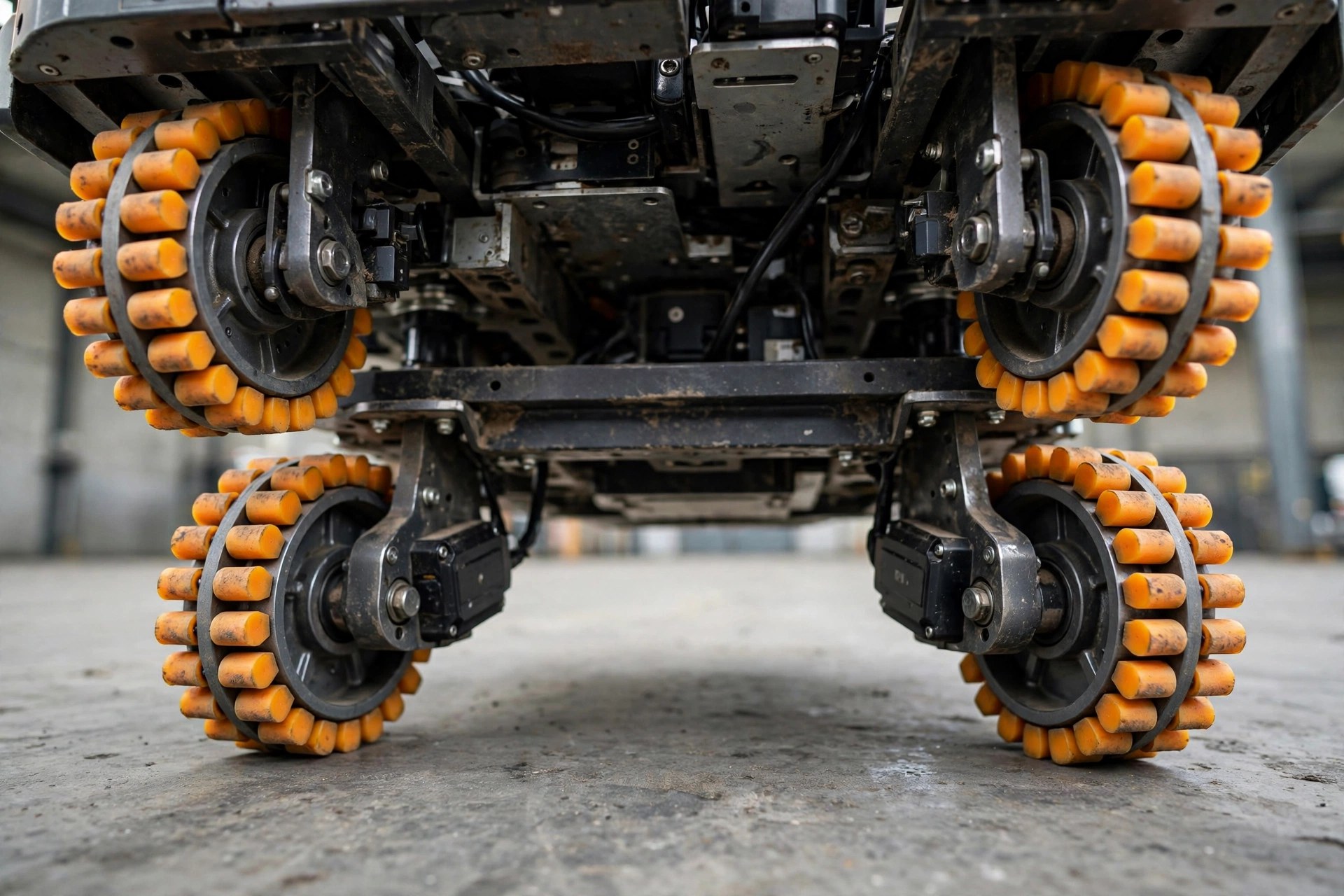
5. Floor and network conditions. The two most overlooked and most dangerous items. Floor: any damage, slopes, expansion joints? An AMR's small wheels can throw an alarm over a 2 cm lip. Network: walk the entire route and measure Wi-Fi signal strength — any dead zone below -70 dBm needs an access point added first. I once saw a warehouse where the unit ran fine 90% of the time but lost connection at one corner — a Wi-Fi dead zone. One AP fixed it, but two weeks of the pilot were wasted diagnosing it.
Pilot KPIs: Write Acceptance Criteria Into the Contract
Run the pilot for 4–8 weeks and judge it on four numbers. Put these into the pilot clause of the purchase contract — miss the targets and the pilot extends or the unit goes back. Vendors willing to sign that usually have solid products.
Uptime ≥ 95%. Formula: (planned operating time − fault downtime) / planned operating time. Note "planned" — charging time doesn't count as downtime, but unplanned stalls, disconnections, and alarm stops all do.
MTBF ≥ 40 hours. Mean time between failures requiring human intervention. Below that, either the route is still too hard for this unit or the unit itself isn't up to it.
On-time task rate ≥ 98%. Did the robot deliver within the WMS time window? On replenishment lanes this is critical — ten minutes late and the pick zone starves.
Labor savings, in hours. Don't count heads; count hours: daily labor-hours on this route before the pilot minus daily labor-hours after (operator + exception handling). If unit one nets 4–6 saved hours a day, that's a passing pilot. Remember: the first unit validates the model. Headcount savings are a job for units five and ten.
Four Traps That Kill Pilots
Trap one: starting with the hardest route. Mixed human-robot traffic, multi-branch paths, fragmented tasks in the pick zone — that's expert mode. Run the easy route first, build your team's maintenance capability and confidence, and save the hard stuff for later.
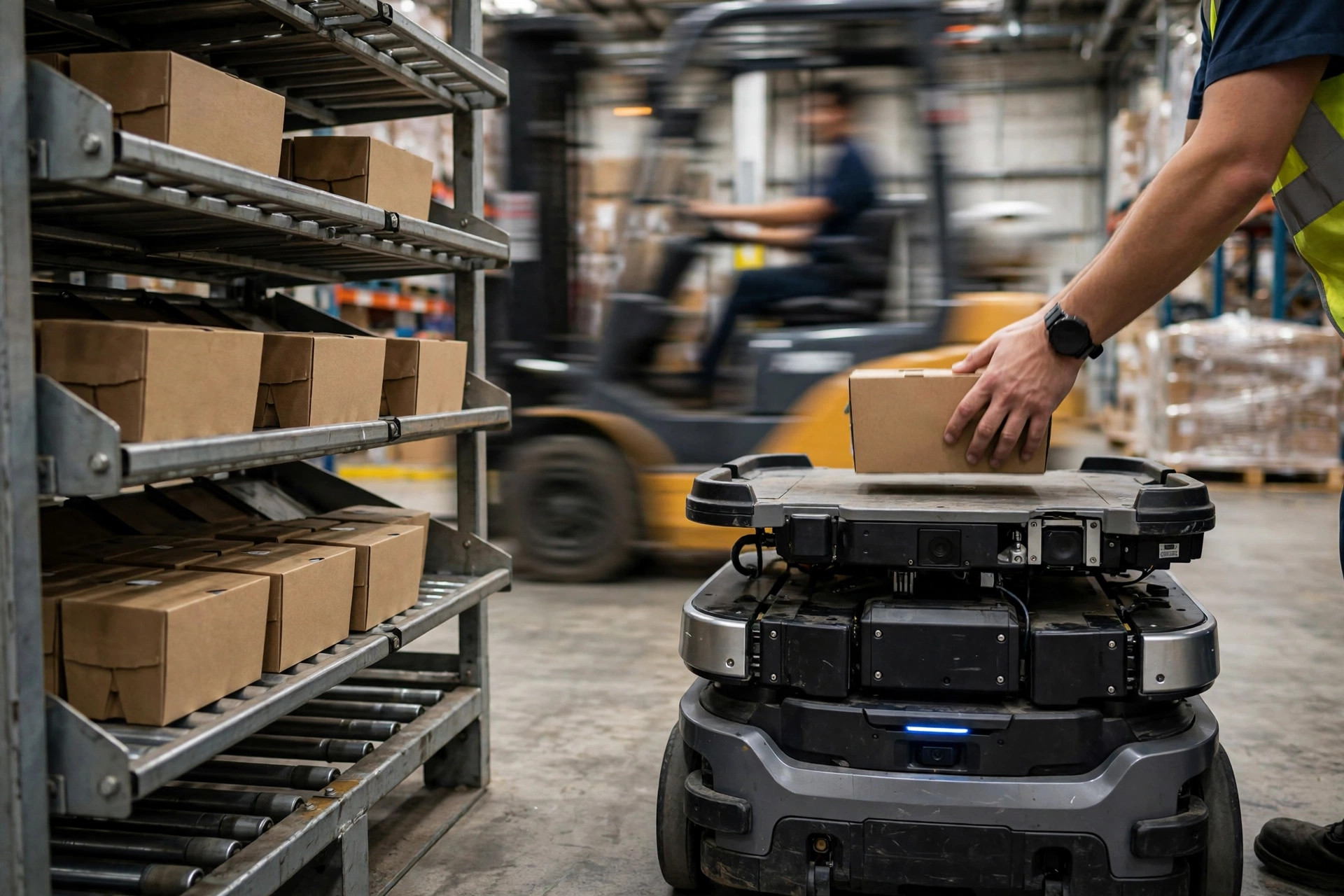
Trap two: no traffic study. A 3-meter main aisle with a forklift passing every two minutes, plus one more AMR weaving through it — stop-and-go avoidance will make it slower than manual labor. Do a traffic count before the pilot: any intersection with more than 15 crossings per 10 minutes at peak gets routed around for unit one.
Trap three: no charging plan. One AMR runs 6–8 hours, then needs 1–2 hours of fast charging. Where does the charger go? Will it block traffic? Decide before the pilot. I've seen a unit arrive with nowhere to install the charger — temporary wiring delayed the pilot by a month.
Trap four: the WMS interface isn't ready. The robot and the WMS need three working interfaces: task dispatch, status feedback, and exception alerts. Many warehouses run WMS systems installed years ago, and the API docs are long gone — the first two weeks of the pilot get burned on integration. The right sequence: get IT and the vendor in an interface meeting before signing, so the interfaces are live on day one.
Scaling to Unit Two: From One Route to a Network
Once unit one is stable (uptime holding above 95%, the team handling common alarms independently), plan unit two. Replication doesn't mean "buy another unit for the same route" — it means expanding into adjacent scenarios along the lines of what made route one work.
One more critical move: during the first pilot, write down the standard operating procedures — daily inspection checklist, common-alarm playbook, charging procedures, WMS reconciliation method. When unit two arrives, the SOPs should already exist. The SOPs are the real output of the pilot. The robot is just the vehicle.
One last honest word: route selection for AMRs is 70% route, 30% robot. Overpaying for a unit can be negotiated. Picking the wrong route costs you the entire company's trust in automation. Don't get greedy with unit one. Winning one easy route is worth ten times more than losing a hard one.