Last November, right before peak season, my radio woke me up at 3 a.m.
"Boss, unit 3 is down again. It says there's an obstacle ahead — but there's nothing there, just a cloud of flour dust."
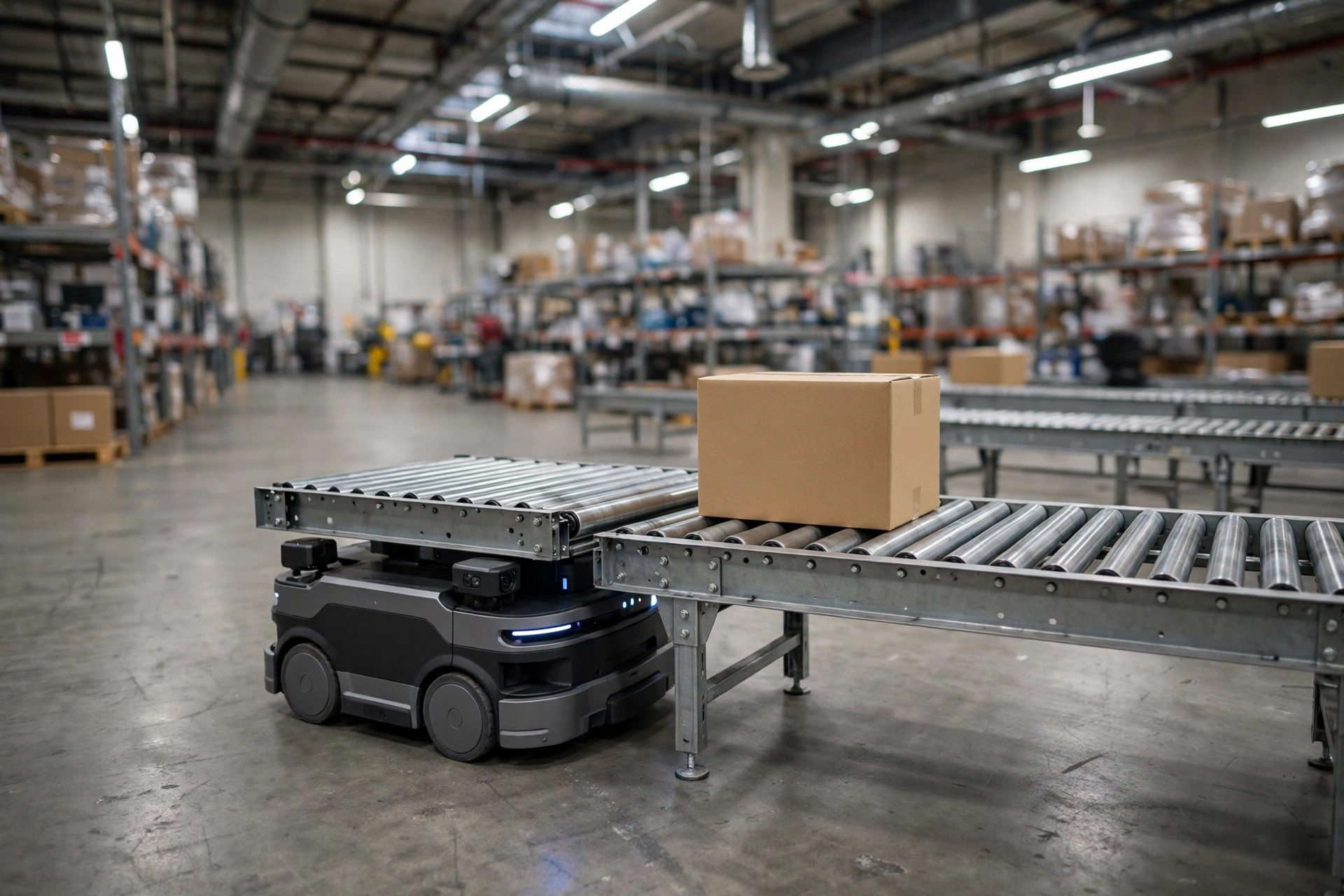
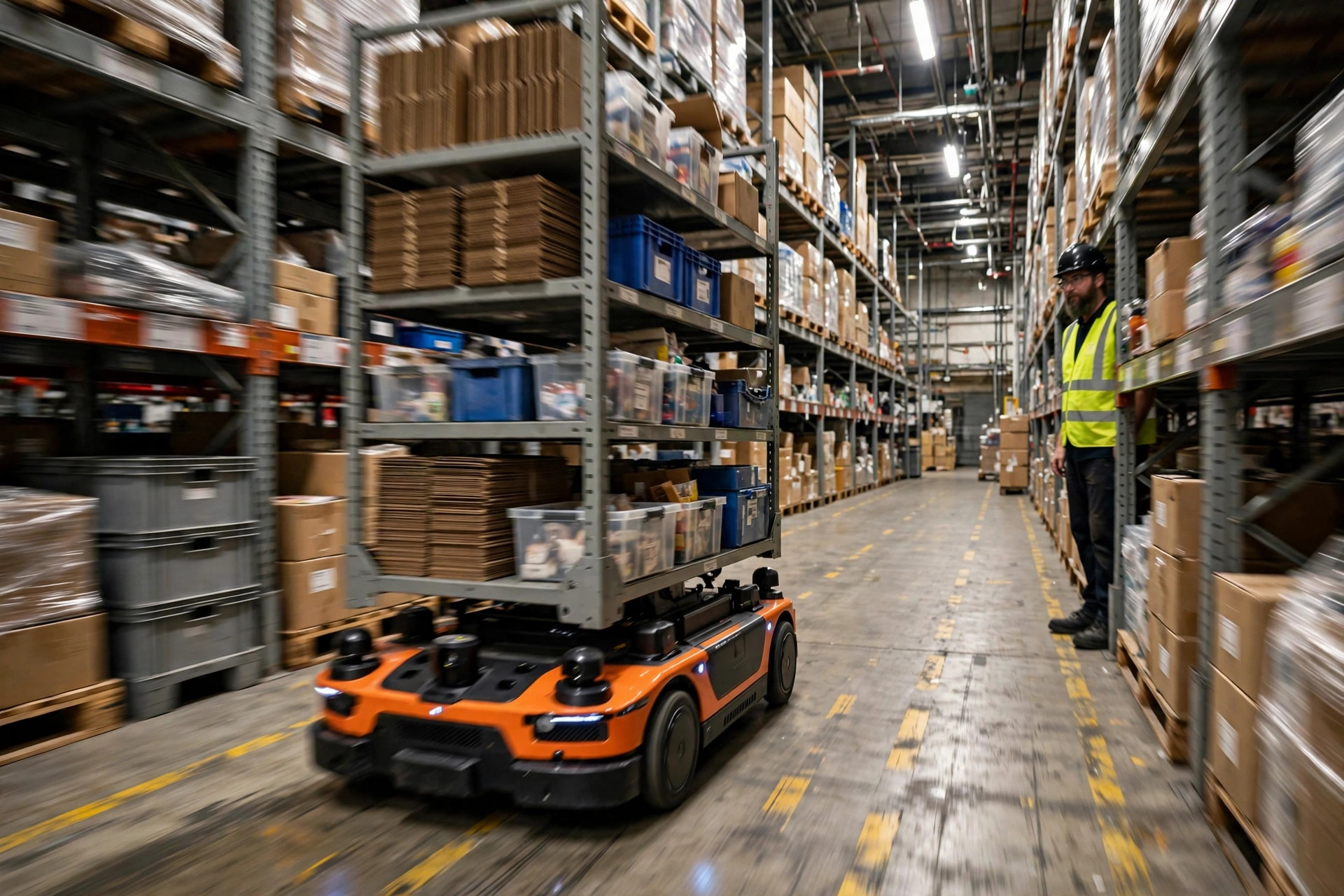
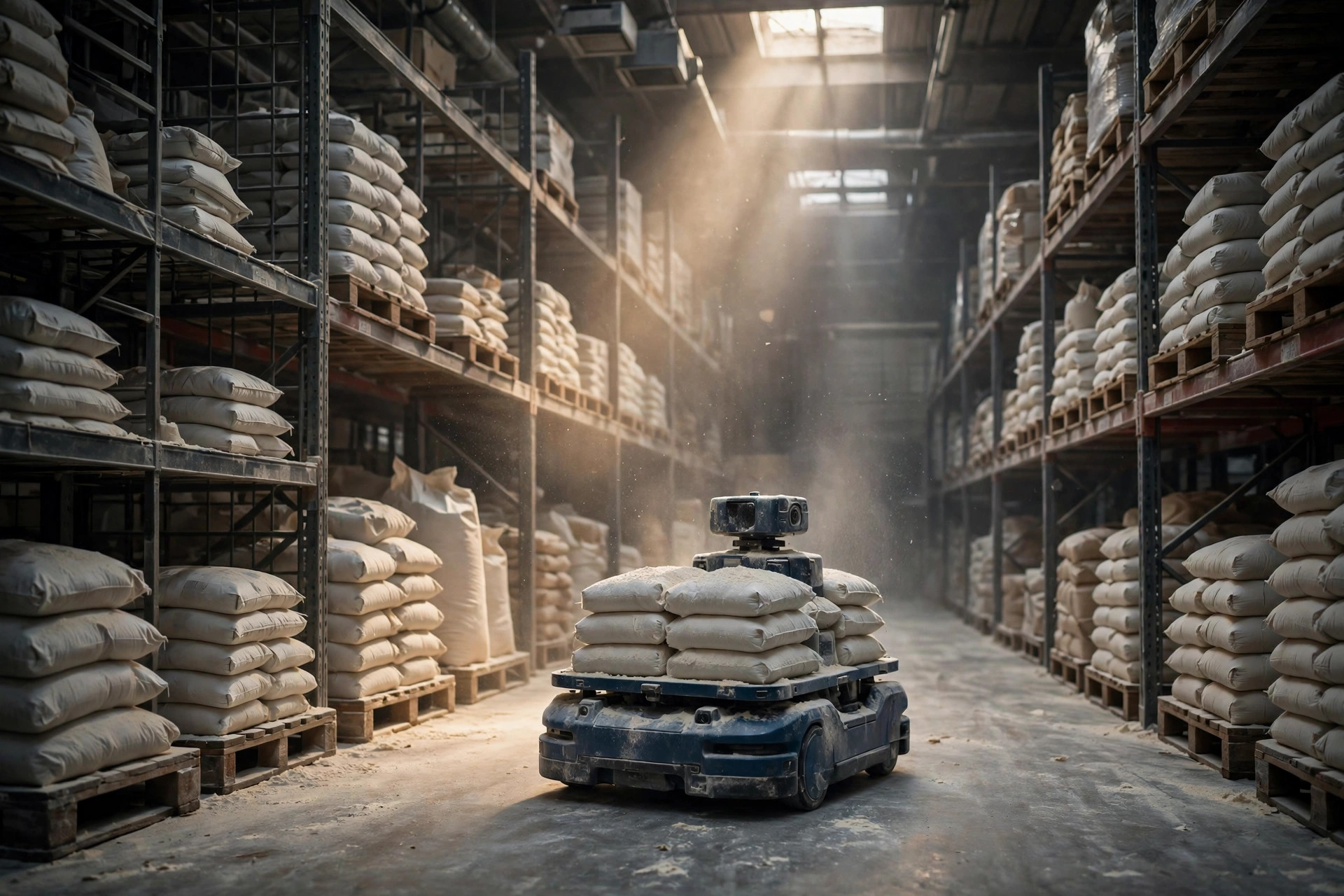
Unit 3 was one of our AMRs in the finished-goods flour warehouse, hauling 25-kilo flour bags from the palletizer to the staging area, over a hundred trips a day. If you've ever worked a flour warehouse, you know the air always carries a fine white haze — you can see it hanging in the light beams. The robot had stopped right downwind of the palletizer, where the dust is thickest. That night shift alone, it emergency-stopped 7 times — each one meant someone walking over to hit reset. My night-shift lead was furious.
Let me be straight with you: before the AMRs arrived, the vendor's proposal read like a dream — navigation accuracy within 2 centimeters, 360-degree obstacle detection, zero blind spots. There was one line of fine print in the contract none of us read carefully: "Operating environment: clean, dry indoor floors." Clean and dry? In a flour warehouse? When we went back to argue, they said this was "use beyond the agreed environment." They'd service the machines, sure — but the false stops didn't count as faults. We ate that loss.
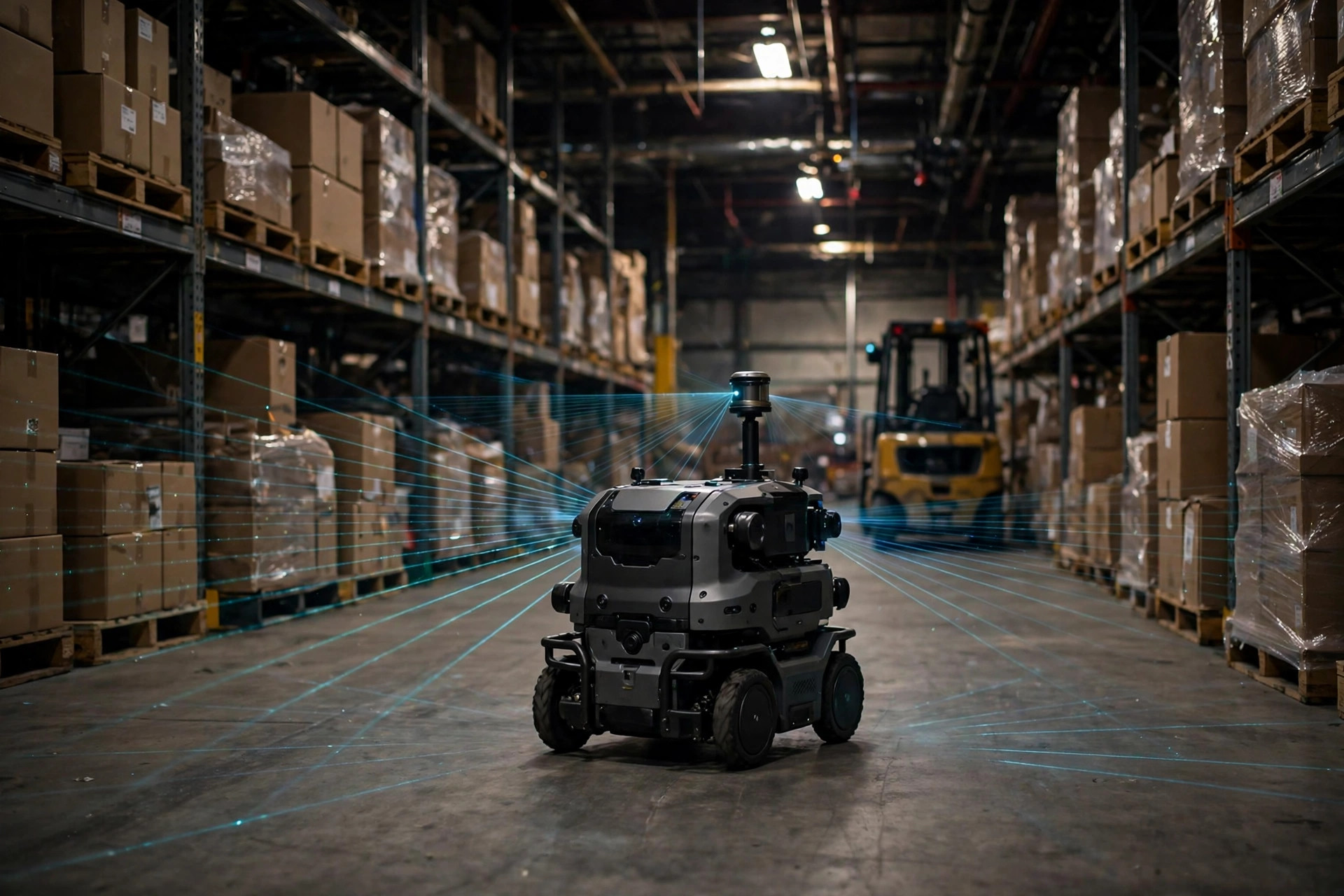
Here's the thing nobody tells you about AMRs in dusty warehouses: the problem is never whether the robot can carry the load. It's whether its eyes can see through the dust. A LiDAR fires a laser beam and measures how long the reflection takes to come back. Flour dust hangs in the air, the beam hits a dust particle and bounces straight back, and the robot concludes there's a wall 30 centimeters ahead — emergency stop, alarm, wait for a human to come rescue it. the industry calls these "airborne returns" — dust is the most common warehouse trigger, ahead of mist and steam.
The sneakier problem is the second kind: dust settles on the LiDAR window and builds into a film. It doesn't blind the robot all at once — it goes blind slowly. At first our navigation accuracy drifted from 2 centimeters to 5, and we shrugged it off. Two weeks later the robots started "hesitating" at intersections, weaving in S-curves. A month in, one lost its position entirely and sat there spinning, trying to find north. We assumed it was a software bug. The vendor spent a day diagnosing remotely, then told us to wipe the LiDAR window. One pass with a cloth came away white with flour dust, and the robot drove perfectly. That day I learned the real lesson: in a dusty warehouse, the number-one maintenance target on an AMR isn't the wheels or the battery. It's the eyes.
Here's how we worked through it, step by step, so you don't have to pay the same tuition.
Step one was the most primitive: wiping. Our maintenance sheet said "clean LiDAR window weekly." In a flour warehouse, that's a joke. we changed it to once per shift — the night crew wipes the window with a dry lint-free cloth at handover, two minutes, done. That single change cut false stops from 7 or 8 a day down to 3 or 4. Honestly, those two minutes are the highest-ROI two minutes in the whole building.
Step two was software tuning. The vendor's engineer opened two parameters remotely: multi-echo filtering — when the laser gets back several reflections, take the farthest one as the real obstacle and throw the near ones away as dust noise — and raised the confidence threshold for close-range obstacles, since dust reflections come back weak. After tuning, false stops dropped again, to 1 or 2 a day. But tune the filtering too aggressively and it costs you: once, it filtered out an empty pallet on the floor. The robot drove straight onto it and wedged a wheel for half an hour. Filtering strength versus detection sensitivity is a trade-off, and in the dustiest zones you want to leave room for human judgment — don't crank the parameters to max.
Step three is where we almost went wrong. Someone suggested sealing the LiDAR in a fully enclosed dust cover — problem solved forever, right? The vendor's engineer shook his head: what about heat? The drive motors and controller already run hot; seal them up and on a 35-degree summer day the motors overheat and derate. We actually borrowed a demo unit advertised as fully sealed IP65 to try. The dust protection was real — but after 4 hours of continuous running, the body was hot enough to fry an egg, and by day three it was throwing motor over-temperature alarms. The conclusion runs against most people's instinct:
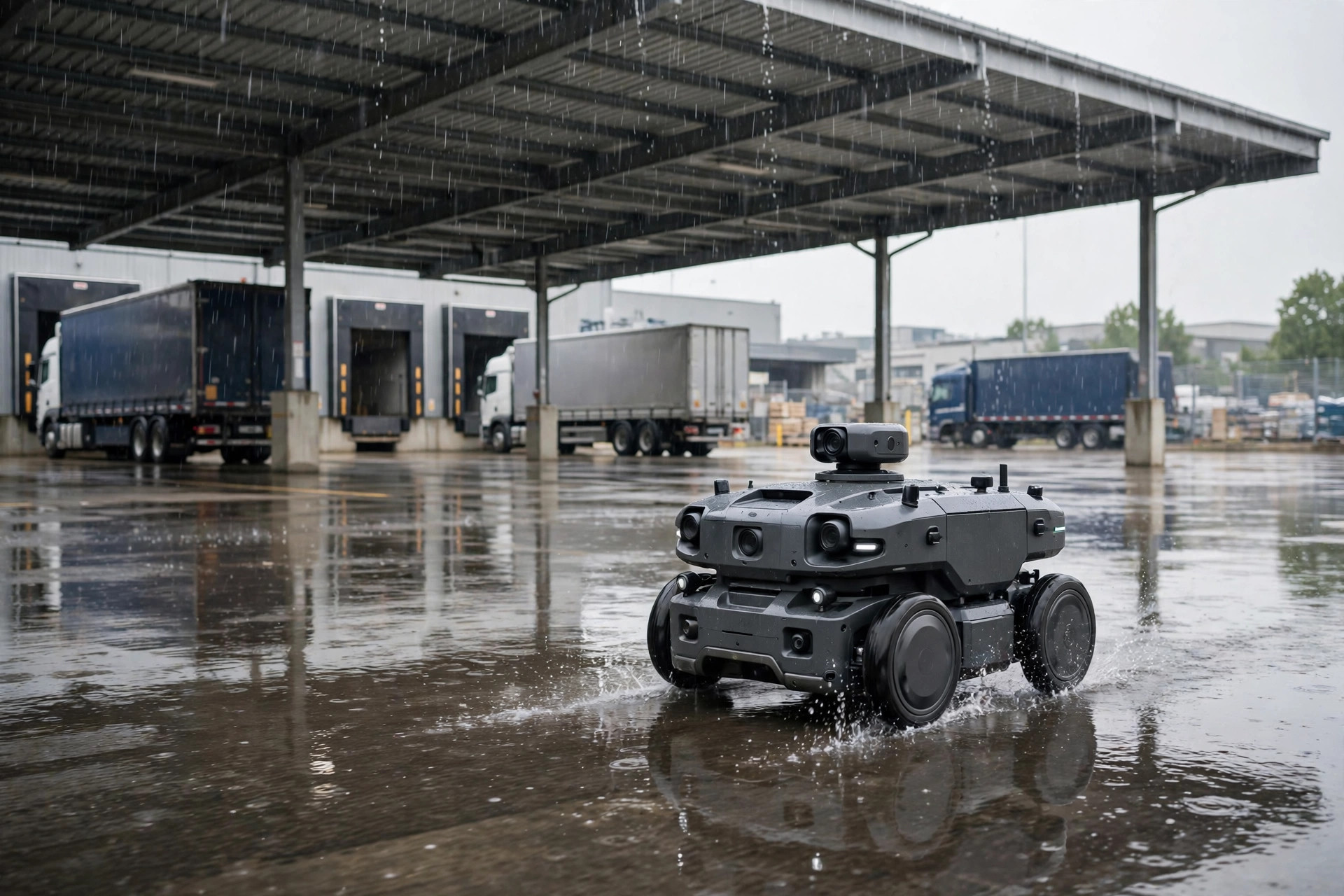
A higher IP rating is not always better. In the IP code, the first digit covers dust: 5 means "dust-protected" — some dust may get in but it won't affect operation; 6 means fully "dust-tight." Sounds like 6 wins, right? But a fully sealed IP65 body in a dusty warehouse becomes a heat trap — motors and controllers baking at high temperature, shorter lifespan. Our line in the sand is now IP52 and up — MiR's 600 and 1350 were the market's first IP52-rated AMRs, dust-protected plus drip-proof, built specifically for "challenging environments." IP52 with diligent cleaning outlasts IP65 in a flour warehouse, which is dusty but not a chemical plant.
Here's the second counterintuitive one: the most expensive LiDAR is not the most dust-proof. We trialed a unit with a high-channel-count 3D LiDAR — denser point cloud, sure, but denser noise in dust too, and it false-alarmed even more than our originals. The steadiest performer was an ordinary 2D safety LiDAR with multi-echo and dust-filtering algorithms. In dusty air, what matters in a "pair of eyes" is the anti-interference algorithm, not the channel count.
Our red-line checklist for procurement:
| Item | Our red line | Why |
|---|---|---|
| Protection rating | IP52 minimum for the whole unit; IP5X is the floor | An IP20 machine in a flour warehouse is a donation |
| LiDAR | Must have multi-echo or dust-filtering algorithms | Without this, airborne-return false stops are untreatable |
| Thermal design | No fully sealed, ventless designs | Sealed IP65 units overheat and derate in summer |
| Acceptance clause | In the contract: no more than 3 false stops per 8 continuous hours in dusty conditions | Verbal promises don't count; ink does |
| Service access | LiDAR window and filters removable by hand | If cleaning needs a ladder and a panel removal, the crew quits doing it within three months |
That last one came out of a bruising negotiation. We signed a supplementary agreement with the acceptance standard written in — "no more than 3 false stops per 8 continuous hours in the dusty zone," or the machines go back. The vendor pushed back at first, said our environment was special. After a week of stalemate they stationed an engineer on-site for three days, tuned every filter parameter and the cleaning routine, and passed in one shot. Since then, every piece of equipment entering our warehouse gets an environment clause in its acceptance terms. Colleagues, if it's not in the contract, you will lose the after-sales argument. Every time.
For maintenance, we now run what the crew calls "the big three," locked into the shift schedule:
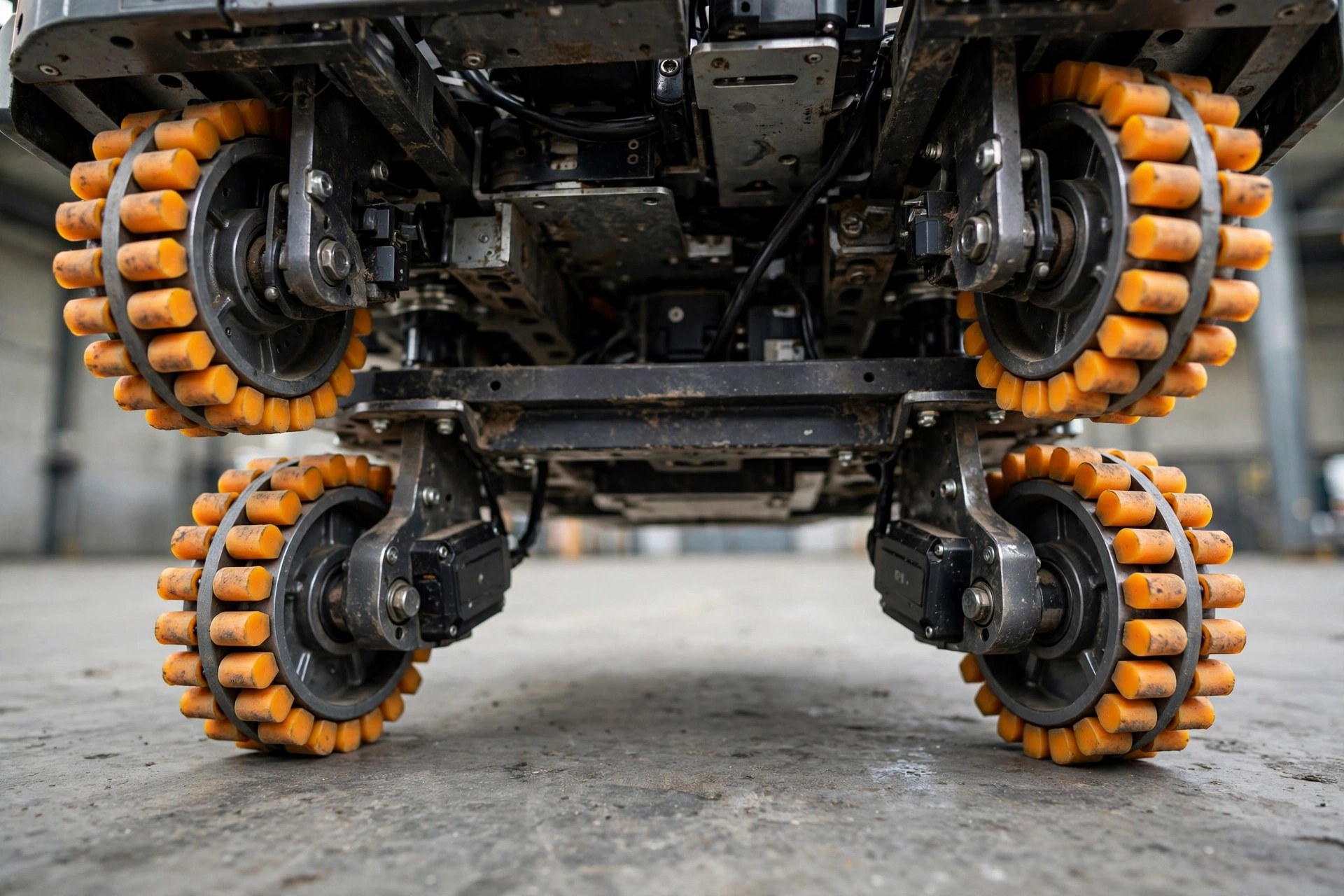
First, wipe the LiDAR window every shift with a dry lint-free cloth — never a wet rag, because water plus flour makes paste, which blinds the sensor worse. Second, swap the filters weekly — the chassis cooling-air intake has a filter, and flour dust can clog half of it in two weeks. When intake airflow drops, motor temperature climbs straight up, and navigation starts drifting with it. Xiao Wang skipped a change once; the robot started "drawing dragons," drifted a dozen centimeters off course, and nearly clipped a rack. Third, clear the wheel treads and drive axles monthly — damp flour cakes onto the wheels, and once they're coated you get slipping and bad odometry.
Four robots, and the big-three routine costs us under 800 yuan a month in labor and consumables. Back when we were eating 7 or 8 false stops a day, each reset plus waiting averaged 12 minutes — nearly an hour of lost runtime per robot per day. At our volumes, the unmoved freight in a month cost far more than ten times the maintenance.
One last reminder for fellow operators: flour warehouses, feed mills, building-material sheds — anywhere the air carries dust, ask yourself three questions before the AMRs roll in. What's the unit's IP rating? Does its LiDAR know what dust is? And is there a dusty-environment acceptance standard in the contract? If you can't answer all three, don't sign. The vendor's proposal was written for a laboratory. The dust is in your warehouse, not theirs.
By Chen Feng, Warehouse Operations Manager