Let me be blunt about amazon returns center seller reimbursement: most sellers lose this money without ever knowing where it went. The return shows delivered, sellable inventory never comes back, no credit lands, and the case is marked closed. You ask support, you get a template reply. I learned this the hard way, so now I run one rule: never trust the returns flow to police itself. You document, you reconcile, and you chase what is actually yours.
Yes, the platform changes the rules again. It always does. What counts, how much is paid, and which deadlines apply are all subject to the latest platform policy, so check the current policy before you file anything. Do not rely on a screenshot from a seller group chat from last year.
Where amazon returns center inventory actually goes
After a buyer ships a return back, the item is checked in and graded. Sellers tend to imagine two outcomes, sellable or not sellable. Real life has more buckets.
A clean item in its original condition can go back to sellable stock. An opened but unused item may go through extra handling. A used, damaged, or incomplete item is graded unsellable. Then there is the bucket that makes sellers furious: the box comes back empty, or with an old model, or with something that is not your product at all. The label gets scanned first, the inventory record moves, and only later does anyone notice the physical item does not match.
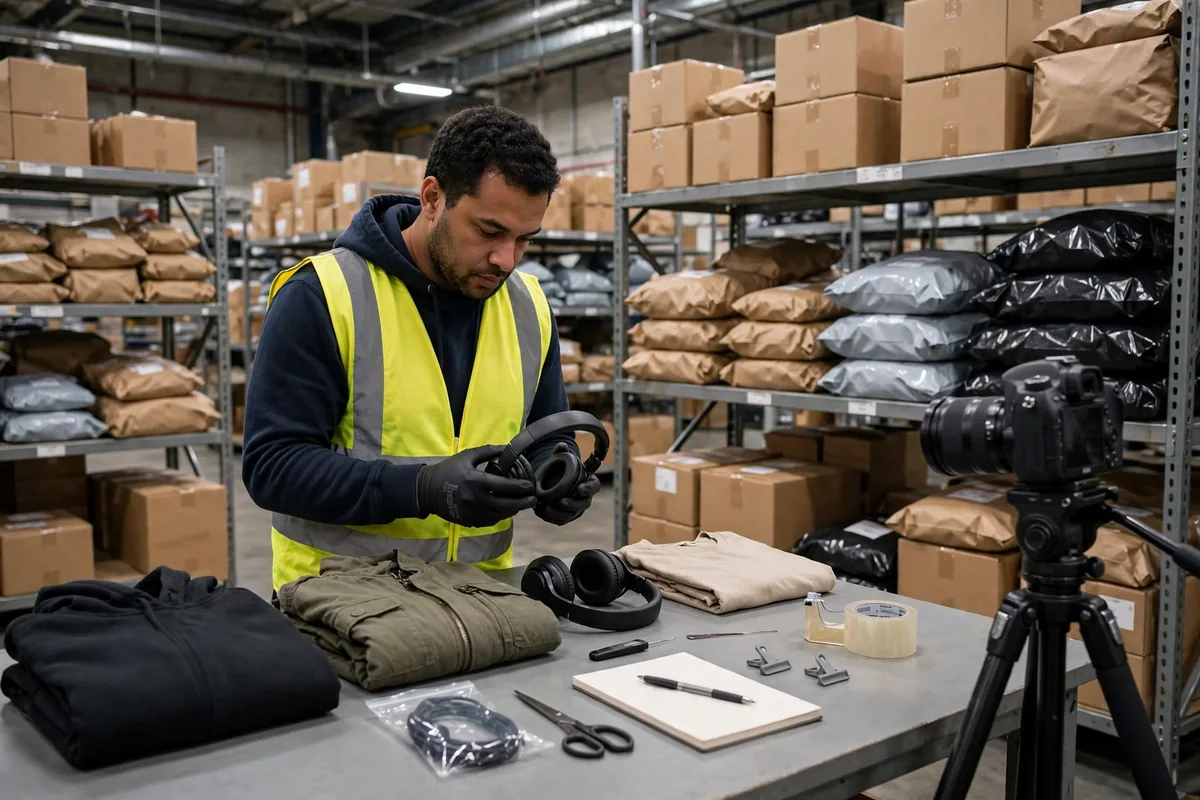
My small warehouse is in Ontario, California, and I sell Bluetooth earbuds. After the November 2024 promotion, 23 returned units showed as fully processed, but sellable inventory rose by only 9. I assumed it was a delay. Two weeks later, nothing had moved. I matched return IDs, original orders, and outbound weight records line by line. Six units had been graded as customer damaged. Eight had no matching physical item at all. Those eight became the real reimbursement fight. Without outbound weight logs and packing video, I would have had nothing to stand on.
seller reimbursement claims worth filing, and claims to skip
Cold water first. Not every return loss is recoverable. If a buyer simply changed their mind within the normal process, if the product had a real defect, or if your listing described it wrong, do not expect the platform to absorb that cost. Filing anyway burns half a day of operator time for nothing.
File where responsibility clearly sits elsewhere and your evidence is complete. I keep a simple decision table taped at the packing bench:
| Situation | Evidence to check first | What I do |
|---|---|---|
| Empty box or swapped item returned | Outbound weight, packing video, label number | Open a case at once with the weight comparison |
| Graded damaged but you have factory QC records | QC photos, batch records | Ask for a review of the grade with batch photos attached |
| Return delivered but nothing moves for a long time | Return tracking and delivery time | Reconcile and escalate once my own waiting line is passed |
| Resold return draws a wrong-item complaint | First outbound photo, return unboxing record | Pull the listing, check stock yourself before appealing |
| Buyer-caused return charged to you | Return reason and buyer note | Compare with the latest policy, file only if the mismatch is real |
Notice the table lists no payout rates and no fixed amounts, because those are governed by the latest platform policy. The method matters more: decide whose fault it is, check whether the evidence chain is complete, and only then file.
A counterexample. In March 2025, a seller I know in Shenzhen who sells camping lanterns filed claims on all 41 units in one return batch, including orders where buyers plainly said they no longer wanted the item. Most were denied, the denials buried his operator, and the 7 genuinely swapped units were missed. By the time he circled back, his own evidence was scattered. Spraying claims everywhere is not diligence. It buries the real problem.
amazon returns center seller reimbursement is won at your packing bench
This is the most valuable section in this piece. Evidence is not something you hunt for after a loss. It is a habit you build before anything goes wrong, on every higher-value unit, with no picking and choosing.
First, weigh every outbound unit. Units of the same product should weigh almost the same. If one is suddenly much lighter, the packing bench stops and rechecks it. Our clumsy but effective rule: photograph the product, the shipping label, and the scale reading in one frame. Miss one of the three and the photo is nearly useless later.
Second, bind the label to the goods. When a return comes back to your own bench or your prep partner, shoot the label first, then the full unboxing, then the serial number or a unique mark. A pretty close-up of the product alone proves nothing, because support cannot tie it to an order. I lost a case exactly that way.
Third, run returned sellable stock through its own quality check before it goes back on sale: look for scratches, power it on, count the accessories, and check for stains or odor. Apparel and personal items get a stricter pass. If it looks used, downgrade it instead of forcing it back to sellable. A resold return that triggers a wrong-item complaint forces you to explain two journeys instead of one.
Here is the counterintuitive part. The money you recover from claims is usually not the biggest prize. The bigger prize is what reconciliation reveals: a category with an abnormal swap rate, a product that keeps getting graded harshly, a listing line that confuses buyers. Fix the packaging, add a tamper seal, rewrite that listing line, and the loss shrinks at the source. Claims stop the bleeding. Reconciliation fixes the cause.
Make amazon returns center seller reimbursement a weekly habit
Do not wait for a year-end cleanup, when the evidence has gone cold. Every week, my operator pulls three lists and matches them: returns shipped, returns processed, and inventory movements plus credits received. Anything that does not match gets queued by order number. We chase the large, well-documented cases first. If the evidence cannot be completed, we drop it and move on instead of nursing it for a month.
Start small. Week one, reconcile only your highest-value category. Week two, make weight-and-photo a fixed packing step that never gets skipped on busy days. Week three, collect every denial reason and turn it into a pre-filing checklist. After a month, even support replies get shorter, because your evidence can be understood in one pass.
One last piece of plain advice: keep claim text short. Facts, dates, order numbers, evidence references. The more emotion you pour in, the deeper the facts get buried. This trick works, I have tested it myself.
By Ah K, E-commerce Seller (5 yrs)