
Hijackers on Amazon are shameless. I'm just going to say it.
Last April, my best-selling mosquito repellent clip got hit by four hijackers in a single day. They chewed through half my Buy Box share overnight. Worse, the returns coming back weren't even my product — flimsy packaging, chemical smell — and the one-star reviews all landed on my listing. I burned almost 20 hours that week on hijacker-related customer service while my ads kept spending like nothing happened.
Complaining doesn't fix anything, so I went to work. I tried the whole playbook against hijackers: reporting, test buys, price wars. All band-aids. The thing that actually worked was Amazon's Transparency program. Last June I enrolled my three hero SKUs, and today I'm laying out the full math and every pitfall — the five things your warehouse operation has to get right, no skipping.
First, Check If You Qualify: The Transparency Program's Entry Ticket
The Transparency program isn't open to everyone. Three hard requirements, all spelled out:
First, you must be the brand owner, and your trademark has to be fully registered. Heads up: Brand Registry accepts pending trademark applications, but the Transparency program does not. If your mark is still in application, wait it out.
Second, your role in Brand Registry must be rights owner.
Third, every product you enroll needs a GTIN — a UPC, EAN, that kind of barcode.
Miss any one of these and your application gets bounced. Enrollment itself is free, no subscription, no minimums. For the latest policy details, go by Amazon's official documentation.
I got stuck on requirement number one. My trademark was filed at the end of 2024 and didn't come through until May 2025 — six extra months of getting bled by hijackers. So here's my first piece of blunt advice: file your trademark early. Don't wait until hijackers show up to think about registration.
What the Transparency Program Actually Costs: Do the Math First
The code pricing is published by Amazon, tiered by annual volume on a 12-month cycle:
| Annual volume | Price per code |
|---|---|
| Up to 1M codes | $0.05 |
| 1M–10M | $0.03 |
| Above 10M | $0.01 |
Enrollment and application cost nothing. Codes are the only official fee. My own math: my three SKUs move roughly 80,000 units a year, so codes run me 80,000 × $0.05 = $4,000 a year.
But the codes are the cheap part. The real money goes into labeling. Here's the per-unit breakdown:
| Cost item | Per unit | Notes |
|---|---|---|
| Transparency code | $0.05 | Official pricing, first tier under 1M/year |
| Label/printing | $0.02–$0.03 | Published range from third-party label vendors |
| Labeling labor | $0.10–$0.55 | Based on published rates for outsourced FNSKU labeling services |
| Total | $0.17–$0.63 | Per unit |
See it? The code itself is only 8–30% of the total. The hands doing the sticking are what cost you. So when people ask "is the Transparency program expensive," the answer isn't at Amazon — it's in your own warehouse workflow.
Where to Apply the Codes: Factory Line vs. Warehouse — Your First Real Decision
You buy the codes, then every unit needs one on it. Two ways to do it, and the trade-off is clear:
Factory-line application: cheapest. Have the factory print the code directly on the packaging during production, or batch-label before shipping. Per-unit cost drops to a few cents. The risk: if the factory mislabels or prints blurry codes, the whole batch fails Amazon's inbound scan check and gets flagged. When it goes wrong, it goes wrong by the container-load.
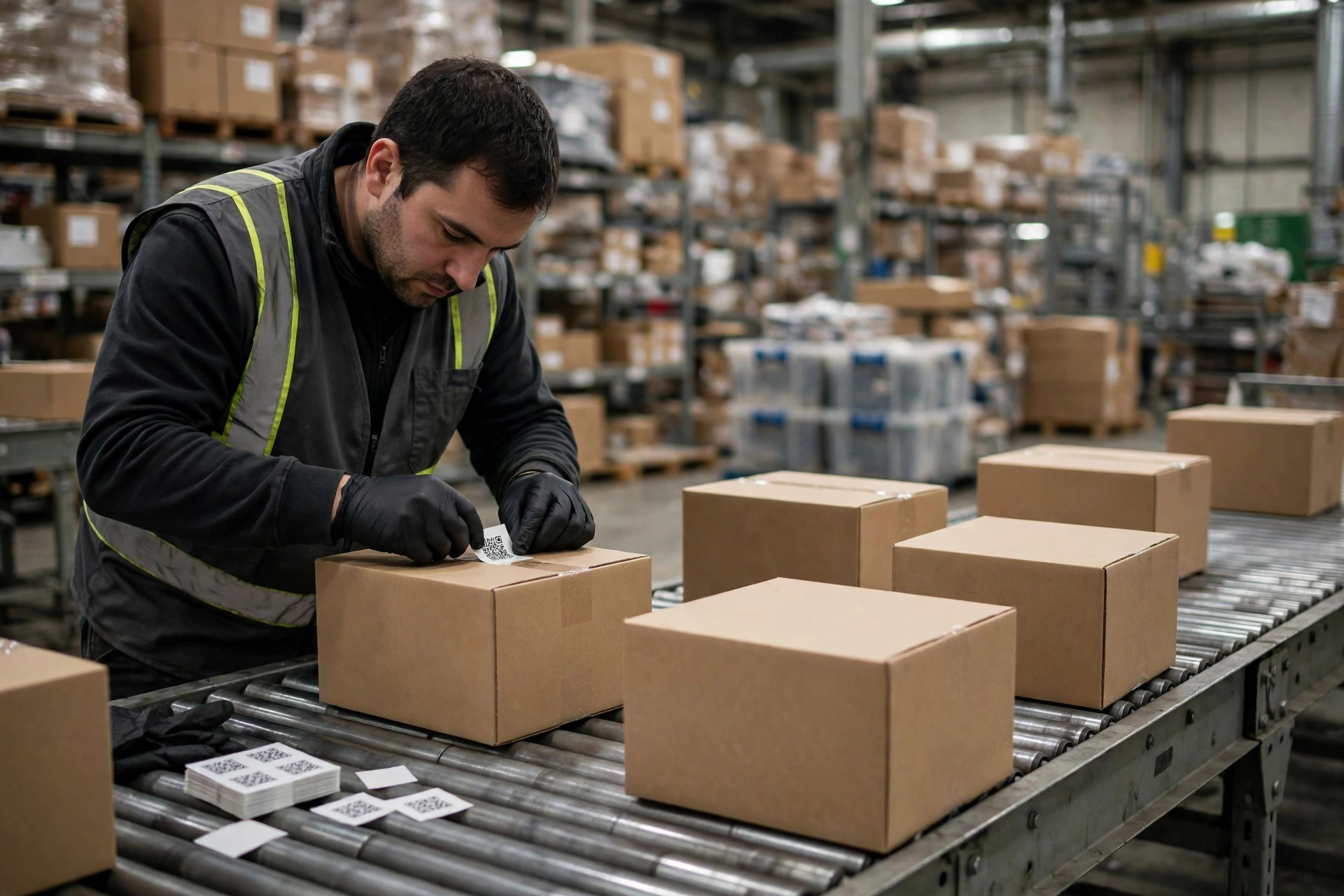
Warehouse application: flexible, better for multi-SKU small batches. That's how I did my first run — goods landed at my prep warehouse in California, two people stuck labels for three days, 8,000 units, labor worked out to about $0.35 a unit. Expensive, but I watched every single unit get its code with my own eyes.
My current setup: hero SKUs with real volume get factory-line codes, with a written agreement plus retained samples from every batch, and my warehouse spot-checks scans on receipt. New products and small runs get labeled at the warehouse. One iron rule: every unit you manufacture needs a code, whether or not that batch sells on Amazon. Half-labeled is the same as unlabeled — Amazon requires a valid code on every unit, and units without one get blocked at the warehouse.
Code Inspection: Where Warehouse Ops Blow It Most Often
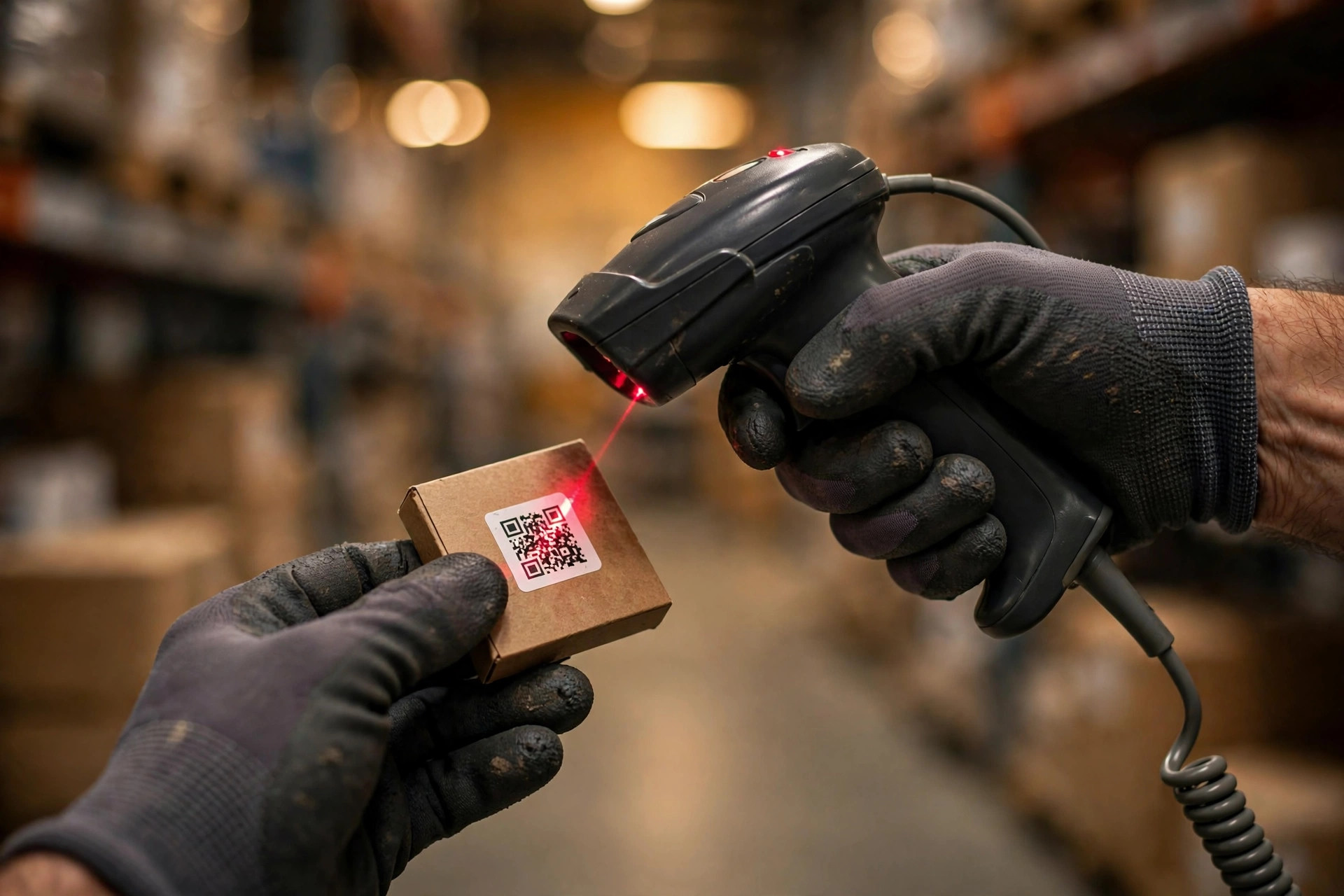
Getting the code on the product isn't the finish line. Your warehouse's inspection process is the real make-or-break. I learned this the hard way: one factory batch of 5,000 units came back with codes printed two shades too light. Looked fine to the naked eye, but the scan gun only read them half the time. The shipment hit FBA, the whole thing got flagged as abnormal, and I spent two weeks on a support case to get it released.
My warehouse inspection routine is non-negotiable now:
- Sample on receipt: pull 5% of every batch and scan each unit with a scan gun. Anything unscannable or duplicated — quarantine the whole batch, don't let it move downstream.
- Re-verify before FBA shipment: scan again at outbound, and keep a spreadsheet mapping codes to SKUs so any problem traces back to the exact batch and factory.
- Manage codes separately: Transparency codes are downloaded in bulk per SKU. Archive the download files and print logs. Don't let a warehouse guy delete them by accident.
Protection Doesn't Start When You Apply: There's One More Review
A lot of sellers think approval plus labeled units equals done. Wrong. Amazon runs an Operational Performance Review after enrollment, and protection only kicks in once you pass it.
Once activated, the effect is real: units without valid codes can't get into Amazon's warehouses. Would-be hijackers can't even ship their inventory in. Two months after my three SKUs went live with protection, hijackers went from four to zero — not because they gave up, but because their goods had no codes and couldn't get through the warehouse door. My Buy Box share climbed back above 90%, and the return rate dropped by nearly half.
But here's the counterintuitive part I have to say upfront: the Transparency program stops people from selling fakes on your listing. It doesn't stop someone from opening a separate listing for a knockoff. It's not a magic shield, and anyone expecting one program to end hijacking forever is kidding themselves. Its real value is killing the cheap hijacking business model — faking your codes raises the cost and technical bar enough that most parasites move on to easier targets.
A few last blunt warnings, the pitfall kind:
First, don't bother while your trademark is still pending. Get the registration done first. Brand Registry and the Transparency program have different rules on trademark status — don't mix them up.
Second, clear out old inventory before you switch. Units without codes will get blocked at FBA, so plan your cutover date and don't mix coded and uncoded stock in one shipment.
Third, get a written agreement with your factory on labeling: code specs, print quality, who's liable for mislabels. When my 5,000 units came back with faint codes, the factory paid for the relabeling labor — because the contract said so.
Fourth, don't protect only your hero SKUs. Hijackers migrate. You lock down the bestseller, they go after your second tier. Enroll by product line, all in. Leaving gaps is the same as not enrolling.
Tested it myself. It works. Four grand a year in code fees plus labeling costs, and in return I got my Buy Box back and I sleep fine. Yelling at hijackers fixes nothing. Codes do.
By Ah K, E-commerce Seller (5 yrs)





