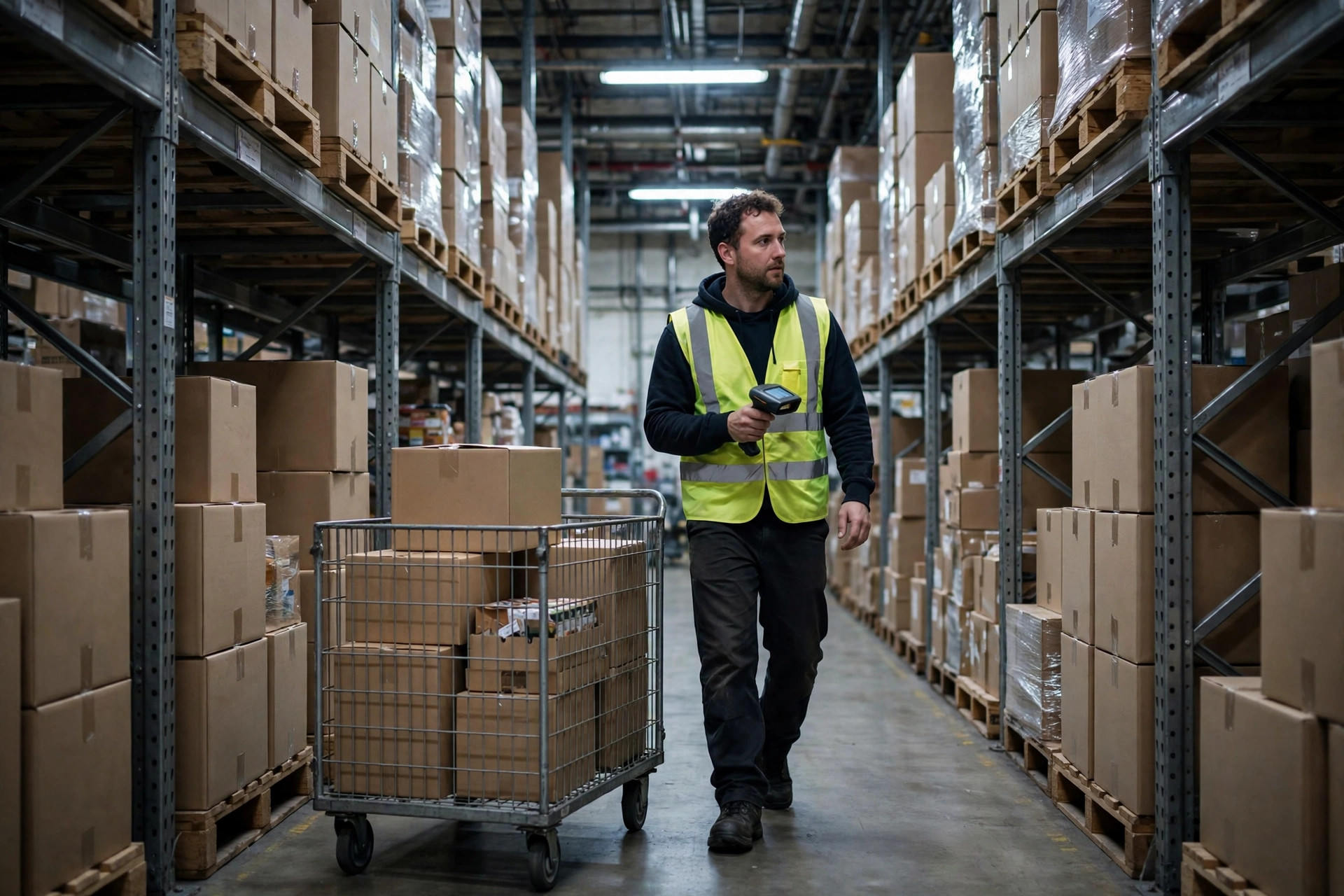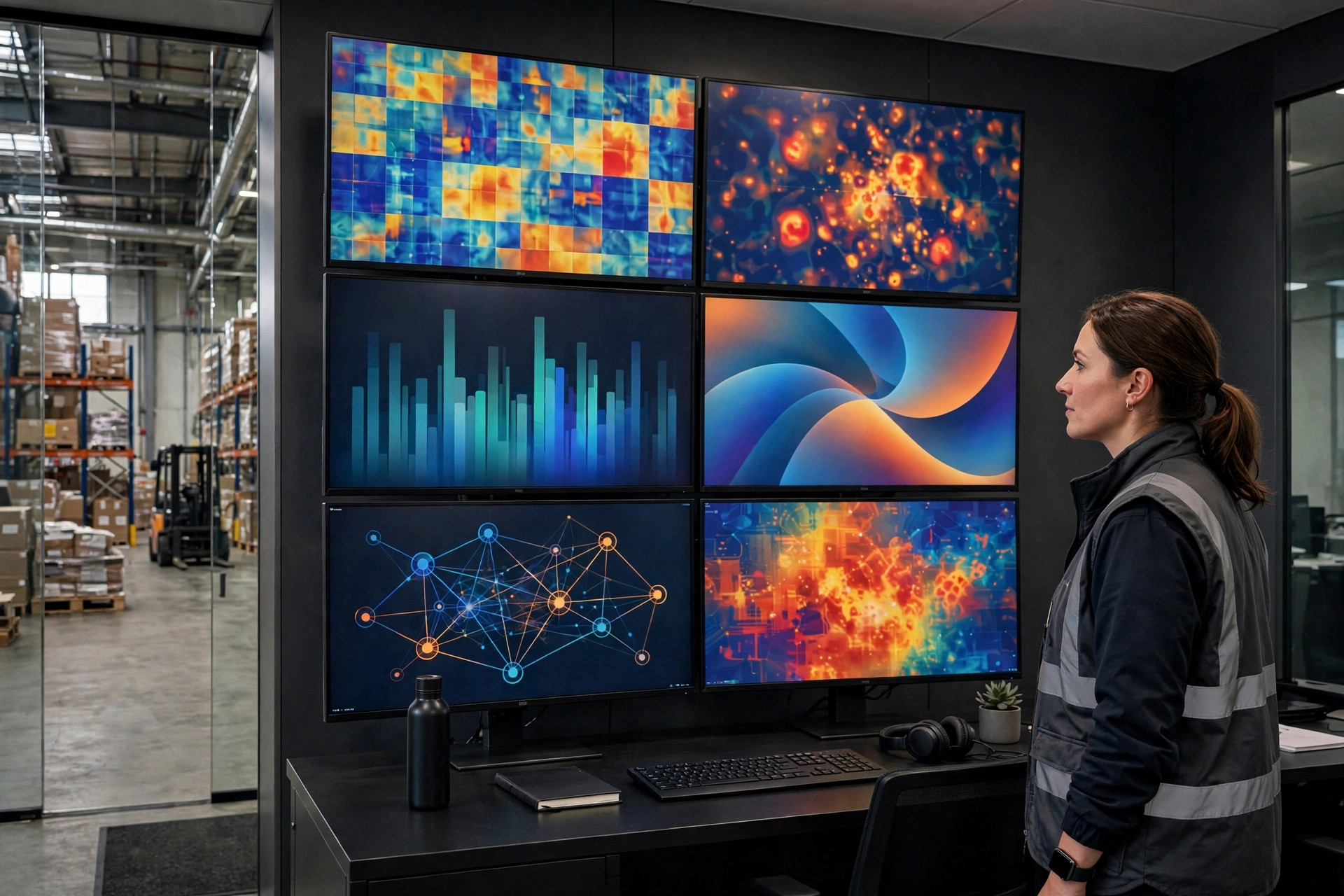
Over the past two years, AI scheduling and performance-review tools have been spreading fast inside American warehouses: rosters are no longer written by hand, and reviews no longer rest solely on a supervisor's judgment. More and more facilities now let algorithms decide who works which shift, what picking quota each worker gets, and who gets called in for "missing efficiency targets." In vendor slide decks, this story of "AI entering workforce management" is told as cost reduction and productivity gains. On the legal side, however, it is colliding with an increasingly clear compliance line — one that most warehouse operators are still underestimating.
The data: three labor-law lines already drawn
Start with California. AB 701, the Warehouse Quotas law — signed in September 2021 and effective January 1, 2022 — was the first US statute aimed directly at algorithmic quotas in warehouses. Its core requirements are threefold: employers must disclose quota standards to workers in writing; quotas may not interfere with basic rights such as meal and restroom breaks; and workers have the right to request 90 days of quota enforcement data. The intent is unmistakable: an algorithmically set pick rate cannot come at the expense of basic human needs. In late 2023, the California Attorney General's office reached a public agreement with a major e-commerce company on quota disclosure, requiring written quota disclosure at its California warehouses — the most closely watched enforcement action since AB 701 took effect, and a line in the sand for every company operating warehouses in California: algorithm-set KPIs must survive written scrutiny.
Then Illinois. The Biometric Information Privacy Act (BIPA), effective since 2008, was originally aimed at fingerprint time clocks — but its logic is now being carried into AI attendance and performance scenarios: written informed consent before collecting biometric identifiers, plus a published data retention and destruction policy. Statutory damages run $1,000 to $5,000 per violation — and "per violation" means per person, per collection, stacking fast. In recent years, Illinois courts have seen multiple class-action settlements against employers over biometric timekeeping, several reaching multimillion-dollar scale. As warehouses adopt facial recognition for clock-ins and camera-based behavior analysis to feed performance scores, a 2008 statute is likely to arrive much sooner than most operators expect.
The third line sits at the federal level. In October 2022, the General Counsel of the National Labor Relations Board (NLRB) issued a memorandum flagging how employer electronic surveillance and algorithmic management can chill workers' organizing rights. The logic: if algorithmic monitoring makes employees afraid to discuss working conditions or engage in collective action, it may implicate the "concerted activity" protections of the National Labor Relations Act. This remains enforcement guidance rather than case law — but the signal is hard to miss. Every data point an AI performance system records could one day become evidence in a labor proceeding.
Attribution: why labor regulators hit warehouses first
Here is the contrarian read: the settings where technology lands first are usually the settings where regulation lands first, too. Warehouses check all three boxes at once. First, injury and strain rates are high, so the causal link between algorithmic quotas and worker injuries is the easiest to prove — regulators don't need to imagine the risk; it's sitting in the incident reports. Second, frontline workers have the weakest bargaining power; an individual picker cannot negotiate with an algorithmically set pace, which gives regulatory intervention its strongest justification. Third, algorithmic management in warehouses is already mature — quotas, takt times, path optimization form a complete data loop, which keeps the cost of evidence-gathering low. Together, these three conditions make warehouses the first proving ground for "algorithmic management" legislation, not the last. That also explains the sequencing we've observed: AB 701 emerged in California first, and BIPA class actions found timekeeping systems first. Regulation always moves first along the path of most complete evidence and least able to resist.

Outlook: the critical window around 2027
Based on the current legislative and enforcement tempo, a timeline-backed judgment is possible. 2025–2026 looks like the window for state-level follow-on legislation, with several states already discussing AB 701-style quota disclosure bills (check each state's official site for the latest status). Around 2027, we are likely to see the first wave of litigated decisions or binding enforcement precedents on "algorithmic management," with disputes concentrating on three questions: whether algorithmic quotas effectively deprive workers of rest rights, whether biometric timekeeping rests on valid consent, and whether algorithmic performance scores are used to punish organizing activity. The EU AI Act's classification of employment-related AI systems as high-risk is a framework US state legislators are likely to borrow — multinational operators should plan against both the US and EU timelines, not the US one alone.
The compliance line: four things to do now
| Risk point | Legal basis | Compliance action |
|---|---|---|
| Algorithmic picking and scheduling quotas | California AB 701 (effective 2022) and state follow-ons | Written quota disclosure; keep human review in quota-setting; retain 90 days of quota data for inspection |
| Face/fingerprint clock-ins and behavior analysis | Illinois BIPA (2008) | Written consent before collection; published retention and destruction policy; assess non-biometric alternatives |
| Algorithmic surveillance chilling worker voice | NLRB October 2022 General Counsel memo | Minimize monitoring scope; keep a human in performance conversations; build an employee appeal channel |
| AI scores directly driving termination or demotion | Algorithmic accountability bills under discussion | Human review for major personnel decisions; scoring logic explainable and appealable |
One caution: the "state follow-on legislation" row is moving fast — verify against each state's official site before acting, and do not treat this article's descriptions as legal authority. The settlement figures and enforcement cases cited above come from public reporting; rely on court records and official announcements for exact numbers.
The bottom line is that AI scheduling and performance scoring face few remaining technical obstacles; the real bottleneck is compliance. My judgment: over the next three years, the dividing line in warehouse workforce management will not be whose algorithm is more accurate, but whose compliance foundation is more solid — because an algorithm can be iterated in three months, while a single class action can cost three years of profit.
Which leaves an open question: as algorithms start deciding who works overtime and who gets the warning talk, what does the role of the warehouse manager itself become? Technology, law, and frontline management are writing that answer together — and the 2027 decisions will only be chapter one.
By Dr. Chen, Supply Chain Researcher