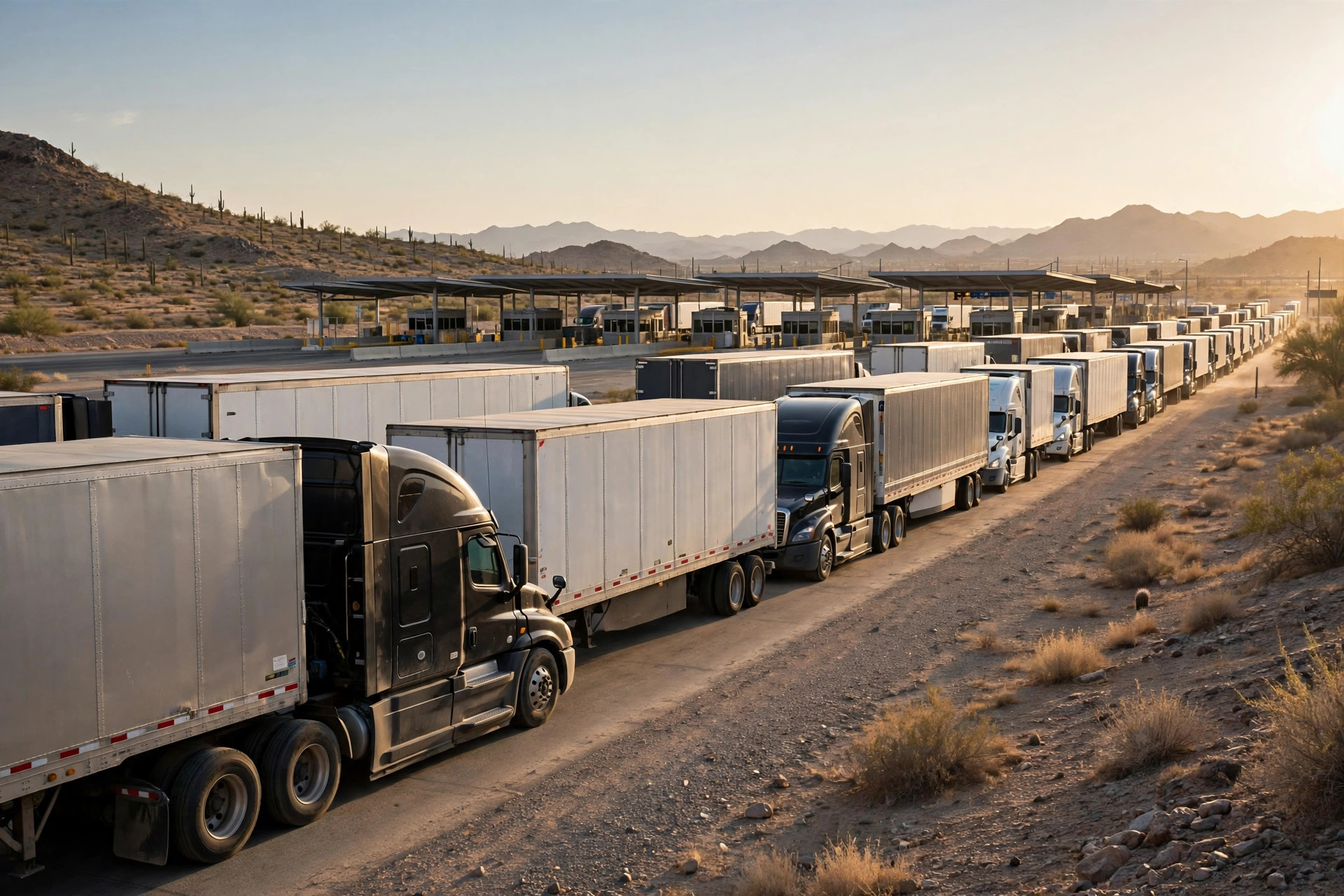
Let me tell you something: in cross-border trucking, the thing that kills you isn't the road. It's the paperwork — one bad ACE eManifest filing and your truck gets turned around at the booth. Back in the summer of 2019, I watched it happen at the Laredo port of entry. A reefer pulled up to the booth, the officer typed something, shook his head, and pointed the driver toward secondary inspection. The cargo was fine. The driver's documents were fine. The problem? His ACE eManifest was filed late. Six hours sitting in secondary. The reefer's cold chain nearly broke. After all these years on the road, I've got one plain rule for this: nobody ever thanks you for filing your ACE eManifest early, but everybody remembers when you file it late.
What ACE eManifest Actually Is
Plain talk first. ACE eManifest is US Customs and Border Protection's electronic manifest system — ACE stands for Automated Commercial Environment. Any commercial truck bringing goods into the United States has to report the trip electronically before the truck reaches the port: who's the carrier, the tractor plate, the trailer number, who's driving, what's in the trailer, how many pieces, who it's going to.
This has been the law since 2007, under 19 CFR 123.92. It's not new. And yet every year, carriers get burned by it, because a lot of folks treat the eManifest as part of "customs clearance" and assume the broker handled it. Wrong. The broker files the entry. The carrier files the manifest. Two different filings, and neither one covers for the other.
Here's how the work actually splits up:
- Carrier / fleet: files the ACE eManifest — trip, tractor, trailer, driver, cargo, seal numbers. It's your truck, so it's your manifest.
- Customs broker: files the entry and gets the entry number. Under PAPS, that entry number also has to be on file with CBP ahead of time.
- Driver: carries the paperwork — commercial invoice, bill of lading, and an ACE lead sheet (a barcoded cover page). The officer scans it and pulls up your manifest.
Three links. If any one of them is missing, the truck doesn't move. That reefer in Laredo? The broker's entry number hadn't made it into the CBP system. The manifest was filed and it still didn't matter.
The One-Hour Rule of ACE eManifest
This is the most important sentence in this whole piece, so memorize it: as a rule, the manifest must be accepted by CBP at least one hour before the truck arrives at the first US port of arrival. The broker's entry number has to be on file by the same deadline.
A few things people get wrong about this:
First, that hour means "accepted by CBP," not "you hit send." If you file 59 minutes out, get bounced back for an error, and refile — you're already late. The old hands file at least 2 to 3 hours ahead, leaving time to fix a rejection. The three most common reasons a filing gets bounced? A plate number mistyped by one digit, a vague commodity description (writing "general merchandise" is the same as writing nothing), and driver information that doesn't match.
Second, there's an exception called FAST (Free and Secure Trade). Carriers, drivers, and shipments that qualify can use a 30-minute window instead of an hour. Don't bank on it, though — FAST enrollment has to be applied for and approved, and most small fleets don't have it. Check the current requirements on the CBP website; policies change and the official site is the authority.
Third, empty trailers count. Plenty of drivers think a deadhead trip back doesn't need a manifest. It does — you just file it marked "empty." No filing, no crossing.
What Late or Wrong Filing Really Costs: It's Not Just Waiting in Line
This is the biggest misunderstanding out there: people think filing late means "crossing a little later." I'm telling you, that's not how it works.
The consequences come in three layers, each one worse than the last:
Layer one: refused entry. CBP can deny the permit to proceed — the truck gets turned around at the booth. You sat in line for three hours, your turn finally comes, and the officer says: go back. That's not a delay. That's a wasted trip.
Layer two: detention and inspection. The truck gets pulled into secondary, and a secondary inspection starts at several hours. Reefer loads, perishables, fresh e-commerce freight — a few hours can wreck the product. That Laredo reefer sat for six hours; the shipper's cold-chain record broke, and the claim fight dragged on for two months.
Layer three: fines. Under CBP's Trade Act penalty framework, egregious violations — carriers that make no attempt to comply — start at $5,000 for the first offense and go up to $10,000 for subsequent ones, under 19 USC 1436. And here's the part that stings: the fine hits the carrier, not the broker. A lot of small fleets on the southern border rely on a US or Mexican broker to file their manifests for them. When it goes wrong, it's the trucker who pays. What's $5,000 in this business? More than a week's revenue on a typical Mexico-US lane. One fine can wipe out a week.
Do the math and it gets obvious. There are filing services that will transmit your manifest for a few dollars a trip. Or your dispatcher files it free on CBP's ACE Portal — the cost is just labor. A $5,000 fine pays for 300+ manifest filings. Skipping the filing to save a few bucks is the dumbest gamble in cross-border trucking.
My Checklist, After All These Years on the Road
Tape this to the dispatch office wall:
- Filing the manifest is the carrier's job. Don't hand it to the broker and forget it. You can hire a service to file for you, but the liability stays with the carrier. The SCAC code is yours, the manifest account is yours.
- File 2 hours out, keep 1 hour for corrections. One hour is the legal floor, not the operating target. Your dispatcher's KPI should be "accepted 2 hours ahead," not "sent right at the deadline."
- Tractor plate, trailer number, seal numbers — triple-check. Swapped the tractor or trailer mid-trip? Update the manifest immediately. A mid-trip equipment change without an update counts as no filing.
- Before the driver rolls, confirm two things: the manifest status is accepted (not just sent), and the broker's entry number is on file. Both green, then dispatch.
- Empty trucks, consolidated loads, reroutes in transit — refile or update. Cargo info changed without an update? That gets treated as a wrong filing.
There's an old saying on the road: the careful driver outlives the fast one. In this business, paperwork is transit time, and transit time is money. Get the eManifest right and nobody remembers. Get it wrong and the whole company remembers.
By Shifu Zhao, Trucking Veteran (15 yrs)