Let me start with a complaint. Right now everyone is shouting that AI belongs in the warehouse. The demo videos at trade shows look smoother every year, the vendor quotes look better every year, and you would think any warehouse without AI is going bankrupt tomorrow. I have sold online for five years, switched warehouses three times, and sat through two AI pilots, and here is the honest truth: most AI warehouse projects do not die because the technology fails. They die because nobody seriously ran the AI warehouse project ROI numbers first.
AI Warehouse Pilots Are Very Good at Fooling You
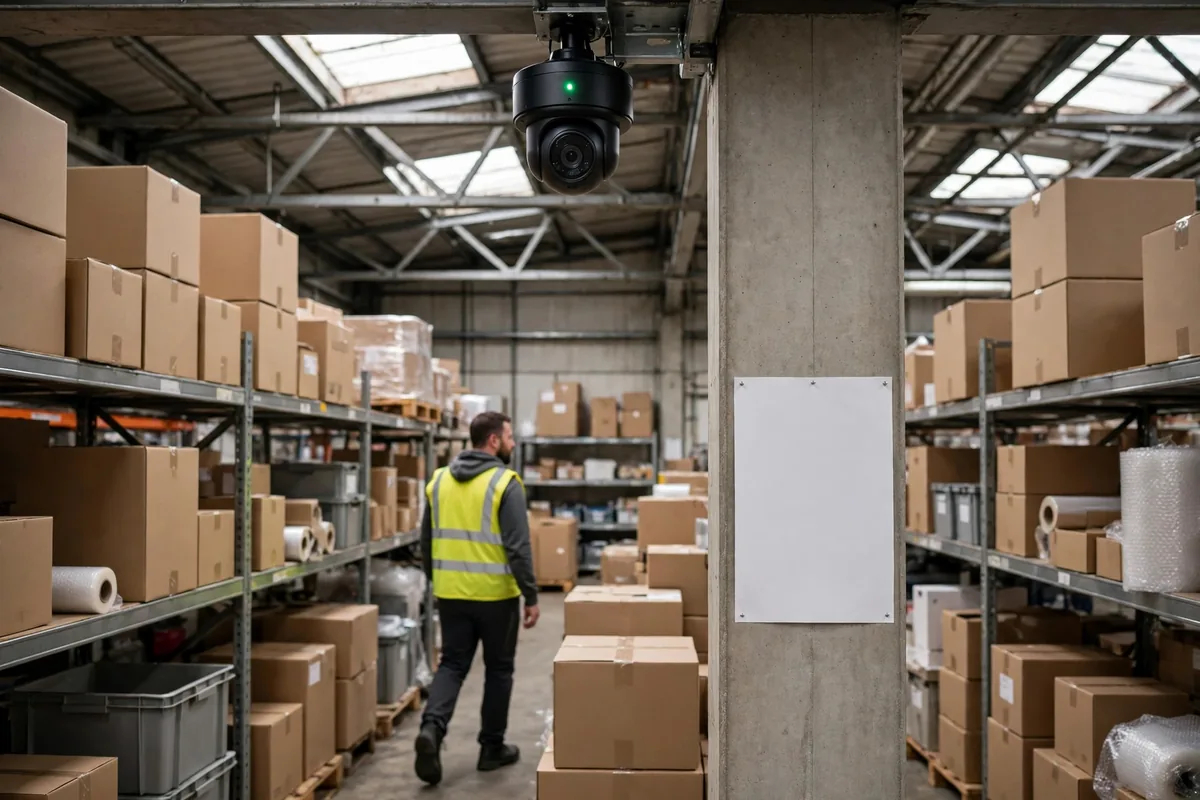
Last year I tried an AI vision check with a partner warehouse. We put it on the packing bench: a camera scans each parcel, the system matches it against the order, and it flags anything short-packed or over-packed. Demo day looked unreal. The vendor's engineer promised accuracy above 99 percent on the spot. We signed a three-month pilot and installed two units.
Here is a hypothetical scenario of how it actually went. In the first month, the numbers looked great, and the error rate dropped well below the old manual spot-check level. Then month two arrived. Peak season doubled the order volume, the conveyor sped up, and the camera started missing things. We switched to new packaging, the system did not recognize it, and someone had to retune the model. Worst of all, nobody in the warehouse wanted to stare at alerts all day, so once the alerts piled up, people started bulk-approving them, and we were right back where we started. Over three months, the math worked out like this, all figures hypothetical: hardware plus software plus integration came to about $40,000 upfront, roughly $1,100 a month spread over three years; the manual recheck time we saved was worth about $900 a month; fewer mispick payouts saved about $400 a month. On paper that is $200 a month ahead, which sounds fine, until you notice the pilot only covered two packing benches. Rolling it out across the whole warehouse would double the investment, and the returns would not necessarily double with it.
Here is the counterintuitive part: a successful pilot proves almost nothing about a full rollout. The smaller and cleaner the pilot, the better the numbers look. A real warehouse is dirty data, new packaging, peak season and staff turnover all happening at once. Vendor demos always run on clean data. What your warehouse's real data actually looks like, only you know.
AI warehouse project ROI: fill in this table before you sign
My rule now is simple. Before I sign anything for an AI project, I fill in the table below, and if I cannot fill it in, I do not sign. Every number in it is a hypothetical example: replace them with your warehouse's real numbers and run it again.
| Item | Amount (hypothetical example) | | One-time cost: software, hardware, integration, training | About $40,000 | | Monthly cost: subscription, maintenance, retuning | About $800 | | Monthly saving: manual recheck time | About $900 | | Monthly saving: fewer mispicks and returns | About $400 | | Payback period | About 30 months |
If the payback period runs past two years, I usually walk away. The reasoning is simple: AI products iterate fast, and two years from now the same capability will probably be half the price and twice as good. Locking yourself into a three-year contract now means paying to fund the vendor's research. There is one more cost most people leave out: the hidden cost of the pilot itself. Engineers flying in and out, staff pulled off their shifts to help with testing, packing benches stopped for recalibration, all of that is money. In a hypothetical example, three months of pilot support from the warehouse side can easily add up to $3,000 in labor, and that number never appears on any quote, but it comes straight out of your margin. This is why AI warehouse project ROI has to be calculated on the full picture, not just the subscription line.
Here is a hypothetical example that shows why volume changes everything. A small warehouse doing 800 orders a day with a mispick rate of 0.3 percent only pays out on two or three orders a month, and the savings would not even cover the subscription. A warehouse doing 8,000 orders a day at the same error rate is looking at twenty-plus problem orders a day, with payouts and customer service costing well over $10,000 a month, and suddenly the same AI system makes sense. Same product, ten times the volume, opposite answer. ROI is never a property of the product. It is a property of your volume. Three questions come before the table. First, does this problem happen every single day? A problem that shows up once a week is not worth an AI project. Second, is the data ready, or do you need three months of cleanup first? If cleanup comes first, double the budget. Third, if it fails, can you fall back to manual work? If there is no way back, I will not touch it, no matter how cheap it looks.
Three traps in AI projects, and I walked into two of them
The first trap is dirty data. The vendor demo used photos shot under perfect light at perfect angles. In your warehouse, half the lights are broken, the tape on parcels glares, and the camera sees nothing but white blobs. Nobody puts data cleanup on the quote. You pay for it yourself in the end.
The second trap is counting only the software price and forgetting the integration price. A subscription of a few hundred dollars a month looks cheap, but connecting it to your WMS, changing the packing bench layout and training the staff often costs more than the software itself. Whatever is missing from the quote is usually the biggest line item.
The third trap is treating the pilot as the finish line. Plenty of sellers see beautiful pilot numbers, rush into a full rollout, and watch the whole thing collapse during peak season. The cost of rolling back is higher than the pilot itself. Peak season is the best lie detector: double the volume, speed up the conveyor, and every problem the demo hid comes out at once. Scaling up before a pilot has survived a peak season is like jumping in without checking the water. My rule is that a pilot has to survive one full peak season with the numbers still standing before anyone talks about scaling up.
This one actually worked for me: the next time someone brings you an AI proposal, skip the demo video and ask them to fill in the table above. If the numbers do not add up, send them back to redo the math. A vendor who can show their working is the only kind worth talking to further.
By Ah K, E-commerce Seller (5 yrs)