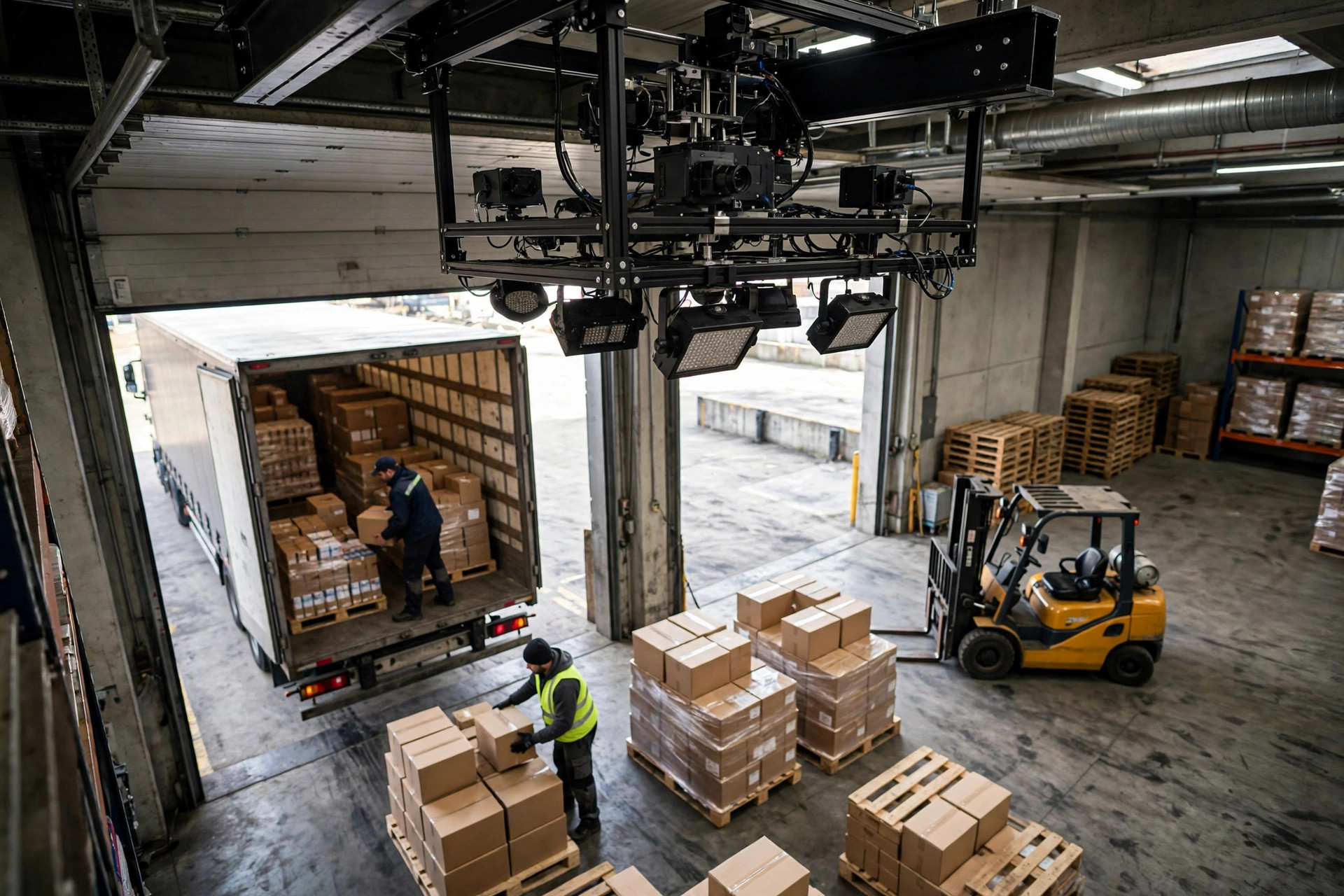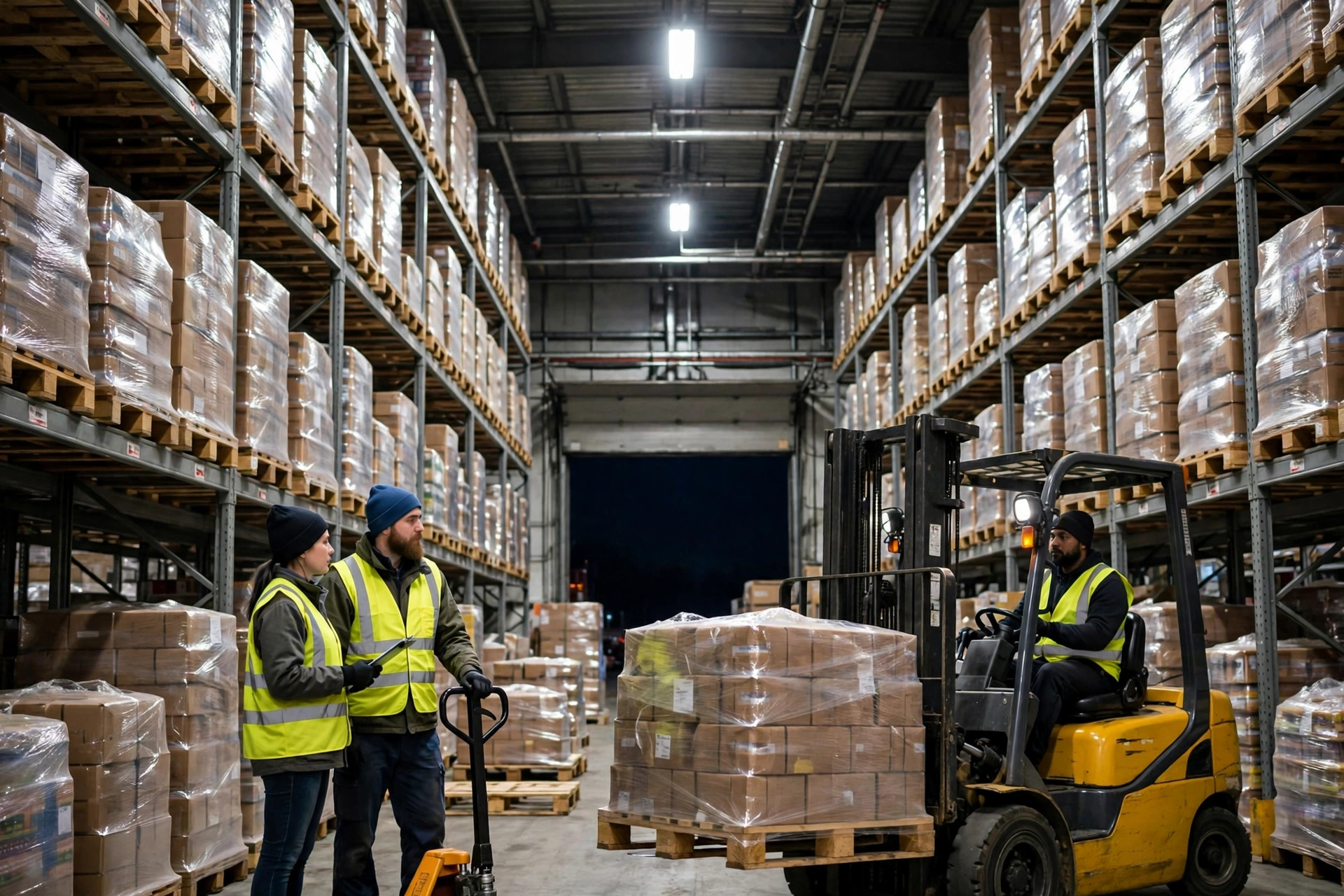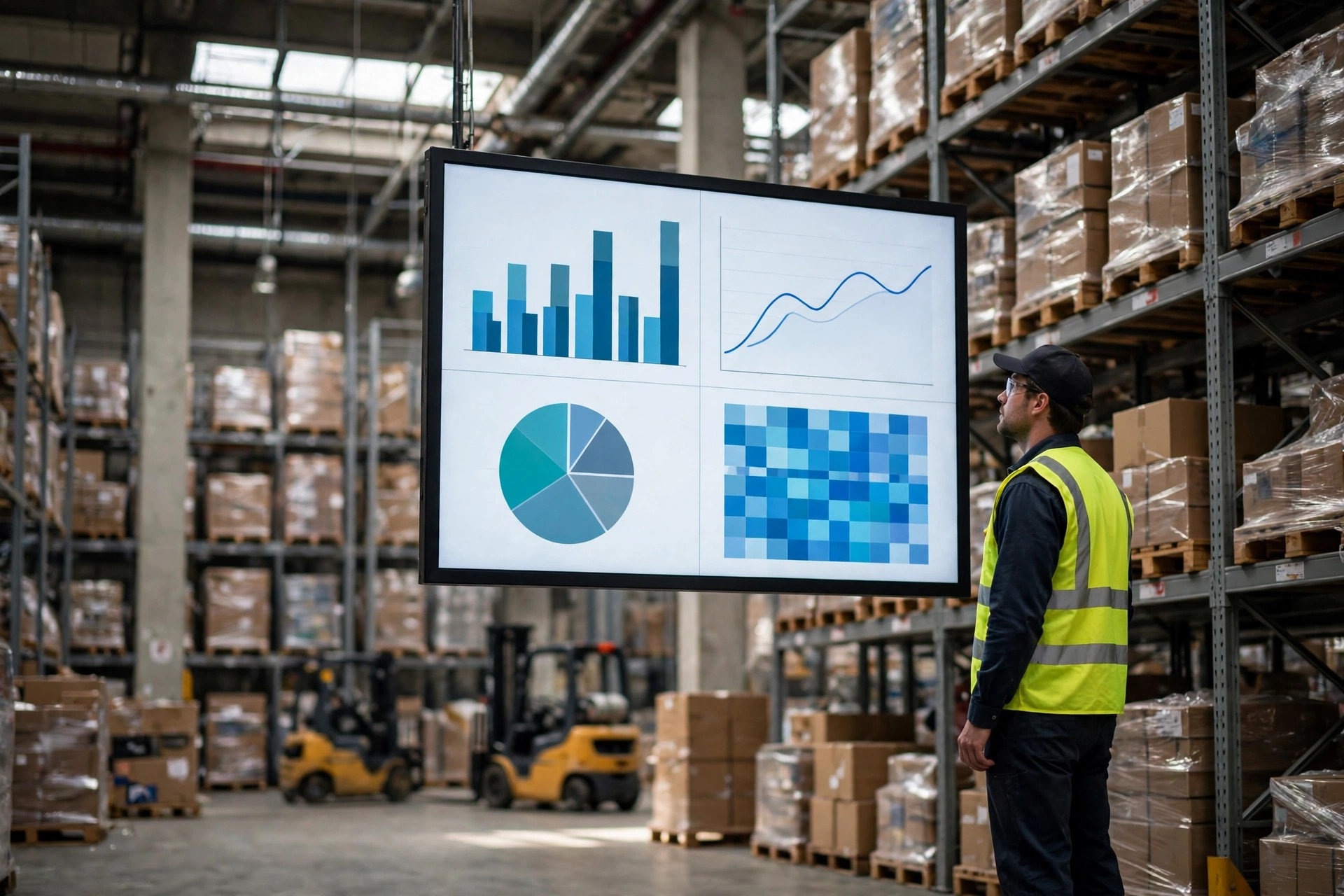
In the autumn of 2024, I walked through an appliance-parts warehouse in eastern China, where slow-moving inventory was already gathering dust, and found three rows of racking filled with the same electric motor, a thin layer of dust on the outer cartons. The warehouse manager told me the part had been a fast seller when it arrived, that orders had begun thinning out roughly six months earlier, and that by the time anyone noticed, nobody was asking for it anymore. That is the normal biography of slow-moving inventory: it rarely arrives overnight. It develops slowly, its early symptoms scattered across orders, receipts, and sales records, and nobody connects them until the stock is already stranded. An AI forecast does that connecting work, assembling faint changes in everyday data into a single picture and raising a flag while there is still time to act.
Slow-Moving Inventory Rarely Appears Suddenly; It Slows Down Gradually
Consider a small-appliance seller whose air-fryer accessory shipped about 40,000 units a month from its eastern China warehouse in the second half of 2023, then slid to just over 20,000 units a month, while replenishment continued at the old peak-season rhythm. When the stock was counted in early 2024, the warehouse held roughly nine months of cover, and two newer generations of the same product category were already on the market. A lighting company followed the same script in a different form: in late 2022, orders for one ceiling-light model fell from more than a dozen a week to two or three, orders grew smaller and further apart, yet the warehouse kept receiving full pallets. In both cases, sell-through slowed first and inventory piled up months later, and human intuition, which reads one picking list or one purchase order at a time, could not keep pace with a demand curve bending steadily downward.
Long-running observation of inventory turnover points to the same conclusion: the formation period of slow-moving stock typically stretches over several months, and the hard part is not disposal but recognition. The warehouse team sees individual shipments, purchasing sees individual replenishments, and nobody watches the category curve itself. The value of an AI forecast here is not a miraculous number; it is a curve drawn in time, with a threshold that triggers a message to the person responsible before the curve flattens completely.
Four Signals Together Make an AI Slow-Moving Inventory Forecast
A single signal misleads easily; four signals arriving together change the picture entirely. The first is declining sell-through: outbound volume for a category running below its historical average for several consecutive periods, with no seasonal explanation. The second is a change in order frequency: fewer orders, smaller orders, and longer gaps between repeat purchases, which often reveal shrinking demand earlier than total sales do. The third is seasonal misalignment: a product that should be rising at this point in the year stays flat, or whose peak season shrinks year after year. The fourth is a substitution signal: a successor model or alternative product is climbing while searches and inquiries for the old item fade, a pattern buried in sales and customer-service records that no one reads line by line.
Put the four signals into one decision table, and the warning becomes something a warehouse can act on:
| Signal combination | Warning level | First move in the warehouse |
|---|---|---|
| Sell-through decline only | Watch | Shorten the review cycle, add no new orders |
| Decline plus falling order frequency | Yellow warning | Freeze replenishment, count stock in transit |
| Three signals together | Orange warning | Cut purchasing, assess transfer options |
| All four signals present | Red warning | Cut purchasing, promote, and negotiate returns in parallel |
The arithmetic shows why six months of lead time matters. Suppose a category ships 10,000 units a month and holds 60,000 units, or six months of cover. If the warning prompts the team to halve the next two replenishment batches, roughly 20,000 units never enter the warehouse; at a unit cost of 50 yuan, that is about 1 million yuan of capital that is never tied up in slow stock. Wait until the goods are truly unsellable, and the discount required to move them often falls below half price, on top of months of storage and handling cost. What an early forecast saves is not the discount; it is the stock that never needed to arrive.
After the Warning, the Warehouse Has Only Four Responses
A warning is useful only because the response window is still open. The first response is to cut purchasing, and it is the cheapest: stop what is in transit or planned, accepting a short-term shortage rather than a long-term overhang. The second is promotion, which suits products that still have a market but are price-sensitive, provided it starts before the item acquires a clearance reputation. The third is transfer: moving stock from a weak region or channel to a stronger one, where the same goods may sell normally. The fourth is returning goods to the supplier or swapping them, which works only where a return policy exists and must be negotiated while the stock is still healthy, because leverage disappears once the goods are stranded.
Here lies a counterintuitive judgment: after a warning, the most dangerous response is often to wait and see. The instinct is understandable, since the product is still moving, only more slowly, and demand might recover. But when all four signals are present, a spontaneous recovery is uncommon, while the cost of waiting is certain: another month of storage fees, another month of tied-up capital, and a deeper discount when disposal finally happens. The real trade-off in AI forecasting is not accuracy versus error; it is the small cost of acting early against the large cost of acting late. Promotion can damage a price structure, transfers incur freight, and cutting purchases risks a short-term stockout, and all of those costs are real, yet they remain small beside an entire batch turning into slow stock.
AI Forecasts Will Produce False Alarms
The boundaries of an AI forecast deserve to be stated plainly, because this is where trust is won or lost. Seasonal products are the easiest source of false alarms: pool equipment does not sell in winter, and a model that does not understand seasonal rhythm will raise an alert every winter. Promotions, platform sales events, and product switchover periods distort the data in the same way, since the dip after a big promotion can look like shrinking demand. A third source of error is the data itself: a channel shift can reduce one warehouse's outbound volume while total sales across channels are unchanged, and a forecast that watches a single warehouse will misread that shift as decline.
Two human checkpoints should therefore sit behind every warning. The first is a business review: the alert goes to someone who knows the category and can judge whether the pattern is seasonal, promotional, or genuine decline. The second is a tiered response: a yellow warning freezes new purchasing only and leaves existing stock untouched, while a red warning unlocks promotion and return negotiations. False alarms themselves are not fatal; what destroys confidence is a system with no tiers, where one false alarm triggers a clearance sale. In this arrangement the AI is a sentry, not a commander: it puts a suspicious trend on the table early, and the decision stays with people.
The broader trend is a shift from discovering slow stock at the quarterly stock count to monitoring its signals continuously. In the past, a company learned which goods had gone slow only when it counted them; increasingly, the moment a sell-through curve weakens, a countdown begins. A further variable is the widening of data sources: when sales, customer inquiries, successor-product launches, and channel shifts can be read on the same chart, the lead time of a forecast lengthens further. But longer lead time also brings higher uncertainty, which makes tiered responses and human review more important, not less. Technology can now place a warning in front of a manager six months before the stock strands itself. Whether the organization is willing to cut purchasing while the product is still selling is a question of habit, not of algorithms, and the next batch of slow stock may already be sitting on a rack somewhere, its sell-through curve only just beginning to bend.
By Dr. Chen, Supply Chain Researcher