Here's the conclusion up front: slotting optimization is one of the easiest AI use cases in a warehouse to justify with hard ROI. Two conditions: your data can't be garbage, and don't expect the algorithm to make decisions for you. It's a tireless analyst, not a manager.
The last few years have brought a parade of warehouse AI stories — vision inspection, autonomous forklifts, voice picking. Exciting demos, all of them. But in my experience, the AI project that actually gets small and mid-size warehouse operators to open their wallets is far less glamorous: an algorithm that tells you where each SKU should live. The math is just easier to believe. Every step a picker doesn't walk is money.
What the algorithm actually eats
Let me demystify this first: slotting algorithms aren't magic. A veteran warehouse manager with ten years of Excel could hand-build 70 or 80 percent of the result. AI's advantage isn't being smarter — it's recomputing everything every week without getting bored. No human has the stamina for that.
The inputs are four things. First, order-line history: how many times each SKU was ordered over the past few months. That's the core of everything. Second, each-pick frequency — and note, this is pick lines, not shipped units. A SKU that ships 100 units in one order costs one trip to the slot; a SKU ordered 50 times a day as single-piece orders costs 50 trips. The second one belongs near the start of the pick path. Third, SKU affinity: items frequently bought together should live together. The algorithm calls it affinity; pickers call it "convenient." Fourth, physical attributes: dimensions, weight, slot location — heavy goes low, bulky doesn't fit in small slots.
The outputs are refreshingly practical: an ABC re-slotting recommendation (which SKUs belong in the golden pick zone), a forward-pick-face adjustment list, and replenishment suggestions. Note the word "recommendation." The best implementation I've seen: every Monday morning the system produces a suggestion list, the warehouse manager spends 30 minutes reviewing it, and decides what to execute. That half hour of human judgment covers exactly what the algorithm lacks — it doesn't know about next week's promo, and it doesn't know a supplier is changing a product's packaging.
A concrete example: an e-commerce DC selling home goods discovered through the algorithm that fitted sheets and pillowcases appeared together in 70% of orders. Moving them to adjacent pick faces cut travel distance for those orders by nearly a third. A human could have thought of it — but nobody's brain can crunch the pairwise combinations of 8,000 SKUs.

The ROI math: un-walked miles are money
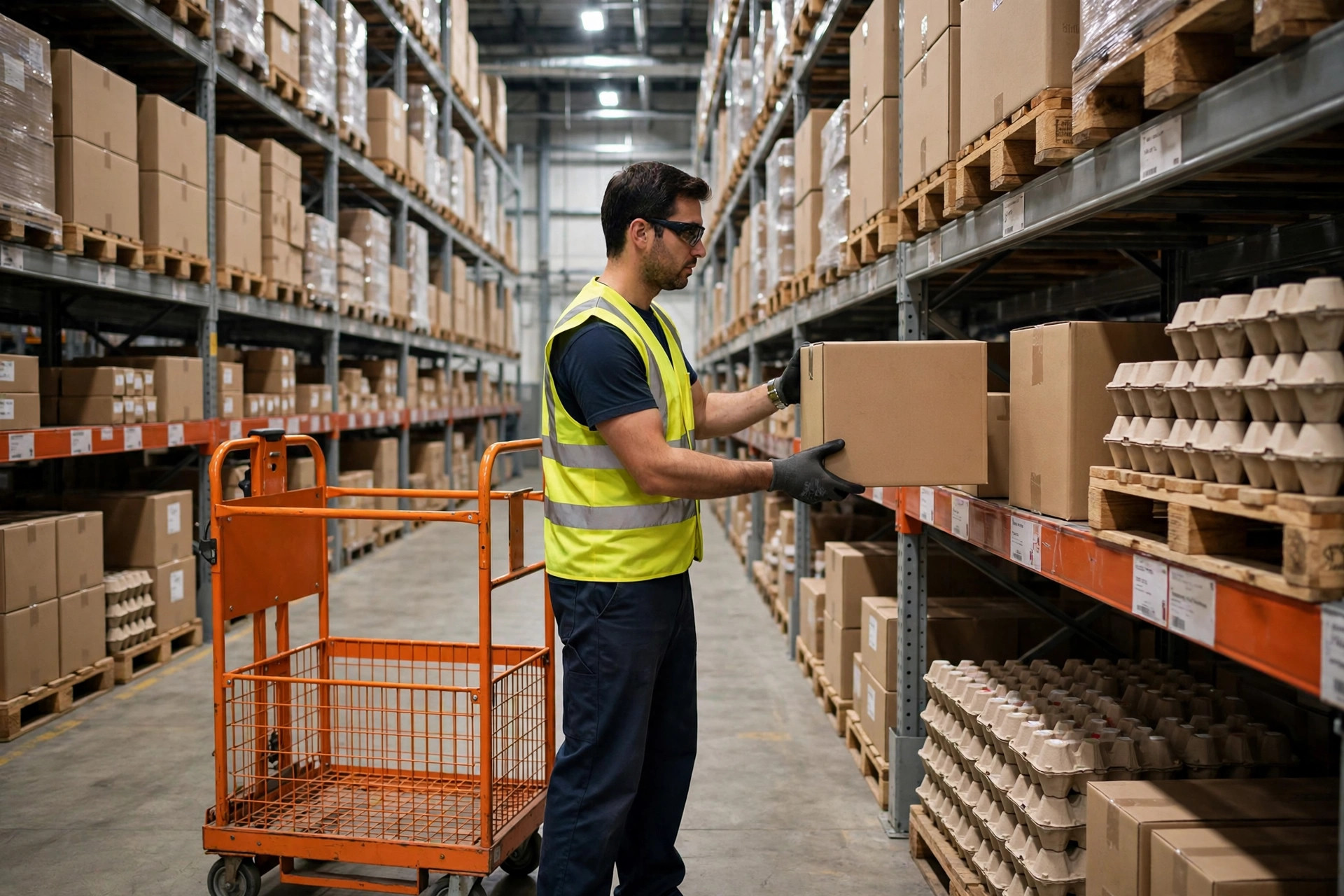
Let me give you the framework. Picking is the most expensive manual job in a warehouse, and field studies consistently show pickers walking miles per shift, with well over half their time spent traveling rather than actually picking. Slotting optimization moves fast movers to the picker's doorstep and pushes slow movers to the far end. A typical improvement range I see quoted is 10 to 20 percent less travel distance. That sounds modest until you multiply it by headcount and hourly wages.
On the cost side, this capability either comes as a slotting module inside your WMS or as a standalone SaaS subscription, priced by facility size and SKU count — get current pricing from the vendor. My rule of thumb is blunt: compare the annual software cost against saved labor hours times your wage rate. Payback inside a year? Take it. Over two years? Pilot first.
For verifying results, there's an unglamorous method that works: shadow mode. Don't act on the algorithm's suggestions yet — run them against two weeks of real historical orders and compare total travel distance under "suggested layout" versus "current layout." Even better, run an A/B test: two comparable pick zones, one following the algorithm, one doing things the old way, for a month. Compare pick productivity and error rates. The numbers will speak louder than any sales deck.
Here's a costing framework: a mid-size e-commerce DC with 40 pickers. If optimization saves each picker 20 minutes of walking a day, multiply the annual saved hours by your wage rate and compare against the software's yearly cost. The catch: the saved time must be measured — use pedometers or WMS task timestamps during the pilot, not gut estimates.
Where does it break? Three traps I've seen up close. First, dirty data: mislabeled barcodes, wrong slot records, returns never put away. Garbage in, garbage out — get inventory accuracy above 95% before you even start, or don't bother. Second, the new-product cold start: a new SKU has no order history, so the algorithm knows nothing about it. Slot it by category judgment, revisit in a month. Third, seasonality: the Christmas hot seller's slot becomes dead weight in January. An algorithm averaging the full year will make dumb suggestions — good solutions slice by season, or at least let you manually pin seasonal SKUs.
Don't roll it out warehouse-wide on day one
Here's the part I most want you to hear: start with your most painful pick zone, not the whole building. One category, one area, four to six weeks, let the data decide. If it works, expand. If it doesn't, your losses are contained.
And a judgment call on fit: B2C fulfillment centers and 3PL mixed-SKU operations with heavy each-picking see the biggest gains. A wholesale operation moving full pallets in and out? Skip it — there's barely any picking travel to optimize, and the software money will likely go down the drain.
Your concrete first step, doable tonight: export 90 days of order-line data and check what share of pick lines the top 20% of SKUs account for. Over 60%? Your fast movers are probably scattered across the building and your slotting is a mess — worth pursuing. Only 30%? Your SKU velocity is flat, the algorithm can't help you much, and you should spend the money elsewhere.
Step two is vendor selection, and now you negotiate from strength: bring your pilot data and ask for outcome-based pricing or at least a three-month trial. Vendors willing to tie fees to results usually have a real algorithm; vendors who only talk licenses are often selling a spreadsheet dressed up as AI.
One last caution: don't execute the moves all at once. Relocating hundreds of slots in a week leaves pickers lost for days, error rates spike, and your pilot data is ruined. My rule: move one batch of fast movers per week, give the floor three days to adjust. Slow is smooth, smooth is fast.