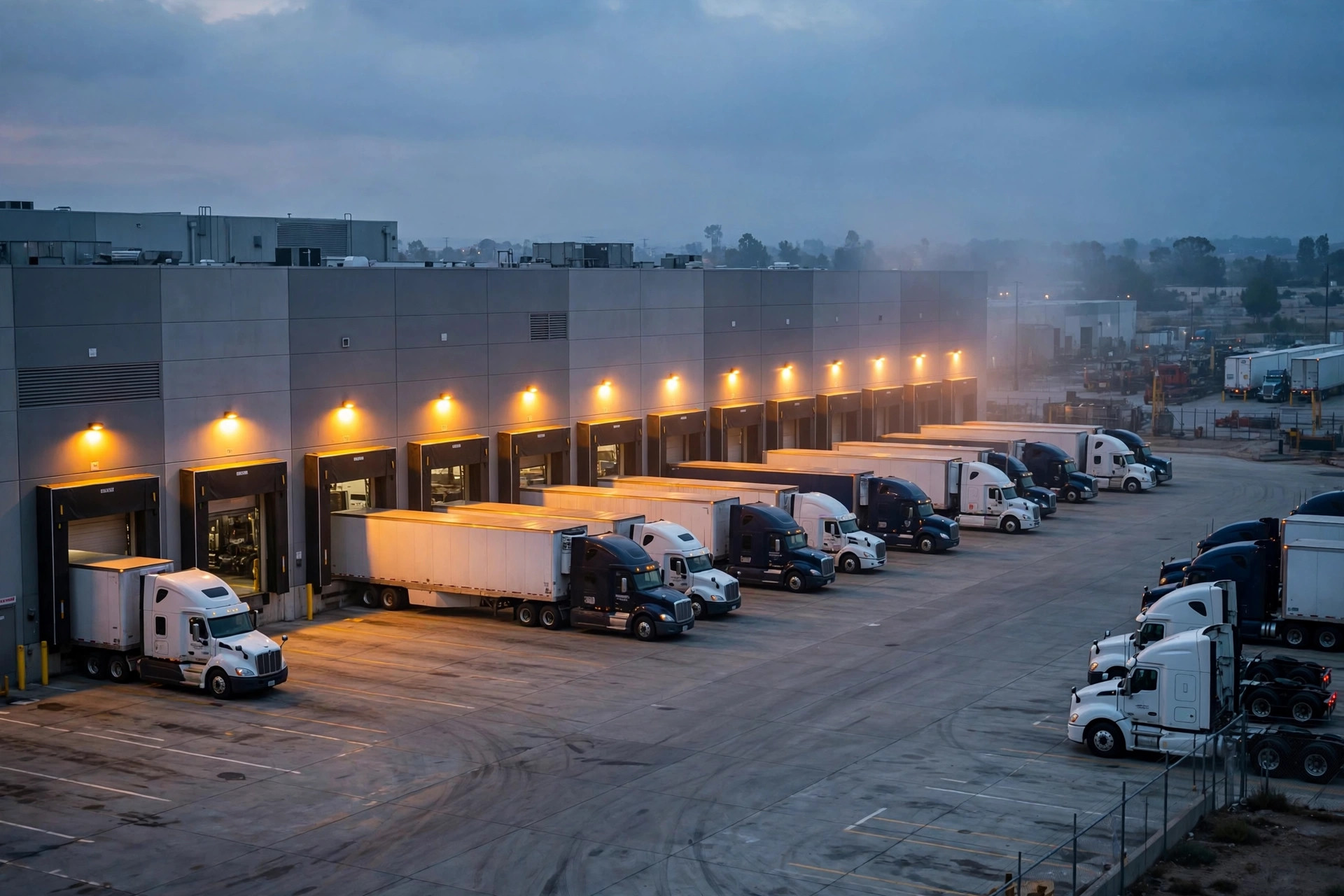
A client of ours asked me about AI labor scheduling last October — a home-goods e-commerce brand with a warehouse in Fontana. His first question on the call: "Susan, everyone in the 3PL world keeps talking about it. Should we get on board before peak season?"
I asked him back: how did you schedule labor last peak? He said it was all on their ops manager, a twelve-year veteran who would glance at the November promo calendar and set headcount by gut feel. Daily volume normally ran three to four thousand orders; during Black Friday week it surged past seven or eight thousand. The result: the pick area was overstaffed by more than twenty temps standing around playing with their phones. Then in the second week of December, the returns wave hit, they were short-handed, and the whole warehouse ran three straight days of overtime — with temp overtime rates running way above the normal hourly wage.
That's what I want to talk about today: can AI labor scheduling actually get this peak-season labor math right?
How AI Labor Scheduling Actually Works
Let me explain the principle in one sentence so vendors can't baffle you with jargon: AI scheduling takes your historical order volume, layers on seasonality factors, promo calendars, and big sale events, and calculates roughly how many people you'll need on a given day and shift.
Sounds beautiful, right? But here's a splash of cold water first — it's usually not the algorithm that's wrong. It's that your historical data itself is full of hidden padding.
The Counterintuitive Truth: the Biggest Trap Is Your Data, Not the Algorithm
At the start of this year, another client — a beauty brand with a warehouse in Perris — actually deployed an AI scheduling tool. The vendor swore prediction accuracy above ninety percent. They piloted it on one night-shift team and ran a four-week predicted-versus-actual comparison sheet. The result: the forecasts were systematically high, overstaffing by three to five people almost every week.
Where was the problem? The ops director dug out last peak season's schedule and laughed. For two weeks last November, the record looked perfect on paper: forty people scheduled, the target order count completed. But in reality, those two weeks were survived on brute-force overtime — the normal shift couldn't finish the work at all, and overtime absorbed the volume. The system recorded headcount and orders. It never recorded how many overtime hours it took.
The AI learned "how many people you scheduled," not "how many people you needed." You feed it padded data, and it learns the padding too, so its forecasts come out inflated. In all my years on the vendor side, this is the most expensive data-quality problem I've seen — not bad technology, just nobody telling the AI what actually happened last year.
So advice number one: before adopting any scheduling AI, go mark up your historical data — the overtime, the emergency shift changes, the all-hands-on-deck blowouts. If a vendor can't even answer "how do you clean the training data," walk away.

Doing the Math: What a 10% Scheduling Error Really Costs
Manual scheduling versus AI scheduling — what's the actual dollar difference? Here's a sense of the magnitude.
Take a warehouse of around eighty people, three peak months, temps making up half the crew. Peak-season temp wages run a good twenty to thirty percent above normal — every October the staffing agencies start raising prices; that's just how the industry works. With a ten percent scheduling error on the high side, you're paying four or five extra people for three months for nothing. On the low side, you're pushing orders into the overtime trap and the late-shipment trap — overtime is expensive, and one blowout costs you customer trust that's even more expensive.
Over a quarter, a ten percent scheduling error costs on the order of tens of thousands of dollars. That's why I say: whether AI scheduling is worth it has nothing to do with the accuracy number on the vendor's slides. It's about whether it can eat half of your ten percent error. Eat half, and it pays for itself in one peak season. Can't, and it's just an expensive schedule generator.
There's one more business angle most people miss: timing. Staffing agencies raise rates in October, but they'll still honor early bookings at lower prices if you commit headcount ahead of time. A forecast that arrives two weeks early lets you lock in cheaper temps; a forecast that arrives the week of the surge leaves you paying the premium. So judge a scheduling tool not just on accuracy, but on lead time — how far ahead it gives you a number you can actually act on.
How to Pilot It Without Getting Burned
If you want to try it, here's my suggested playbook: pick one shift team, not the whole warehouse. Run the predicted-versus-actual comparison sheet for four full weeks. And set a rule up front — if the error stays above your threshold, you investigate the data first, not the algorithm. Nine times out of ten, the data is where the padding hides.
Three Questions for Your Next AI Scheduling Contract
After all these years in sales, I believe one thing: a vendor's slide-deck numbers only count once they're written into the contract. When negotiating an AI scheduling contract, make sure you ask these three questions:
First, is the forecast-accuracy commitment written into the service terms, or only on the slides? Is there a remedy clause if errors stay above the threshold for consecutive weeks? Without one, "ninety percent accuracy" is just advertising copy.
Second, who owns the training data? When the contract ends and you switch vendors, can you take your historical data and the tuned model with you? Plenty of contracts hide a trap here: the data is nominally yours, but the export format makes it unusable.
Third, what's the review cadence after go-live? Who defines "accurate," and do you review weekly or monthly? An AI project with no review mechanism ends up as "the system says schedule this many, so we schedule this many" — no different from the old gut-feel approach, except the gut now belongs to an algorithm instead of your veteran manager.
One last honest word: AI scheduling isn't fortune-telling. It calculates "if history repeats, how many people you'll need." What peak season really tests is everything history never saw — the surprise volume spike, the blowout, the carrier strike. So my verdict is clear: use it, but don't treat it as a savior. Pilot it on one shift team, run the comparison sheet for a month, and only roll it out once the numbers check out. Any vendor pushing "full-warehouse go-live on day one" isn't selling AI — he's selling his quarterly commission.
By Susan, 3PL Sales Director