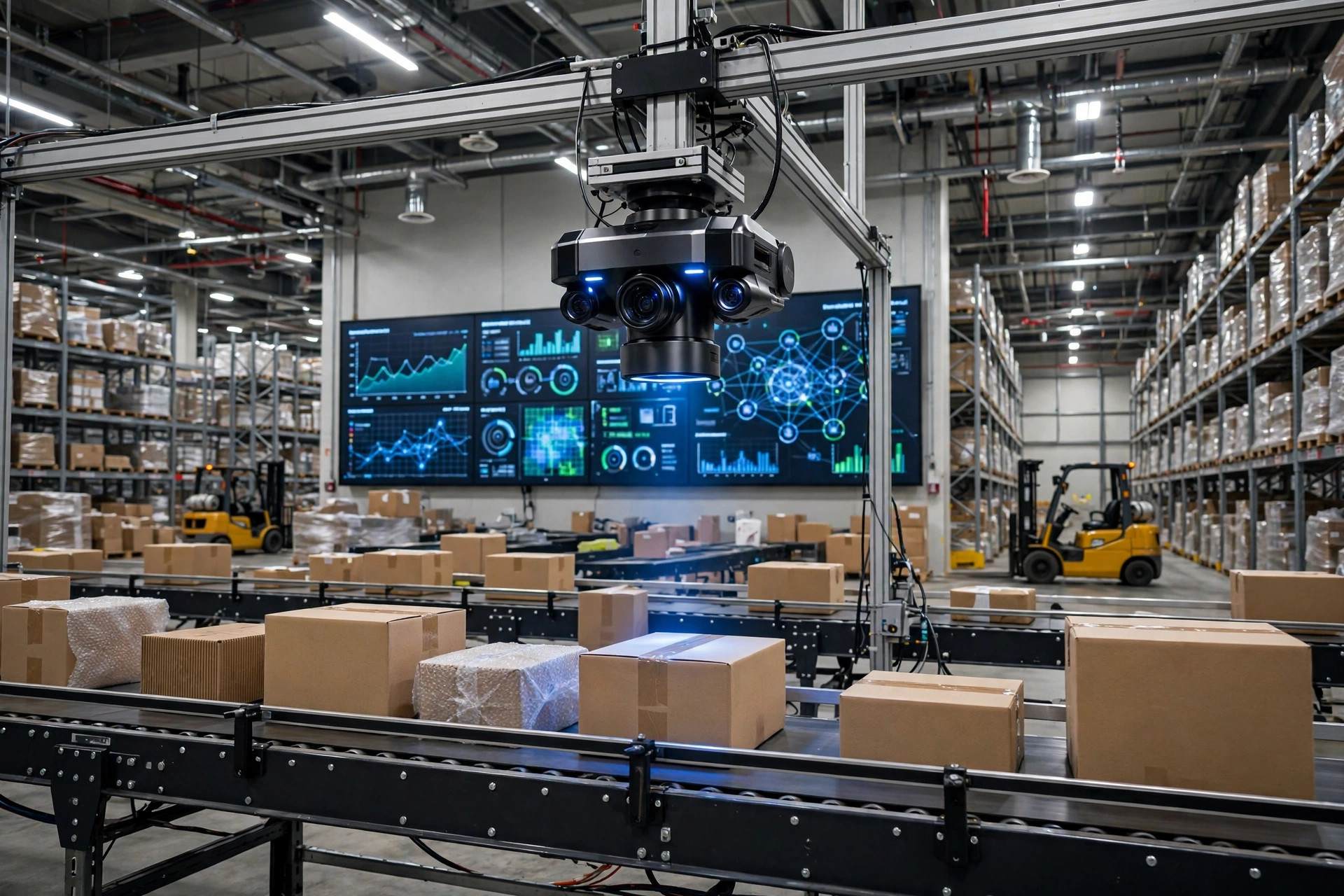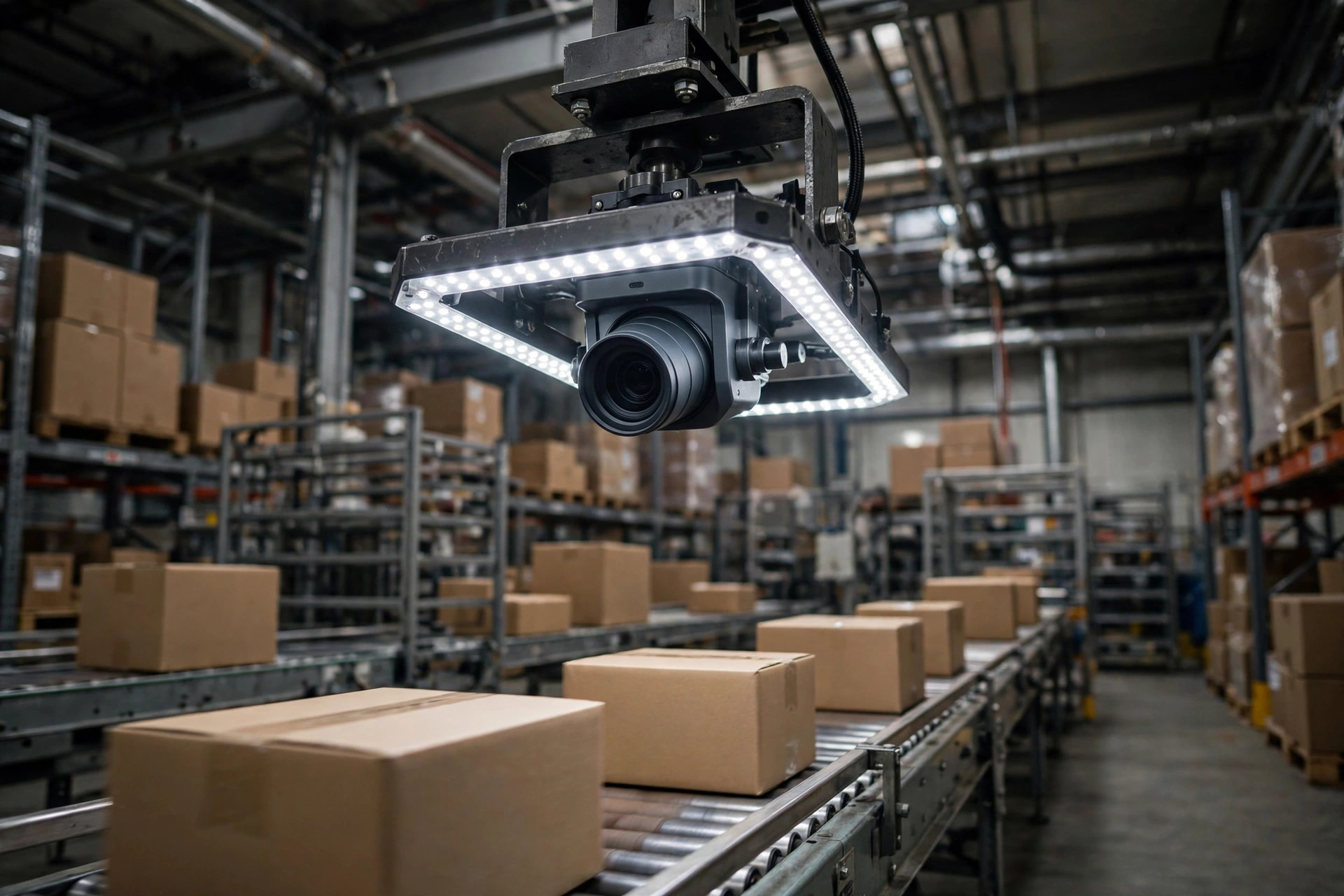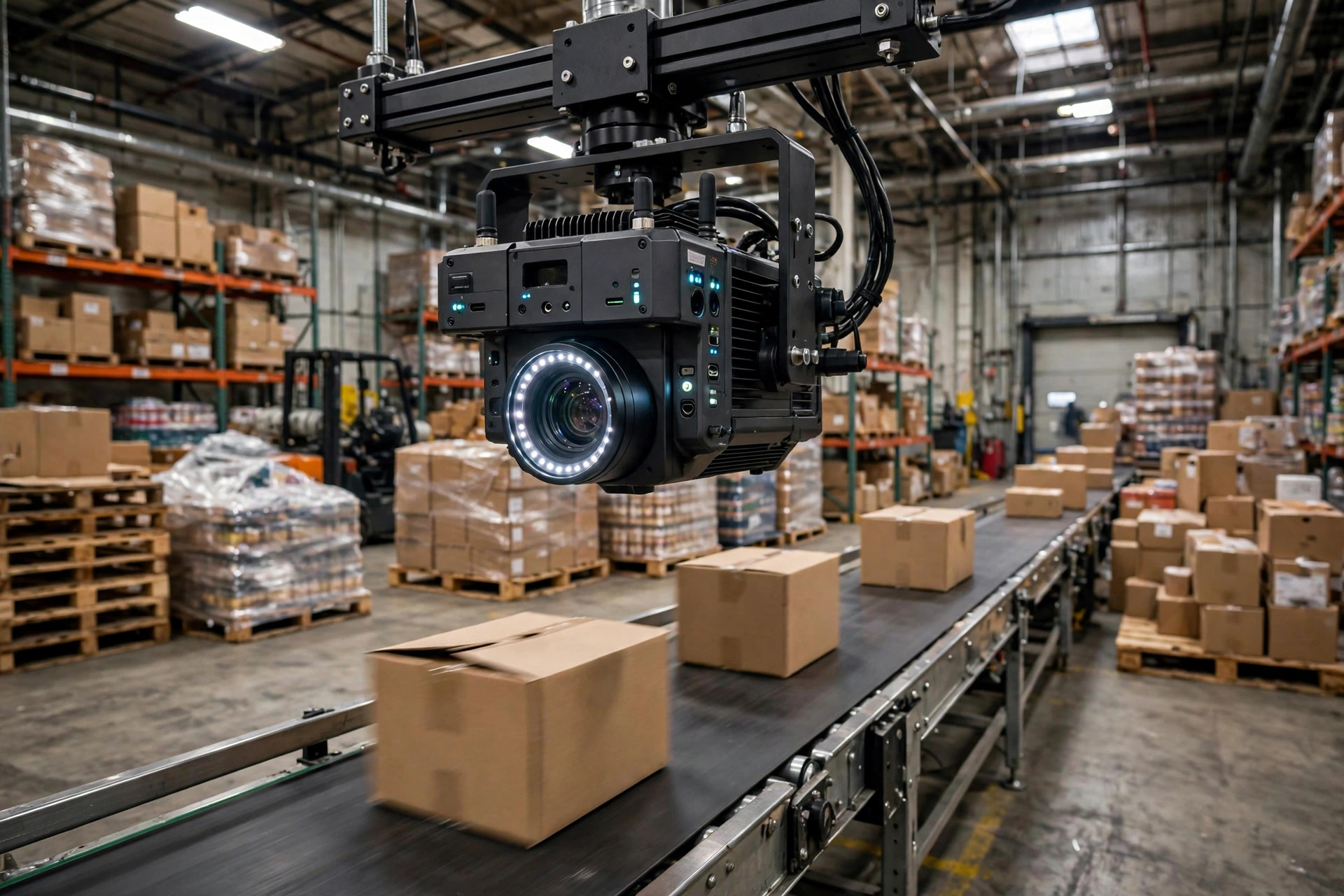
In June 2024, Amazon publicly described an internal program codenamed Project P.I. — computer vision systems inside fulfillment centers that inspect the physical condition of parcels, flagging damaged or otherwise problematic ones for a human associate to decide whether to discount, donate, or dispose of them. The media coverage mostly framed it as "Amazon saving money on returns," which misses the more interesting signal. If vision-based damage detection works at the outbound end, moving the same technology one link upstream — to the receiving dock — is largely a matter of time, and that is exactly what AI incoming QC is about. This guide examines where it actually stands: what machine vision can reliably see, what it cannot, and which freight justifies the investment and which does not.
AI Incoming QC by the Numbers: Quality Inspection Is One of the Fastest-Growing Vision Applications
According to market research firm Dataintelo, quality inspection accounted for roughly 22.1% of computer-vision-in-warehousing application revenue in 2025, and the firm projects it to grow at a compound annual rate of about 17.6% through 2034 — making it one of the fastest-expanding categories in the report. That category spans receiving docks, conveyor lines, and outbound sortation, covering damage detection, packaging defects, and labeling errors.
The investment logic is not hard to parse. In pharmaceuticals and food and beverage, a single recall costs far more than a vision inspection setup. In automotive parts logistics, vendor disclosures from companies like Cognex and Keyence claim surface-defect detection accuracy well beyond manual inspection. The market is not paying for the concept of "AI"; it is paying for two things — insurance against a costly incident, and a replacement for the inconsistency of human spot checks.
AI Incoming QC in Practice: Three Tasks at Three Different Levels of Maturity
Incoming inspection breaks down into three tasks whose real-world maturity differs more than most vendor decks admit. The first is carton damage and deformation detection. Models recognize tears, dents, crushed corners, punctures, and deformation, then output a confidence score; anything above threshold triggers an alert, a diversion, or a repack workflow. This task matured first for a straightforward reason: training data is easy to collect, because every warehouse generates a steady supply of naturally damaged cartons. Amazon's Project P.I. is essentially this pipeline, applied at the outbound end.
The second is label integrity and barcode readability verification — more mature than damage detection, because it inherits two decades of industrial code-reading experience. Per Zebra Technologies' solution briefs, fixed-mount area-scan cameras offer higher read rates and broader code coverage than legacy laser scanners, and they can read partially damaged or obscured codes. A typical receiving-dock deployment captures a pallet from multiple angles as it passes through a camera gate, reads every barcode in bulk, and cross-checks against the ASN or purchase order. Vimaan's PalletSCAN 360 does exactly this, per the vendor's own account: a pallet sits on a turntable, and within seconds all barcodes are captured and validated — wrong SKUs and short counts flagged on the spot. For 3PLs handling dozens of suppliers a day, catching a mis-shipment at the dock is dramatically cheaper than discovering it after putaway.
The third is pallet-level quantity counting — the hardest of the three, not because of the algorithms but because of physics. Cartons occlude each other; a camera sees only outer faces, and no model can count boxes it cannot see. Every workable deployment is therefore a "vision plus logic" hybrid: vision counts visible layers and verifies stacking structure, while final quantity confirmation still depends on barcode aggregation or weight reconciliation. Any vendor claiming "one photo tells you exactly how many cartons are on the pallet" should be asked how they handle the occluded side.
Camera Selection and Placement: Deployments Fail on Lighting and Mounting, Not on Models
In the failed deployments I have studied, the root cause was lighting or camera placement in the large majority of cases — not model quality.
Camera selection maps to the three tasks. Damage detection works with standard RGB industrial cameras, with resolution and frame rate matched to conveyor speed. Barcode verification needs high-resolution cameras with global shutters, because a rolling shutter turns a moving carton into a wobbling image and smears the barcode. Dimensioning-grade counting needs 3D or depth cameras. At the dock door, the standard geometry is a multi-camera gate: one overhead for the top face, one on each side, with side-camera angles tuned to the most common carton dimensions — because that is where the labels live.
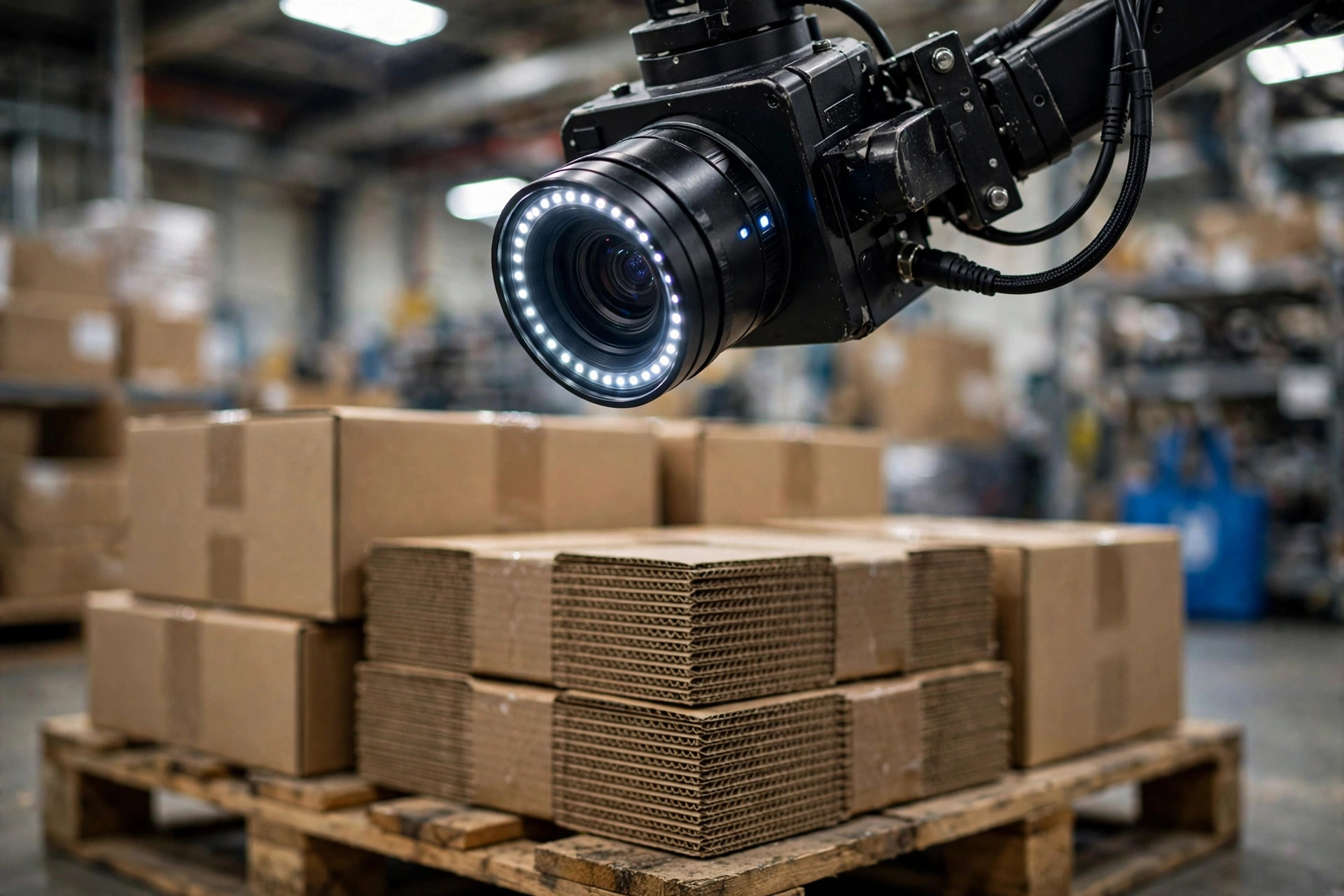
Lighting is the biggest trap. Warehouse high-bays are designed for illumination, not imaging: uneven intensity, color-temperature drift, and fluorescent flicker that shows up as banding under rolling shutters. The mature approach gives the inspection station its own industrial lighting — ring or bar lights that make illumination uniform and stable. A counterintuitive field lesson: lighting and installation labor often end up costing more than the cameras themselves, so any budget listing only camera prices will overrun in implementation.
False-positive tuning is the most grinding part of operations. Set the confidence threshold too loose and misses rise; set it too tight and false alarms slow the receiving cadence until trucks queue at the dock. Here is a trade-off that catches first-timers: at receiving, a false positive usually costs more than a miss. A missed damaged carton can still be caught at putaway or picking; a false positive stops the entire pallet, and the receiving supervisor will have the system switched off by lunch. The correct strategy for incoming QC is permissive — let the AI auto-reject only high-confidence severe defects, and tag everything else with photos for human review. In this role, AI is the inspector's second pair of eyes, not the judge.
Five Questions to Answer Before Connecting AI QC to Your WMS
Before integrating a vision QC system with the WMS inspection flow, five questions need answers. First, at what granularity do detection events enter the WMS — pallet, carton, or receipt line? Second, what is the exception flow — a quarantine hold or an automatic exception ticket? Third, where and for how long are evidence images stored, and can they be retrieved for a supplier claim? Fourth, is ASN data quality good enough — if suppliers' ASNs are routinely wrong, barcode mismatches will drown real problems in noise? Fifth, who maintains the model — who retrains and retunes thresholds when new SKUs and packaging appear? The fifth question is the most neglected, and it determines whether the system is abandoned after three months or still running after three years.
The Money Question: Which Freight Justifies It, Which Does Not
A receiving vision-QC station's total cost of ownership has roughly five components: cameras and lighting hardware, installation and commissioning, model training and tuning labor, WMS integration development, and ongoing annual maintenance. The return side has three: replaced manual inspection labor, intercepted mis-shipments, shortages, and damage claims, and the data asset itself — an image record of every received pallet.
The decision framework simplifies into a comparison:
| Worth the investment | Not yet worth it |
|---|---|
| High-value goods where one damaged unit is expensive (electronics, precision parts) | Low-margin commodity freight where damage cost is below system amortization |
| Label errors trigger downstream penalties (retailer compliance chargebacks, pharma traceability) | Label errors only affect internal efficiency and are cheap to correct |
| Many suppliers with poor ASN quality and frequent mis-shipments | A stable supplier base where spot checks already suffice |
| Returns and claims processes depend on photographic evidence | Low complaint rates with no evidence-chain requirement |
| Receiving volume too large for full manual inspection | A few dozen pallets a day, where a human glance is faster |
The logic of this table is the whole point: what justifies the system is never "how advanced the technology is," but "how much a mistake costs." A 3PL receiving 200 pallets a day from 40 suppliers and a captive warehouse receiving 30 pallets a day from fixed suppliers will reach opposite answers — correctly.
Where This Is Heading: Incoming Inspection Is Moving From Sampling to Full Coverage
Connecting the phenomenon, the data, and the attribution, the direction is clear: incoming inspection is shifting from manual sampling to machine full-coverage with human-machine collaboration. The drivers are not a single vendor's breakthrough but three things happening at once — vision hardware costs declining, WMS receiving flows getting more digitized, and supplier claims increasingly requiring photographic evidence. Within three to five years, an image record attached to every received pallet will likely be standard at large 3PLs and retail distribution centers, much like outbound weigh-and-photograph is today.
I will leave one question open rather than close with a conclusion: when every pallet arrives with a complete, timestamped image record, what happens to the power structure of supplier management? Today, damage and shortage disputes are settled with the receiver's notes and both sides' version of events. Tomorrow, they will be settled against a machine-generated evidence chain. Technology never changes only efficiency — it changes who gets the final word at the negotiating table.
By Dr. Chen, Supply Chain Researcher