The debate over whether AI will take warehouse jobs has spent years running on emotion — both camps can find arguments to suit them. The more informative way to frame the question is to break it apart: not "whether," but "which roles, starting with which tasks, and on roughly what timeline." Drawing on public data and industry developments since 2025, a provisional, evidence-backed answer is now possible.
The Phenomenon
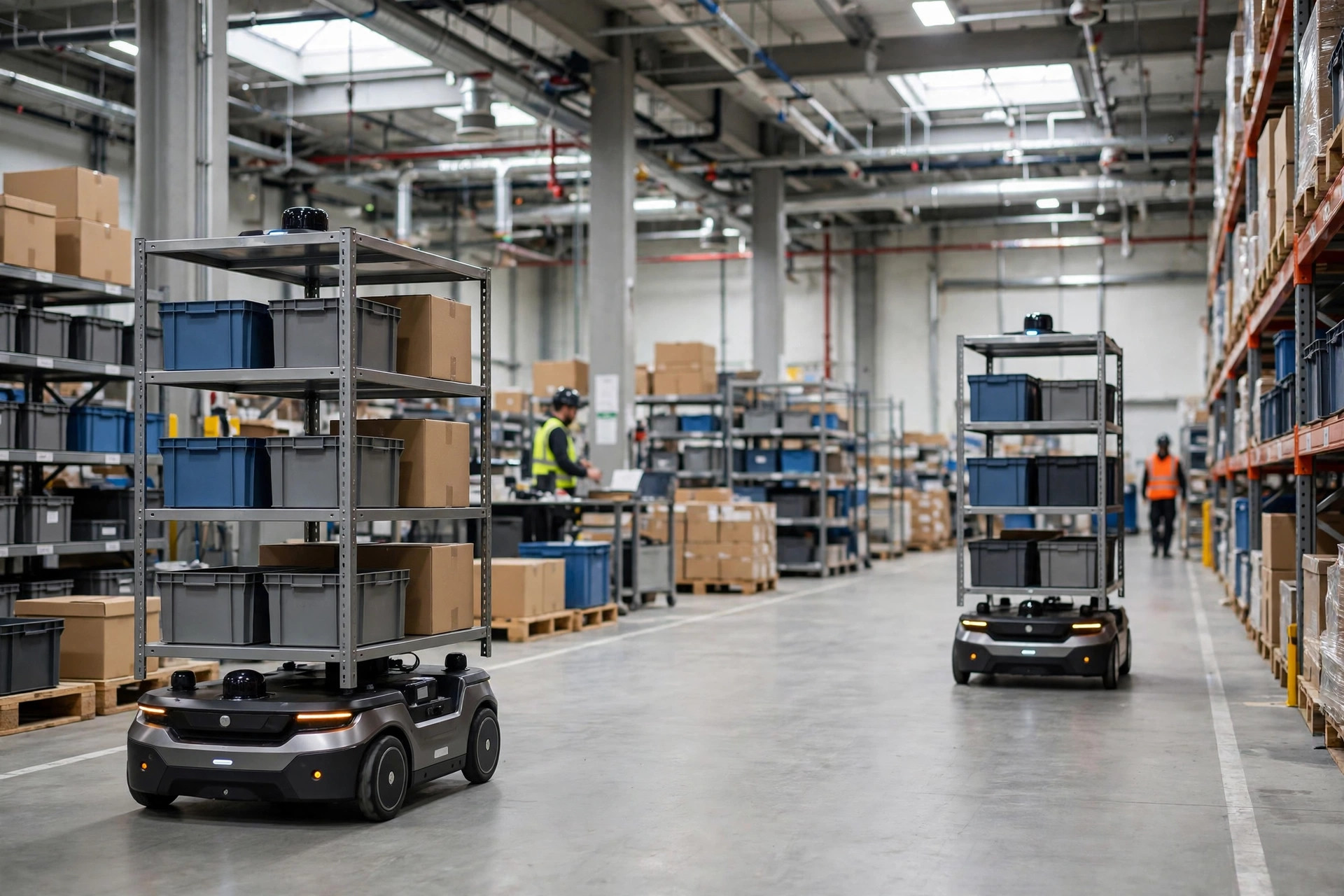
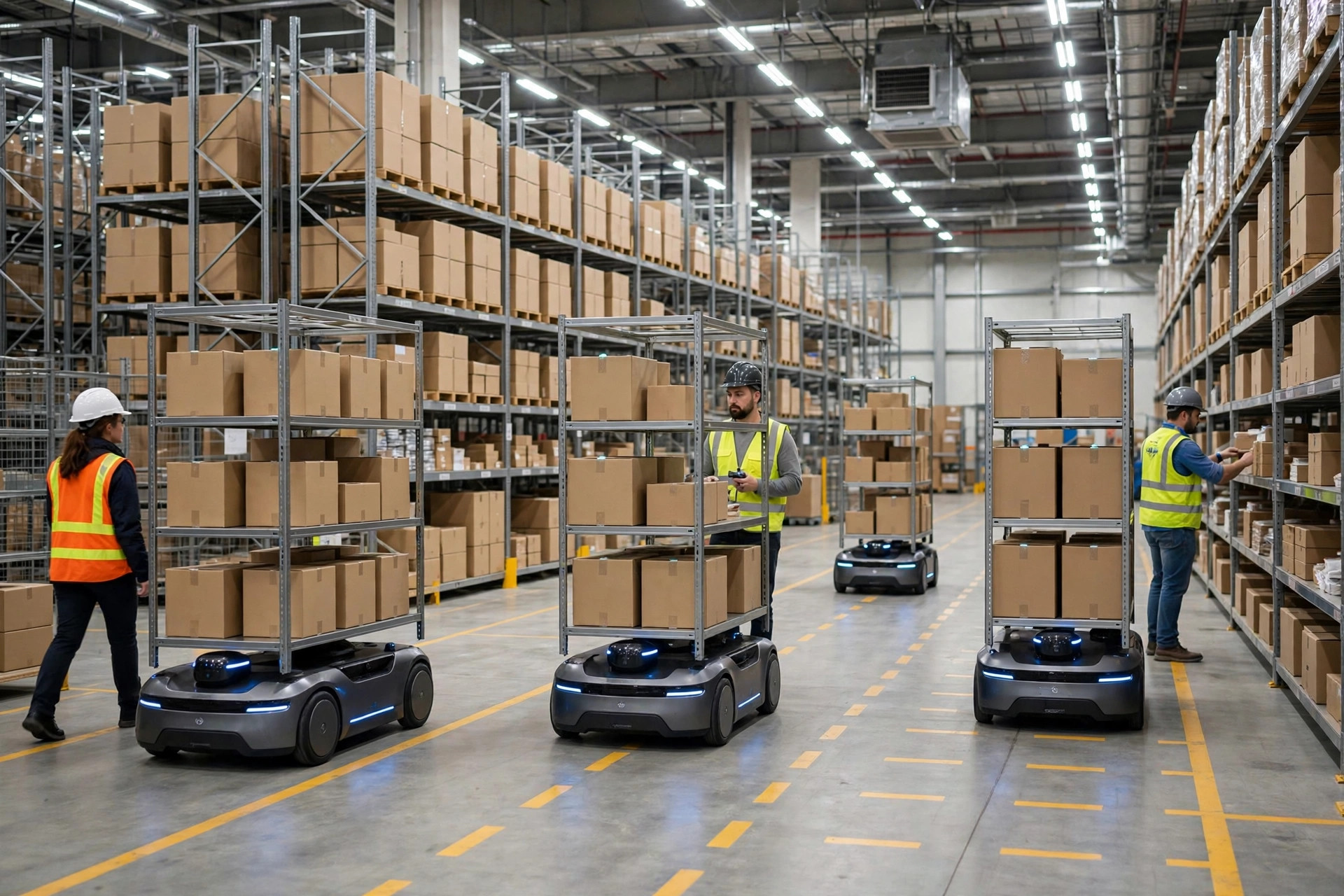
Start with what has happened. According to Amazon's public announcement in July 2025, the company surpassed one million robots deployed across its warehouses worldwide. Around the same time, Amazon unveiled DeepFleet, a generative AI foundation model that coordinates the travel routes of its robot fleet; the company says it can cut fleet travel time by roughly 10%. And its next-generation fulfillment center in Shreveport, Louisiana, operates with about ten times the robot density of a conventional site. Taken together, the signal is clear: AI's entry into the warehouse has moved beyond the "one automated machine at a time" era of a decade ago into whole-facility intelligent orchestration — an order-of-magnitude step up in both machine count and coordination complexity.
The Data
The World Economic Forum's Future of Jobs Report 2025, published in January 2025, offers the most widely cited macro frame: by 2030, technological change is expected to create roughly 170 million new jobs worldwide while displacing about 92 million, for a net gain of around 78 million. That report covers all industries, and warehousing is only one slice — but its structural conclusion applies directly: displacement concentrates in tasks that are highly repetitive and rule-bound, not in entire industries at once.
There is a second, warehouse-specific backdrop that is often overlooked: industry research commonly estimates that labor accounts for roughly half of a warehouse's total operating cost — the single largest line item. That means any technology that materially reduces labor dependence has the strongest possible economic tailwind in this setting. The binding constraint on adoption is rarely "do we want to," but "is the technology ready, and does the math work."
The Causes: Why These Roles Go First
If you rank warehouse roles by the order in which AI will reshape them, the ordering is not determined by how much each role is paid. Three mechanisms decide the sequence.
The first is how structurable the physical task is. Picking, moving, and unloading are highly repetitive and take place in relatively controlled environments — the first ground robotics has claimed. In early 2023, DHL Supply Chain signed a multi-year agreement with Boston Dynamics to deploy Stretch container-unloading robots across North American warehouses; the company says each unit can handle hundreds of cases per hour. Unloading happens to be among the dirtiest, most punishing, and hardest-to-staff jobs in the warehouse. Technology always takes the jobs people least want to do first — not the jobs that cost the most.
The second mechanism is how digitized the work already is, and it is the one most people miss. Scheduling, replenishment, and demand forecasting live entirely inside systems: the data already exists, so generative AI can read it and output decisions directly, without first solving any problem in the physical world. By contrast, the "see it, grasp it, place it" sequence a robot must execute at a shelf is still bounded by the reliability of grasping technology. This asymmetry produces a counterintuitive result, which I will return to below.
The third is recruitment pressure working as a forcing function. Across major US warehousing clusters, frontline turnover has stayed stubbornly high for years, and peak-season hiring shortfalls have become a standing operational constraint. When "we cannot hire" is more certain than "we cannot afford the equipment," the automation decision stops being about saving money and becomes about protecting throughput — which accelerates adoption considerably.
Outlook: A Restructuring Timeline for the Next Three Years
Combining technology readiness with the three mechanisms above, the reshaping of warehouse roles over 2026–2029 will likely unfold in roughly this sequence. One caveat first: "reshaped" does not mean "eliminated." Far more often, it means the content of the job gets rewritten.
| Role | Tasks most affected | Key technology | Expected window of material impact | Where people move |
|---|---|---|---|---|
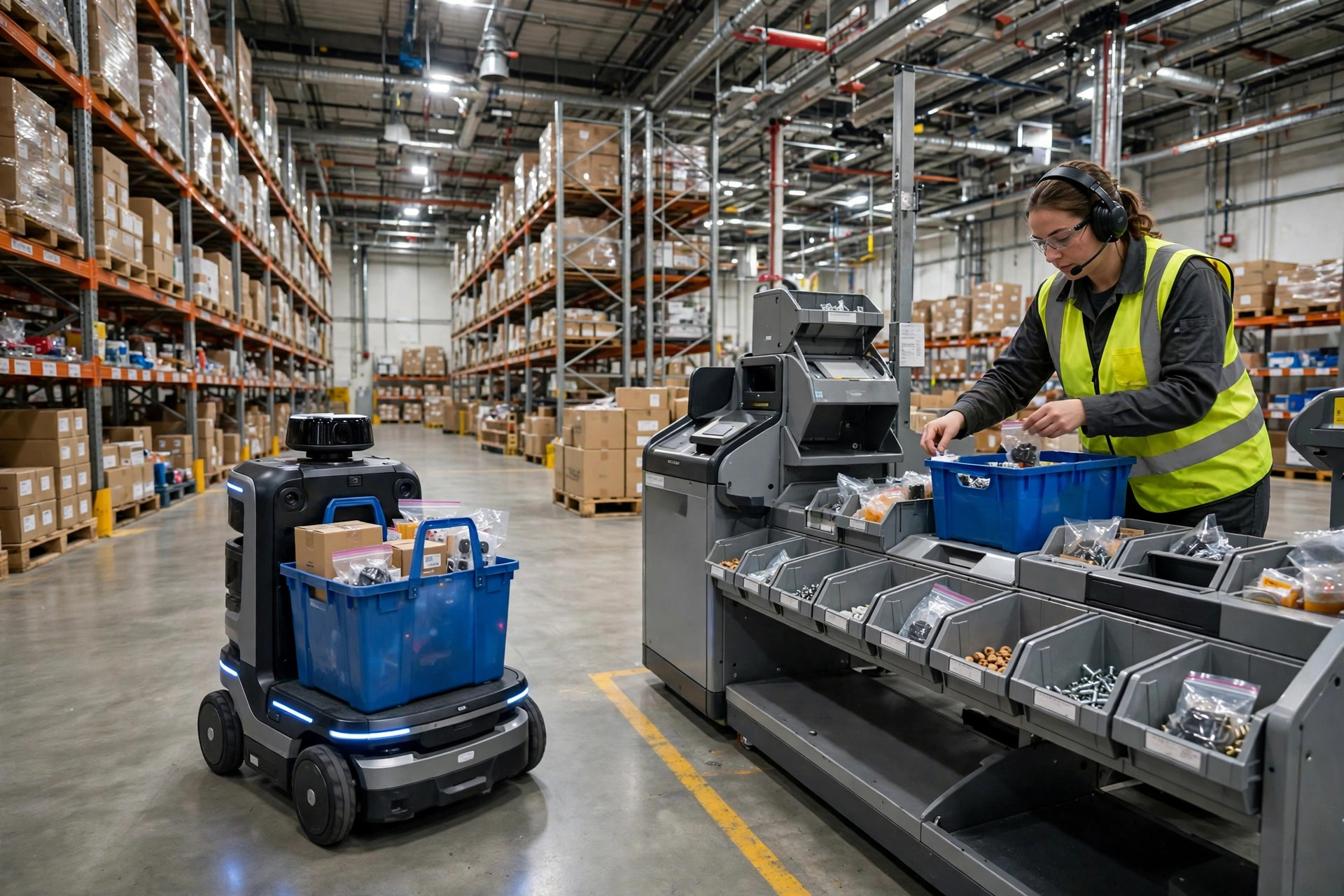
| Pickers | Walking to find goods, repetitive grasping | AMRs (goods-to-person), robotic picking arms | Accelerating from 2026–2027 | Pick-station operators, exception handlers |
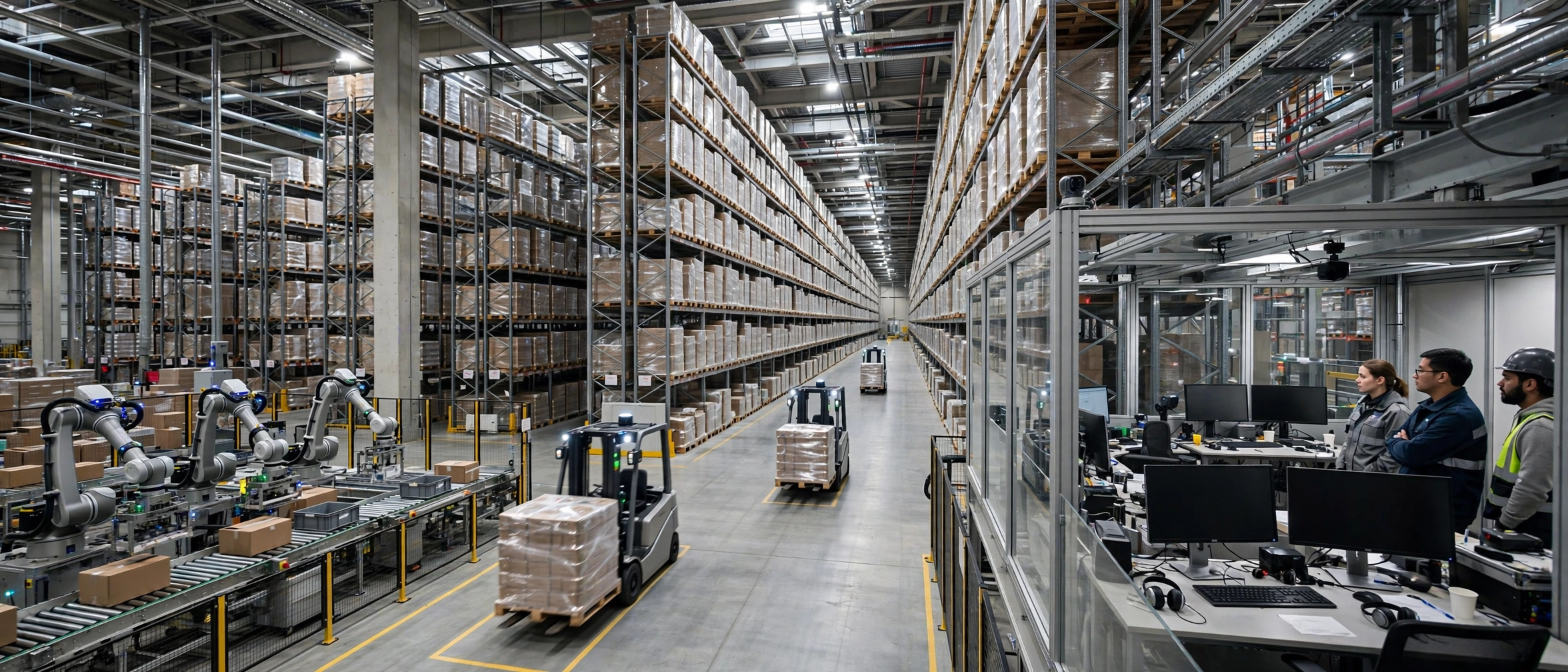
| Forklift drivers, material movers | Point-to-point pallet moves | Driverless forklifts, AMRs | Accelerating from 2027–2028 | Fleet dispatch, on-site safety |
| Receiving / QC inspectors | Opening cartons, quantity checks | Vision AI, automated weighing and scanning | From 2026–2027 | Sampling audits, claims judgment |
| Shift leads, floor supervisors | Rostering, task assignment | Algorithmic scheduling, dispatch AI | Already underway; broad by around 2027 | Exception handling, people management |
| Inventory planners, replenishment analysts | Replenishment suggestions, safety-stock math | Generative AI decision assistants | Gradual penetration 2026–2028 | Strategy setting, model validation |
The pace will not be uniform across regions, and the reason is arithmetic rather than cultural. Where fully loaded warehouse labor costs are highest — the US, Western Europe, parts of East Asia — the payback math above clears the hurdle earliest, so adoption leads. Where labor remains inexpensive, the same equipment faces a longer payback period and adoption lags, though it still advances wherever recruitment is difficult or throughput is volatile. This regional gradient matters for multinational operators: the "future warehouse" will arrive on different schedules in different markets, and workforce planning done on a single global timeline will misfire.
There is also a back-of-the-envelope calculation worth doing, because it explains the pace. A rough industry math exercise goes like this: take a US frontline warehouse worker's fully loaded annual cost at about $50,000 (an explicit rough assumption), and an AMR's amortized annual cost — depreciation, maintenance, software subscription — at roughly $15,000–$20,000 (also a rough assumption; real figures vary widely by vendor and deployment scale). On that basis, one AMR doing the work of about 1.5 people pays for itself in roughly two to three years. The number itself is not precise, but it explains why AMR adoption visibly accelerated across leading 3PLs and e-commerce warehouses in 2024–2025: once payback drops under three years, automation stops being a "strategic bet" and becomes a financially defensible routine decision.
A Counterintuitive Finding
Return now to the asymmetry noted earlier: over the next three years, the roles AI substantively rewrites first may not be the blue-collar jobs that do the most walking, but the white-collar jobs that do the planning and analysis.
The logic is straightforward. Demand forecasting, replenishment planning, and schedule optimization take data in and put decisions out — generative AI needs no robot to learn grasping before it can participate today. The tens of thousands of steps a picker walks each day, meanwhile, are precisely the part of the physical world hardest to fully replace: AMRs have solved the walking, but "take that oddly shaped item off the shelf and place it in the tote" still exceeds robotic grasping reliability in complex-SKU environments. So the realistic picture for the next three years is this: blue-collar roles keep their people but change their tasks — from walking pick paths to minding pick stations and clearing exceptions — while analytical roles may employ fewer people, each with a much wider decision radius: one planner with an AI assistant doing what used to take a team. The basis for this judgment is the asymmetry in technology readiness: model reasoning is already usable; general-purpose grasping is not yet reliable.
An Open Question for Managers
Looking three years out, the question warehouse managers should prepare for may not be "will my role disappear," but a different one: when rostering, pick-pathing, and replenishment suggestions all come from algorithms — and the algorithms are right most of the time — what remains of a manager's core capability? Is it deeper equipment and data literacy, or deeper people literacy: knowing how to run a mixed human-machine team so that people willingly own the 10% of exceptions the algorithm cannot handle?
There is no standard answer yet. Technology bets still diverge sharply: some wager on humanoid robots entering warehouses, others consider AMR-plus-arm combinations the pragmatic play for the next three years; generative AI is already live in scheduling, while in replenishment decisions — where one wrong call means a stockout — most companies still let it advise but not order. The one relatively certain thing is the pace: Amazon's million-robot milestone in 2025 marked the end of the "whether to automate" debate. For the next three years, the only discussion is which process goes first and how the rollout is sequenced — and that timeline is worth every warehouse manager mapping against their own operation, carefully, and soon.
By Dr. Chen, Supply Chain Researcher