Bottom line first: in AI container load optimization, the algorithm is 30% of the job. The other 70% is carton master data. Garbage master data in, beautiful loading plan out — and then nothing fits on the dock. I've seen this exact failure three times, and all three died the same way: nobody ever physically measured the cartons in the system.
June 2024. A cross-border furniture e-commerce client in California brought me in. Their 40-foot containers were getting sealed at roughly 65% full. The warehouse supervisor told me, straight-faced: "Our veterans have been loading containers for ten years. There is no more space in there. Not even magic could fit more."
I told him to stop arguing and take a tape measure to their top 30 SKUs. What he found shut him up: the carton dimensions in the system had been typed in by purchasing three years earlier, by hand, by eyeball. Measured for real, every carton was off by 2 to 3 centimeters on average. Two centimeters per carton, 400 cartons per container — that's nearly a full cubic meter of phantom gaps. Once we fixed the master data and re-ran the optimization, three months of validation showed the same freight loading at 65%... no, 73%. About 8% more in the same box.
What does the algorithm actually do? It's industrial Tetris — 3D bin packing, formally. You feed in each carton's dimensions, weight, crushability, and orientation constraints. It spits out a loading sequence and a stacking diagram. A standard 40-footer gives you 12.03 m long, 2.35 m wide, 2.39 m high inside — about 67.7 cubic meters on paper. On the dock, if you can actually use 60 of those, you're doing well. The rest gets eaten by irregular cartons, working clearances, and the rule that heavy freight can't sit on light freight. The algorithm's real value isn't the theoretical optimum — it's the optimum that actually fits on the dock.
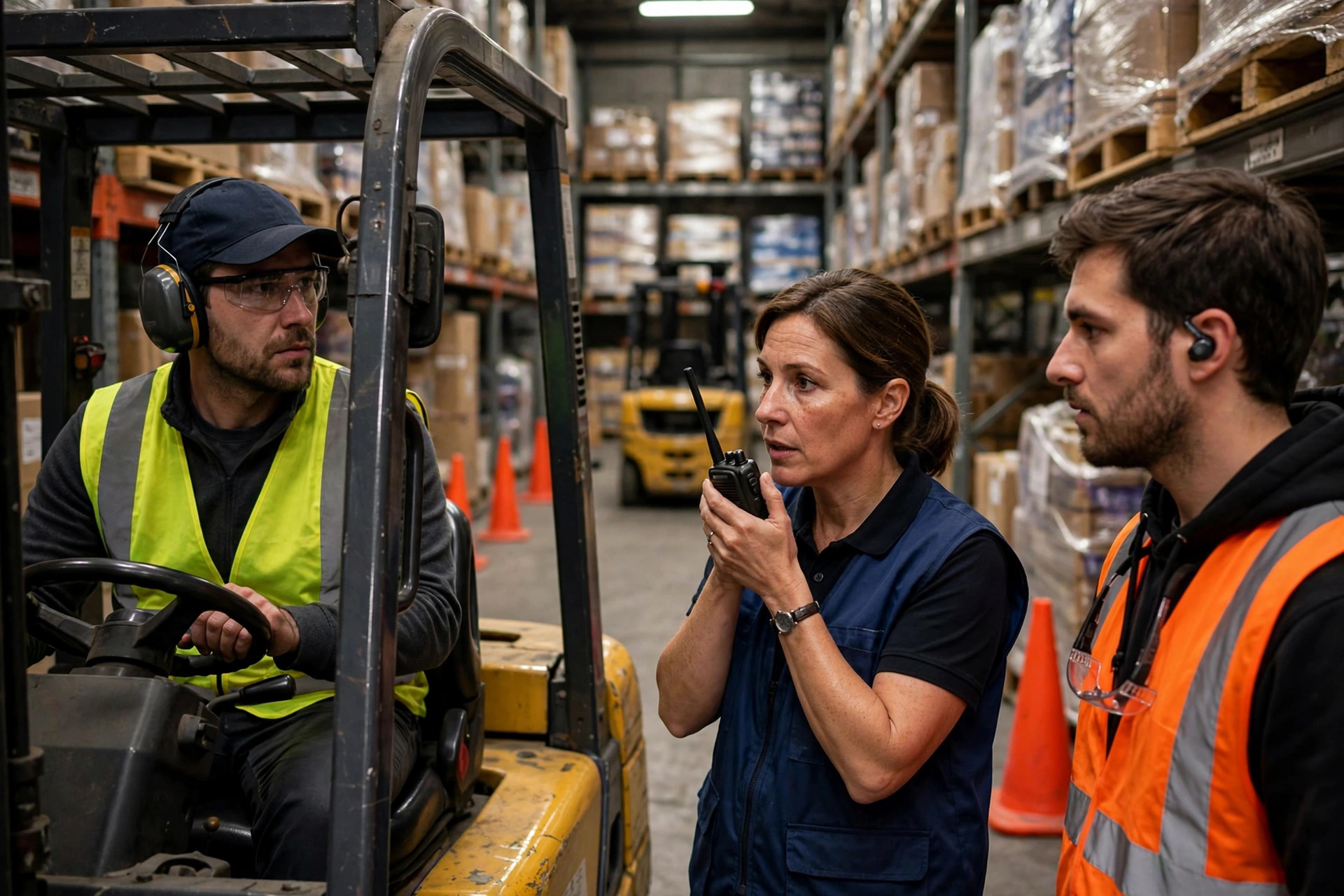
Where do the veterans actually lose? Not on experience — on working memory. Carton dimensions, weight, crushability, stacking orientation, unload sequence: five constraints spinning in a human head at once, and nobody can keep them all spinning. The algorithm's edge is chewing through dozens of constraints without getting tired. But flip it around: the algorithm doesn't know "this customer's cartons go soft in the rain" or "that terminal inspects axle weight aggressively." That dock knowledge still has to be fed in by a human. The right posture: humans set the rules, the algorithm computes the combinations, the dock feeds back corrections.
The math. A client shipping 200 containers a year, moving load factor from 65% to 73%, ships roughly 16 fewer containers a year. The savings aren't just ocean freight — it's the whole chain: booking, drayage, terminal handling, all of it. The investment is a few weeks of data cleanup plus a software subscription. It pays for itself in the first year, and every year after that is pure gain.
Landing it takes four steps. Skip none of them.
- Measure. Tape-measure your top SKUs — outside dimensions, not inside, including tape thickness and carton bulge. Trust nothing in the system. Trust it and you'll pay for it on the dock.
- Model. Tag every carton: weight, crushability, orientation limits, moisture sensitivity. The warehouse supervisor has to be in the room for this one — only he knows which cartons "look crushable but collapse if you actually stack on them."
- Validate head-to-head. Same freight: one container loaded the veteran way, one loaded the algorithm way. Load both for real, photograph everything. Run at least 3 to 5 containers before you call it — don't mistake first-container luck for a conclusion.
- Write the SOP. Print the loading sequence, tape it to the container door, get the shift lead's signature. An algorithm output nobody follows equals zero.

Now the four failure modes. I've watched every one of them happen.
First: bad master data. I've seen this pitfall three times. The worst one: a client had entered inside dimensions as outside dimensions. The algorithm produced a gorgeous, perfectly full plan — and the freight stuck out half a meter past the doors. The container wouldn't even close.
Second: volume without weight. Late 2023, a Christmas décor importer in Los Angeles stacked all the heavy freight at the door end. The box hit the scale at the Port of Long Beach, failed the axle-weight check, got rejected, and had to be dragged back and reloaded. Two days lost, nearly missed the vessel. A load plan that doesn't eat weight distribution is a paper exercise.
Third: nobody can read the output. The 3D stacking diagram the algorithm produces? The shift lead looked at it for three minutes and tossed it aside. You have to translate it into human language — "layer 3, cartons 41 through 58 go here" — or the veterans run the dock anyway.
Fourth: ignoring handling time. A container loaded to 73% takes over an hour longer to load and unload. For urgent freight racing a vessel cutoff, you'd rather load a little less and move fast. The algorithm will never tell you that trade-off. You have to set the rule yourself.
If you're shopping for software, check three things before anything else: does it take weight and axle constraints, or only volume? Can it export a sequence sheet a shift lead can actually read, not just a 3D render? And does it handle mixed SKUs with crush rules, or does it assume every carton is a perfect rigid box? A "yes" on all three is rarer than the sales deck suggests.
Here's the counterintuitive call: load factor is not the metric to maximize. A 73% plan the crew will actually follow beats a 78% "theoretical optimum" nobody executes. AI is a tool. The people on the dock are the bottleneck. Any optimization that routes around the dock dies on the dock.
So should you do it? Match your annual volume:
| Annual containers | My call |
|---|---|
| Under 50 | Don't bother with algorithms. Measure your cartons properly, run a free loading planner, and you'll see results immediately |
| 50–300 | Buy an off-the-shelf load optimization tool on subscription — an order of magnitude cheaper than building |
| Over 300 | Worth a deep customization: weight distribution and mixed-load rules baked into the model |
Go-live night checklist. Four questions, four yeses, then you open the container doors: Has the master data been physically measured? Are the heavy-freight distribution rules in the model? Can the shift lead read the sequence sheet? Is someone watching the first container end to end?
By Lin Xiao, WMS Implementation Consultant