Here's the blunt version: warehouse AI adoption ROI on your first project is dangerous precisely because it looks so easy to calculate. My advice up front is simple. Do not chase an impressive first-year percentage. Split the baseline, the hard savings, and the hidden costs into three separate piles, and be willing to accept a project that only breaks even in year one. A project sold on a vendor's slide deck will embarrass you six months later, when the boss asks for the number and you do not have one of your own.
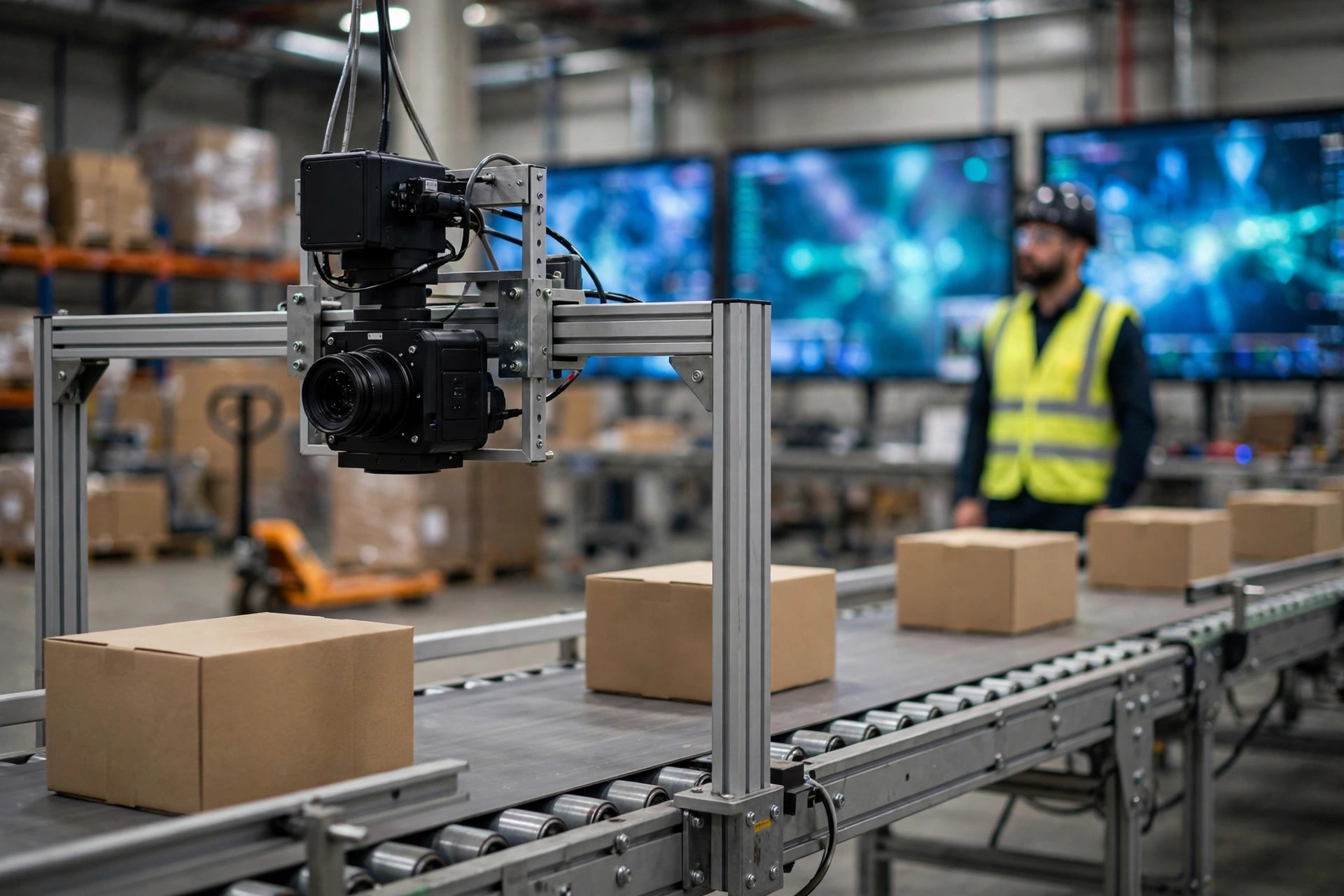
I have sat through that meeting more times than I care to count. In the fall of 2023, I was in a third-party warehouse in Indiana, about sixty thousand square feet, shipping roughly fourteen hundred orders a day at peak for auto-parts dealers. A vendor came in to demo vision verification: a camera over the conveyor, checking each carton against the order before it sealed. The demo was genuinely impressive. Then the salesperson did the math out loud and landed on three hundred percent ROI in year one. I asked one question: whose labor hours and whose error rate went into that number? The answer was "typical customer averages." That is the whole problem in one sentence. The demo was real. The arithmetic was real. The denominator belonged to somebody else's warehouse.
The owner signed anyway. What he found after signing did not appear anywhere in the proposal. His error rate was already low, so the camera only replaced about two and a half people on second checks, not the four the vendor had assumed. His product barcodes and pack specifications did not match in the historical data, so the camera could recognize a carton but could not always tell which inner packaging a particular customer expected. And every time peak season brought a new product, the model needed retuning, which meant half a day of line validation. None of that was fraud. It was just the part of the project that does not fit on a slide.
Get the baseline first, or warehouse AI adoption ROI means nothing
Before you calculate anything, measure for three weeks. Not one good week, not the week the vendor visits. Three ordinary weeks. I make clients write down four things: how many people touch this step today, how many hours each of them spends on it, what one error actually costs, and how different peak looks from a slow week. In Indiana, the baseline came out like this. Second checks took four people, eight hours a day, at twenty-two dollars an hour. Over two hundred and sixty working days, that is about one hundred and eighty-three thousand dollars a year. Mispicks ran about forty-one orders a month, and each one cost roughly thirty-eight dollars in rework and reshipping. That is close to eighteen thousand seven hundred dollars a year. Until you have numbers like those, every percentage anyone quotes you is decoration.
There is a second baseline people skip: whether the current process is stable enough for a machine to learn from. In the spring of 2024, a home-goods warehouse outside Dallas wanted AI replenishment suggestions. After three weeks, the pickers were accepting fewer than four in ten suggestions. The algorithm was not the problem. Safety stock had been set by gut feel, and three shift leads had three different numbers for the same product. We spent a month agreeing on one rule for safety stock, and only then did acceptance climb above seventy percent. Data cleanup is not a line item vendors like to quote, but if you skip it, the project never gets off the ground.
Why vendor warehouse AI adoption ROI math falls apart
Vendor math usually breaks in three predictable ways, and once you can spot them, you stop getting fooled. The first is treating hours saved as money saved. You freed up two people, but they are still on payroll, still in the building, just doing other work. Unless you actually reduce headcount or take on more volume with the same crew, nothing has left the bank account. The second is converting soft gains into cash: capacity headroom, happier customers, future hires you might not need. Those things matter, but they are not savings, and stacking them on top of hard savings inflates the total fast. The third is quoting only the software subscription and leaving out integration, data cleanup, training, and ongoing tuning. That is like pricing a forklift by the monthly lease and forgetting the charger, the maintenance contract, and the driver training.
My method is unfashionable and it works: hard savings count only two things, money you stop spending or fees you earn from orders you could not have handled before. Soft gains get their own line, clearly labeled as excluded from the ROI. Here is the Indiana project, worked out honestly:
| Item | Year one (USD) |
|---|---|
| Labor saved: 2.5 people × 8 hours × $22 × 260 days | 114,400 |
| Mispicks avoided: 24 fewer per month × $38 × 12 months | 10,944 |
| Total hard savings | 125,344 |
| Software subscription | 48,000 |
| One-time systems integration | 36,000 |
| Data cleanup: three weeks of staff time plus outside help | 18,000 |
| Training and lost productivity during go-live | 9,000 |
| Model tuning support for the year | 12,000 |
| Total year-one cost | 123,000 |
| Year-one net gain | 2,344 |
That is an AI adoption ROI of under two percent in year one, not three hundred. Here is the trade-off most vendors will never say out loud: a project that barely breaks even in year one can still be a good project. In year two, the one-time costs disappear. The remaining cost is the subscription plus tuning, about sixty thousand dollars. If hard savings hold, the net gain is over sixty-five thousand dollars, an ROI above one hundred percent. The counterintuitive judgment is this: if a vendor promises you triple-digit returns in year one, that is the moment to get suspicious about what was left out. If your boss will only accept a first-year win, do not do the project. If the boss can live with a two-year payback, this is exactly the kind of project worth doing.
The hidden costs to price before you sign
I now make clients walk through a hidden-cost checklist before signing anything, and any item without an answer gets answered before the contract does. Integration: what version of your warehouse management system are you running, is the interface already built or custom work, and is the developer billing hourly or fixed-fee? Data cleanup: barcodes, pack specifications, order history, how many weeks does each one take, and who is doing the work? Training: not just how to use the tool, but how a human takes over when it fails, and how many days a seasonal temp needs before they are useful. Tuning: when packaging changes or a customer changes a rule, how fast does the model catch up, and who covers the gap in the meantime? And the one nobody budgets for: your own project lead's time. Three months of a good manager's attention is a real cost, and whatever they were running before still needs somebody.
Work through that list and you will usually discover that the right first project is smaller than the vendor proposed. One process, one product family, one customer. A small scope gives you a baseline you can actually measure, hidden costs you can actually contain, and a rollback plan if it goes sideways. Run that first project well, and the second negotiation is different. You walk in with your own denominator instead of borrowing the vendor's average.
So before you sign anything: have you measured your baseline for three real weeks?
By Lao Mi, Supply Chain Veteran (20 yrs)