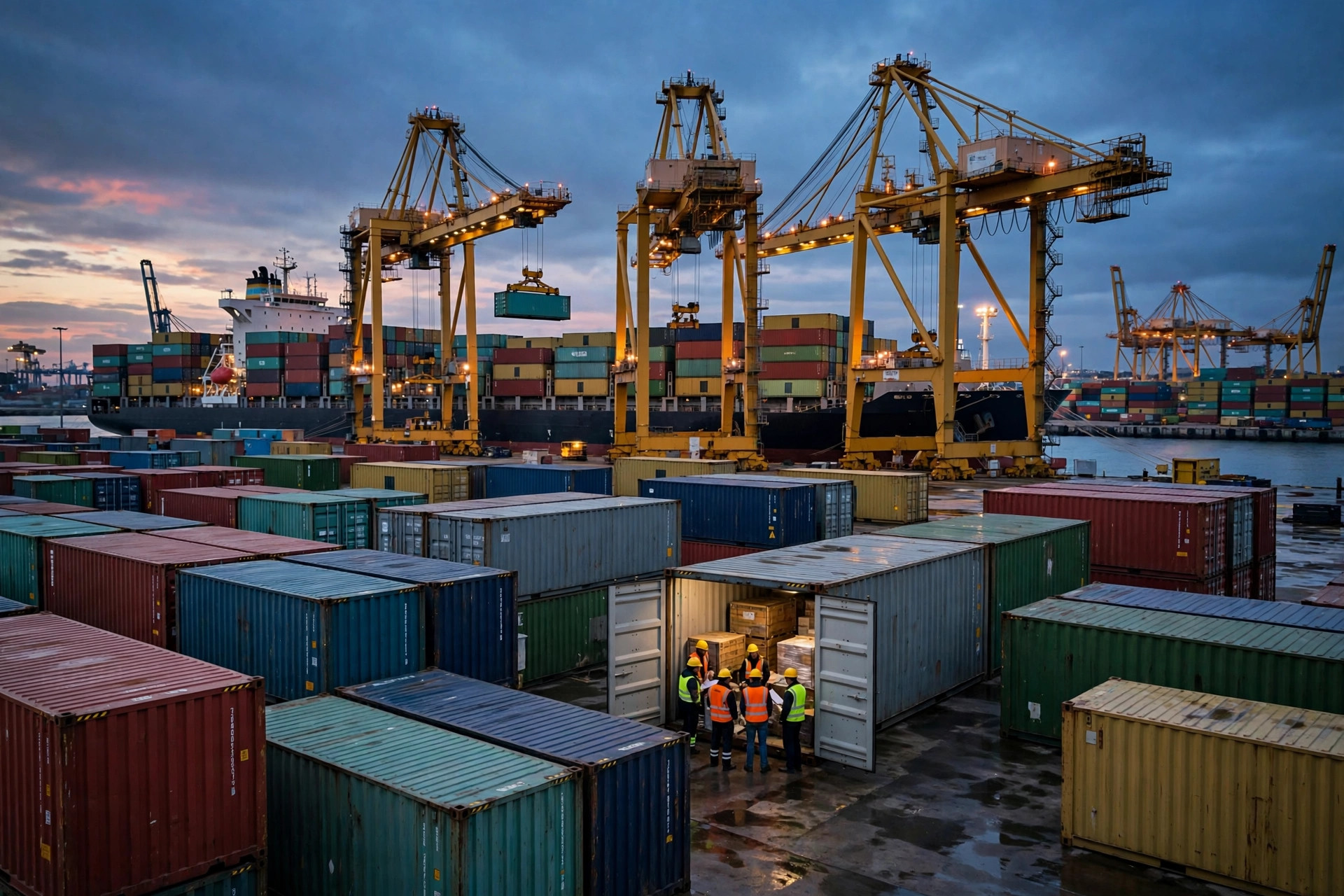
Allergen segregation warehouse work is clearest at seven in the morning, standing on a receiving dock. Trucks are waiting, forklifts are lined up, a driver wants a signature, and a temp is asking where a pallet goes. The zoning map on the wall can be perfect and it will not help you if nobody stops that pallet at the door. Honestly, segregation is not a layout project. It is what your crew does on every shift, with every load, and every time something spills.
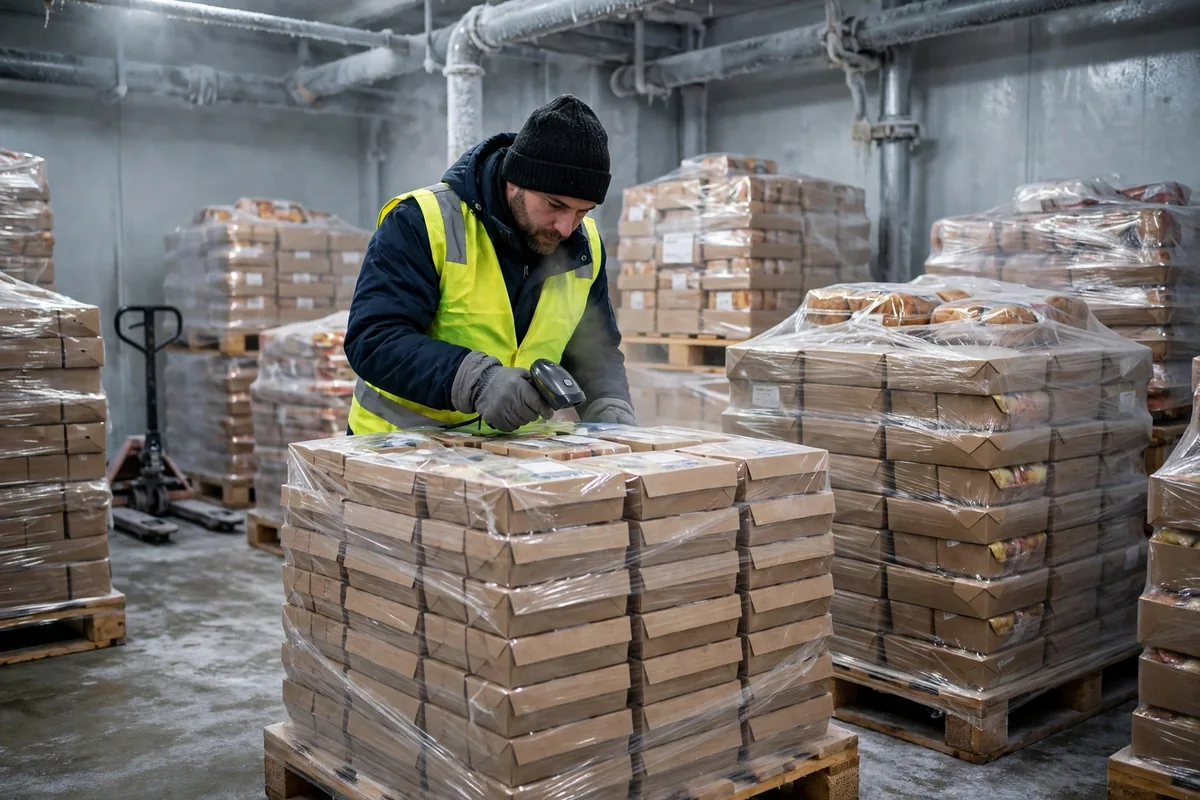
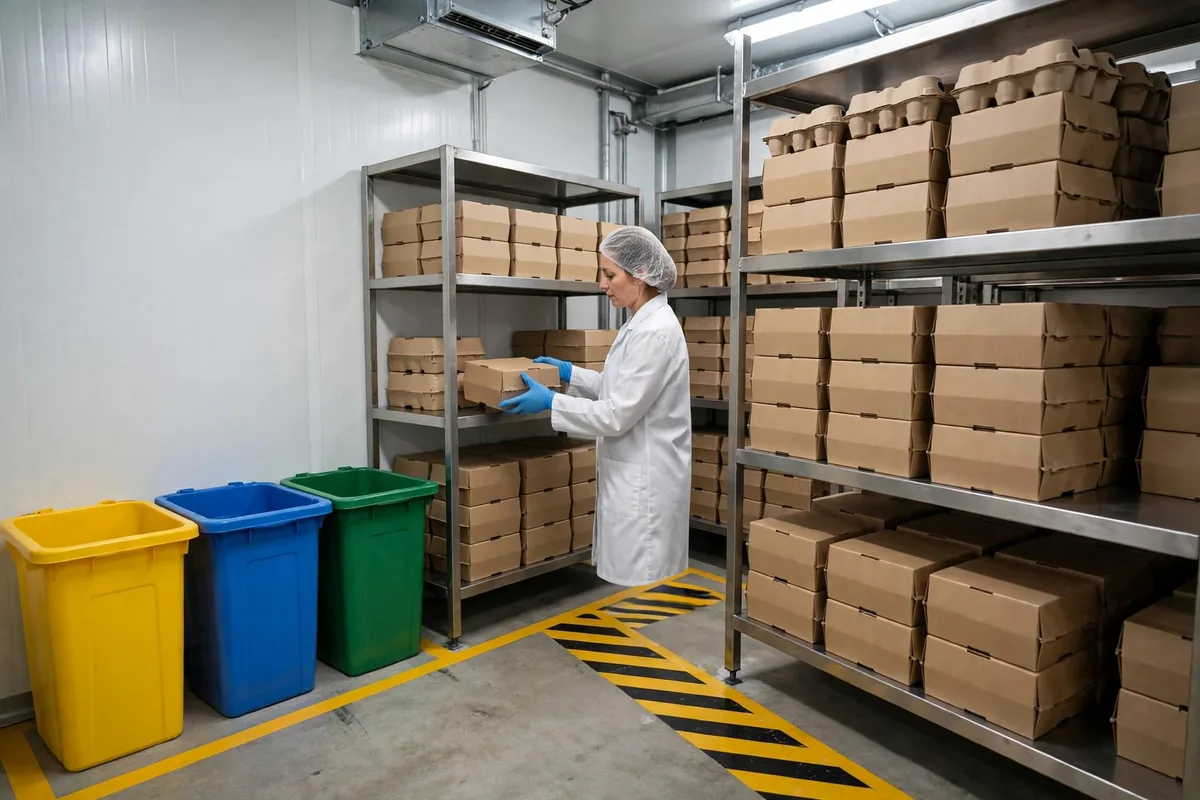
Here is how we run it. Anything carrying peanut, tree nut, milk powder, or egg powder stops in a hold area first. It does not travel straight to storage. A crushed carton, powder leaking from an inner bag, or a label nobody can read — any one of those means the pallet waits. My crew complained at first. It is only one pallet, they said. My answer never changes: holding one pallet costs ten minutes, placing one pallet wrong can stop a whole aisle for a day.
Allergen segregation warehouse checks at receiving
Last fall, just before peak season, a bakery-ingredient warehouse in Texas had a night that taught this lesson the hard way. A mixed load arrived after nine in the evening: twenty-six pallets, four of them peanut powder. The receiver was rushing to finish his shift. He checked product names but never looked at the inner bags. One pallet had a corner torn by a fork tine, and powder trailed across the floor. The morning crew found it during picking. Across the aisle sat product marketed as nut-free. Nothing reached a customer, but the whole aisle was frozen. Six people spent most of a day wiping and checking pallet by pallet, and the customer's orders shipped a full day late.
Receiving is not paperwork. It is the first gate. Our check is plain and it works. First, read the label properly — does this product contain an allergen ingredient? If the print is small, get close. If you still cannot read it, take a photo and zoom in. Never guess. Second, look at the packaging: crushed corners, split seals, powder under the pallet. Treat any of those as a problem until proven otherwise. Third, confirm the destination. Does the system location match the physical label? If the system says general storage and the driver is standing at the allergen zone door, stop and ask. A thirty-second question beats a day of cleanup.
Here is the counter-intuitive part: holding freight only works if someone specific can release it. If anyone can hold a pallet but nobody dares release one, the hold area fills up in three days and the night shift starts quietly routing around it. So we named the authority. A shift lead can release a pallet with a dented outer carton when the inner bag is intact. A broken inner bag waits for quality staff. Clear ownership keeps the gate real instead of theatrical.
For the underlying zoning and signage logic, our broader guide to food warehouse allergen segregation covers how zones and labels should be set up. This piece is about what happens after the zones exist — how you defend them on an ordinary Tuesday.
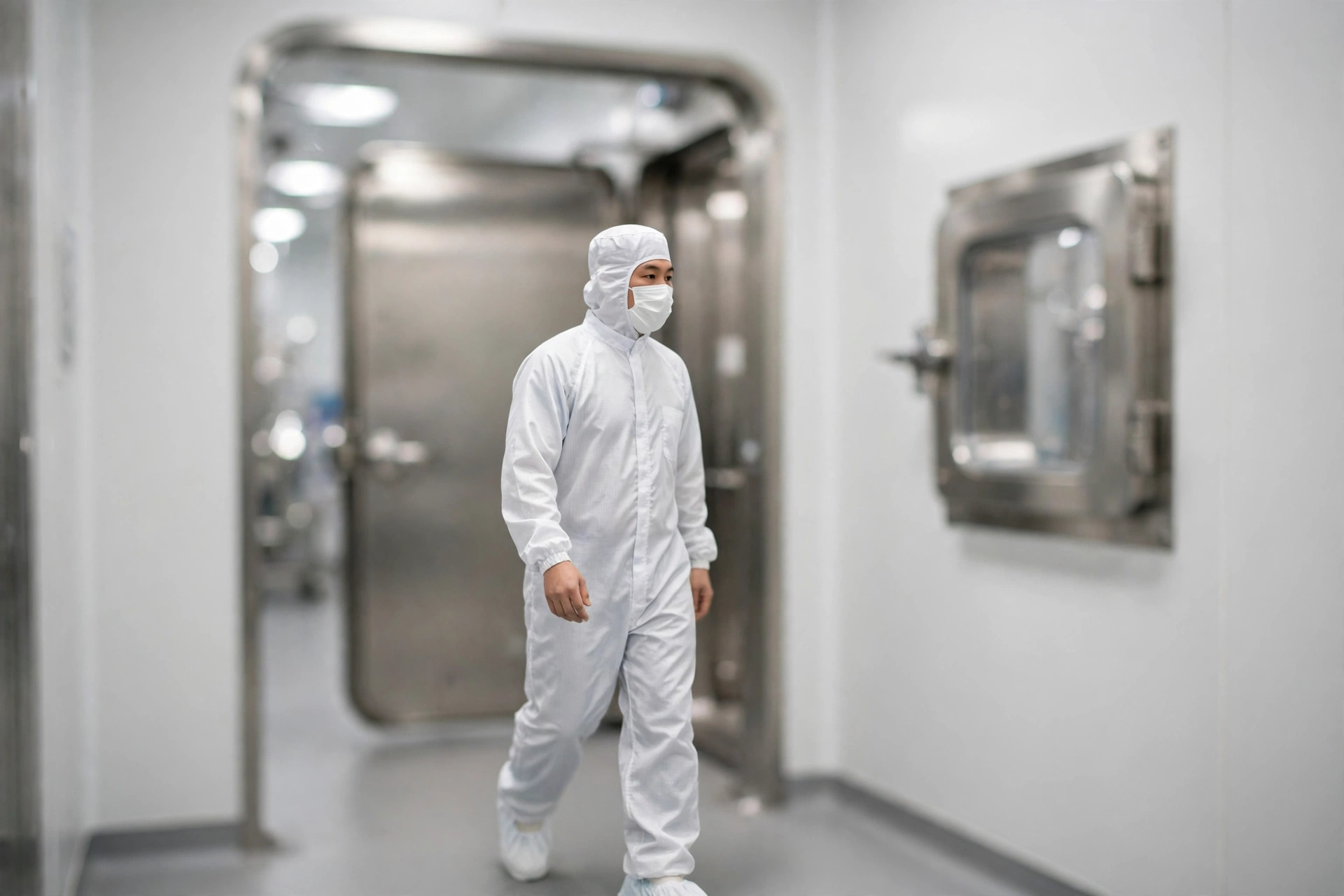
Cleaning changeovers in an allergen segregation warehouse routine
The biggest risk is often not a pallet in the wrong slot. It is residue from the last run riding into the next one. This March, our crew repacked milk powder in the morning and switched to oat flakes in the afternoon. A veteran operator, Zhang, wanted to save time. He blew off the conveyor and skipped the side panels. Powder packed into the panel seams shook loose onto the first totes of oat flakes. Quality caught it on a spot check and the batch went on hold. Twenty saved minutes bought nearly four hours of re-inspection and a delayed shipment.
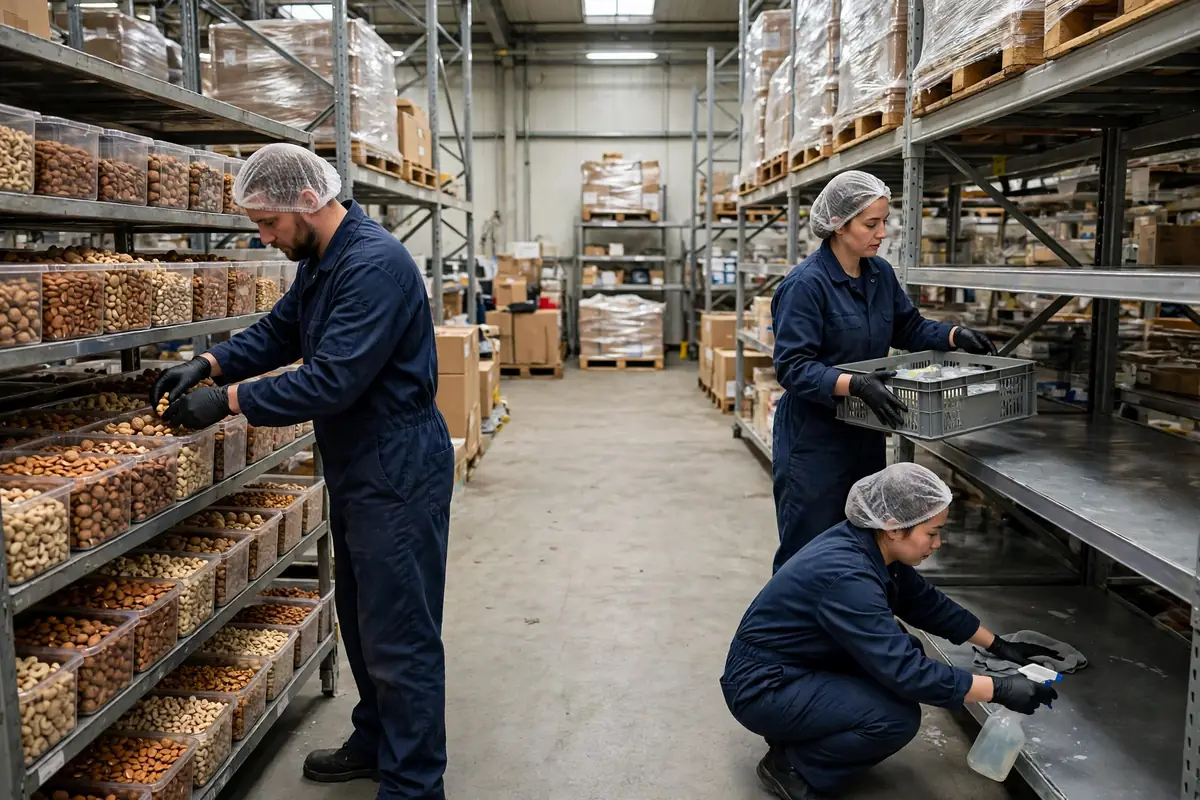
After that, changeovers got hard steps. Stop the line. Clear the surface. Remove the side panels and catch trays that can come off. Wipe down with the dedicated tools for that line. Brushes and dustpans that touched nut or milk product never travel to a general product line — they are a different color, visible at a glance. And the person who cleaned does not sign alone. A second person looks, then signs, then the line restarts. People call that fussy. I call it thirty seconds of signature versus three days of incident reports.
Post this simple framework at the line:
| Step | What to check | If it fails |
|---|---|---|
| Clear the line | Surfaces, side panels, catch trays free of residue | Clean again; do not restart first |
| Tool control | Dedicated brushes not mixed with other lines | Swap tools, recheck the whole segment |
| First batch | First cartons and totes after changeover are clean | Hold the batch for lead confirmation |
| Sign-off | Cleaner, checker, and time all recorded | Missing any item means changeover is not done |
A new hire can follow that table on day one. That is the point.
Spills: rope it off before you touch it
Spill response tells you what a warehouse is really made of. Two winters ago, on a night shift at a food warehouse in Ohio, a temp clipped a bag of sesame and half of it spread across the travel aisle. His first instinct was a broom, pushing it to the side. Every sweep widened the area and lifted dust into the air. The lead stopped him, coned off that stretch of aisle, rerouted people and forklifts, then cleaned with a dedicated vacuum and damp wiping. Afterward the crew checked the outer cartons of every nearby pallet.
The order matters: contain first, stop traffic second, clean third, check neighboring freight last. Reverse that order and you personally expand the problem. One more rule: floor staff control the area, they do not decide whether affected product is good. Dusty outer cartons get cleaned and staged separately. A torn inner bag goes to hold for quality staff. Clear boundaries feel cold, but they prevent expensive improvisation.
Run the math once and crews stop arguing. Say a pallet carries about 800 dollars of product. A spill that spreads to six neighboring pallets puts all six into re-inspection — three people for two hours, plus the customer calls about late orders. Roping off one aisle section for twenty careful minutes costs almost nothing by comparison.
Training temps: teach the three things they will touch today
At peak, temps can be a third of the crew. Two hours of regulation slides will not survive their first shift. Teach the three things they will actually touch today: which products never sit together, who to call when a bag breaks, and which brush never leaves its line. Our leads walk new temps through the floor for fifteen minutes before the shift, pointing at real freight. Peanut powder goes here. Milk product goes there. If you see powder leaking, your first move is to stop and call out, not to sweep. Then the lead asks three questions on the spot. Miss one, walk it again. Nobody receives freight alone until they pass.
For the first week, temps work paired with a veteran and cannot release held freight. That is not distrust. It is arithmetic: one wrong release costs more than a week of pairing. After a temp has handled one hold and one small spill under supervision, the lead signs them off.
Good allergen segregation warehouse habits are unglamorous: one extra look at receiving, one extra signature at changeover, cones before brooms. Spend less on repainting lines, more on those three moments repeated every shift. Local rules and customer requirements vary, so where unsure, check official latest policy rather than relying on habit.
By Chen Feng, Warehouse Operations Manager