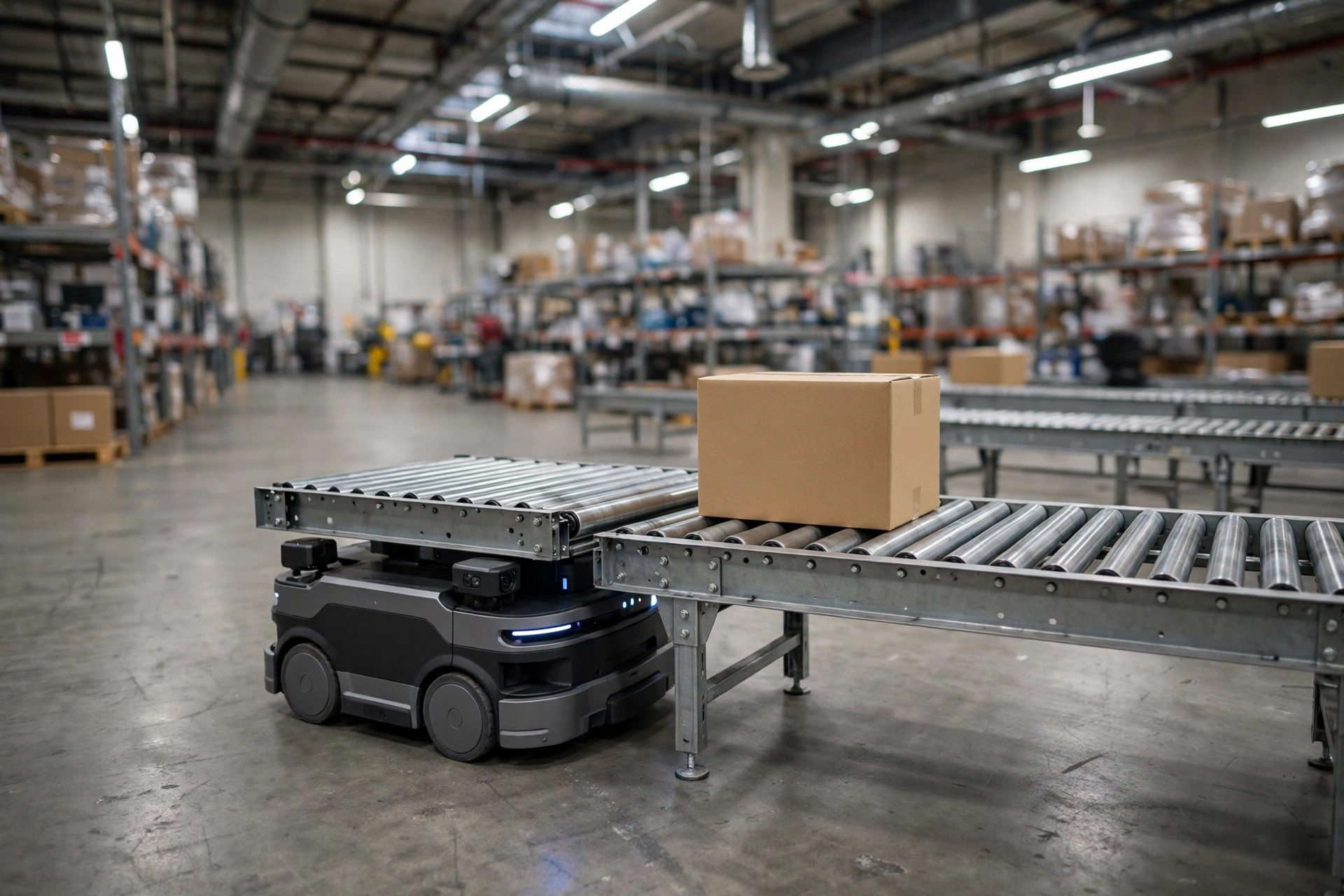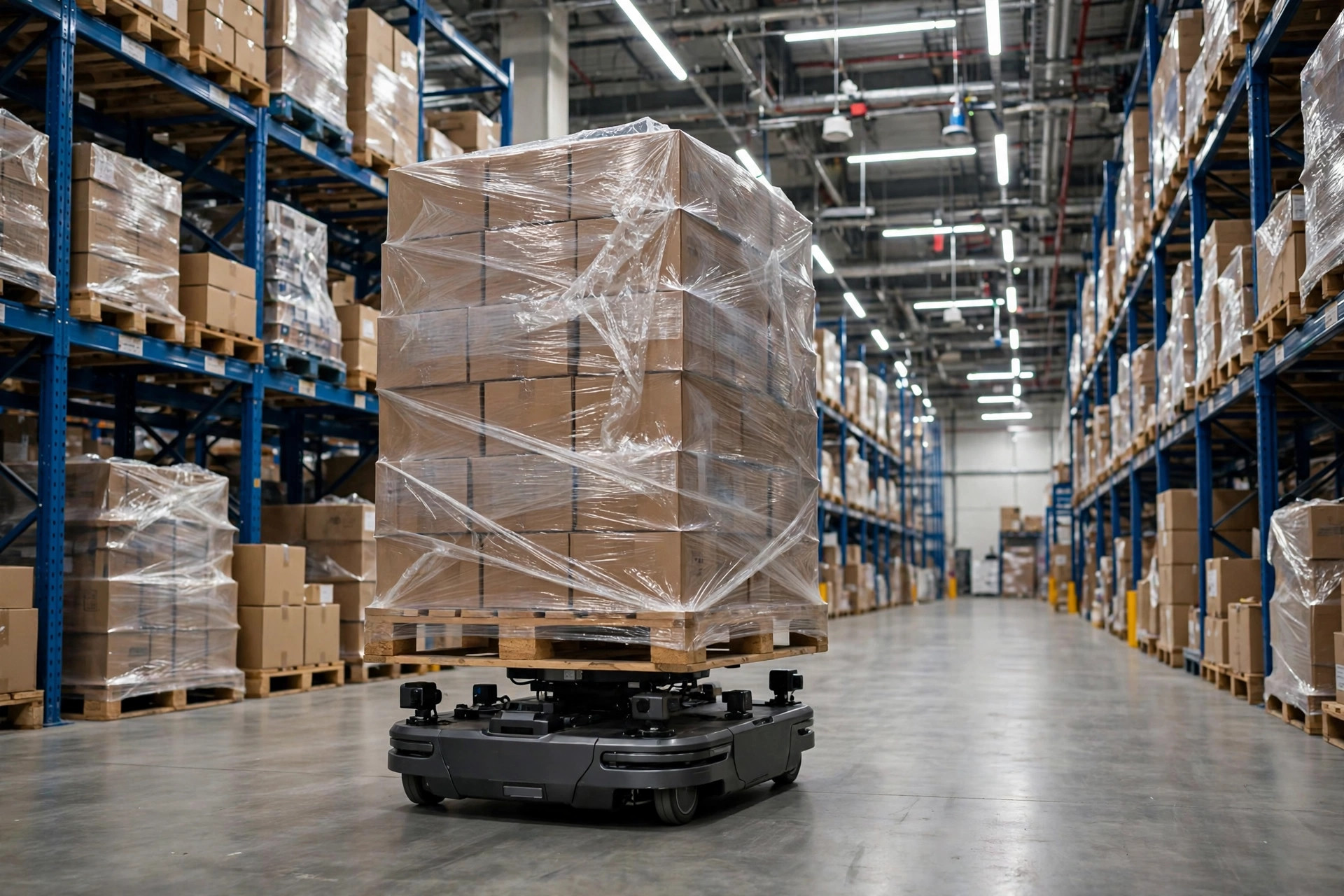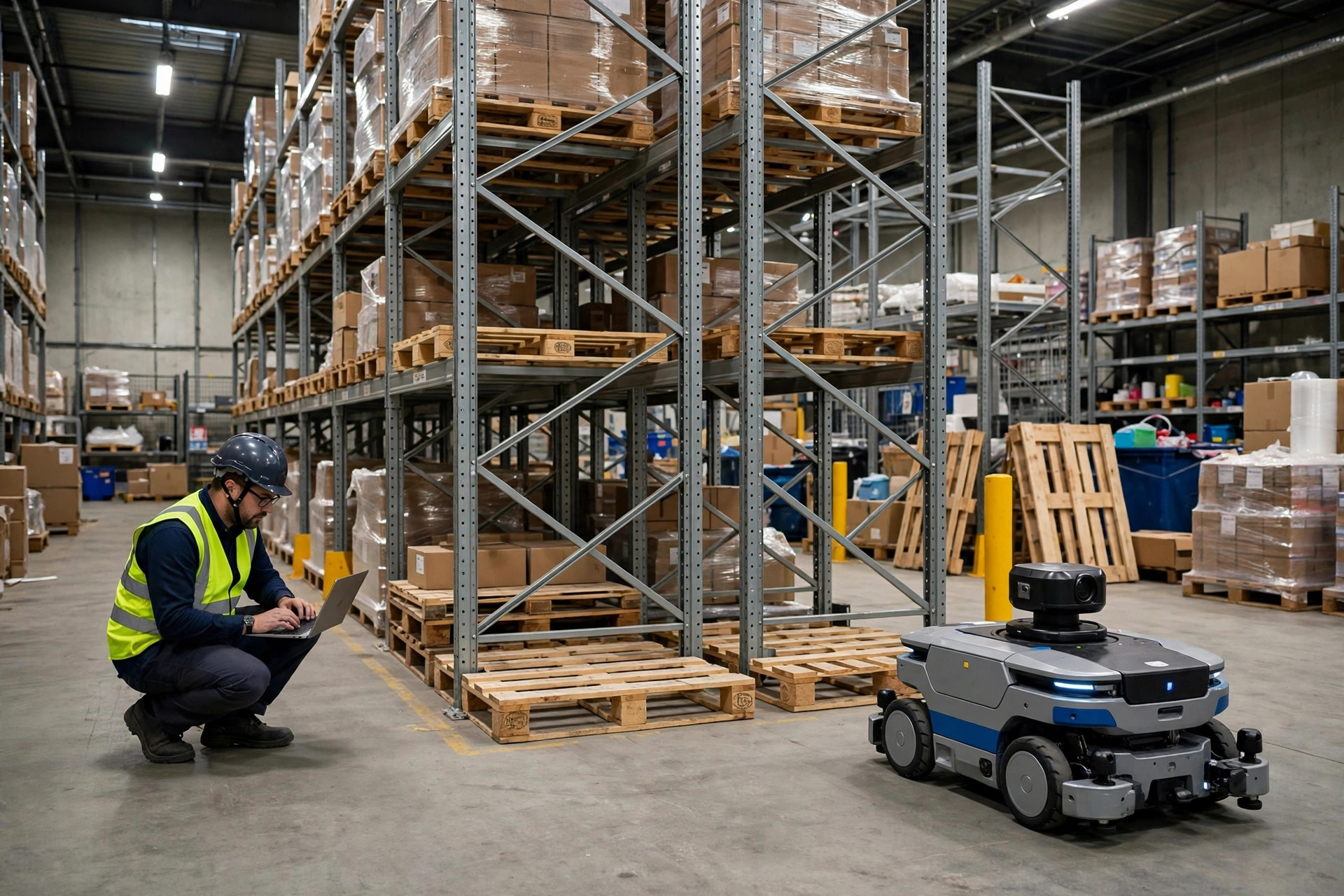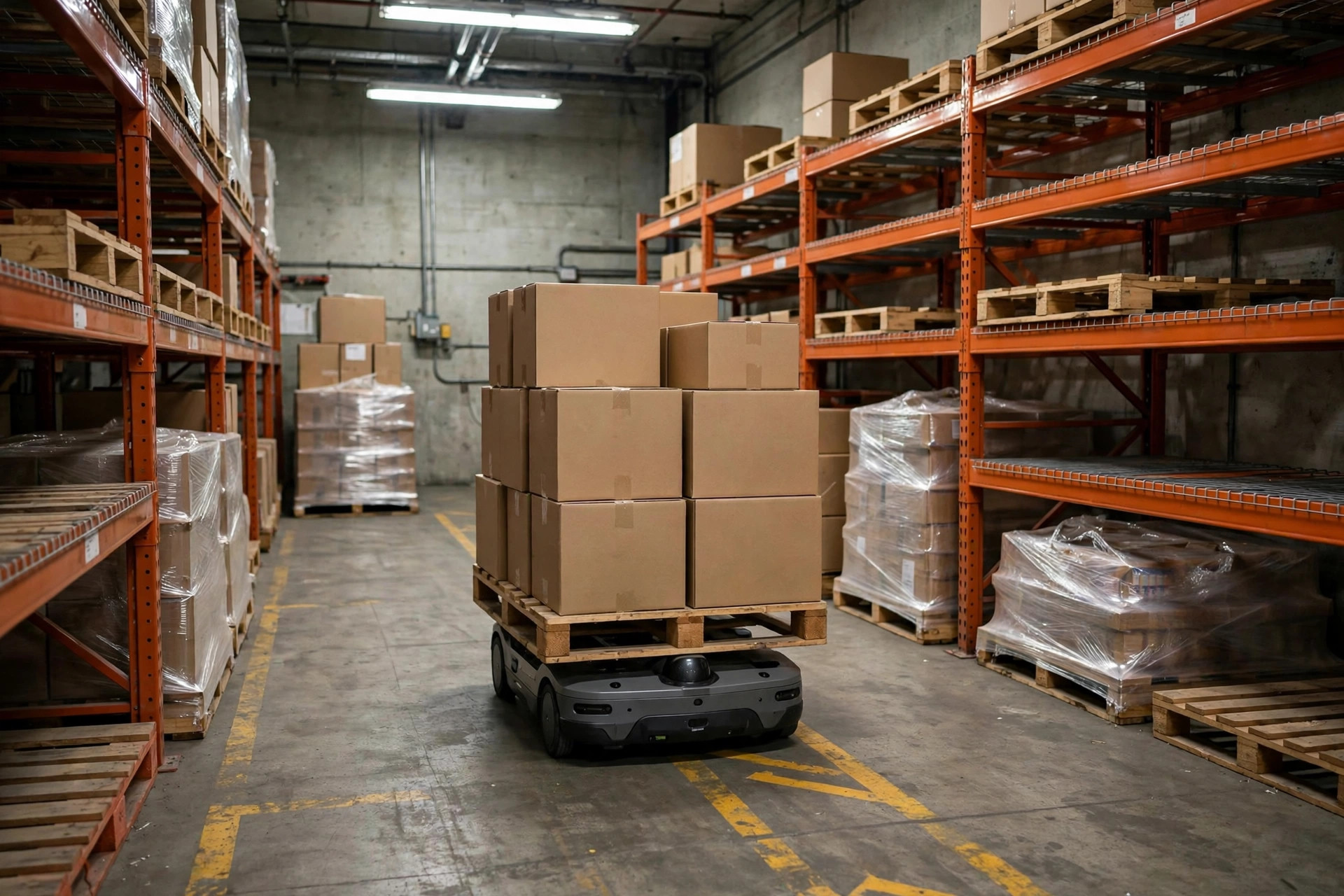
A phenomenon worth noting: more and more warehouses are asking their AMRs to "go outside."
Dock-to-workshop shuttles, material transfer between two buildings, staging under rain canopies. These "semi-outdoor" scenarios are becoming the new battleground for AMR vendors. Public industry reports put outdoor mobile robots' market growth ahead of indoor-only AMRs. But behind the buzz, one dataset deserves a cool head: failure rates in outdoor scenarios run 2–3x indoor levels.
Why? Let's do an attribution analysis of outdoor operation's challenges.
Challenge 1: Light, the LiDAR "Blinding" Moment
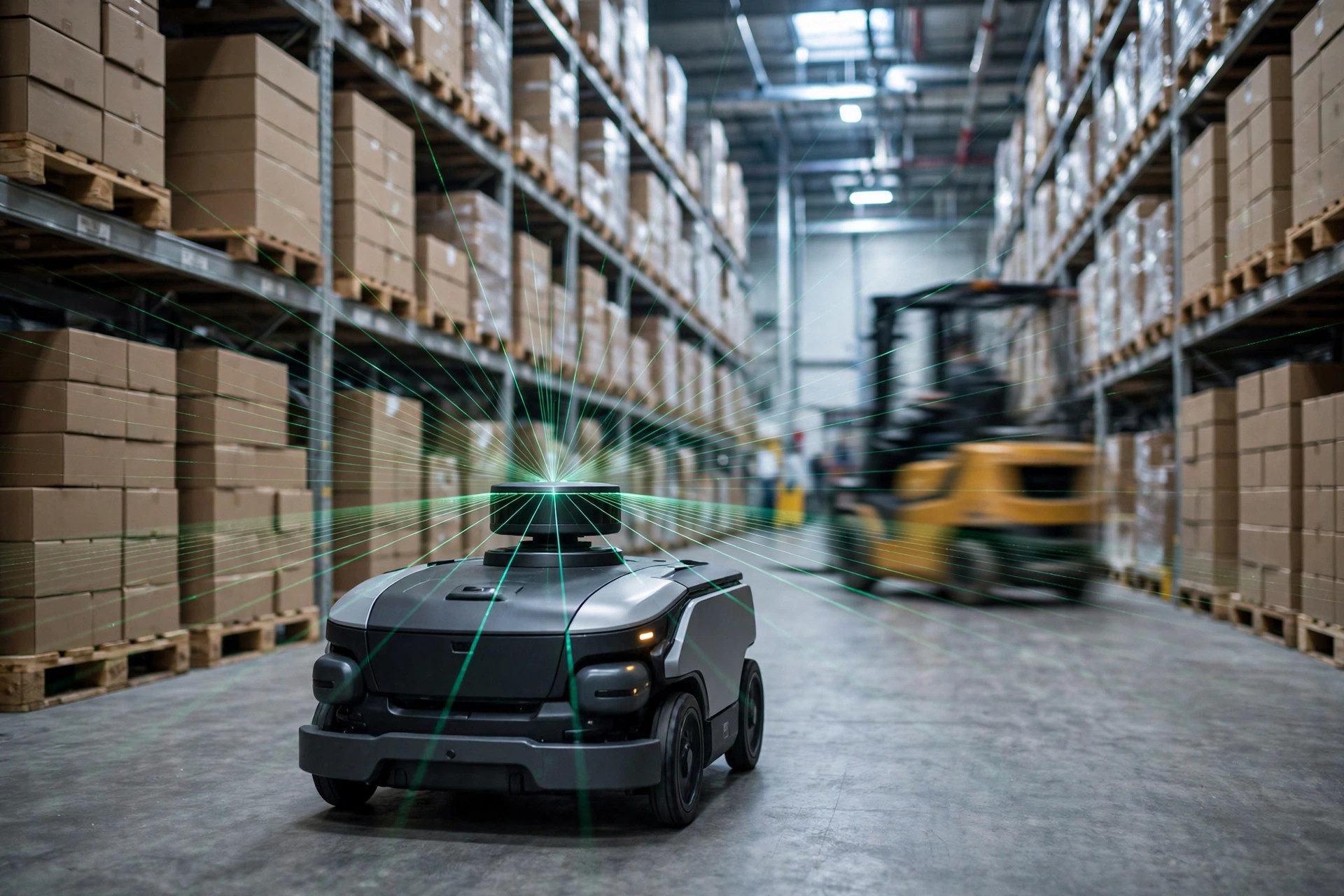
Indoor AMR navigation leans on LiDAR. Outdoors, direct midday sun can saturate some LiDAR receivers, causing brief "blinding."
Vendor technical documents point to three mitigations: switch to sun-resistant LiDAR models (roughly 20–30% cost uplift); fuse laser with vision so cameras correct the fix; or add RTK-GPS as a satellite backstop in open areas.
Attribution: no single navigation mode is reliable outdoors; fused localization is standard equipment, not an option.
Challenge 2: Rain, Where IP Rating Is Only the First Gate
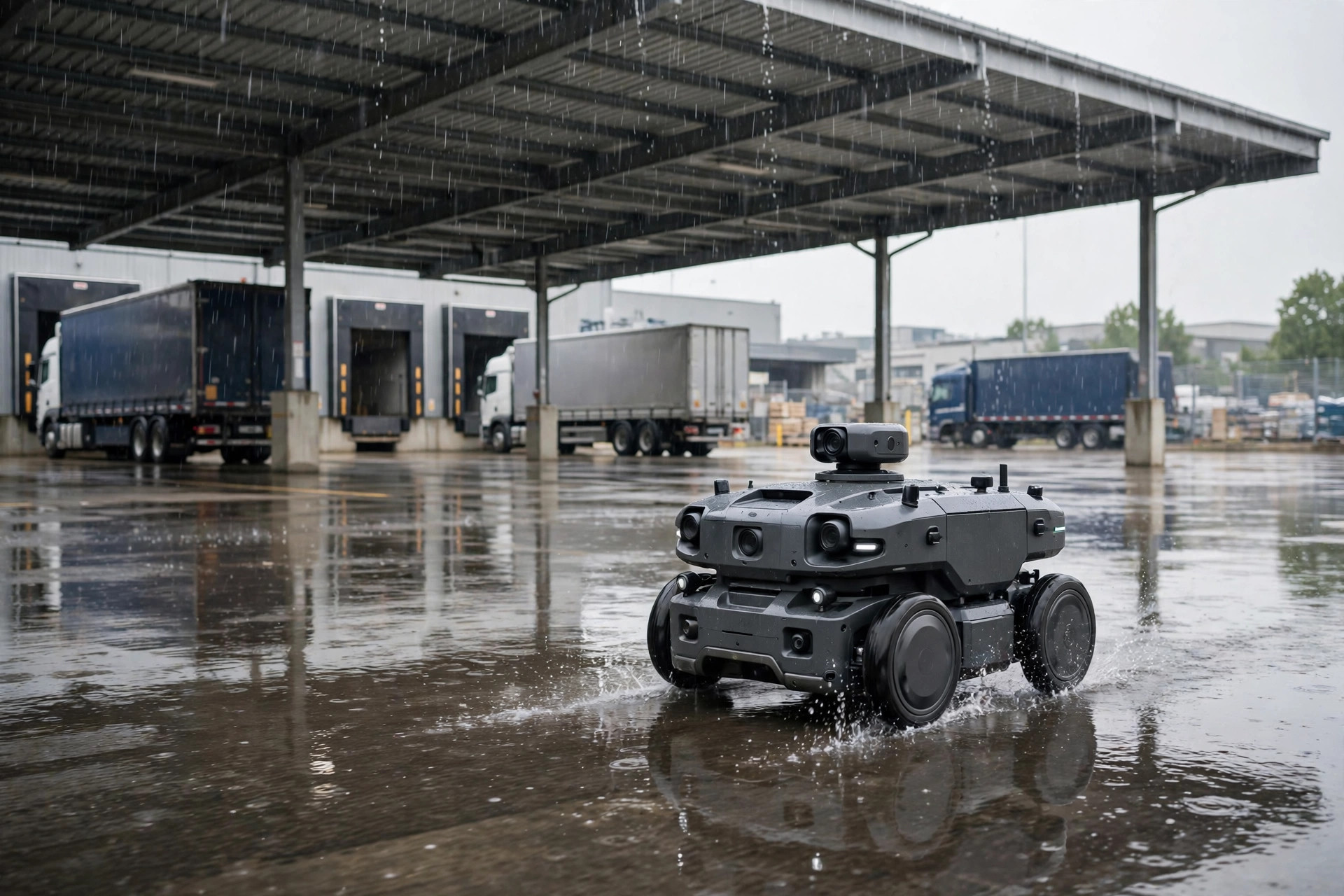
Indoor AMRs typically carry IP20 (dust, no water). Outdoor duty wants at least IP54 (splash-proof); under-canopy work should start at IP54, full exposure at IP65.
But the rating is only the first gate. The real traps hide in details: rain filming over the LiDAR cover refracts and ghosts obstacles; wet ground slips tires and drifts odometry; canopy drip lines land exactly on the AMR's travel path.
Reviewing several public outdoor-AMR pilot cases, more than half the outdoor failures trace not to navigation algorithms but to waterproofing details: aging connector seals, corroded charge contacts, hydrophobic LiDAR coatings worn off. None of it in the brochure; all of it in the maintenance manual's footnotes.
Challenge 3: Ground, From Epoxy to Concrete Plus Speed Bumps
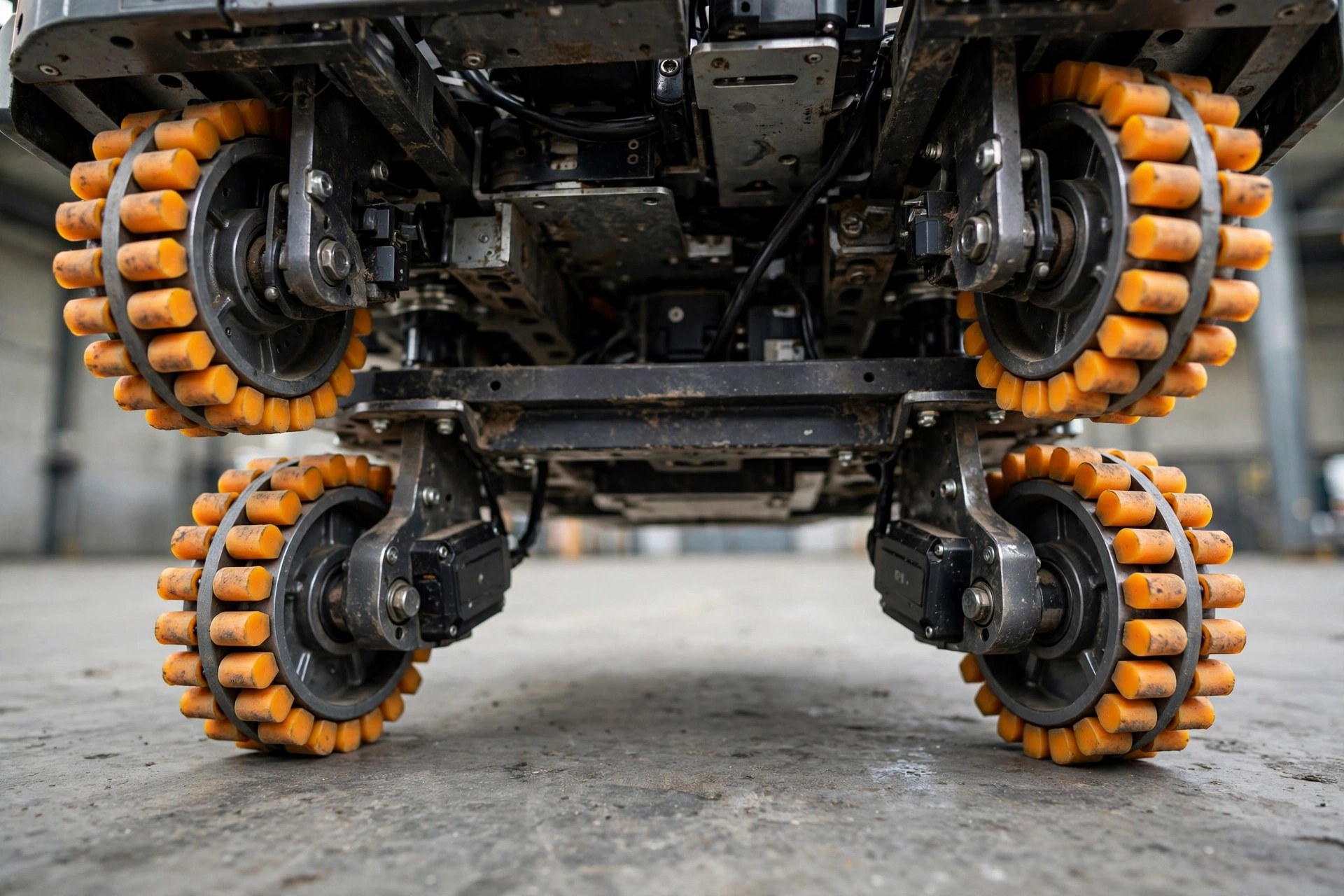
Indoors is flat epoxy; outdoors is concrete, expansion joints, speed bumps, manhole covers. AMR suspension and tires were designed for indoor floors.
Tire wear outdoors runs about 3x indoor rates; shock absorber life roughly halves. Translation for the TCO model: budget consumables and maintenance at 2x indoor levels for outdoor AMRs, or the ROI math is fiction.
Challenge 4: Temperature Swings, Batteries Complain First
Lithium capacity fades notably below 0°C and degrades faster above 40°C. An outdoor AMR living through −10°C to 40°C across the year often delivers half its nameplate battery life.
Countermeasures: climate-controlled battery compartments (heating plus cooling), or battery-swap architectures that isolate battery maintenance. This is the most commonly omitted line in outdoor project budgets.
Outlook: Semi-Outdoor Is the Three-Year Battleground
My read:
- Full-exposure long-range operation isn't mature within three years; closed campuses and short shuttles still rule;
- The "dock door to canopy" semi-outdoor case is technically ready; what's missing is standardized waterproofing, dust-proofing, and maintenance playbooks;
- Vendor divergence will sharpen: vendors with outdoor DNA (from AGV/unmanned-vehicle backgrounds) will take this increment, while pure-indoor AMR vendors need 1–2 years to catch up.
One open question for warehouses evaluating this: is your "outdoor need" real, or just "while we're at it"? Fifty-plus fixed shuttle trips a day justifies a project. A few trips a week is better served by a human with a tugger. Let the AMR do what it's best at; don't pay for the "fully autonomous" narrative.
By Dr. Chen, Supply Chain Researcher