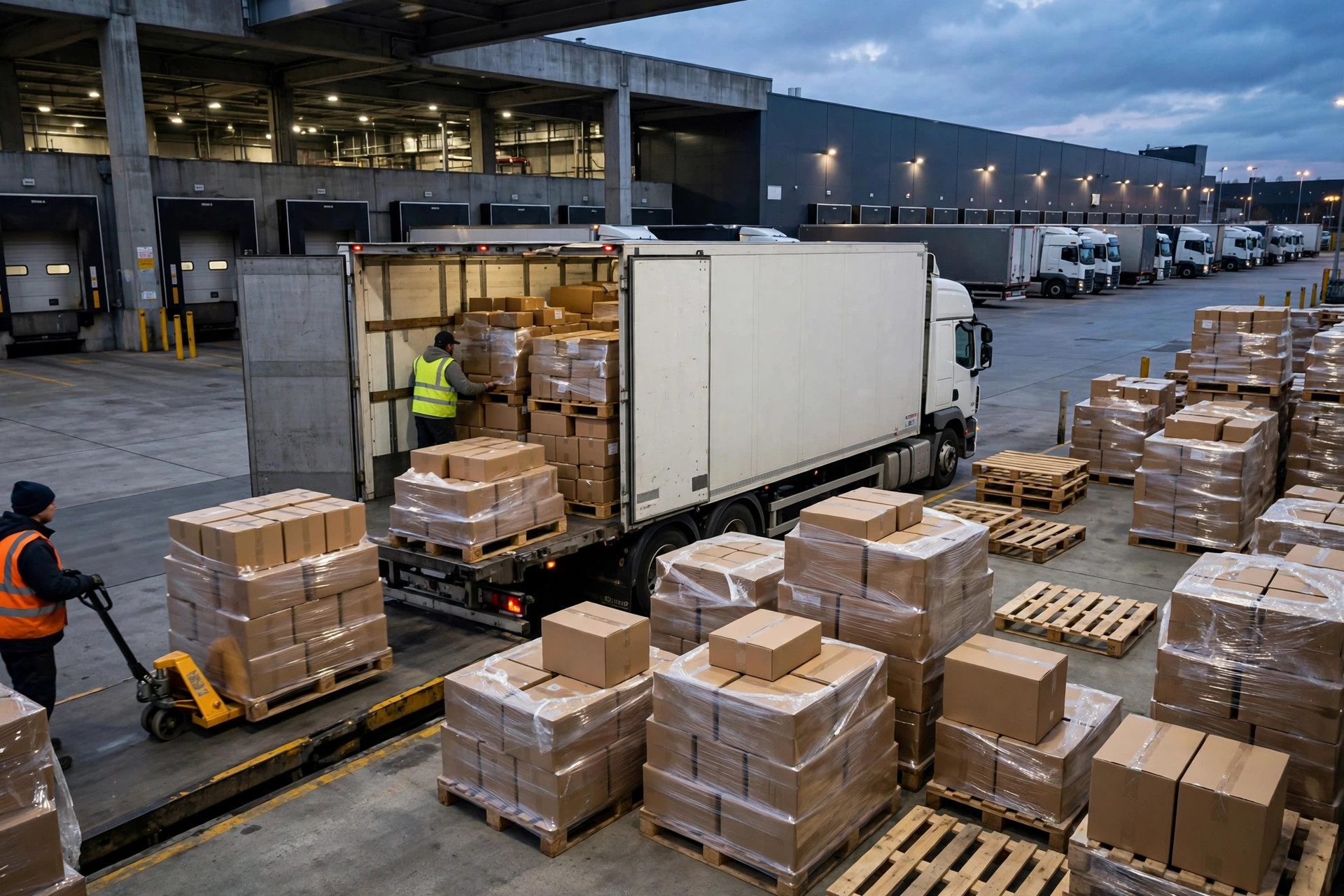
Back in September 2024, I hauled a full 53-footer from Ontario, California to Memphis, Tennessee. Not pallets — thousands of small parcels, labels already on, boxes stacked neat.
I'm sitting in the cab thinking: this shipper has lost his mind. Why pay me to drag these boxes 1,800 miles when UPS could've just picked them up in California?
At delivery, the owner bought me dinner and walked me through his math. I nearly dropped my chopsticks. The man calculates better than I drive — and I've been driving for 15 years.
That's zone skipping. And if you're thinking about it, do the math before you touch it.
What Zone Skipping Actually Is
The simple version: you collect all the parcels headed for one region, load them onto a truck — full truckload or LTL — drive them to a sort facility in that region, then hand them to a local carrier for last-mile delivery.
Why? Because UPS and FedEx price by zone. The farther from your ship point, the higher the zone number, the more you pay. Zone 2 is cheap; zone 8 is brutal — the same box can cost several dollars more at zone 8 than at zone 2.
Zone skipping takes the long-haul leg away from the parcel carrier and gives it to a truck. A truck moves a whole trailer for one flat price; split across thousands of parcels, that's pennies per box. The parcel carrier would've charged you zone-8 rates for every single one. That gap is where the money lives.
Sounds beautiful. Now do the math.
The Only Number That Matters: Daily Volume Per Zone
Fifteen years on the road, and I'll give it to you straight: zone skipping lives or dies on one number — how many parcels a day you ship into the same region.
The math goes like this:
Money saved per day = daily parcels × zone savings per parcel Money spent per day = linehaul cost (the truck) + sort facility handling
If the savings beat the spend, it works. The breakeven point is: breakeven volume = linehaul cost ÷ savings per parcel.
Let me run a set of numbers to show you the method (these are illustrative — always check current rates on each provider's website):
Say a full truck from California to Texas costs $2,200 in linehaul, and dropping from zone 8 to zone 2 saves $3 per parcel. Breakeven = 2,200 ÷ 3 ≈ 733 parcels a day.
| Daily parcels to the region | Zone savings ($3/parcel) | Linehaul cost | Daily result |
|---|---|---|---|
| 300 | $900 | $2,200 | lose $1,300 |
| 500 | $1,500 | $2,200 | lose $700 |
| 800 | $2,400 | $2,200 | make $200 |
| 1,200 | $3,600 | $2,200 | make $1,400 |
See it? At 500 parcels a day, you're paying me to take your boxes sightseeing.
The consolidators have their own rule of thumb: several publish that roughly 200+ parcels a day per destination zone is where zone skipping becomes worth discussing. That's their number, not mine — and they pool multiple shippers' freight into one trailer, splitting the linehaul, which is why their threshold runs lower than my DIY math. Verify against current published rates before you bank on it.
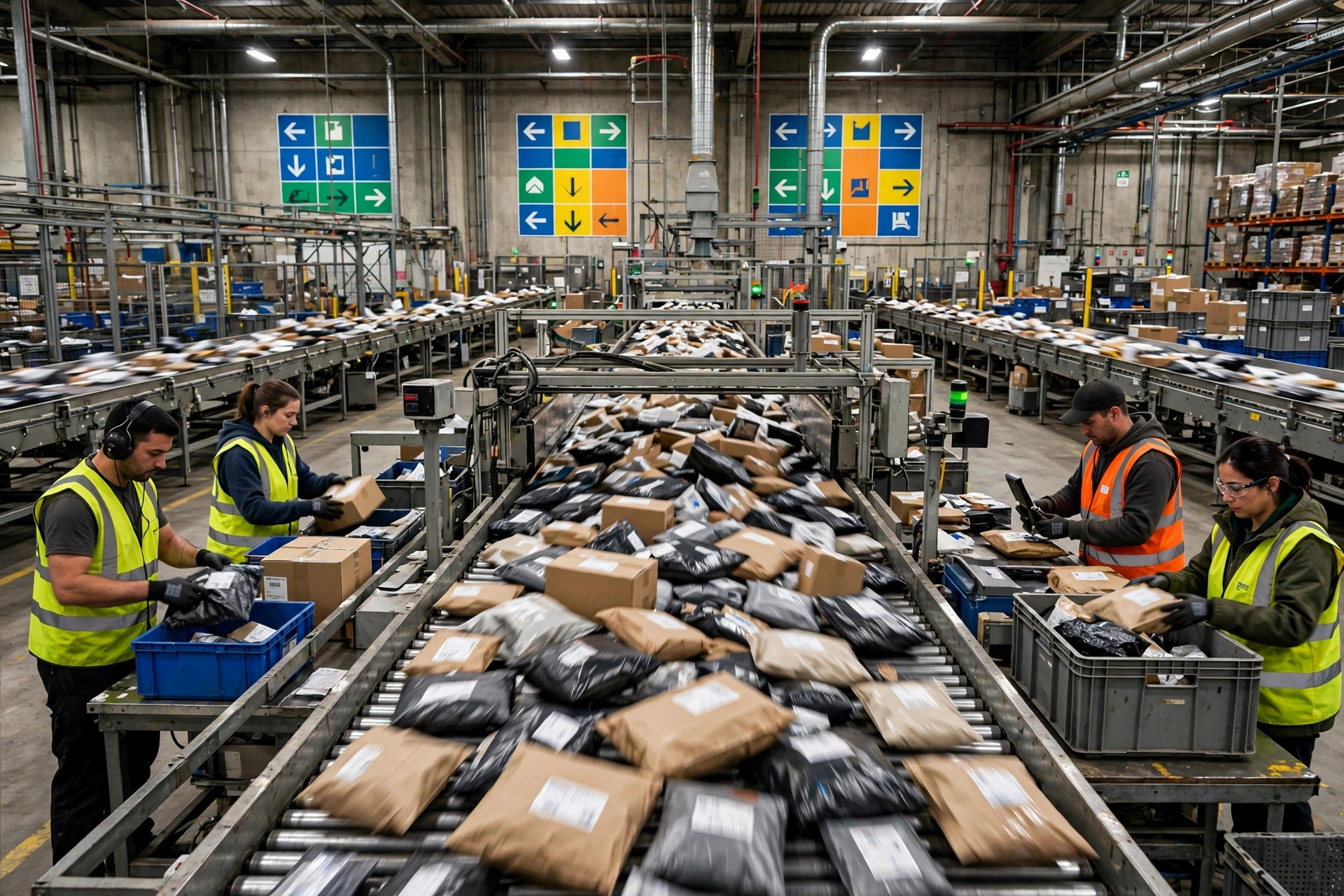
Here's the counterintuitive part: people treat zone skipping like a money-saving trick. It's not. It's a scale game. Jump zones without the volume and every dollar you "save" goes straight back into the linehaul — and you still added a day or two of transit for your trouble.
Two Stories: One Made Money, One Burned It
Last spring, a home-goods seller in Ontario was pushing 900+ parcels a day to the East Coast, all at zone 7 and 8 rates. I started hauling full trailers to their consolidator's facility in New Jersey — about $2,400 a trip. Their math: $3+ saved per parcel, $3,000 a day in savings, minus the linehaul, still hundreds ahead. Two months in, the owner told me they'd cut over ten grand a month off their shipping bill. The volume was there. Zone skipping sang.
The other story: a small Dallas seller doing 120 parcels a day, determined to skip zones into California. LTL linehaul plus handling came to $6+ per parcel; the zone savings were barely $2. Every parcel lost $4. A month of that burned nearly twenty grand before they quit. "Shifu," he told me, "I wasn't skipping zones, I was jumping into a pit."
Fifteen years on the road taught me this: zone skipping doesn't care how much you want to save. It cares how many parcels a day qualify you to save.
Zone Skipping, Two Ways: Build It Yourself or Hire a Consolidator?
DIY fits big sellers moving thousands of parcels a day. You lease the regional facility, hire the sort crew, negotiate your own last-mile discounts with UPS and FedEx. Full control, lowest unit cost — but heavy fixed investment in every region. Without the volume, it's a money pit.
Outsourcing to a consolidator fits almost everyone else. The players each have their own personality:
- DHL eCommerce: widest network, stable pricing, but a beat slower than UPS and FedEx. Good for freight that isn't in a hurry.
- UniUni: aggressive pricing, strong in the West, but capacity gets tight in peak season — lock it in early.
- OnTrac: owns the West Coast ground game — fast and cheap there, ordinary everywhere else.
- Warp: tech-driven, lots of hub nodes, strong API integration. Fits sellers with solid systems.
- USPS lightweight products (like Ground Advantage): unbeatable for sub-2-lb parcels; don't bother for heavy stuff.
That's the industry's general read on each player; service areas and rates change, so verify on each provider's current site before you sign anything.
Onboarding with a consolidator is usually three steps: API integration for orders and labels, sort and label to their spec, then drop the freight at their induction point — they take it from there. Low barrier to entry, but nail these down before you sign:
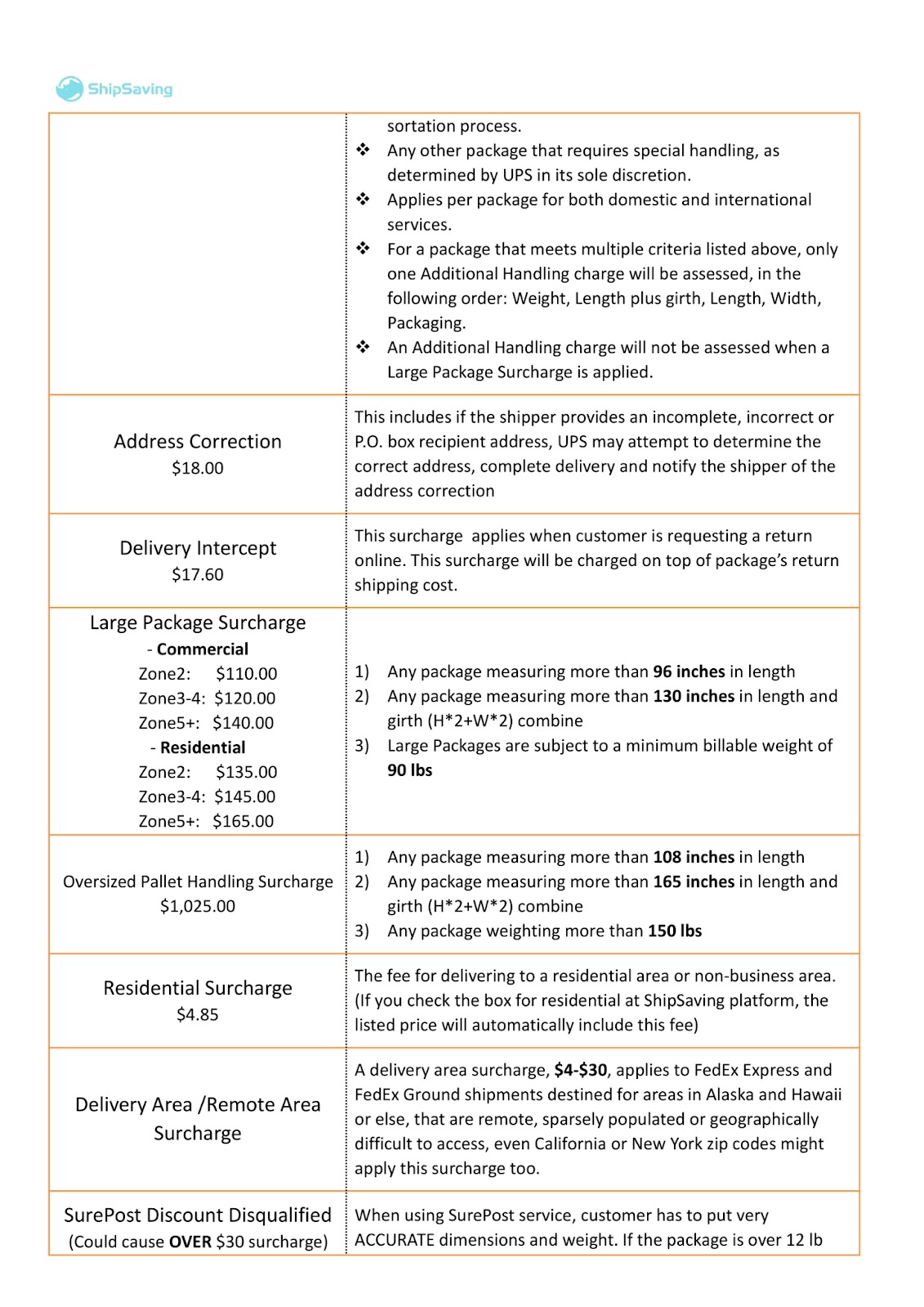
- Hidden accessorials: residential surcharges, extended-area surcharges, fuel surcharges. Whatever isn't on the rate sheet, ask about three times in the contract.
- Claims rules: who pays for a lost parcel, how much, and do late deliveries count? Get the liability handoff point between linehaul and last mile in writing.
- Billing clarity: can you reconcile the invoice parcel by parcel? Don't accept a mystery bill at month-end.
Three Potholes, Flagged in Advance
One: transit adds 1–2 days. An extra linehaul leg plus a sort means 1–2 more days, normally. If you promise 3-day delivery, zone skipping can turn it into 5. Selling on speed? Think twice.
Two: lost-parcel blame games. Lost on the linehaul truck — that's the trucking company's problem. Lost after the sort facility — that's the consolidator or the last-mile carrier. More handoffs, more finger-pointing. My advice: insure every linehaul load and keep every handoff document.
Three: peak-season capacity. Thanksgiving through Christmas, trucks are scarcer than gold, linehaul rates spike, and consolidator induction points have lines out the door. Those two months can eat every dollar zone skipping saved you. Lock linehaul rates before peak, or just pause zone skipping for the holidays.
My Parting Advice
We truckers have a saying: do the math before you roll.
Zone skipping is a fine tool — for sellers with the volume and concentrated destinations. Under 200 parcels a day to a region? Stay with your parcel carrier and don't overthink it. 200 to 700? Ride with a consolidator. Over 700? Then consider building it yourself.
Don't let a sales rep's savings number hypnotize you. Pick up the calculator, run the formula above with your own numbers. If it clears, roll. If it doesn't, those savings are paper money.
By Shifu Zhao, Trucking Veteran (15 yrs)