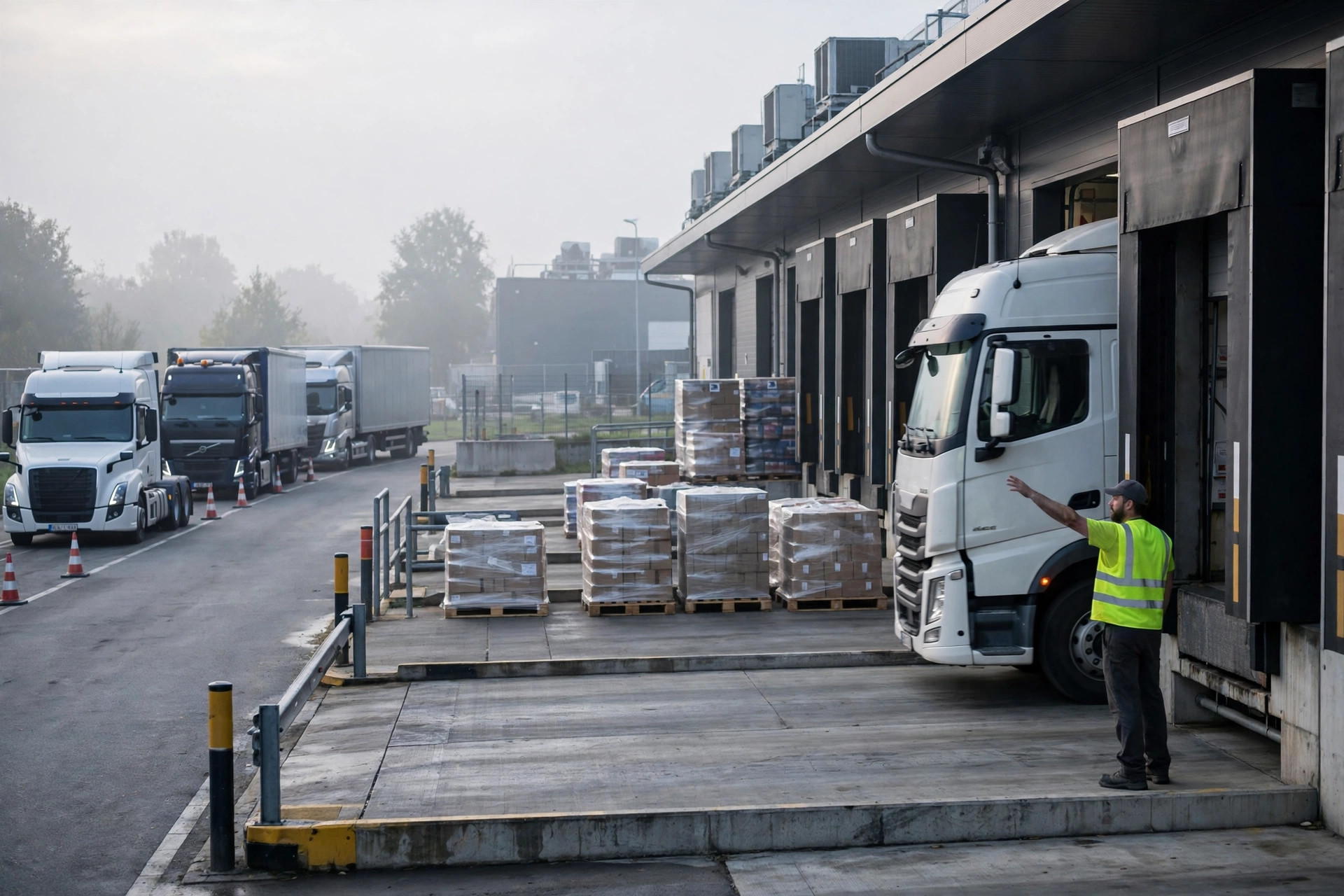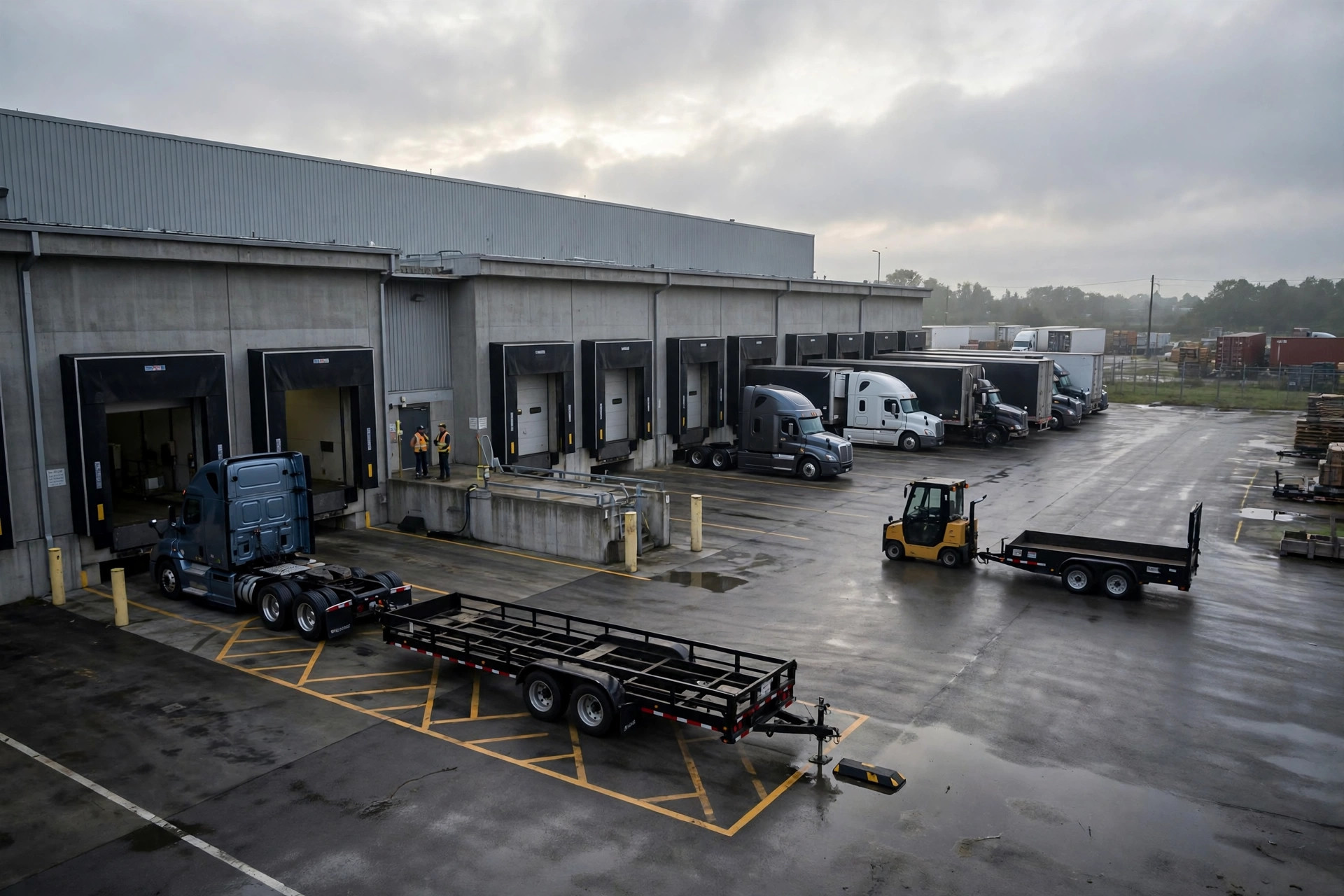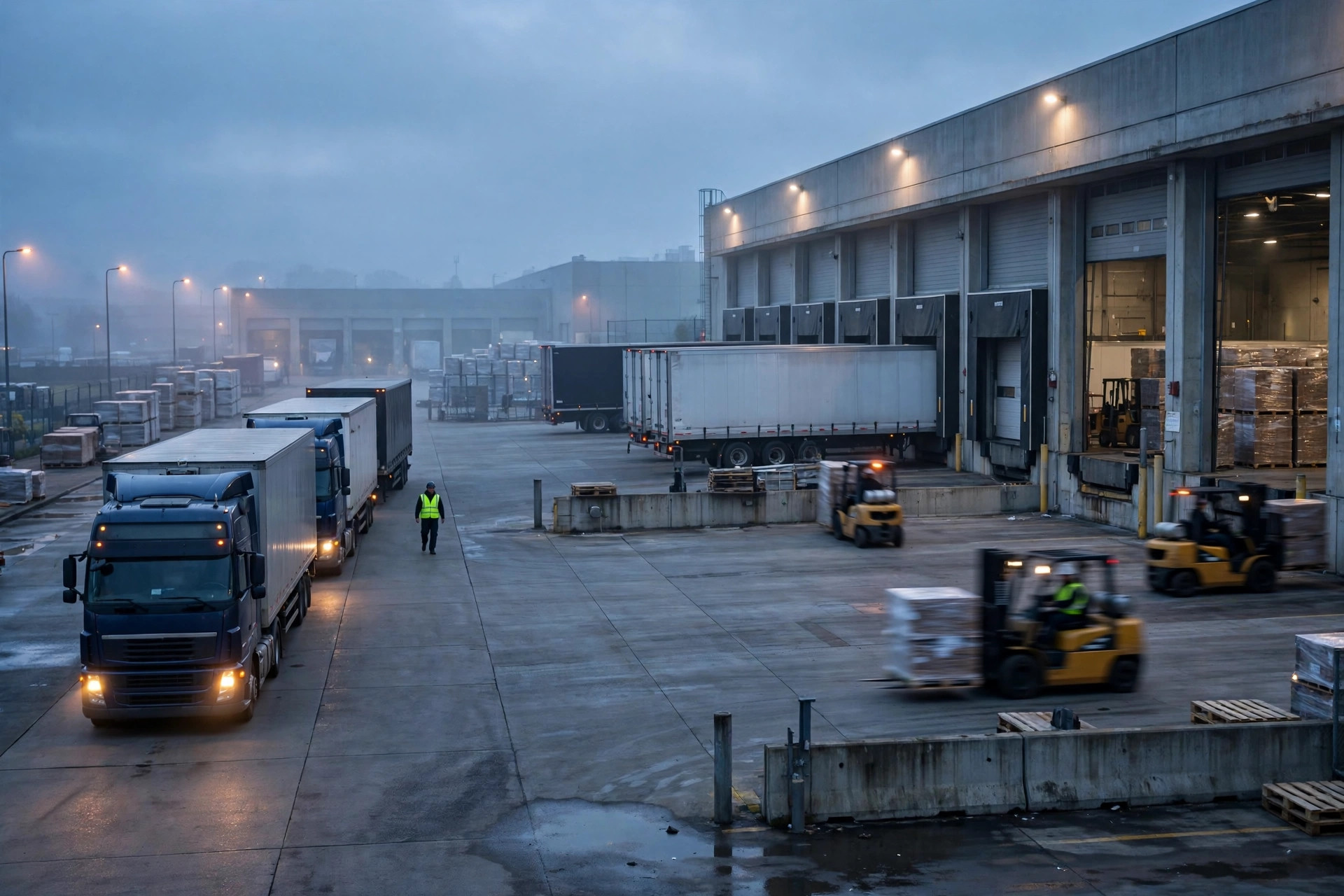
Bottom line up front: YMS truck wait time does not come down because you bought expensive software. It comes down when you stop running the gate on guesswork and start running it on appointments. A line of trucks is not the problem. An unpredictable line is the problem. The driver does not know when he gets in, the warehouse does not know when to staff the dock, and both sides burn hours guessing. I am not going to quote you a vendor's marketing percentage in this article. I will show you how to measure it, how to price it, and how to change it step by step, using numbers from project sites and one operator's own records.
Where YMS truck wait time actually goes
In November 2024, a third-party warehouse outside the Inland Empire in California, handling e-commerce fulfillment, had nine trucks queued at the gate by 7 a.m. The appointment slip said 8 a.m. entry, but the dock crew was still working through freight left over from the day before. One driver arrived at the gate at 7:05 a.m. and did not reach a dock door until 11:40 a.m. He got out and asked four times, and got four different answers: almost there, wait a bit more, the truck ahead is not done, go park over there. I have seen this exact failure three times now, and the script never changes. The appointment time is scheduled in one place, the entry order is shouted out in another, and the two never meet.
When that warehouse broke its own log apart, the picture changed completely. Actual unloading took 52 minutes. The rest went to three buckets: 1 hour 50 minutes waiting for an open door, 47 minutes waiting for a forklift and crew, and 38 minutes waiting on paperwork and inspection sign-off. The driver was not waiting on unloading. He was waiting on coordination. Until you split the total into those buckets, every argument about the gate is an argument about a single number nobody can defend.
A second site taught me the other half of the lesson. In March 2025, an auto-parts distributor in Dallas did not buy software first. They had the gate guard log timestamps for two weeks: arrival, gate entry, dock start, departure. The worst congestion was not the morning rush. It was Tuesday and Thursday afternoons between 2 and 4 p.m., when three big customers' trucks landed in the same window. The problem was not drivers arriving early. The appointments had never been staggered at all. That finding became the starting point for everything they changed afterward.
Measure it before you promise anything
On my go-live night checklist, the first item is always the same: measure for two weeks, then talk about targets. The method needs exactly two things, and both are non-negotiable. The first is gate timestamps at four points: arrival, entry, dock start, departure. A guard with a clipboard works. A gate camera with plate recognition works better. What matters is that all four points for the same truck can be matched up. The second is detention-fee reconciliation: take the monthly detention bills from carriers, spread them across individual trips, and check them against the timestamps. If the long-wait trips on the bills do not match the long-wait trips in the log, one of your two data sources is lying to you.
Here is what the Inland Empire operator's own books looked like. These are that one warehouse's numbers, not an industry benchmark, and your starting point will be different:
| Metric | Before (October 2024) | After (January 2025) |
|---|---|---|
| Average driver time on site | 4 hours 12 minutes | 2 hours 5 minutes |
| Pure unloading time | 52 minutes | 48 minutes |
| Monthly detention spend | About $19,000 | About $7,000 |
| Gate inquiries per day | About 60 | About 15 |
Read that table the right way. Unloading barely moved. Everything saved came out of waiting and coordination. Detention spend fell from about $19,000 a month to about $7,000, and that money was not conjured up by software. It disappeared once appointments were staggered and the dock sequence was visible to everyone, so trucks stopped burning hours at the gate. Report savings at this level of detail or do not report them at all. A single percentage means nothing when every warehouse starts from a different baseline.
One detail trips up reconciliation more than any other: the contract language on free waiting time. Some contracts start the clock at arrival, others at gate entry, and that one-hour difference in definition can swing thousands of dollars a month. I insist that finance write the contract definition into the header of the reconciliation sheet, so timestamps and bills are compared under the same definition. Until the definitions match, do not quote any improvement figure to anyone. You will only be digging your own hole.
The checklist that actually moves truck wait time
Work through this list in order. Each step has an acceptance test, and you do not move on until the step passes.
- Baseline for two weeks. Log all four timestamps for a full two weeks and produce a congestion chart by time of day, naming the two worst windows and the three customers who overrun most often. Acceptance test: more than 90% of trips have all four timestamps.
- Pull appointments out of phone calls and chat groups into the system. Every appointment carries three required fields: plate number, expected arrival window, and freight type. Missing one, no appointment. Acceptance test: phone bookings drop below one in ten.
- Sequence the docks, not just the clock. Every morning the system publishes a sequence sheet built from appointment windows, freight type, and actual door availability, posted at the gate and in the dock office, so a driver arriving at the gate can see his place in line. Acceptance test: driver inquiries at the gate cut in half.
- Set a 30-minute slip rule. When one truck overruns by 30 minutes, the system automatically texts the next three drivers a revised window with the reason stated plainly, so nobody drives over for nothing. Acceptance test: no-shows and wasted trips after a rebooking drop to zero complaints.
- Review weekly. Post the week's average time on site, overrun trips, and detention spend on the office wall. Any window that got worse two weeks running loses appointment slots the following week. Acceptance test: the review happened, the notes exist, and the slot cut was actually applied.
The three ways this blows up
Here is the counter-intuitive part, and it is the part most buyers get wrong: lower is not always better. One warehouse drove average time on site down to just over an hour and then watched dock idle time double. The forklift crew spent half the shift waiting for trucks, and labor cost went up instead of down. The right target is not zero. It is predictable: drivers arrive on time and leave on time, the warehouse can plan staffing, and the docks do not sit empty. A stable two hours beats a flashy one hour that nobody can repeat.
The other two failure modes I see on repeat are just as common. One is appointments without dock discipline: drivers arrive on time, but the door still is not free, so the wait moves from outside the gate to inside the yard. The number looks better and the drivers are angrier than before. The other is slicing appointment windows too thin. Fifteen-minute slots sound precise until a driver hits twenty minutes of traffic, and then the whole day's schedule unravels into rebooking chaos. After enough of that, nobody trusts the system and everyone goes back to phone calls. On my go-live night checklist, both of these are marked in red: appointments must be tied to real dock capacity, and window widths must leave room for the road being the road.
So what does yard management really cut? Not the unloading work. It cuts the hours both sides spend guessing. Split the wait into buckets, measure it at the gate, put it into appointments, and review it every week, and the four hours at the gate will come down. How fast depends on where your warehouse starts. Do not trust any single number on a sales page. Trust your own gate timestamps.
By Lin Xiao, WMS Implementation Consultant