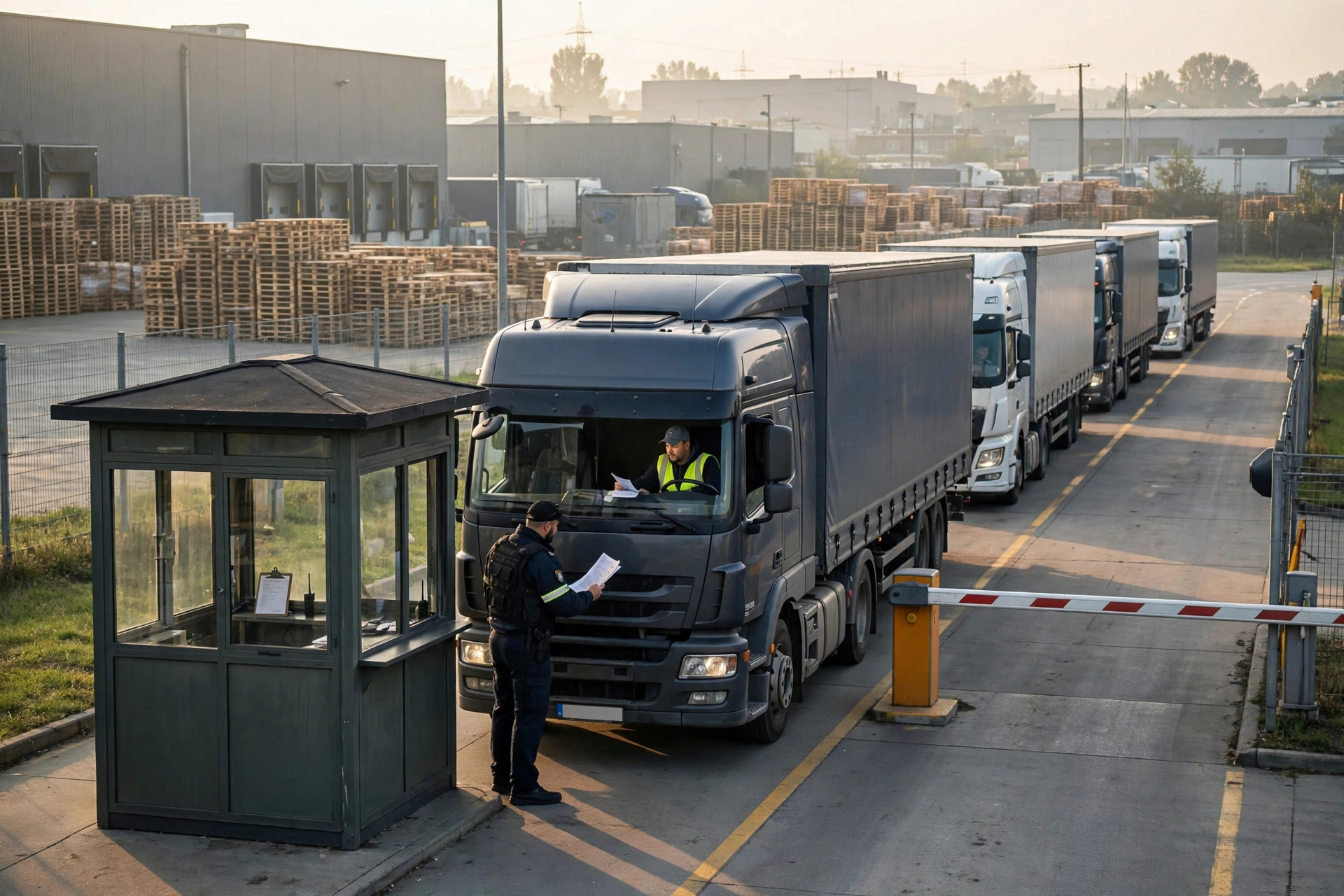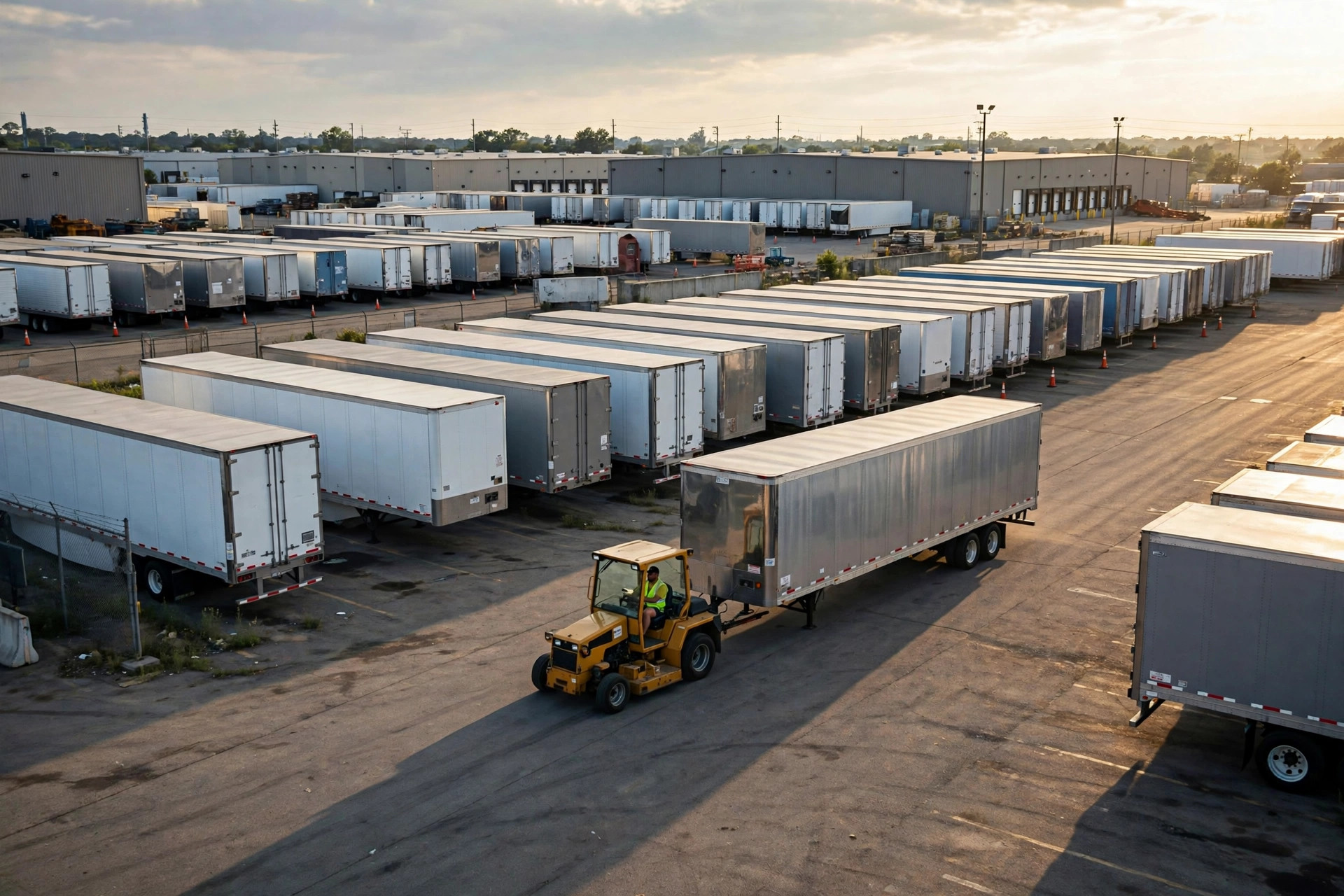
Let me tell you something. After all these years on the road, the strangest thing that ever happened to me wasn't a blowout on the highway. It was a trailer "going missing" inside a warehouse yard.
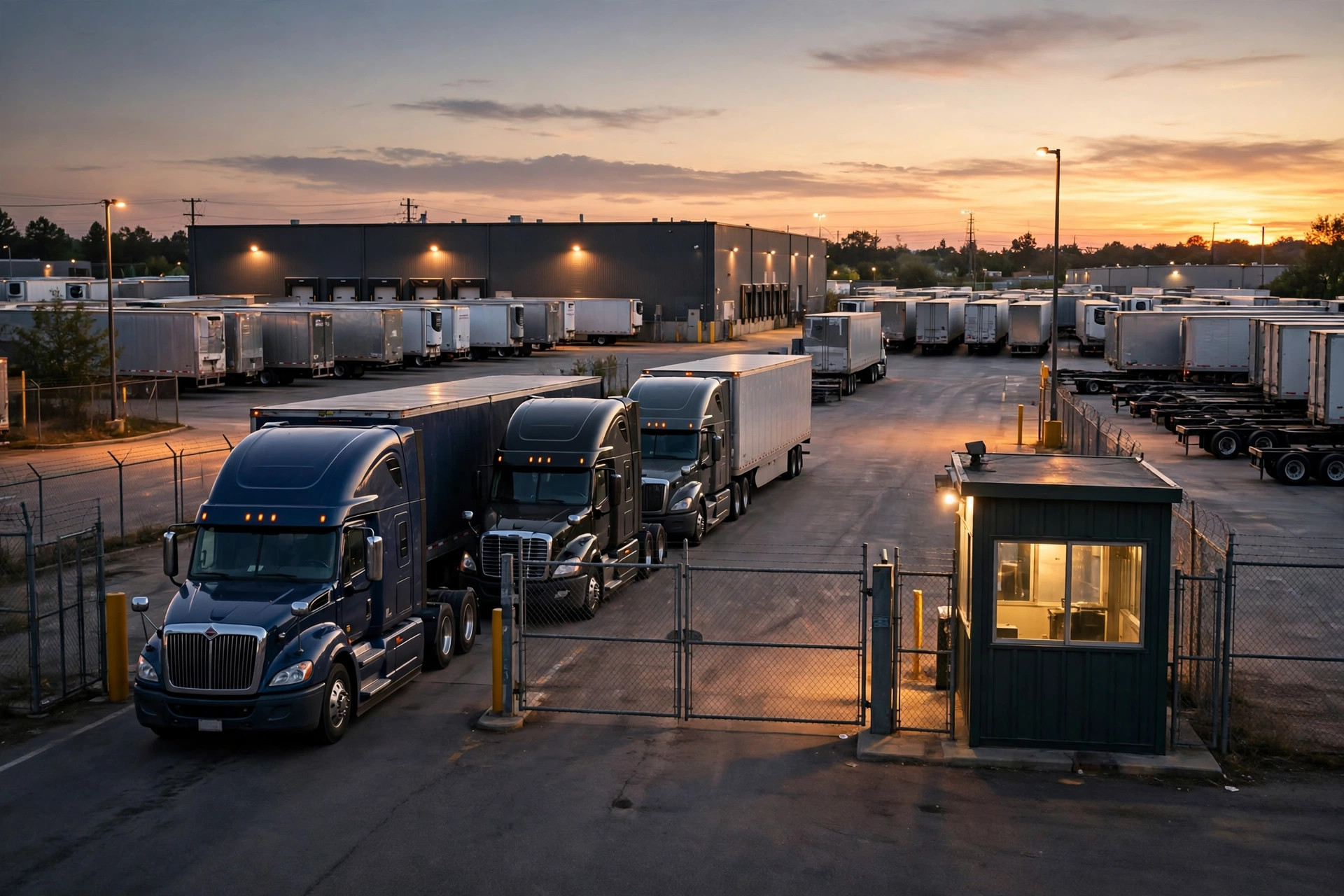
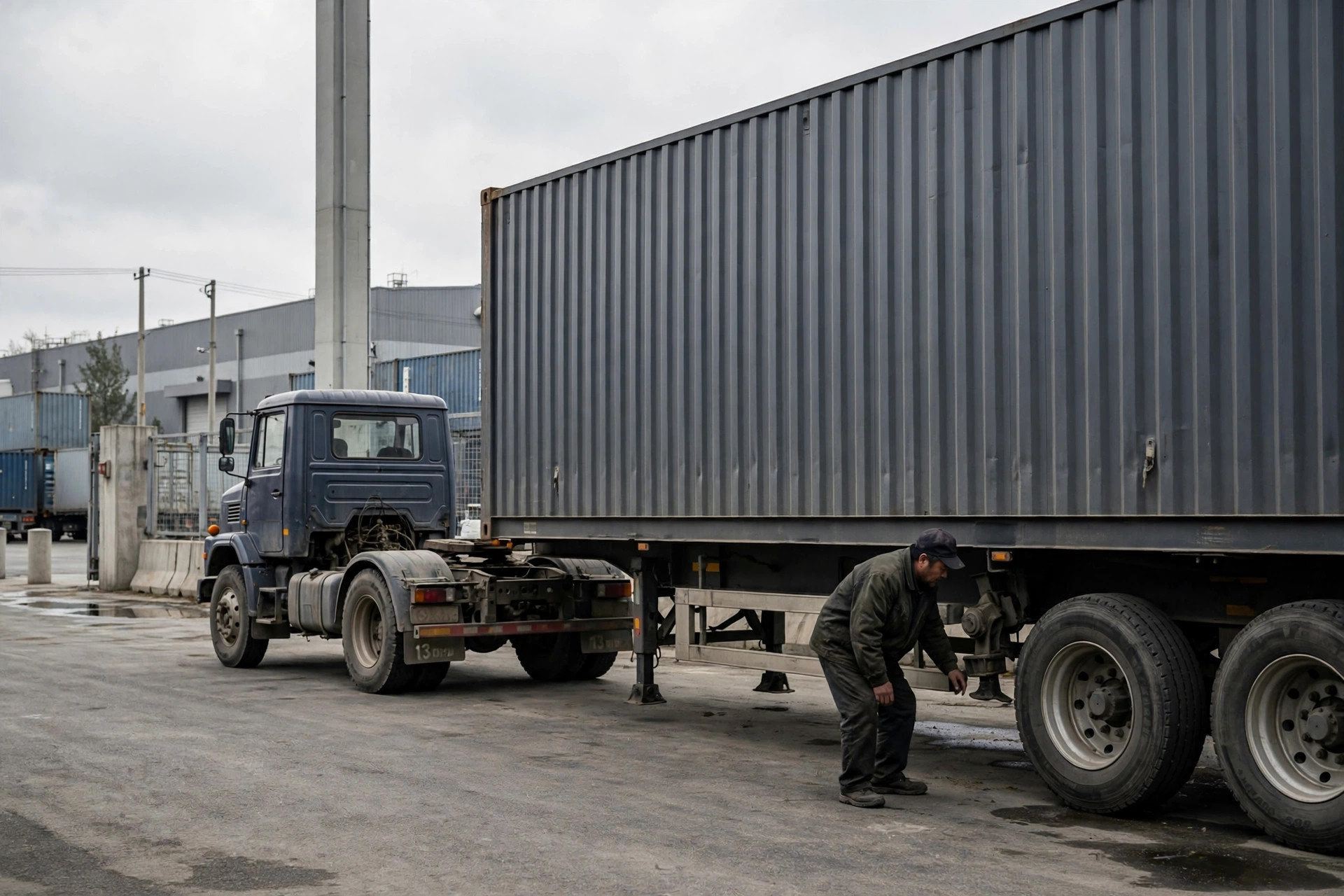
A few years back I was running drop-trailer loads for a consumer goods shipper. I rolled in around 9 PM, and the guard told me to drop my trailer in the east lot — "someone will hook it in the morning for unloading." I did what he said and bobtailed out. Next day at noon the shipper calls me: where's our freight? I said I dropped it last night. He said: we walked the whole yard, couldn't find your trailer. I was stunned — dozens of trailers parked out there, all looking the same. I gave them my trailer number, but the guy on duty said it wasn't in the logbook at all.
How did we find it? The security guard rode his little electric scooter down every row, checking numbers one by one. Forty minutes later, there it was, tucked in the farthest corner. The freight was fine, but the unload schedule was wrecked, and I got hit with a detention penalty. I still remember that day.
How a Drop Trailer Gets "Lost"
Don't laugh — this happens in drop yards all the time. Every "lost" trailer I've seen in fifteen years falls into one of three buckets.
Bucket one: wrong location on record. The driver drops the trailer, the guard scribbles "east lot, third row" in a notebook, but the driver actually parked in the west lot. Or the driver misremembers the trailer number and reports a wrong one, and nothing matches anywhere. In drop operations, the moment the tractor separates from the trailer, the information chain breaks — everything after that rides on somebody's memory and a piece of paper.
Bucket two: the trailer got moved and nobody knows. The yard jockey shuffled it from the staging area to a dock door but never told dispatch. The shipper calls asking where the freight is, dispatch checks the notebook: still in the east lot. They walk out there: empty. Everybody just stands around blinking.
Bucket three: trailer found, wrong freight inside. The trailer turns up, you open the doors, and it's somebody else's load. It got loaded onto the wrong trailer, or two loads got shuffled around and the paperwork went missing. This is the worst kind — finding the trailer doesn't help, and you're down to checking boxes one by one.
See the pattern? In drop-trailer work, the trouble is never on the road. It's inside the fence. The moment a trailer rolls through the gate, if the information doesn't follow it, that trailer becomes a black box.
YMS Drop Trailer Tracking Watches Four Data Points
So what's the lesson? A drop yard doesn't need more hands — it needs a bookkeeper. YMS drop trailer tracking is that bookkeeper. For every trailer that enters, it watches exactly four data points. Get all four right and a trailer cannot get lost:
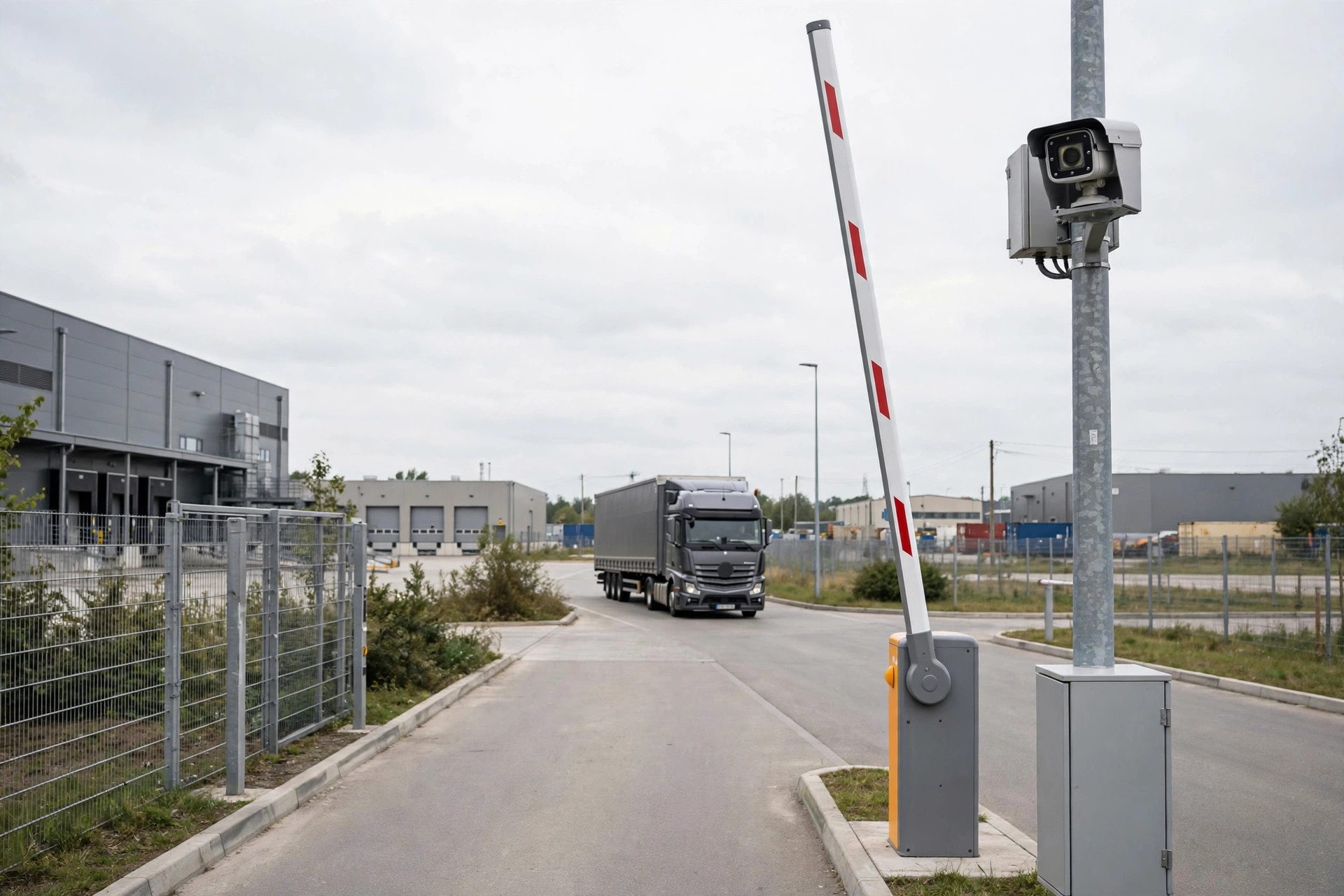
Unit number — the trailer's one true identity. Scan it at the gate (plate or trailer number) and the trailer is "born" in the system. Wherever it gets moved afterward, one scan tells you who it is.
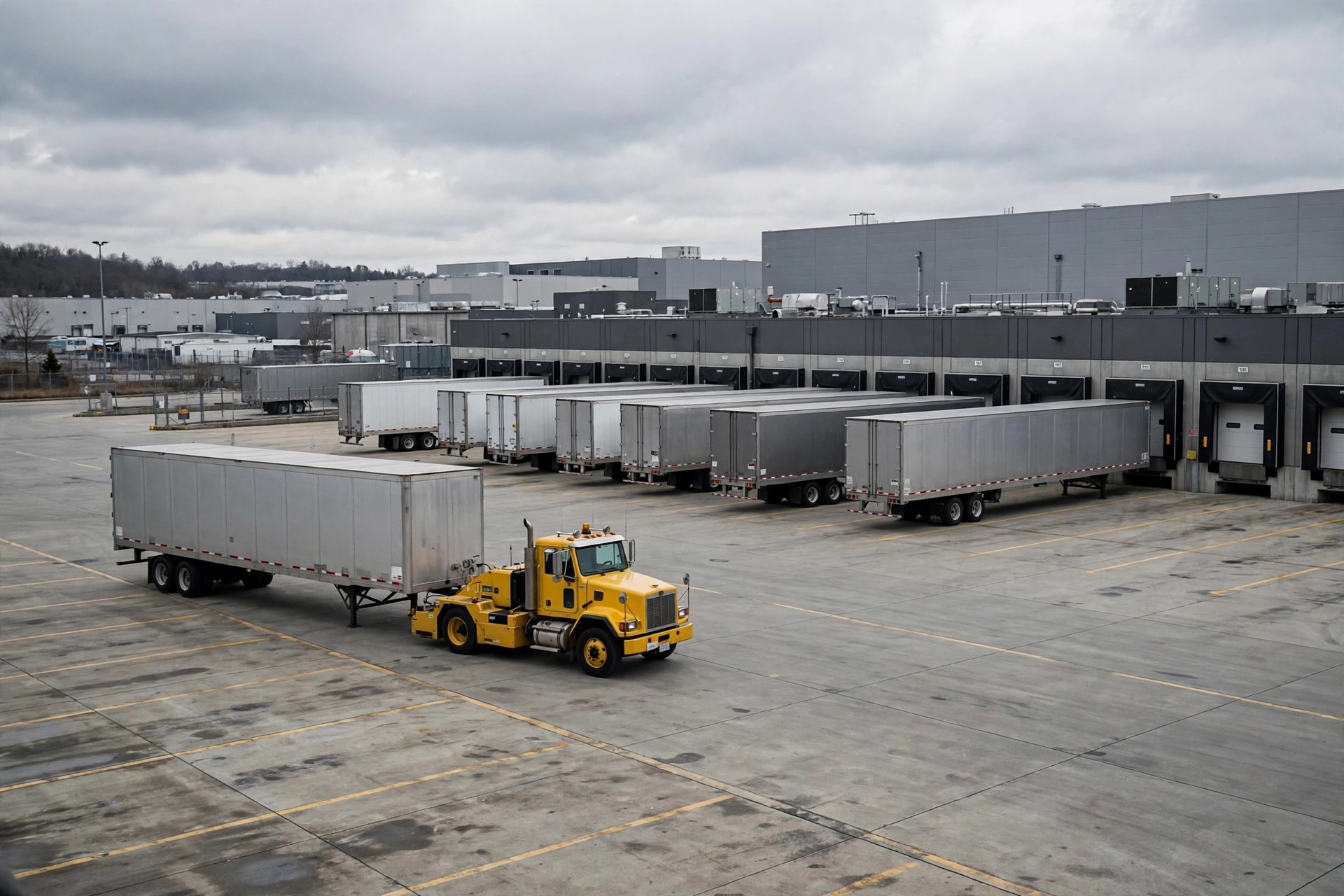
Location — which zone, which numbered spot. The drop pool is divided into marked zones, every parking spot numbered. A trailer isn't "somewhere in the east lot" — it's "East-2, spot 17." Down to the exact patch of pavement.
Status — what the trailer is doing right now: awaiting unload, unloading, awaiting load, empty and available, in maintenance. The status updates with a scan whenever it changes. Dispatch looks at a screen and sees which trailers are working and which are idle — no shouting required.
Linked documents — which shipment is on this trailer, which inbound receipt or outbound order it ties to. Freight and trailer are bound together in the system: find the trailer, find the freight; find the freight, find the trailer. Bucket-three "losses" simply stop happening.
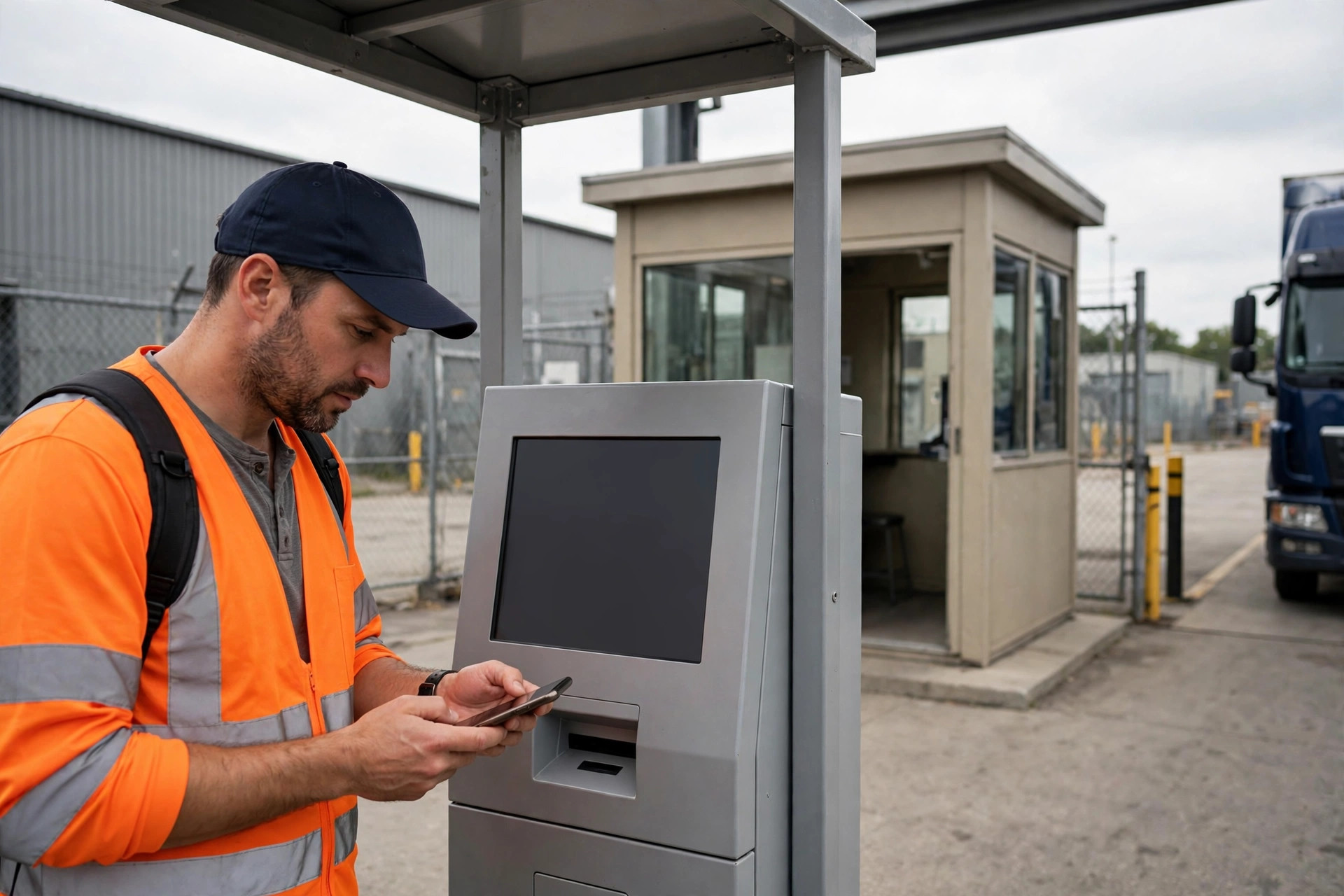
Once those four data points live in the system, the yard graduates from "human memory" to "system memory." The driver drops and leaves — the information stays. The yard jockey moves a trailer — one scan updates the location. The shipper asks where the freight is — dispatch reads off a spot number in three seconds. That's what YMS drop trailer tracking is supposed to look like.
Drop Trailers, Clipboard vs. YMS: It's Not About Money
I've worked yards on both sides. One kind runs on the old ways: a guard with a notebook, a radio, a guy on a scooter hunting for trailers. Those yards fall apart as they grow — past about thirty trailers, dispatch starts losing its mind. My "lost trailer" story came from exactly that kind of yard.
The other kind runs YMS. Gate scans, numbered spots, status updates, dwell-time alerts — all in the system. The driver drops the trailer, taps through a self-service kiosk, takes the ticket, and leaves. No guard interaction needed. Dispatch sits in the office and watches every trailer on a big screen: where it is, what it's doing.
And honestly, it's not about money. A YMS drop-trailer module costs a fraction of one lost shipment, one detention fine, one lost customer. It's about mindset. Plenty of warehouse owners say "our yard is too small for a system." But small yards are the ones that can't afford chaos — a big yard loses a trailer and finds it after some hunting; a small yard with tight ship windows loses one trailer and the whole day's outbound plan collapses.
Here's the counterintuitive part: the old way looks "flexible" but it's actually the most rigid. A notebook, no matter how neatly kept, can only be read by one person. A radio call, no matter how loud, leaves no record. When something goes wrong and you need to reconstruct it — what time did the trailer enter, who moved it, how long did it sit in that spot — all you've got is people's recollections. And recollections are worth what exactly? In the system, everything is timestamped. Nobody can argue with a timestamp.
Three Pieces of Practical Advice for Warehouse Operators
Enough stories. Three pieces of straight advice for anyone running a warehouse, earned the hard way over the years:
First: zone the drop pool before you talk about software. Zone by status: awaiting-unload, awaiting-load, empties, maintenance — four clearly separated areas, painted lines on the ground, signs on posts. If the zones are a mess and you install software on top, all you've done is take a sharp photograph of a tangled mess. The photo doesn't untangle anything.
Second: gate scanning is mandatory, every single time, no exceptions. "We're slammed today, write it in the book and we'll enter it later" — later never comes. The rule is the rule: no scan, no entry; no scan, no exit. Drivers will curse you for the first month. Get through it. I worked one yard where the gate guard enforced it like a religion — drivers called him "the Iron Gate" behind his back, but that yard didn't lose a single trailer in three years.
Third: alert on dwell-time overruns, always. How long may a trailer sit before it's a problem? If a trailer marked "awaiting unload" hasn't moved in 24 hours, the system should raise a flag. Most "lost" trailers aren't really lost — they're forgotten in a corner. Nobody asks, nobody checks, and there it sits for days. A dwell-time alert kills that slow-motion disappearance before it starts.
There's an old saying where I come from: it's not the slowness that kills you, it's the standing still. In drop-trailer work, a moving trailer is never the problem. The problem is the trailer sitting somewhere with nobody knowing. A YMS that records where every trailer goes — a yard can be as big as it wants, and you'll still sleep at night.
Next time you visit a warehouse, take a look at their drop lot: is the guard writing in a little notebook, or are drivers scanning themselves in at a kiosk? One glance tells you exactly what level that operation is playing at.
By Shifu Zhao, Trucking Veteran (15 yrs)