If you want one warehouse that can reach eastern Germany and southwest Poland at the same time, start with wroclaw poland warehouse logistics and resist the urge to dump everything into Warsaw. My verdict up front: Wroclaw works best as a bridgehead warehouse for moving west, not as your single national hub for all of Poland. Every location choice is a trade-off, and this one is no exception.
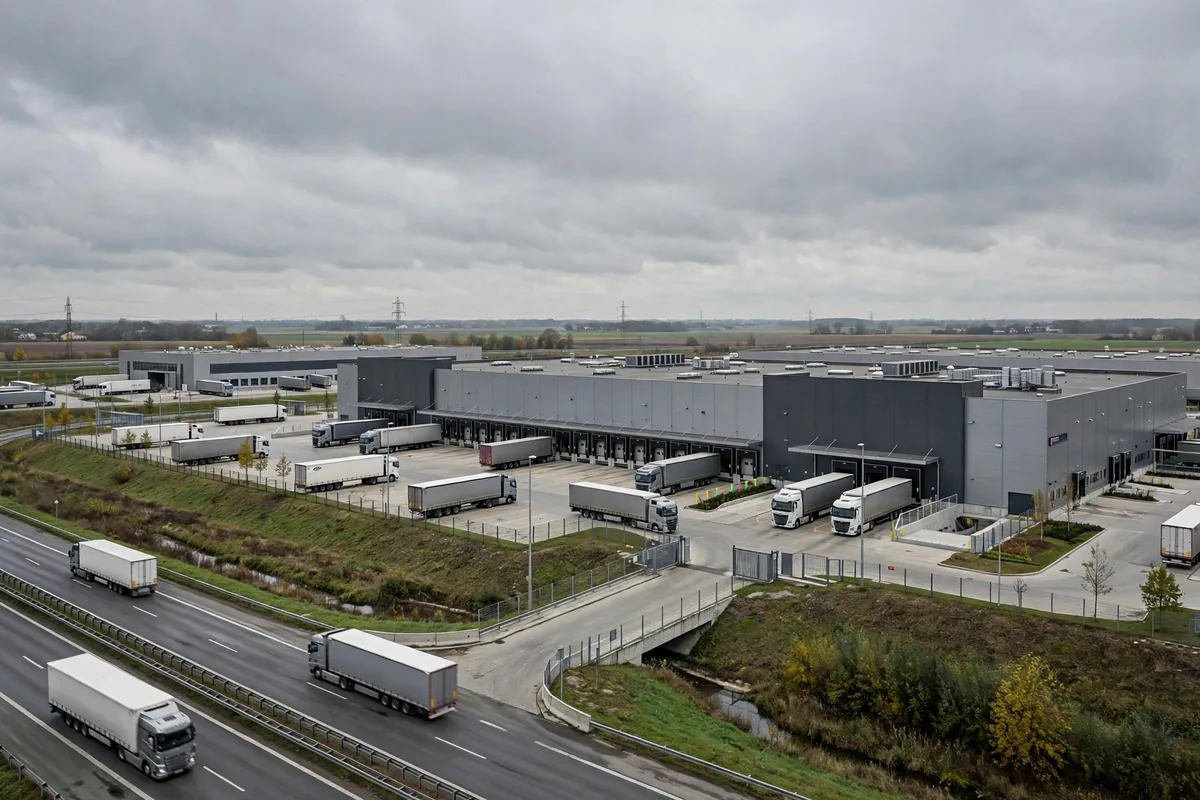
Wroclaw sits in southwestern Poland, it is the capital of Lower Silesia, and it lies close to both Germany and Czechia on a major east-west motorway corridor. That geography is the whole story. The city is not central for Poland as a whole, but it sits right on the cross-border belt where Polish warehousing meets German demand. I have watched too many teams pick a city because the rent looked cheap on a spreadsheet, then spend a year paying for that choice in linehaul and returns.
What wroclaw poland warehouse logistics actually does well
It draws the right delivery radius. Westbound, it covers eastern German cities without a long domestic leg first. East and north, it holds southwestern Poland on its own. For a cross-border seller entering Europe from Asia, that means stock can land in Wroclaw, clear into a lower-cost Polish operation, and then feed German orders in short hops. For Polish domestic orders, the southwest corner stops depending on Warsaw for every replenishment run.
Here is a pit I saw firsthand. A few years ago I advised an auto parts team that put all its European spares in Warsaw because the provider network looked deeper there. Their eastern German dealers kept calling about late orders, because every shipment started with a long westbound leg and peak-season congestion turned promised dates into apologies. We moved the fast-moving lines to Wroclaw and left Warsaw serving central and eastern Poland. The complaint calls dropped within weeks. The lesson is blunt: in cross-border work, the single mega-hub is often the wrong answer, and splitting stock by order map is usually the right one.
One counterintuitive point deserves emphasis. Being close to Germany does not automatically make German delivery cheap or fast. Last-mile cost depends on which carrier you hand over to, in which country the handover happens, and where returns go. If returns handling is an afterthought, parcels flow into Germany smoothly and then bounce around the border on the way back, and the money you saved on linehaul leaks out through returns.
Wroclaw poland warehouse logistics versus Warsaw and Poznan
Poznan, in western Poland, also faces Germany and has a solid industrial base. Warsaw, the capital, has the deepest provider market, the largest labor pool, and the strongest air freight links. None of the three crushes the others. They fit different order maps, as this comparison shows (cost levels are relative and illustrative; get live quotes before deciding):
| Factor | Wroclaw | Warsaw | Poznan |
|---|---|---|---|
| Best-fit orders | Eastern Germany plus southwest Poland | All-Poland plus air freight | Germany-facing plus western Poland |
| Warehousing and labor cost | Relatively moderate | Highest of the three | Middle |
| Provider depth | Adequate, with cross-border specialists | Deepest | Fairly deep |
| Main risk | Northeast last-mile stretches if used as sole hub | Cost and peak congestion | Overlap with Wroclaw invites duplicate sites |
My decision framework has three questions. First, what share of your orders actually goes to Germany? If that share is high, shortlist Wroclaw or Poznan; if Polish domestic orders dominate, start with Warsaw. Second, will you run your own site or use a third-party warehouse? With a 3PL, Wroclaw's cross-border specialists will often take a smaller account seriously, while a self-run site forces you to solve hiring and supervision locally. Third, where do returns get processed? High-return categories need inspection and re-shelving at the same site, or the westbound strategy falls apart.
A recent case makes this concrete. Last year a home goods seller spent nearly a month torn between Wroclaw and Poznan before a peak season expansion. I had the team plot a quarter of orders by postal code. The map ended the argument: demand sank toward eastern Germany and southwest Poland, so Wroclaw won, starting with a small third-party site for one peak season before any expansion talk. Test small, then scale is almost always safer than a long lease signed on instinct.
The hidden costs behind wroclaw poland warehouse logistics
Do not budget on rent and pick fees alone. Here is a hypothetical worked example, shown only to reveal the structure, not as any provider's real pricing (illustrative scenario): assume ten thousand outbound orders a month. Option A keeps everything in Warsaw, with warehousing at about 4.2 cost units per order and cross-border last-mile to eastern Germany at about 3.8 units. Option B moves sixty percent of stock to Wroclaw, with warehousing at about 3.9 units and last-mile at about 3.1 units, but adds inter-warehouse transfer and management cost of about 0.3 units per order. Net result: option B saves roughly 0.7 units per order, or about seven thousand units a month. The swing variable is not rent; it is last-mile structure and transfer frequency. Transfer too often and the saving evaporates.
Three more costs hide below the quote. Hiring: the southwest has a cross-border workforce, and German-speaking operations and support staff are easier to find than in many regions, but peak season still gets tight, so lock rosters early. Tax and compliance: where goods enter and where consumers sit define the filing path, so the fiscal setup must be decided with the warehouse, not after stock arrives. Returns processing: many quotes wave returns through in one line, yet inspection, refurbishment, and repacking are pure labor, so price each step in the contract.
My practical advice is simple. Enter Wroclaw through a third-party warehouse on a short term, run real orders for eastern Germany and southwest Poland, and let the data argue for expansion. Run your own site only when the order pattern is proven and you have trustworthy local management. And do not open both Wroclaw and Poznan at once; their coverage overlaps so heavily that you will mostly pay twice for the same map.
A warehouse choice is really an order-map choice. Signing a lease before you plot that map is buying shoes with your eyes closed. So before you commit, ask yourself honestly: where do your European orders actually land?
By Lao Mi, Supply Chain Veteran (20 yrs)