Here's my conclusion up front: in WMS wave vs waveless picking, there is no "better" mode — only a better fit for your warehouse. Stable order flow, high pick density, and a clear cut-off time: wave release wins. Fragmented orders, volatile demand, and same-day fulfillment promises: waveless wins. Why do most mode-switch projects fail? I've seen this pitfall three times: the answer is never the mode itself. Teams flip a configuration switch in the WMS and leave the entire release logic untouched.
What wave release and waveless release actually differ on
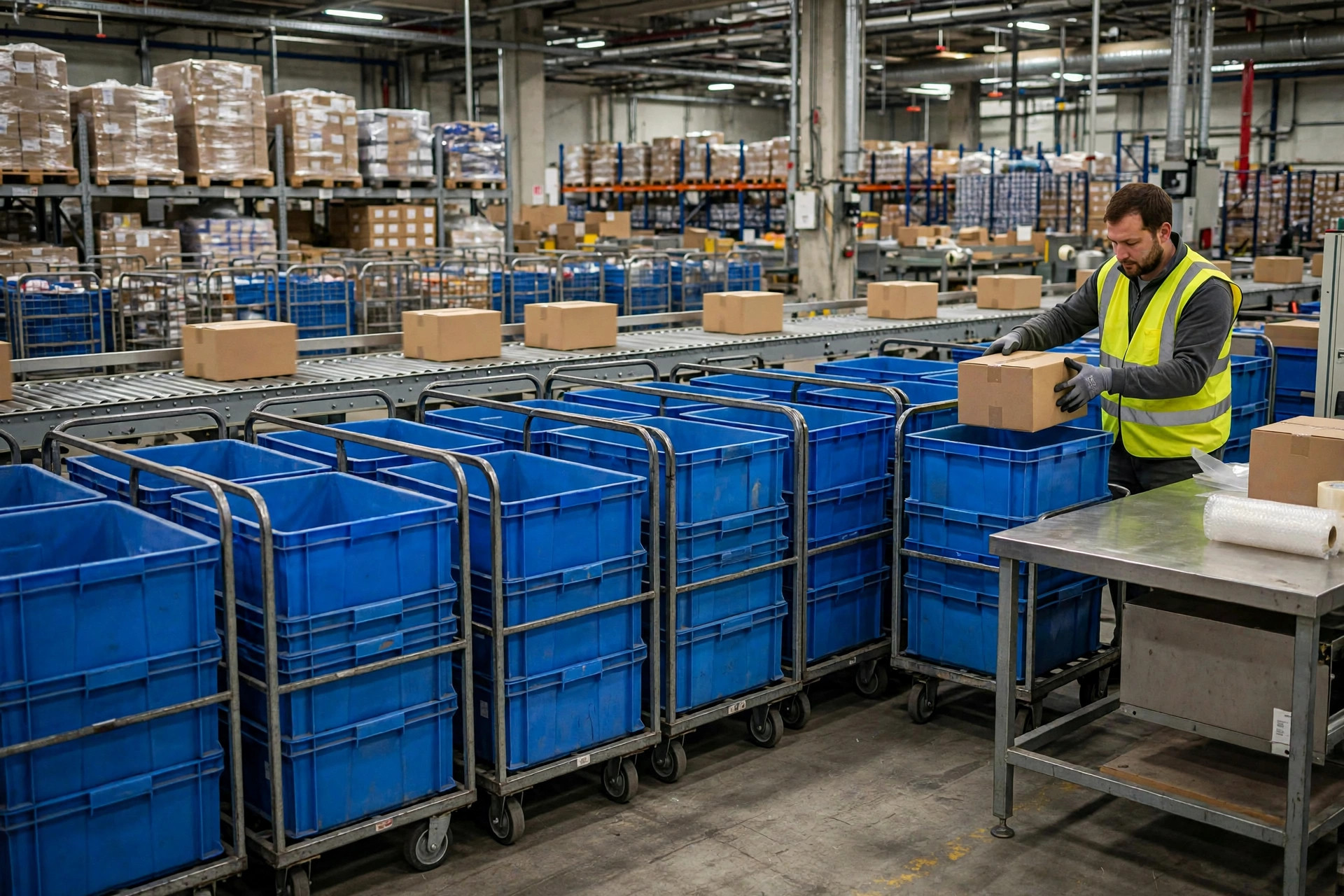
Wave release batches orders into waves and drops them onto the floor on a fixed rhythm — say, one wave per hour. A picker grabs 30 to 50 orders at once, and the travel path gets planned in one shot. The underlying logic is "batching buys efficiency": orders in the same zone and aisle get pooled, and walking distance gets amortized across the batch.
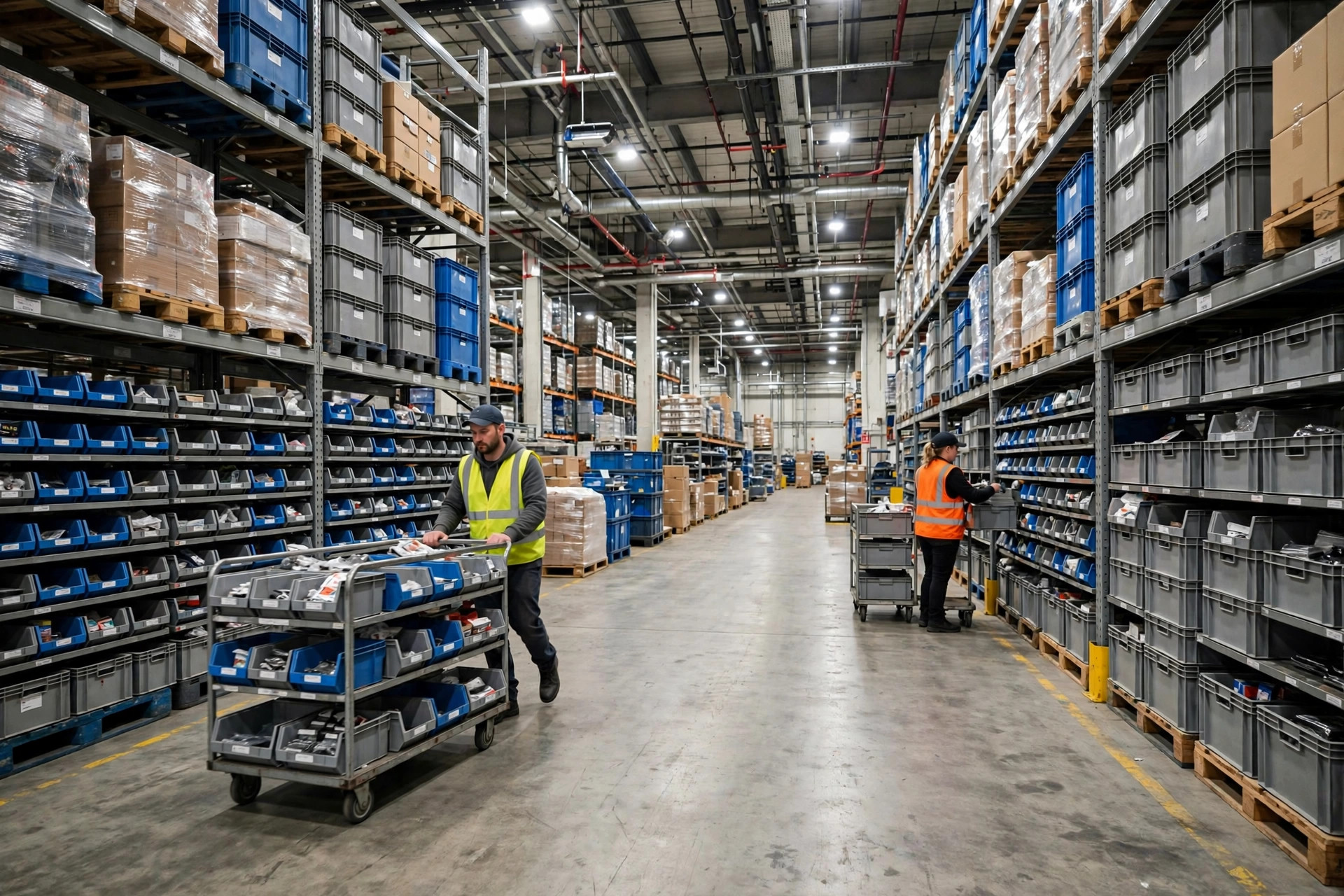
Waveless release streams orders into a task pool the moment they arrive, and the task engine pushes work to pickers' RF guns in real time. The underlying logic is "speed buys everything": no waiting for the next release window, work starts when the order lands.
The real difference in WMS wave vs waveless picking is not the "wave or no wave" checkbox on a configuration screen. It is the trigger condition for task release. Wave is time-triggered (or quantity-triggered). Waveless is event-triggered. After switching to waveless, I keep hearing pickers complain that "tasks come in fits and starts." The root cause is almost always the same: the WMS task engine is still consolidating work the old way, only with a shorter wave interval. New shoes, same old walk.
One trade-off most teams miss before go-live: wave makes labor planning highly predictable — the supervisor knows when each wave lands and how many people it needs. Waveless trades that predictability for rush-order responsiveness. Change the mode, and you must change the labor logic with it. New engine, old transmission — it won't move.
How do you spot a fake waveless switch? Check three things. First, look for leftover "minimum batch quantity" or "maximum wait time" parameters in the task engine — if they still exist, the switch is cosmetic. Second, measure average delay from order creation to task release; if it's still above 15 minutes, there is a batch node somewhere in the chain that nobody removed. Third, ask the implementation consultant one question: "What exactly triggers a release right now?" If the answer includes "every X minutes," the switch never really happened.
The wave vs waveless boundary: draw three lines, get your answer
| Line | Choose wave | Choose waveless |
|---|---|---|
| Order flow | Stable rhythm, clear cut-off (e.g., everything must ship by 2 PM) | Fragmented, volatile, ship-anytime demand |
| Pick density | High density — a batch naturally forms a clean travel path | Low density — batching means standing around waiting |
| Labor logic | Fixed shifts, staffed to the wave rhythm | Flexible labor, work starts when tasks arrive |
If at least two of the three lines point the same way, you can talk about switching. If each line points somewhere different — I've seen this — the honest answer is usually a hybrid. Don't force one side.
Summer 2023, a 3PL e-commerce warehouse in Dallas, Texas, was exactly this case. Roughly 80,000 square feet, half the volume from subscription boxes, half from one-off orders. Subscription boxes ran on a fixed rhythm — perfect for wave. One-offs trickled in all day with a two-hour ship promise — perfect for waveless. The final design: subscription boxes on wave, two waves each morning, about 800 orders per wave cleared by three pickers in two hours; one-offs on waveless with a dedicated pick team, averaging 45 minutes from order to outbound. Cut-off hit rate went from 91% to 98%, and overtime hours got cut in half. The project team ran the numbers afterward: the overtime savings alone paid for the WMS upgrade implementation within a year.
How do you know your warehouse is on the wrong mode right now? Four signals — if two of them are true, run the assessment:
- The pick floor explodes in the hour before cut-off but sits idle at other times. Classic mismatch between the wave rhythm and the real order arrival pattern.
- Rush orders and inserts get chased by shouting and paper slips. The release system can't keep up with the actual pace of the business.
- Pickers' RF guns frequently show "no tasks" while hundreds of orders sit in the backlog. The release conditions are misconfigured, and orders are sleeping in the pool.
- Peak season means hiring temps, off-season means labor efficiency drops by half. The mode has no elasticity, so you solve everything with headcount.
Let me run the math on one scenario. Take a 3,000-order-per-day e-commerce DC with a 3 PM cut-off and a 4 PM carrier pickup. On hourly waves, the last wave drops at 2 PM — theoretically one hour to pick and pack, but a single 20-minute overrun on any wave pushes orders to the next day and the late rate spikes. On waveless, order-to-release averages under 10 minutes, and the cut-off "death sprint" gets flattened across the whole day. Same labor cost, but the late-order rate drops from around 5% to under 1%. That's a number finance understands.
The go-live night checklist for switching wave/waveless modes
Whichever direction you're switching — wave to waveless or back — walk this list before go-live. I check every item off, by hand, on every go-live night:
- Quantify the baseline. Log release intervals, cut-off hit rate, and per-person UPH for seven straight days. Without a baseline, you'll never know whether the switch made things better or worse.
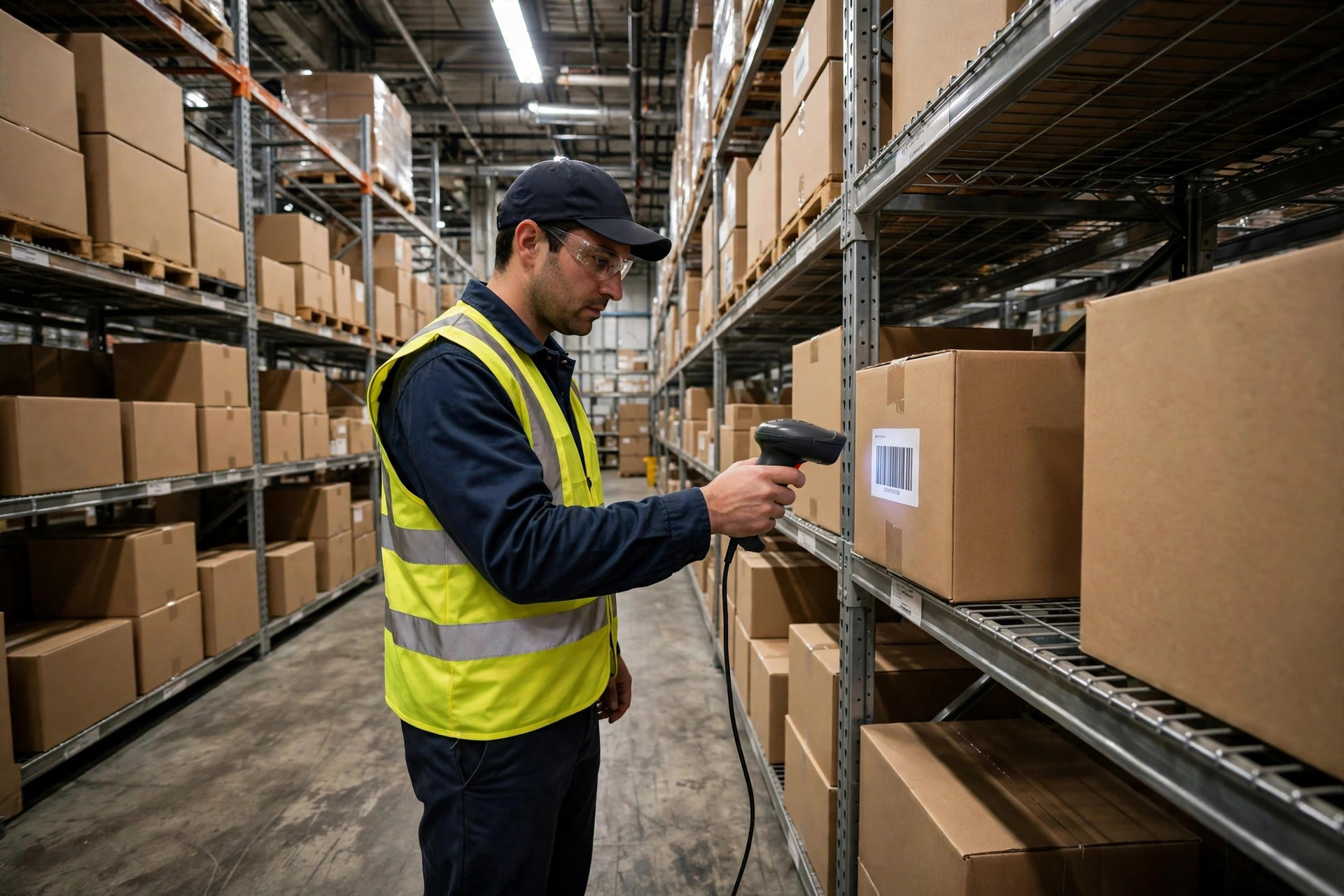
- Confirm orders can flow in real time. Can your OMS or ERP push an order to the WMS the moment it's created? If it's still an hourly batch export, waveless is theater.
- Rewrite the release rules. For waveless, tear out the consolidation logic and switch to "release when X tasks accumulate or X minutes pass." For wave, lock in the wave cadence and the order cut-off time. Write the rules on paper — not in someone's head.
- Match the RF task push cadence. Push too fast and pickers can't keep up; push too slow and waveless loses its entire advantage. Work backward from per-person UPH to figure out how many tasks each picker should receive every 10 minutes, then tune the parameters.
- Adjust slotting in the same pass. Under waveless, hot SKUs get their own zone with dynamic replenishment slots. Under wave, make sure wave batches keep slotting density tight — don't let one wave span three floors.
- Pilot it. Switch one product category or one floor first, run it for two weeks, compare against the baseline, then go full. A big-bang switch leaves you no way back.
- Keep a rollback switch. The mode configuration must be revertible with one click. During the first week of go-live, roll back first and analyze second — never "try it out" in production.
Three failures I've seen with my own eyes
First: 2021, an apparel DC in California, wave to waveless. After the switch, pickers complained that "tasks come and go randomly." Investigation found a legacy "minimum consolidation quantity of 40 orders" parameter still sitting in the task engine, untouched. One parameter change, and the flow went smooth. The lesson: switching modes is not flipping one switch — it's auditing every parameter in the release chain.
Second: 2024, a cross-border small-parcel warehouse in Dongguan, switching to waveless right before the holiday peak. Orders were fragmented, sure — but 20% of SKUs drove 60% of picks. Under waveless, the hot zone turned into a traffic jam and travel paths fell apart. The counter-intuitive fix: put the hot zone back on wave, keep waveless for the long tail. After the hybrid went live, the hot zone's per-person UPH actually rose by 20%. Remember this: waveless is not wave's upgrade. In high-density zones, wave's path consolidation wins outright.
Third: a warehouse switched to waveless and watched its cut-off hit rate go down instead of up. Root cause: labor was still scheduled to the old wave rhythm — understaffed at peak, idle off-peak. The mode changed, the labor logic didn't, and the problem simply moved from "release" to "staffing." I bring this up in every design review: release mode, release rules, and labor logic are one system. Touch one, and you re-align the other two.
So, one more time, the conclusion on WMS wave vs waveless picking: draw the three boundary lines before deciding whether to switch; if you switch, walk the seven-step checklist. In release strategy there is no silver bullet — only fit.
By Lin Xiao, WMS Implementation Consultant