We had a client who called me two weeks before go-live, sounding proud. Susan, he said, acceptance is done, more than a hundred cases, all green. On the Wednesday of go-live week he called again, and his voice had changed. A receiver had scanned a damaged carton, the system had frozen, and trucks were backing up at the dock. I asked him one question: how many of those cases were written by someone who actually receives or picks for a living? He went quiet. That silence is exactly why wms user acceptance testing warehouse work so often disappoints. It looks rigorous in a meeting room and falls apart on the floor.
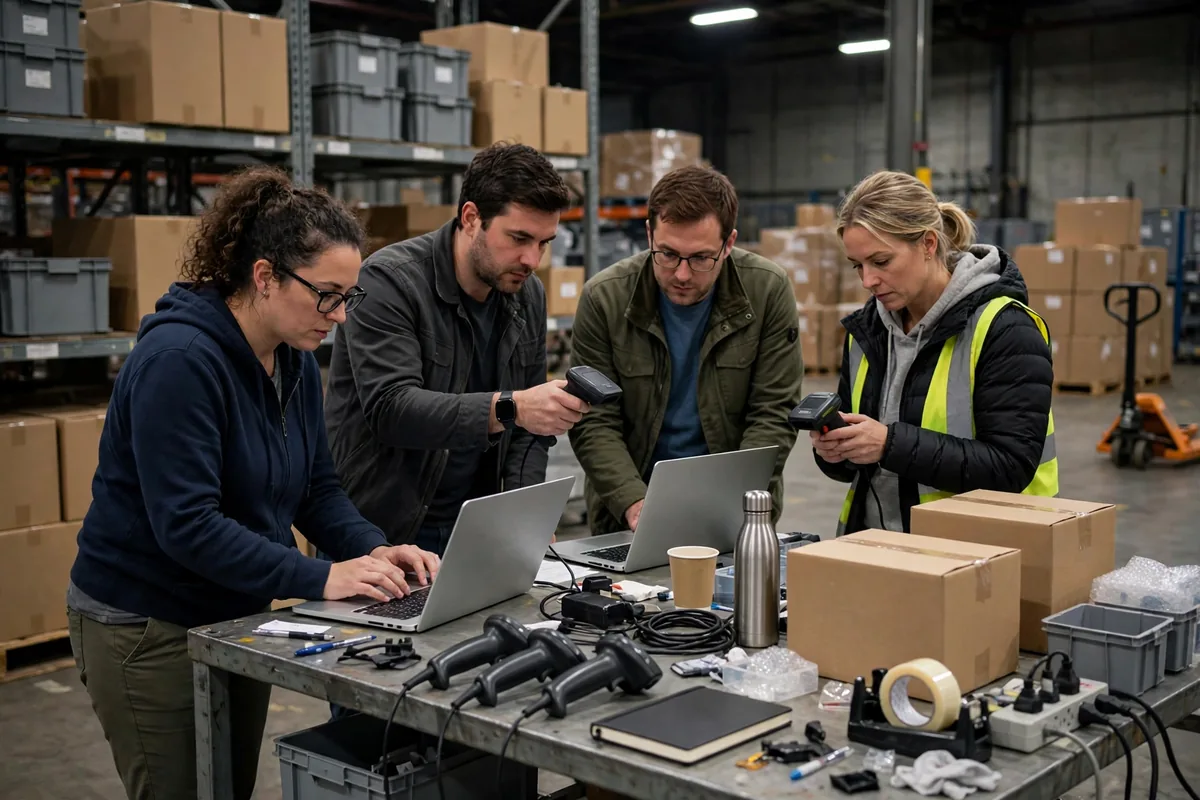
I have sat through acceptance with many warehouses, usually on the vendor side, so I know how easy it is to make it look good. A consultant demonstrates, a manager nods, everyone signs — and nobody has tried the job wearing gloves, pushing a cart, with a queue behind them. Real acceptance is not a demonstration. It is the last chance to crash the system with real people and real problems while crashing it is still cheap.
Let Pickers and Receivers Write the user acceptance testing Scripts
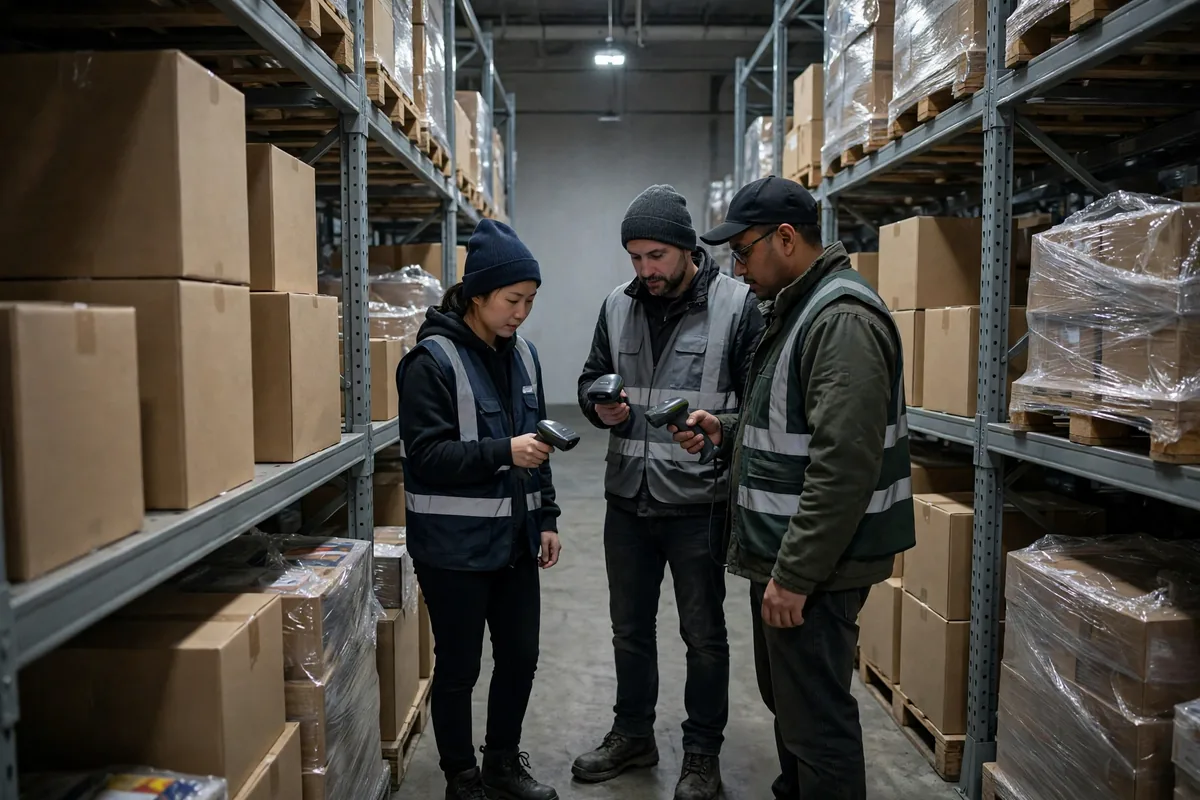
Here is a hypothetical scenario, offered as an illustration. A consultant writes the test book, and the first case reads beautifully: log in, open the order list, select an order, click allocate. A picker named Chen shakes his head. That is not how we start, he says. We grab the order about to miss its cutoff, and we scan with one hand while steadying the carton with the other. There is no spare hand for a mouse.
The consultant's version checks whether menus exist. Chen's version checks whether the work can be done in an aisle, at speed, without putting the scanner down every ten seconds. So my rule stands: pickers and receivers dictate the scripts, and the project team only tidies their words into steps. Receivers will tell you they fear a mixed pallet with two batches hidden inside it. Pickers will tell you nothing wastes a shift like being sent to an empty location. No consultant invents those cases in an office.
Add one more case type: give the operator a goal and no steps. Hesitation means a design problem, not a training problem.
Here is the counterintuitive part. The more experienced the tester, the less I trust a clean result. Veterans unconsciously steer around weak spots; their hands know the workaround before their brain notices the flaw. A new hire is gold — every pause and wrong tap shows where the system assumed knowledge nobody taught them. Mix recent starters into every round, and protect them when they break things. Breaking it in testing is the job.
warehouse testing Data Has to Look Like a Real Order Day
A second hypothetical calculation, also illustrative. Suppose test data is built by hand: fifty orders, each with one line, one unit, a perfect address, and plenty of stock. Of course the pass rate sparkles. Compare that with a real promotion day, where nearly half the orders have multiple lines, some are full cases and some split picks, and customers change addresses or add items halfway through picking. Testing on tidy data is like holding a swimming exam in an empty pool: the strokes look lovely, and the first real dive still ends in coughing.
My rule is simple. Take a full recent cycle of real orders, anonymize them, and sample in the same proportions. Keep the awkward freight, the items that need weighing, and the serial-numbered products. Do not clean up the mess before testing, because the mess is the test. Tick off a checklist like this one honestly:
| Test data element | Build it this way | The usual shortcut |
|---|---|---|
| Order structure | Match the real multi-line and split share | All single-line orders |
| Stock position | Leave some lines short, empty, or near expiry | Unlimited stock |
| Master data flaws | Seed a duplicate barcode, a fuzzy unit conversion | Perfect master data |
| Addresses | Keep changed and incomplete addresses | Every address standard |
| Inbound shape | Mix full pallets, mixed batches, no-order arrivals | Only clean receipts |
When the data is ready, ask the manager: does this look like your worst busy day? If he laughs, rebuild it. Data that flatters the system a little is repaid in overtime a lot.
Exceptions deserve their own warning. Short picks, damaged goods, and returns must be in the test book, not as a token case at the back. Normal orders pass in almost any system. Warehouses collapse when stock runs short and nobody knows whether they may reallocate, when a damaged carton needs a photo and a quarantine location, or when a return arrives the system has never heard of.
One more illustration, as a scenario rather than a real client story. A warehouse deferred returns testing because the process was "not final yet." Returns arrived with the promotion backlog anyway, staff parked cartons wherever there was space and wrote notes on paper, and three days later book stock and physical stock parted company. Reconciling them took two nights of counting. Whenever I hear "we will test the main flow first," I translate it as "we will hide the hard part until hiding it becomes expensive." That is why, in any serious round of wms user acceptance testing warehouse practice, I would rather drop two happy-path cases than skip one exception case.
Test stacked exceptions, too: one short, address-changed, partly cancelled order exposes more than fifty clean orders.
Sign-Off Is a Gate, Not a Ceremony
Because I work in sales, people expect me to push for a quick signature. On acceptance, I do the opposite. A one-line clause — the system conforms to the specification, demonstration complete, deemed accepted — protects nobody. When something breaks, the vendor points at the specification, the client points at the floor, and meanwhile the freight does not move itself.
Write the gate in numbers instead. Core cases must pass in full. Exception cases must pass to a proportion agreed before testing starts, not negotiated after a bad result. Open defects get graded: the most severe grade must be zero at sign-off, and the next grade down must carry a workaround and a fix date in a signed annex. Two more conditions belong on the same page: every key role has completed a full task unaided at least once, and the real stock and master data have been loaded and spot-checked. If either fails, I advise clients not to release the go-live date, however green the case list looks.
Run the cost comparison out loud, in front of whoever owns the budget. In a hypothetical worked example, one bad go-live week — dock queues, emergency overtime, reshipped mis-picks, and calls to calm angry customers — easily costs several times what two extra rounds of acceptance would have cost. And that leaves out the item that never appears on an invoice: once floor staff decide the new system exists to make their lives harder, they walk around it for a year, and no training budget fully buys that trust back. Extra days in acceptance are not delay. They are cheap insurance for the following year.
So remember three things: people, data, and exceptions. Let the people who do the job write the scripts, build data like your messiest day, and force short picks, damage, and returns into the room. Then sign a gate with numbers and workarounds written down — not a compliment about a good demonstration.
Next time your warehouse approaches go-live, remember to ask these three questions. First, how many of these scripts were written by our own pickers and receivers? Second, does this test data look like our busiest day, or like a quiet Tuesday someone invented? Third, have short picks, damage, and returns actually broken this system yet — and when they did, how did it recover? A vendor who can answer all three while looking you in the eye has earned a go-live date. One who cannot has just told you, in advance, exactly how your first week will go.
By Susan, 3PL Sales Director