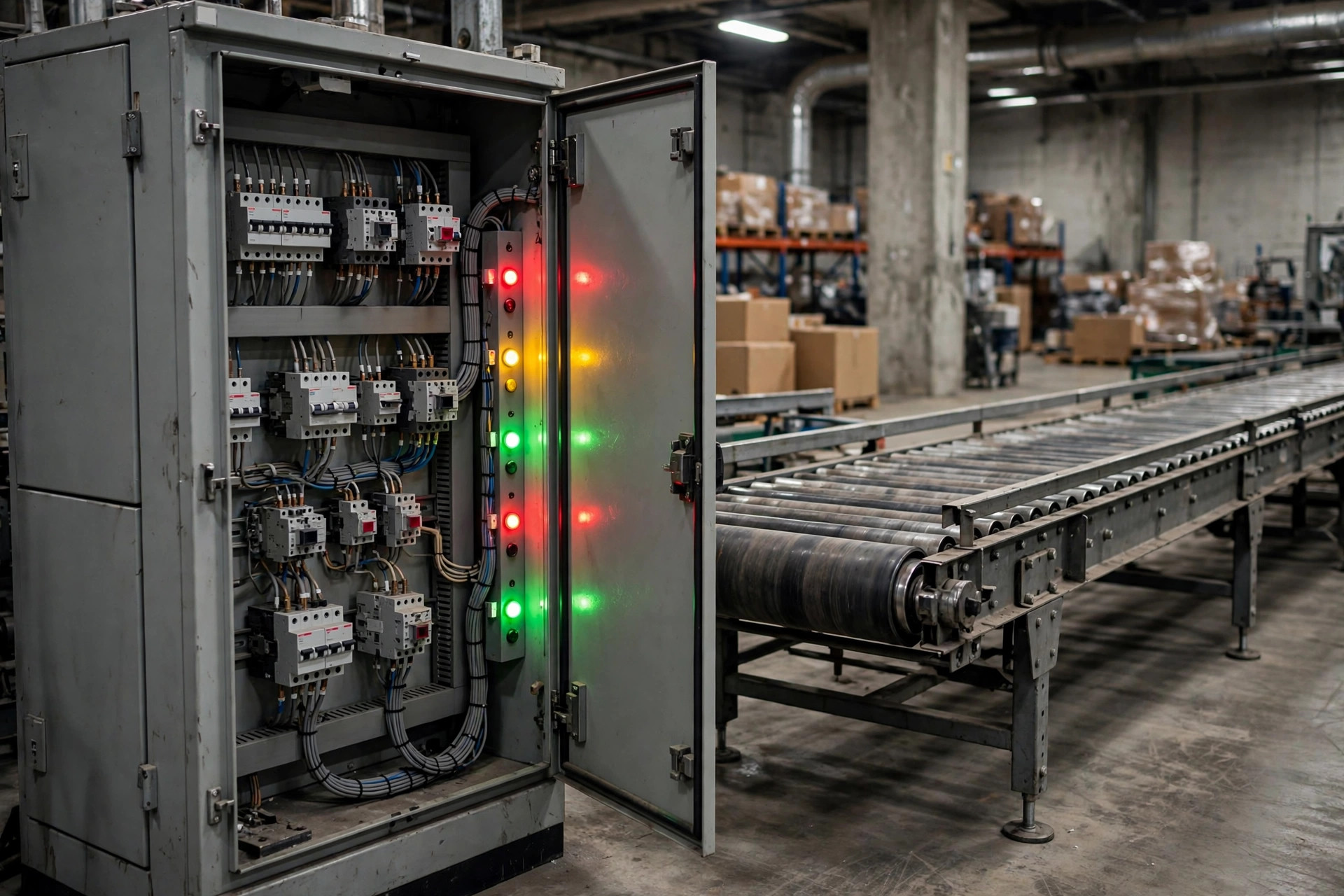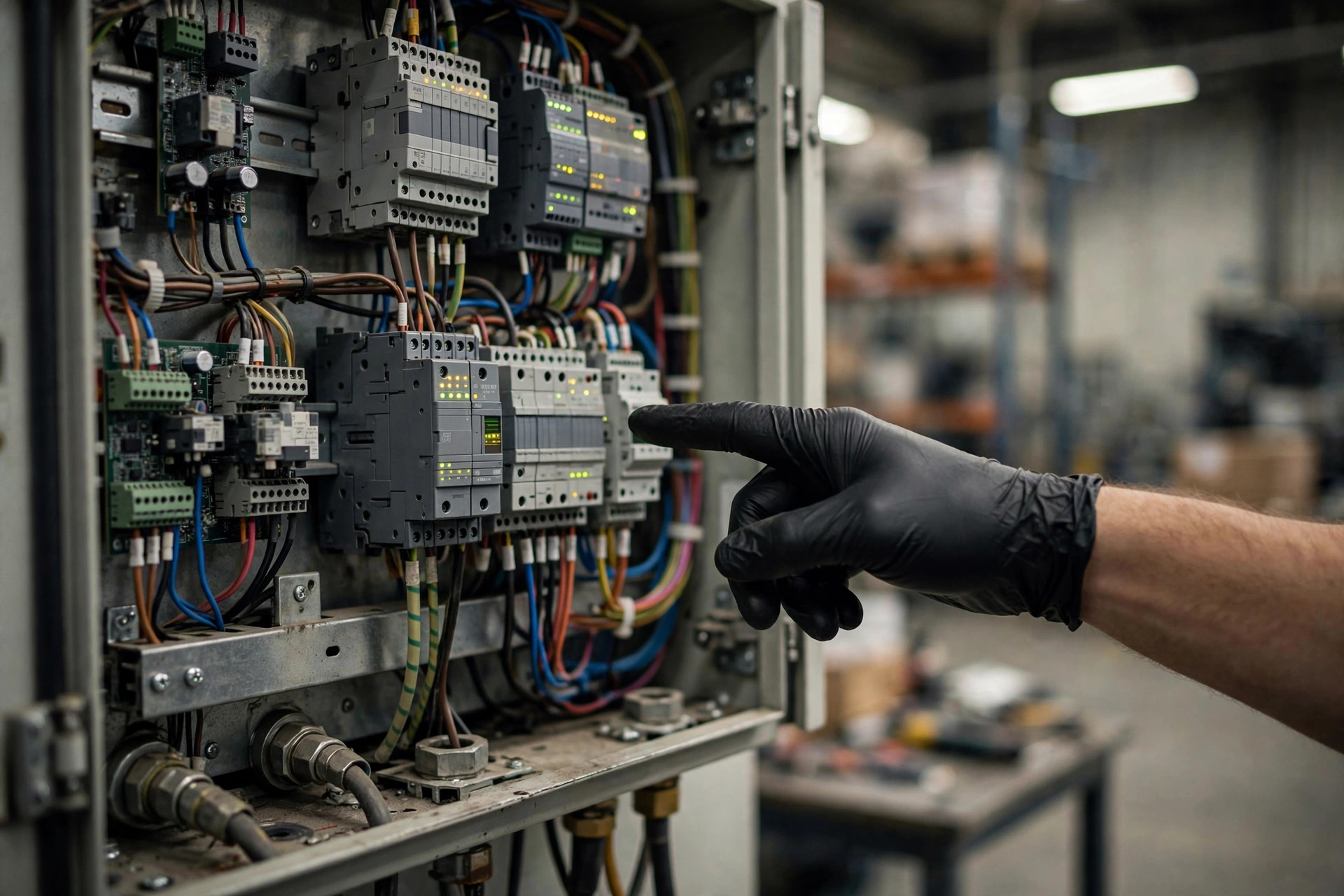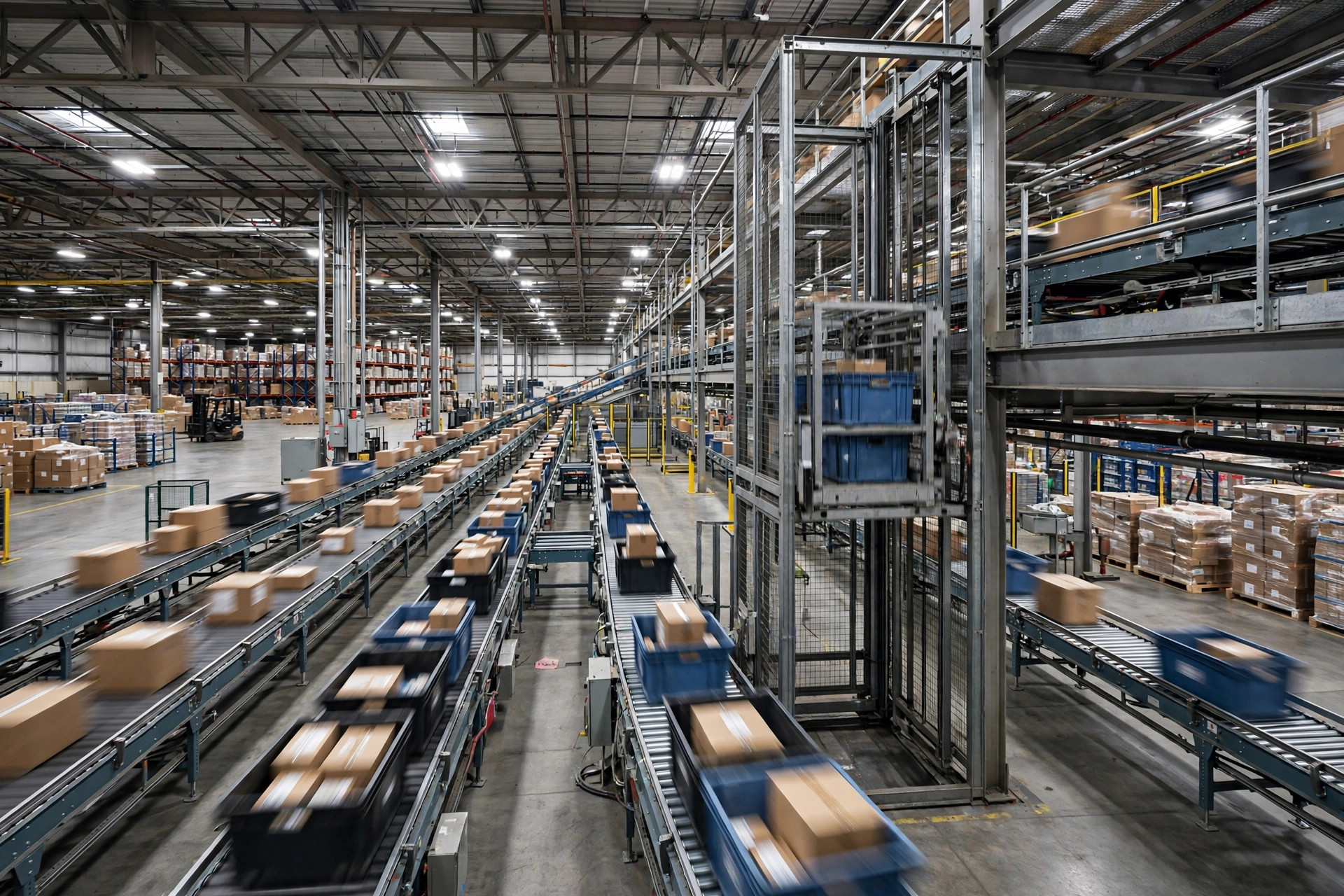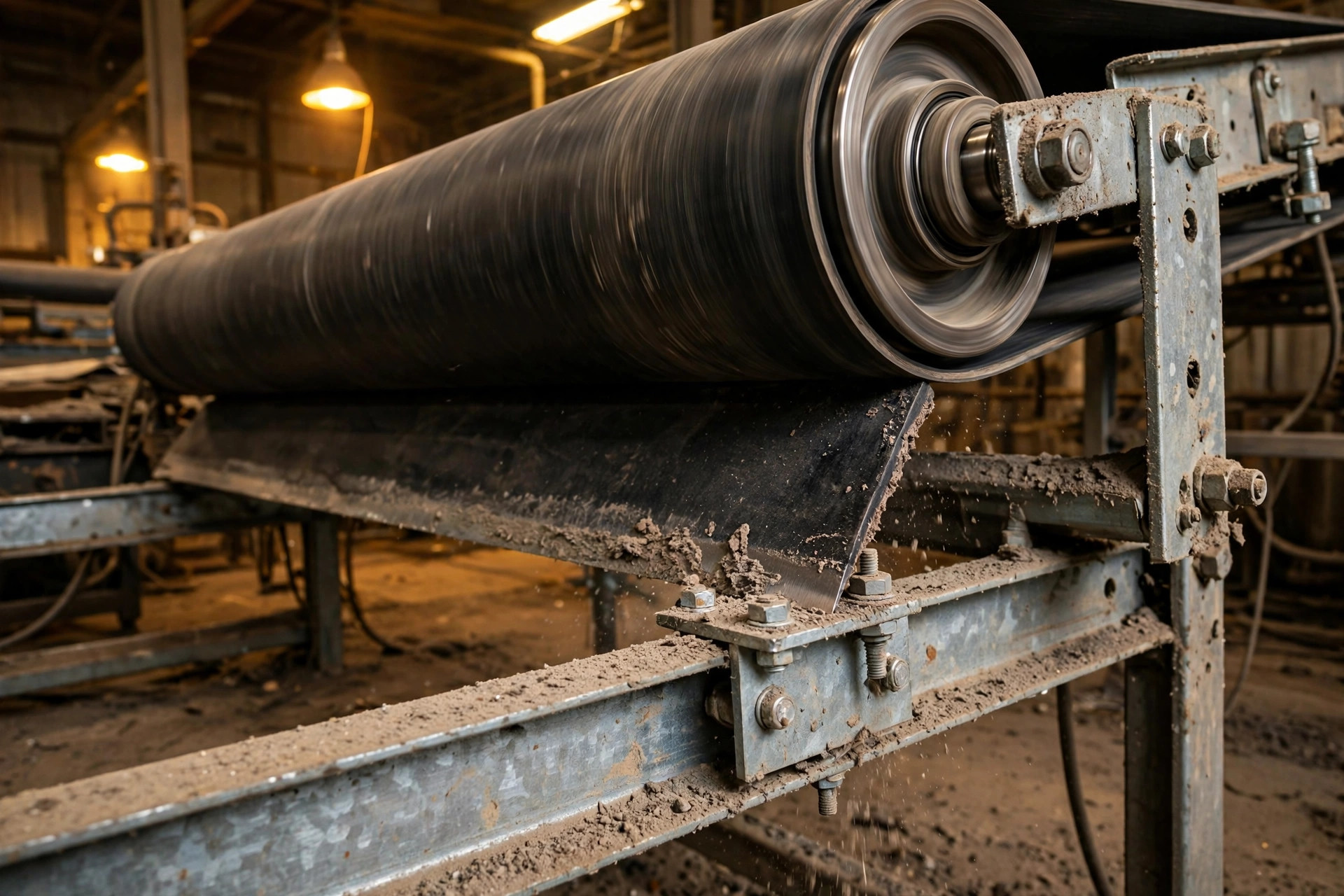
There was a curve in an Ontario e-commerce warehouse that jammed every Wednesday, same spot, same mess. By the time I got involved, the night-shift lead had a routine: climb up, pull cartons apart one by one, restart the line, and log another "JAM B-07" in the WCS panel. The system did raise alarms — but only after the jam was already a solid knot, and every alarm meant a person on a ladder. That is the state of jam configuration in most warehouses I walk into: detection exists but is tuned too coarse, auto-clear exists but nobody dares to enable it. A WCS can handle jams well, but only if you get the signals, the severity tiers, and the auto-clear boundaries right.
Photoelectric, Current, Misalignment: Which Signal Actually Calls the Jam?
A WCS detects a jam through three signal types. First, photoelectric: a carton blocking the beam longer than a set time means a jam. Cheap and intuitive; its blind spot is small items and translucent packaging, where a half-blocked beam flickers and produces the most maddening false alarms. Second, motor current: a jammed drive draws a current spike. Reliable when a real jam happens; its blind spot is accumulation-style roller conveyors, where slipping rollers keep the current flat while cartons pile up into a mountain and the system thinks everything is fine. Third, belt misalignment switches, mainly on belt conveyors — a drifting belt usually means something is wedged in it.
My standard setup: photoelectric as the primary signal, motor current as the cross-check. One signal alone only earns a "suspected" flag; a confirmed jam requires both. That combination drops the false-alarm rate by an order of magnitude. Before trusting the current signal, baseline it: run the same section empty, half-loaded, and fully loaded for half an hour each and record the current curves. Locked-rotor current is usually more than double the full-load running current, so a threshold at 1.5x catches real seizures without mistaking a normal incline climb for a jam. Many commissioning teams skip this and use the motor nameplate rating as a flat threshold — and get both false alarms and missed jams for their trouble. Sensor placement matters too: a pair at the curve entry, a pair at the exit, and one pair in the middle. Many integrators install a single pair to save cost, and then your jam location is only accurate to "somewhere in this section" while the technician hunts for it.
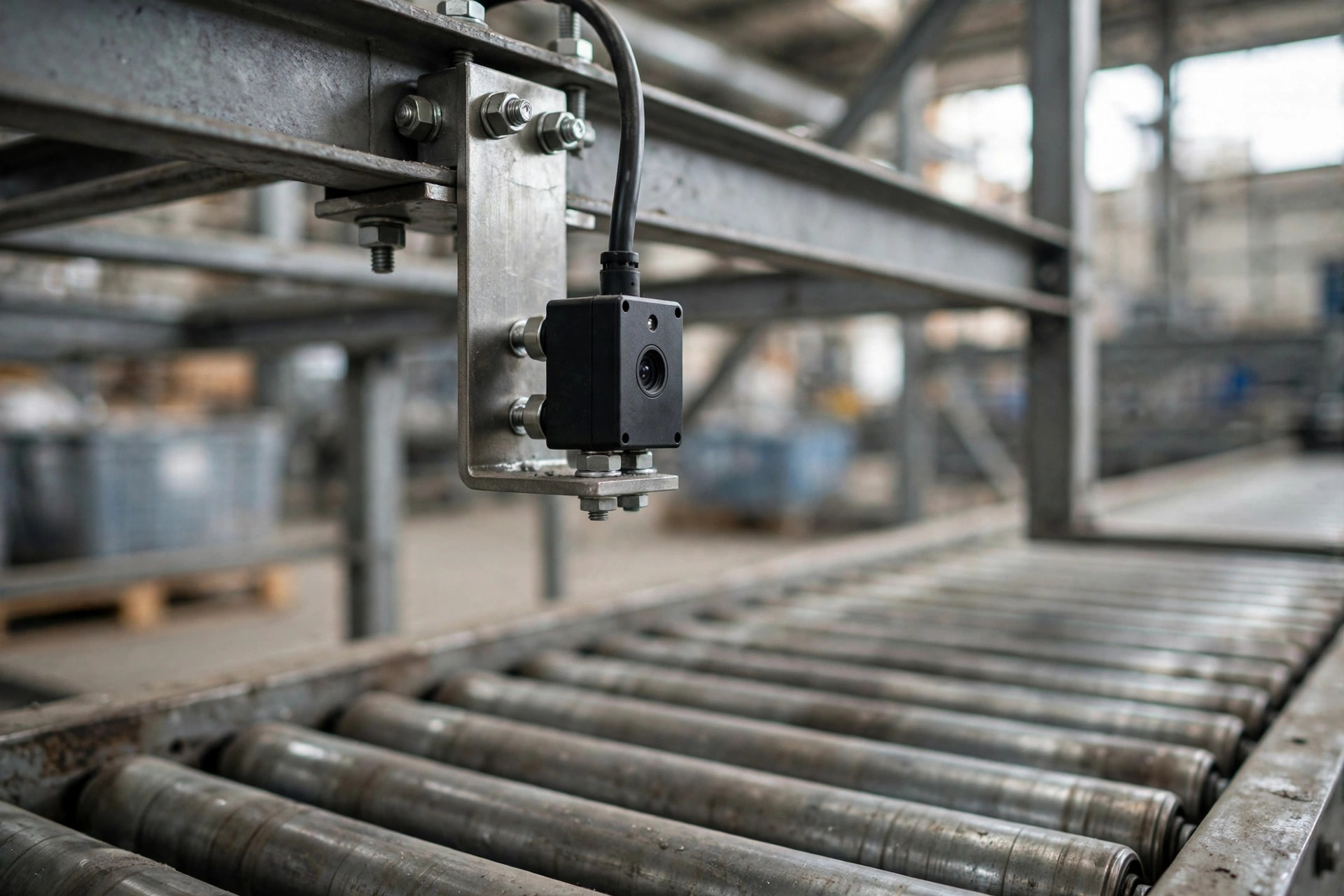
One more small trap: mount the photoelectric beam at the height of your smallest carton. Beams mounted for large cartons let small boxes slip underneath, the system reads the section as empty, and product keeps piling up invisibly.
Warning, Stop, Auto-Reverse: How Many Severity Tiers Are Enough?
I run three tiers. Tier one is warning: suspected jam, notification only, the line keeps running while control takes a look. At peak, a line can throw dozens of warnings a day, nine in ten being false alarms — stopping the line for each one would cut throughput in half. Tier two is line stop: confirmed jam, the whole section halts, human intervention required. Tier three is auto-reverse clear: the motor reverses for a few seconds to spit out the wedged carton.
Tier three is where the arguments start. I only enable auto-reverse when four conditions hold simultaneously: a straight section (never a curve, never an incline), a low-speed zone, light non-fragile product, and standard-size cartons. In that setup, a short reverse frees a lightly wedged carton nine times out of ten and saves a ladder climb.
When must it be manual? Curves, inclines, and merge points — never enable auto-reverse there. In a curve, product is wedged at an angle and reversing only tightens the squeeze; on an incline, reversing sends product sliding downhill toward whoever is standing below. And two product types always go manual: fragile goods and heavy items (over 25 kg per piece). Here is the painful lesson: in 2024, a home-goods warehouse in Ontario had auto-reverse enabled line-wide by default. A pallet of ceramic decor wedged at a curve, the system reversed three times, and three cartons were crushed — over $2,000 in product damage plus a bent roller bracket. The same day, auto-clear on curve sections was permanently disabled, kept only on straights.
The Guardrails for Auto-Clear: Attempts, Duration, Failover to Manual
Even where auto-clear is allowed, it needs three guardrails. First, cap reverse attempts at two. If two reverses do not clear it, the jam is not minor, and more reversing only crushes product tighter. Second, keep each reverse to 3-5 seconds — no longer. Third, after two failed attempts, fail over to manual and lock out auto-clear on that section for 30 minutes, so the system and the technician stop fighting over control.
And configure by product and section, not line-wide. The straight of a line may run cartons while its curve runs cartons too, but auto-clear on the curve stays off. In the WCS, assign the policy per section, never per line — that is the trap most people fall into the first time they configure a WCS.
The one parameter I see misconfigured most often: the jam confirm timer. Many integrators leave the factory default of 2-3 seconds. At peak, cartons briefly stack at a curve, the system calls a jam, the line stops a dozen times a day, and operators eventually mute the alarm — so when a real jam hits, nobody hears it. Set it too long, past 10 seconds, and the system is still "confirming" while product is already deformed. My starting point: take the longest normal dwell time on that section, add a 50% margin, then tune downward from there. There is no universal answer — it depends on your carton sizes, line speed, and curve radius. Copying someone else's timer value is like running a race in someone else's shoes.
One last thing worth saying: jam detection is the cheapest uptime insurance on a conveyor line. The hardware costs less than a single peak-season stoppage, and the configuration work is a few hours of honest testing. Lines that run without it are not saving money — they are just postponing the bill, and the bill always arrives at 2 a.m. during peak.