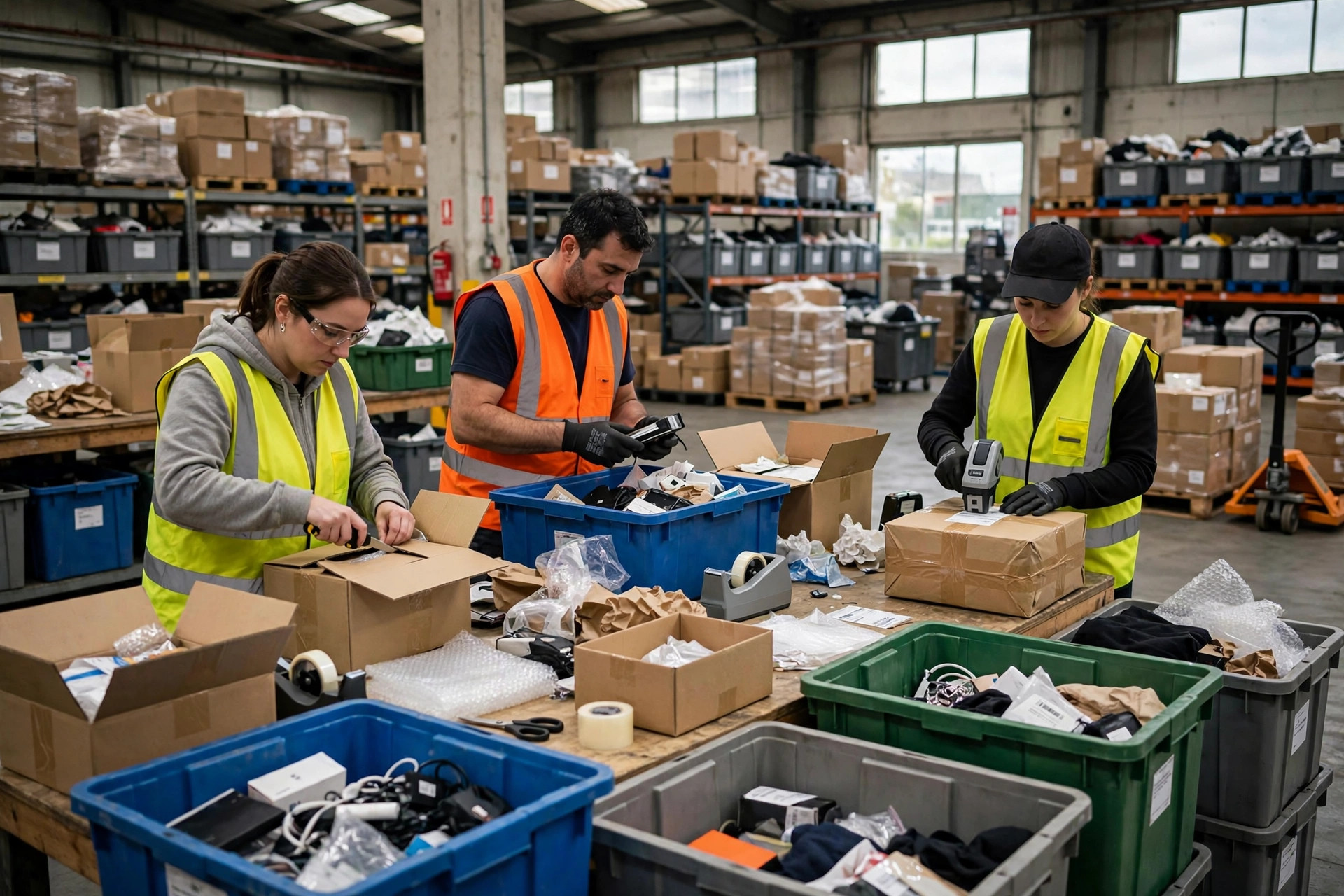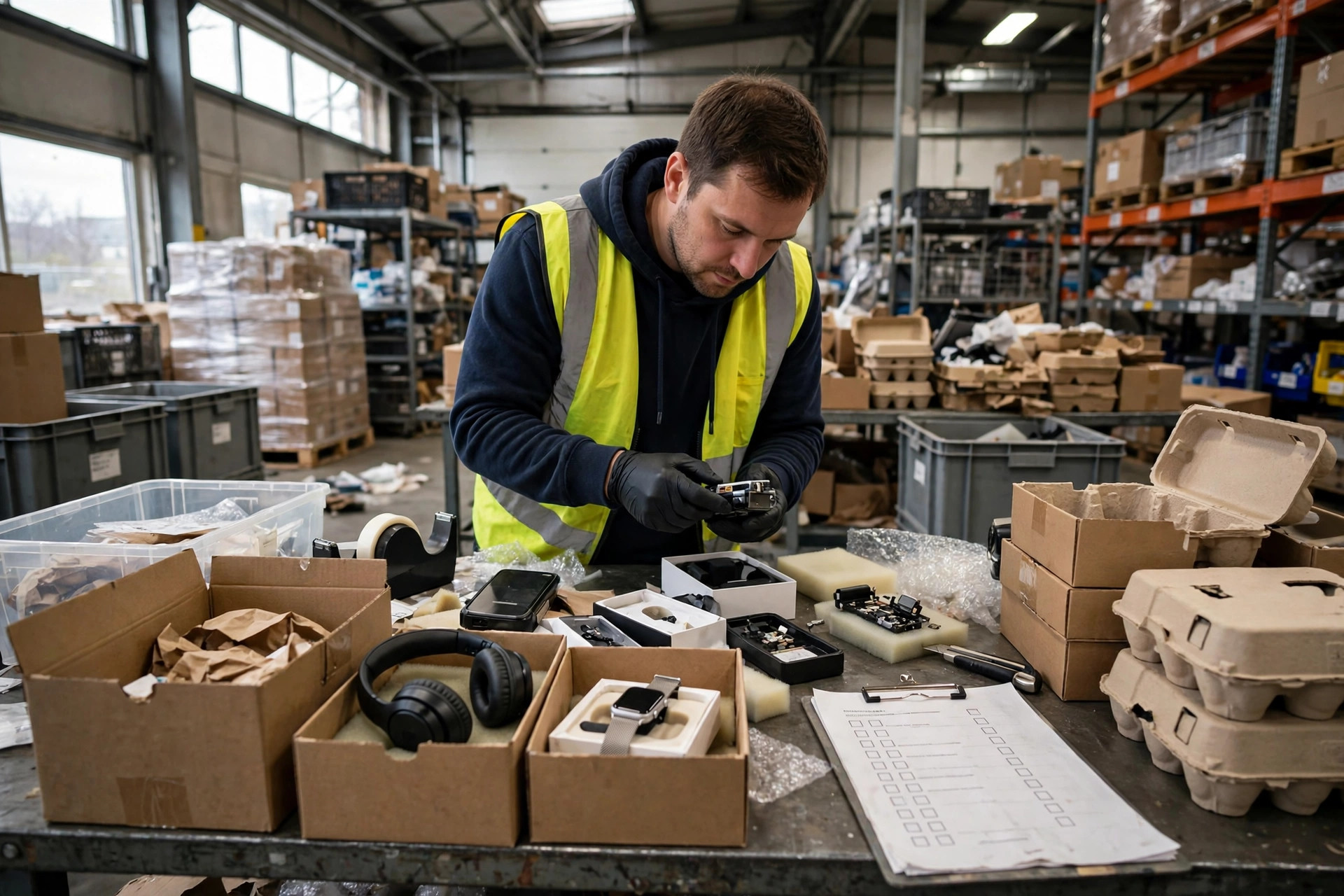
Here is the ugly truth about the warranty returns warehouse process: the return itself is not the problem. The problem is the pile in the corner of the warehouse that nobody wants to touch. You cannot sell it, because you are afraid of a second complaint. You cannot throw it away, because it still feels like money. So it sits there, eating up shelf space and cash, until a stock count finally forces you to write it off. I did exactly that for years, until one pallet of returns sat untouched for almost half a year and half of it had already passed the point where refurbishing made any sense.
A proper warranty returns warehouse process is not the same as normal returns handling. Normal returns are mostly about speed: get it back, refund it, move on. Warranty returns are about judgment: is this really covered, is it really broken, and is there any value left in it? Get those three questions wrong and you either give away free replacements or trash stock that could have been sold again. Here is how I run it now. It is not fancy. It just makes the math work.
First, the rant: a returns corner with no process is a dump
Most sellers I know have the same setup: one table, a few cartons, and a sticky note on each box. Two weeks later, nobody can tell you when a unit came back, what was wrong with it, or whether it can be sold again. That is bad for any return. For warranty items, it is fatal, because you end up approving replacements before you have checked the purchase date, the warranty period, or whether the fault description matches the actual unit.
I learned this the expensive way. In March 2025, our Shenzhen warehouse received more than 20 warranty returns for one small appliance in a single run, all marked "won't turn on." Trying to be nice and fast, we replaced all of them. A later spot check found that 6 units simply had batteries fitted the wrong way, and 3 more had the child lock switched on by accident. Fewer than half had a genuine hardware fault. The replacement cost on that batch came to roughly a third of that product's profit for the month, by my own books. That day I made a rule: no inspection record, no replacement channel. No exceptions.
The warranty returns warehouse process, step by step
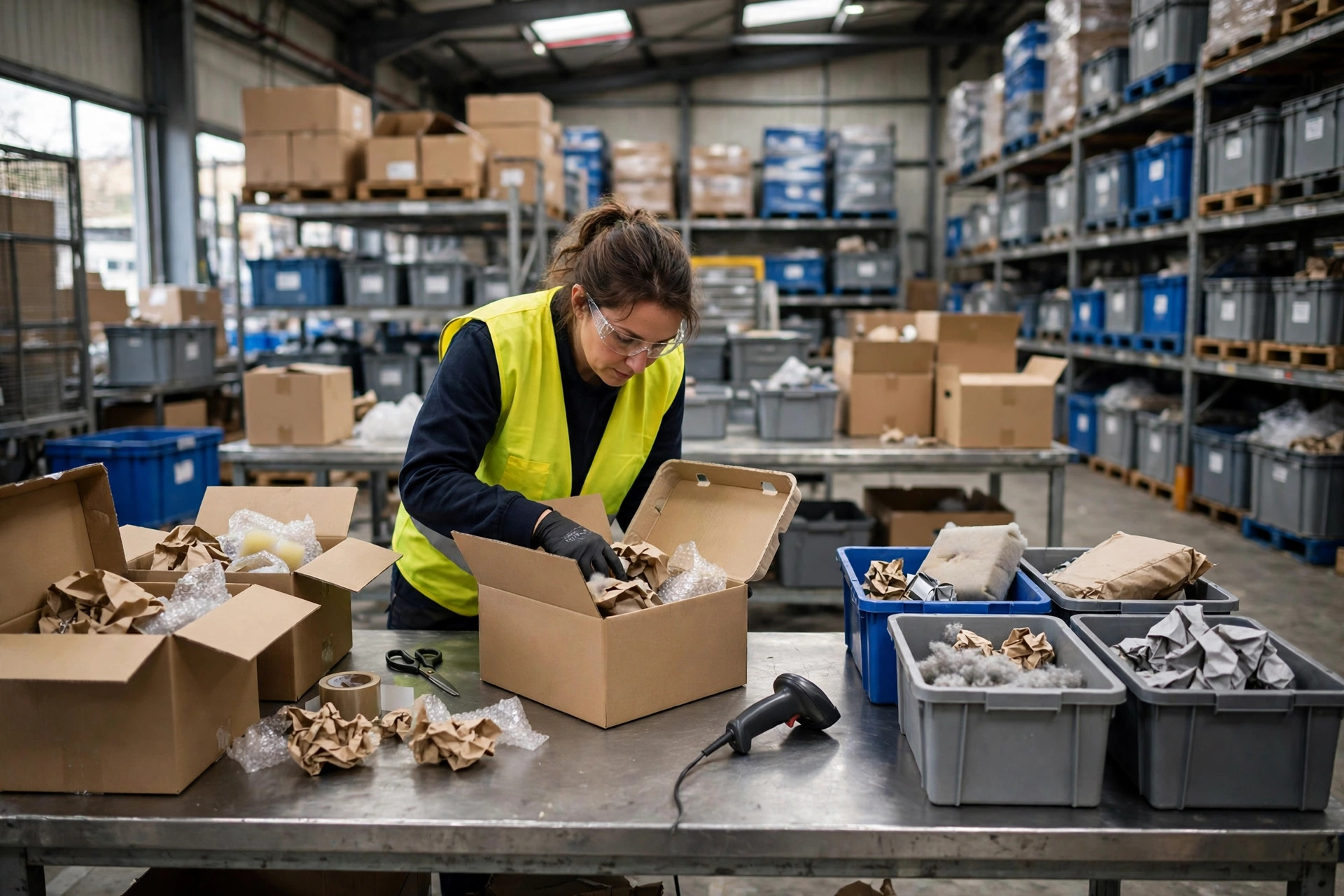
Step one is receiving and verification, and I check three things before anything else: the order number and purchase date, whether the unit is still inside its warranty period, and whether the reported fault matches what is in the box. Out-of-warranty units go to a paid repair or discounted route, never into the free warranty lane. If the reason says "quality issue" but the unit shows obvious physical damage, we photograph it first and talk second. The form is one page. It does not need fancy software. It needs one thing: a record for every single unit, so any decision can be traced later.
Step two is inspection and grading. I use three grades, with the standard written on the wall above the inspection bench so whoever is on shift grades the same way:
The warranty returns warehouse process decision table: resell, refurbish, or write off
| Grade | How we decide | What happens next | Rough cost level |
|---|---|---|---|
| A: Resellable | Looks new, passes every function test, all accessories present | Clean it, repackage it, back to sellable stock | Just cleaning labor and new packaging, the cheapest outcome |
| B: Refurbishable | Minor fault or cosmetic flaw, works fine after repair | Repair or replace parts, then sell at a lower price with the condition stated | Repair labor plus parts, roughly one to two tenths of the new-product price |
| C: Write-off | Board-level failure, water damage, or structural damage where repair costs more than the unit is worth | Strip usable parts or dispose of it properly | Disposal cost, but it stops the bleed and frees the shelf |
Grading only works if it is not guesswork. Each grade gets a short test list: power on, buttons, core functions, accessory count. Pass all four and it is an A. Fail one and it drops a grade. The list is taped to the bench, and new staff just tick boxes. I also cap the time: a routine check should take under 10 minutes per unit. Anything harder gets parked for a senior technician in a batch, instead of letting one stubborn unit block the whole line. Results go into a table the same day, with six fields and no more: order number, serial number, reported reason, test result, grade, and destination. Miss one field and the inspection does not count as done. At month end, that table tells you which product category is bleeding warranty money and which batch has an unusually high failure rate, and that feeds straight into your next purchasing and listing decisions.
Step three is refurbished resale, done in the open. A repaired B-grade unit gets its own refurbished listing, or a clearly marked refurbished option, with its own warranty terms spelled out. Never mix refurbished units back into new stock and hope nobody notices. You save one headache and buy a bad review plus a second return. For warranty terms on refurbished units, I write exactly what the platform currently allows and nothing more. Platform policies change, so check the latest platform policy before you promise anything in a listing or a customer message.
A second case shows why this is worth doing. In July 2025, our Yiwu warehouse took back more than 40 Bluetooth speakers under warranty. Grading came out as 12 A-grade, 21 B-grade, and 8 C-grade. The A units were repackaged and sold within two weeks. The B units got new battery cables, were priced a tier lower with their condition stated, and mostly cleared within a month. Overall recovery on that batch was over 60 percent by my own calculation. Under the old approach of writing the whole lot off, recovery would have been close to zero. That gap is the entire value of having a process.
Fraud, expired claims, and the trade-off nobody wants to admit
Warranty returns attract their share of gaming: an old unit swapped for a new one, a product bought elsewhere returned to you, or the same order claiming again and again. You do not need to argue with customers to stop this. Three hard rules do the job. First, if the serial or batch number does not match the order, the claim is rejected, politely, with the evidence kept on file. Second, repeat warranty claims from the same buyer in a short window go to manual review, never to automatic replacement. Third, no replacement ships until the old unit has been received and signed into the warehouse. No old unit, no new unit.
Here is the counterintuitive part: handling warranty claims faster actually reduces fraud. Drag a claim out and the customer escalates, the platform steps in, and you end up paying just to make the case go away. My rhythm is a grading decision within 3 to 5 days of receipt, and the customer is told the same day the decision is made: replace it, repair it, or decline it with test photos and a clear reason. Firm evidence plus a decent tone wins over most reasonable buyers.
And here is the trade-off: refurbishing is not always worth it. For low-value, small items, inspection plus repair labor can cost more than the product itself, and those units should go straight to grade C. For higher-value products with common parts, refurbishing is close to pure profit. My rule of thumb is simple: if total refurbishment cost passes two tenths of the new-product price, I do not refurbish, unless the product is chronically out of stock and restocking will take a very long time.
Three closing reminders. First, keep warranty returns in their own ledger, separate from ordinary returns, or you will never know how much warranty is actually costing you. Second, clear the returns area every month: anything without a decision after 30 days gets forced to a decision, sold or written off, so no new pallet grows in the corner. Third, before you write any warranty promise into a listing or a support script, check the latest platform policy. Memory is not a policy document.
Run this way for over a year now, my returns corner has gone from a dump to a small profit center. This one I tested myself, and it works.
By Ah K, E-commerce Seller (5 yrs)