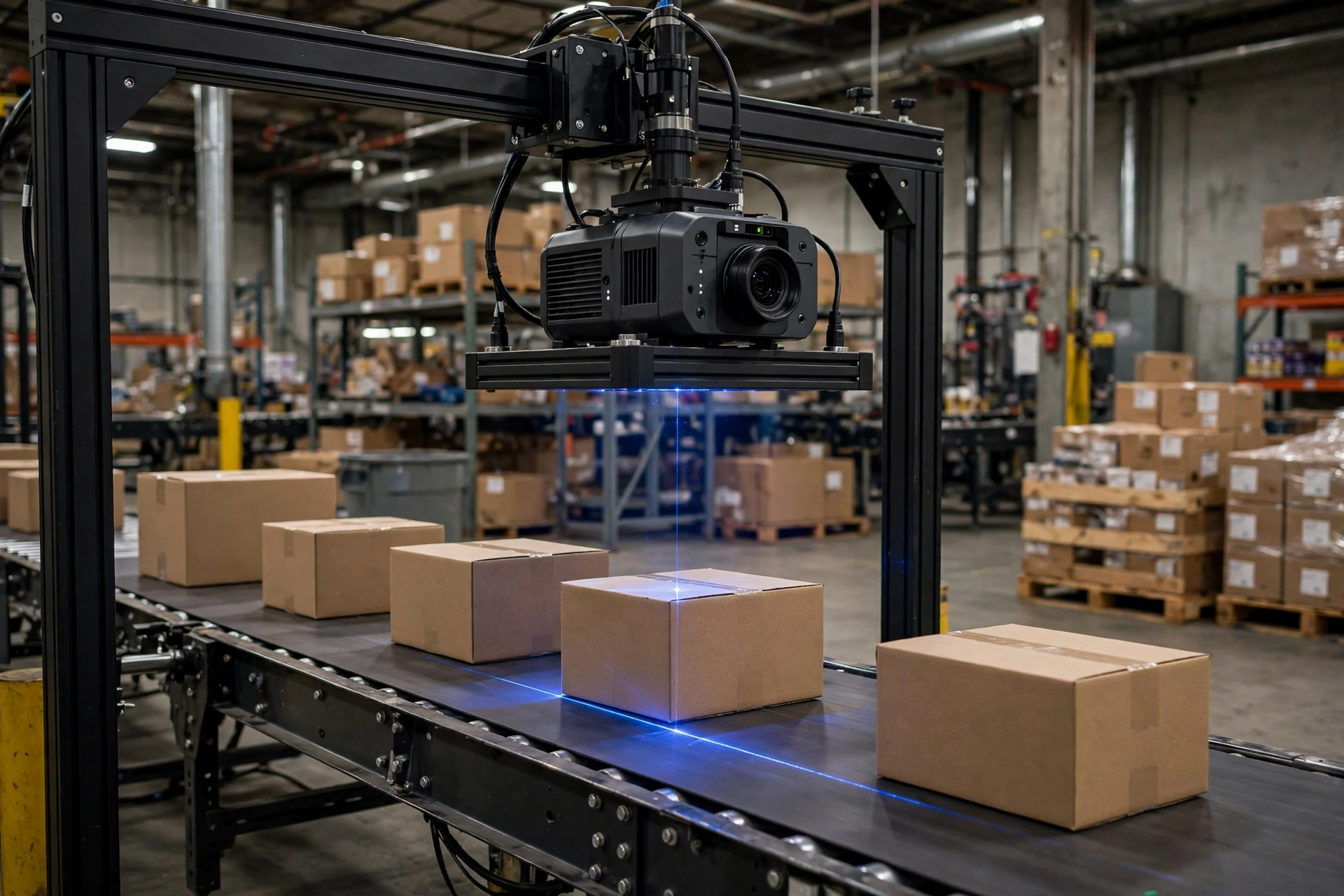
Here's my verdict up front: vision inspection replacing manual checks saves you headcount money and loses you false-reject money. In twenty years in this business, I've watched too many people get the math backwards — they sign off on a vendor's 99% accuracy slide, then get eaten alive by a 3% false-reject rate.
Let me put it plainly: this thing cuts both ways. On one side, a camera never blinks, never gets tired, never calls in sick. On the other side, when it's wrong, it's wrong with total confidence. A tired human second-guesses herself. A machine misreads a label and doubles down.
Two real projects, heaven and hell
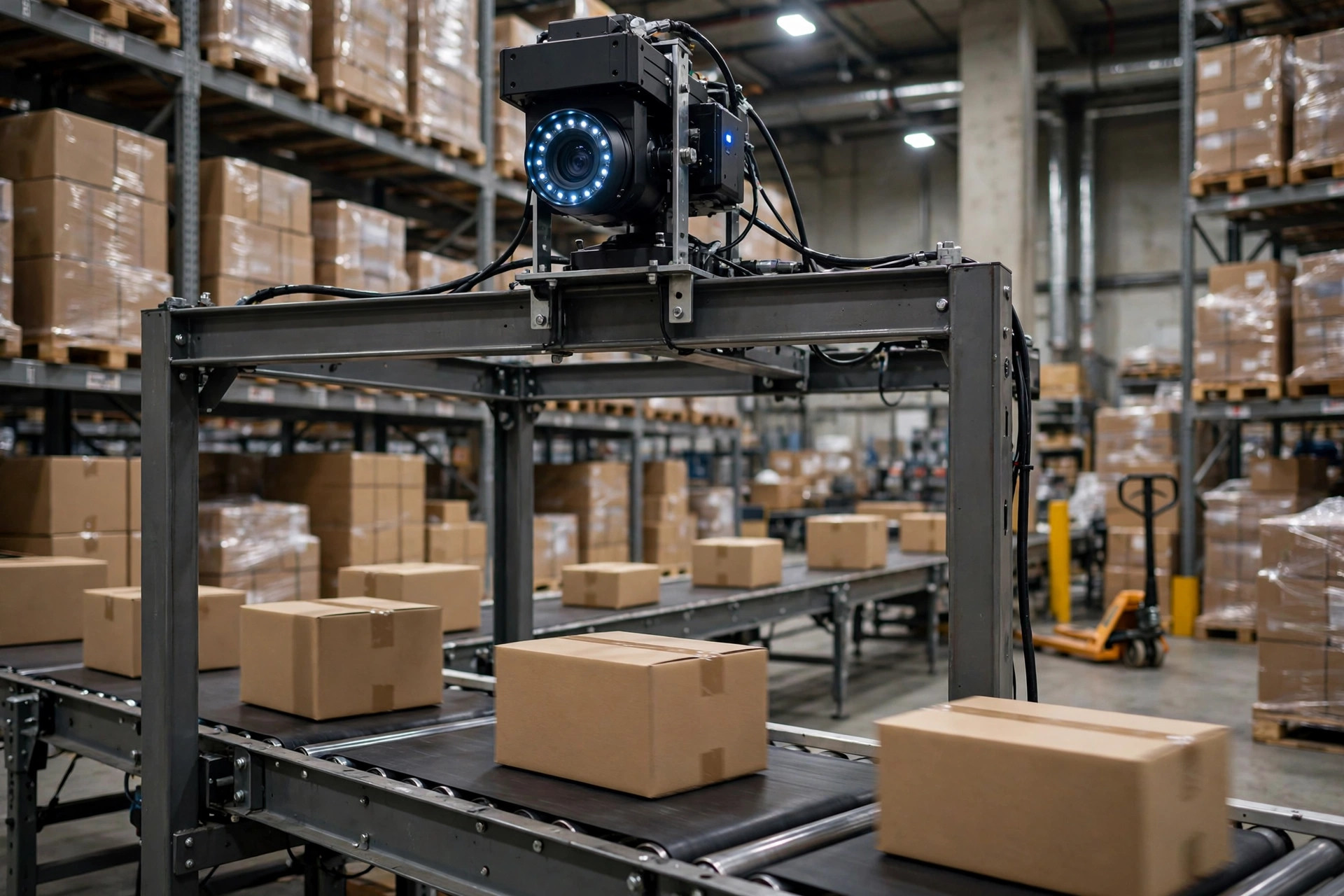
Early 2024, Riverside, California. A beauty DTC brand warehouse, 40,000 square feet, about 8,000 orders a day. The owner put vision inspection at the end of the conveyor — camera reading shipping labels, combined with checkweighing. The vendor promised 99.2% accuracy. Two weeks in, reality showed up: beauty brands love promo stickers, stickers reflect light, and the camera started flagging "label anomaly" on perfectly good cartons. The false-reject rate hit 6–8%. Every false reject needed 3–5 minutes of manual re-inspection. The rework station turned into a mountain. The checking crew went from 2 people to 4. As the owner told me: "Lao Mi, I didn't buy a labor-saving machine. I bought a work-generating machine."
Late that same year, Dallas, Texas. A 3PL doing outbound verification for an auto-parts client took the opposite approach: the camera only answered two yes/no questions — is the label present, and does the carton marking match? No full recognition at all. Fewer features meant fewer ways to be wrong, and the false-reject rate stayed under 1.5%. Rejects diverted automatically to a rework chute, handled by one person. The old manual process needed 3 checkers across two shifts; after go-live, one person handled exceptions. The labor savings paid back the equipment in about a year.
Same technology, one lost money, one made money. The difference wasn't "accuracy." It was the math.
Vision vs. manual checks: the math most proposals skip
I've seen too many business cases that only run one calculation: annual labor cost versus equipment cost, then a payback period. That math leaves out the most expensive line item — the false-reject tax.
Here's the full picture in one table:
| Cost line | Manual checking | Vision inspection | How to estimate it |
|---|---|---|---|
| Direct labor | Checker wages × headcount × shifts, all year | 1–2 exception handlers | $18–$22/hr is a common range for US warehouse checkers |
| Equipment & software | Zero | Cameras + lighting + industrial PC + install, roughly $15K–$40K per station | Varies with station complexity and SKU variety |
| False-reject tax | ~Zero (humans rarely reject good cartons) | False-reject rate × daily volume × rework minutes per carton × wage × 365 | This is the line that decides profit or loss |
| Missed-defect losses | Human miss rate typically 0.5%–1% | Usually lower miss rate, but each miss costs the same | One mis-ship ≈ carrier fee + support + return, tens of dollars minimum |
Run the Riverside numbers through it: 8,000 orders a day, 7% false rejects, 4 minutes of rework each, $20/hr — the false-reject tax comes to roughly $270,000 a year. The equipment cost a fraction of that. That's the arithmetic of a "work-generating machine."
Dallas flips it: 1.5% false rejects, rejects auto-diverted down a chute, under a minute of rework each — the false-reject tax lands under $50K a year, while two eliminated checker positions save over $80K a year. The math works.
So the real ROI formula isn't (labor saved) ÷ (equipment cost). It's: (labor saved + fewer missed defects − false-reject tax − annual maintenance) ÷ total investment. Nine out of ten vendor proposals I've read never write down the false-reject tax.
And to be fair to the humans: manual checking isn't innocent either. Human eyes drift after about four hours of staring at cartons; a 0.5%–1% miss rate is normal. Vision's value is half labor savings, half fewer misses — but only if the false-reject tax doesn't eat both.
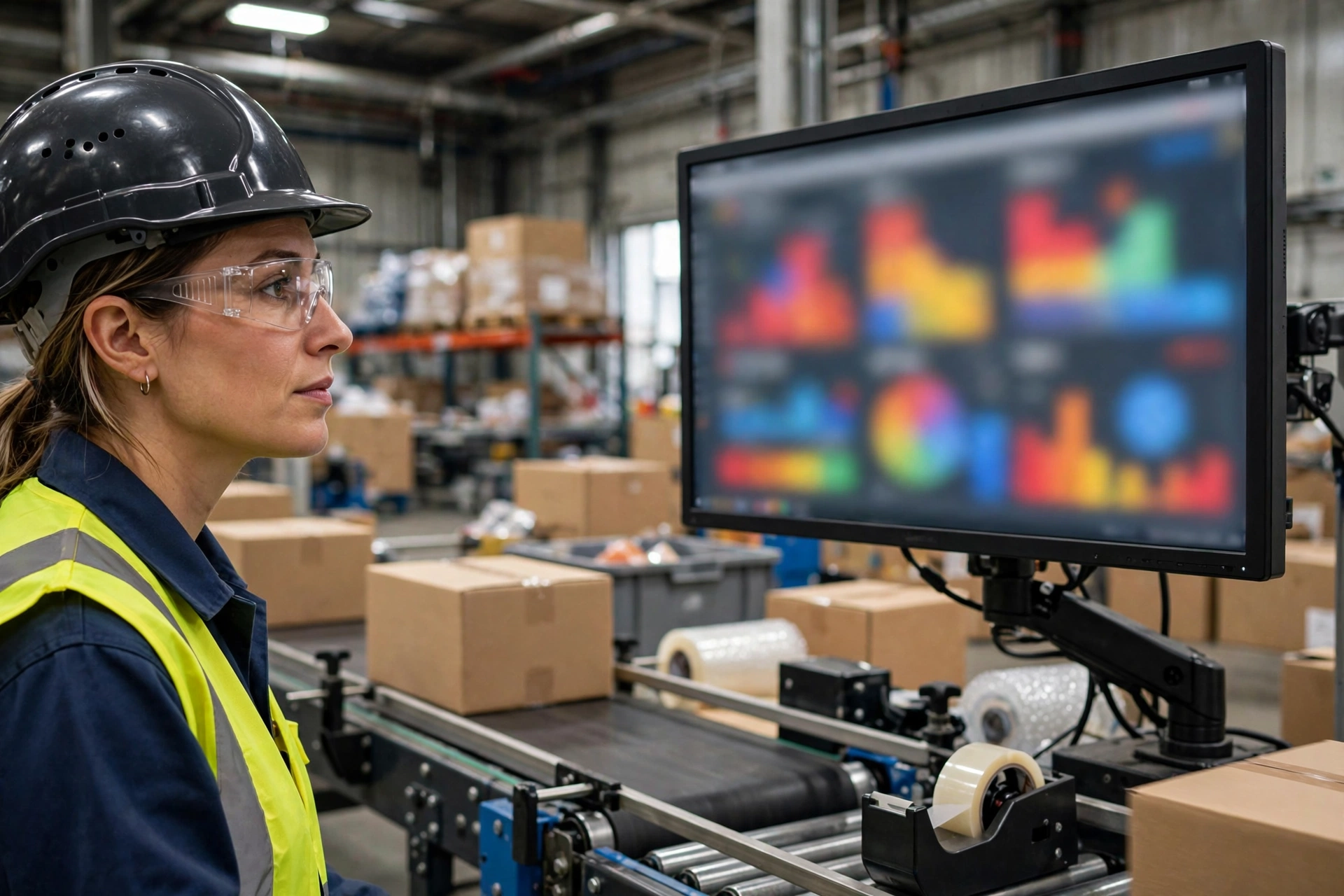
Don't trust the vendor's false-reject rate. Measure it on your own freight.
Both sides of this are true: the lab's 99% is real, and your warehouse's 99% might be fiction. Lighting, glare, stickers, crushed cartons, belt speed — the lab has none of them, your floor has all of them.
My field-tested method is one thing: run shadow mode for two weeks. Install the cameras, let them judge, but keep your manual process exactly as it is. Then reconcile. The confusion matrix you get from your own SKUs is your real accuracy and your real false-reject rate. If a vendor won't agree to a shadow test, they already know the answer — walk away.
Reconciliation has its own craft: don't reconcile everything, 500 orders is plenty. Focus on two questions — were the false rejects actually wronged (and how many were systemic, like sticker glare?), and did anything slip through that shouldn't have? Systemic false rejects are the killer: they mean no amount of tuning will fix it, the scenario itself is wrong. Recognize it early and cut your losses.
One more trick: start with the fewest possible features. Dallas won because its camera only answered yes/no — is the label there? Fewer features, fewer ways to be wrong, naturally low false rejects. Asking a camera to recognize SKUs, count quantities, and spot damage on day one is like asking a new hire to do the QC manager's job on their first shift. Of course it crashes.
Which warehouses should do this — and which shouldn't
Here's the three-dimension framework I use with clients:
| Dimension | Go for it | Hold off |
|---|---|---|
| Daily volume | 3,000+ orders/day, 3+ checker positions | A few hundred orders, one checker with idle time |
| SKU profile | Standard cartons, clean labels, few features | Odd shapes, sticker-covered, packaging that changes weekly |
| Rework flow | Room for a divert chute/line so rejects don't block the main flow | Tight floor where one reject stops the line |
If you land on "hold off" for two out of three, don't rush it. Riverside hit two "hold offs" (nasty SKUs, no divert design) and forced it anyway. Dallas hit all three "go for it." Hard to lose from there.
One cost almost everyone forgets: annual maintenance. Light sources age, lenses need cleaning, every new SKU means fresh sample photos and model tuning. $2,000–$5,000 a year per station is common. Leave it out and your ROI is fiction.
Roll out in three steps, never all at once
I've watched too many projects die from big-bang go-lives. The reliable rhythm is three steps.
Step one: two weeks of shadow mode, watch only, judge nothing. Get your real false-reject rate on your own freight. If the numbers look ugly, stop — your sunk cost is one set of cameras.
Step two: go live with a single feature. Just presence checks — is the label there, is the tape applied. Run a month, hold the false-reject rate under 2%, then talk.
Step three: add complex features one at a time. SKU recognition, quantity counting, damage detection — each addition gets its false-reject rate re-measured, and anything over the line gets rolled back.
Dallas did exactly this and spent two full months on step two before adding features. Riverside is the cautionary tale: full features on day one, driving blindfolded.
A counterintuitive take
A cheaper 95%-accurate system with a well-designed reject-divert flow can cost less overall than an expensive 99%-accurate one.
Sounds wrong, but the math is honest: the big money isn't in recognition, it's in what happens after a false reject. A 95% system whose rejects auto-divert and take an operator 30 seconds each is cheap. A 99% system whose every false reject stops the line for five minutes of manual digging is expensive. When you buy vision inspection, you're not buying an accuracy number — you're buying the cost of being wrong.
So don't ask me "is this vision system accurate?" Ask yourself three questions instead: when it falsely rejects a carton, can your rework flow handle it? How "nasty" are your SKUs — glare, odd shapes, sticker storms? And after two weeks of shadow mode, are you willing to look at the data?
If you can't answer those three, your vision ROI is paper wealth. If you can, it's a money printer. Remember: you're never buying the camera. You're buying the cost of being wrong.
By Lao Mi, Supply Chain Veteran (20 yrs)