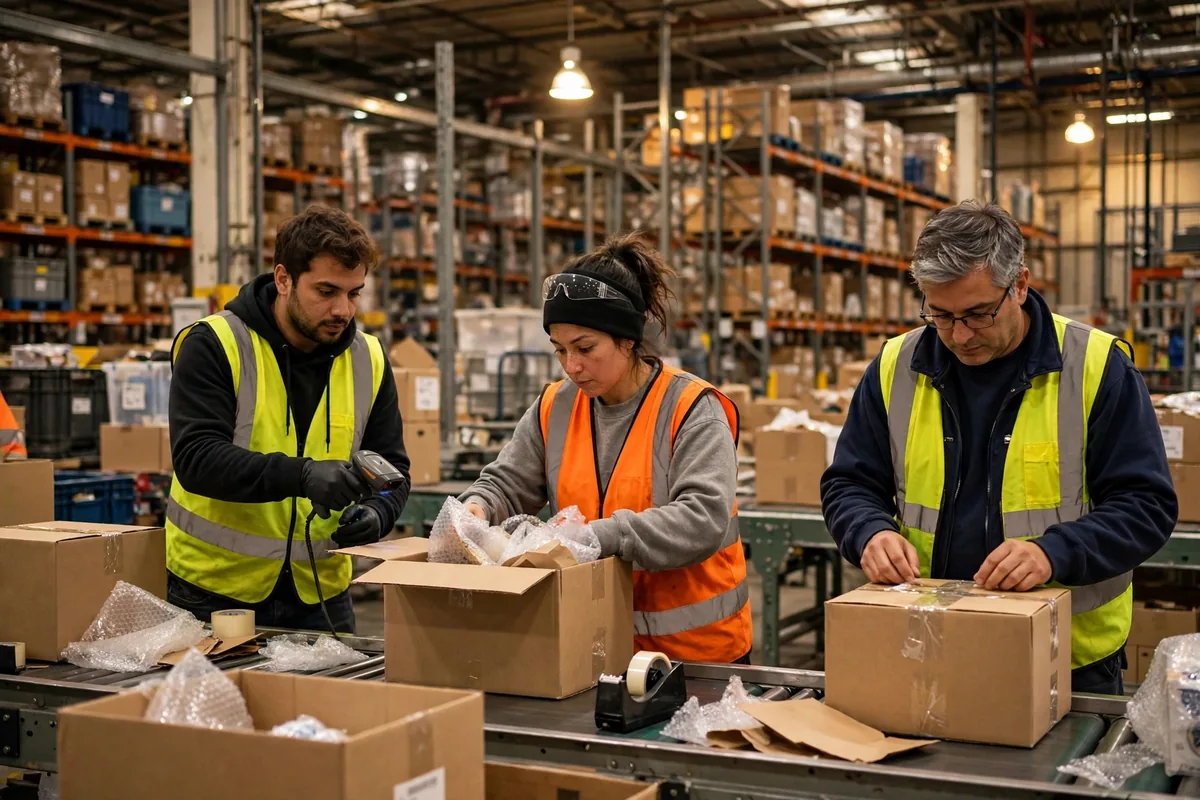
The night shift had just handed over when the warehouse supervisor promotion list went up beside the notice board, and the picking aisles went quiet. Let me be straight with you: standing in that aisle that morning, reading the faces around me, I understood one thing. Who was on the list mattered less than whether the crew thought it was fair. The fastest picker made it. The steady hand who covered new starters on every shift did not. The muttering started before the ink was dry. Handle that badly and the picking rate is the least of your problems. Lose the crew's trust and the whole floor drifts.
Promotion comes up in every warehouse, every year. A picker does good work and wants to move up, which is only fair. A lead position opens and someone has to fill it. The hard part is that picking well and leading well are two different jobs. Picking rewards fast hands, a good memory, and clean accuracy. Leading rewards rostering, covering gaps, holding morale, and arguing with drivers and customer service without burning the relationship. Measure a leader with a picker's ruler and the answer will come out crooked.
What Warehouse Supervisor Promotion Should Look At First
Here is how we do it in our warehouse now: before any warehouse supervisor promotion, the standard goes up where everyone can see it. Who qualifies and who is still short is no secret. The standard is simple and it looks at hard evidence. Is picking quality steady? Does the person own mistakes? Do they coach new starters? Do they step up when the roster is short? Do they stay calm when urgent orders land? Picking speed is only a small part of that list. The ability to carry people matters more. Speed can be trained. The instinct to look after a crew cannot.
Take a night shift during last year's peak season, as an example. Suppose the roster broke and the picking area was left at half strength, with outbound orders stacked along the aisle. Suppose the fastest picker on the floor kept his head down and worked his own orders, still the quickest in the group. Suppose another picker, the quiet one nobody talks about, put his own orders aside, sorted the new starters' routes first, and then took the hardest line himself. The orders still went out that night, and it was not the fastest pair of hands that saved them. It was someone holding the crew together. That is what promotion should reward, not speed alone.
Take the scorecard we use now, as a worked example. Suppose the total is 100 points: picking quality counts for 30, coaching new starters and helping colleagues counts for 30, covering gaps and handling change counts for 25, and picking speed counts for only 15. The weights were not guessed. The leads argued them out line by line against past shifts. With the scores on the table, everyone can see who is ahead, and the person who misses out can see exactly where to improve next time.
| What we measure | Worked example weight | How we read it |
|---|---|---|
| Picking quality | Suppose 30 of 100 | Few errors and quick ownership beat speed |
| Coaching and helping | Suppose 30 of 100 | Teaching and covering is what a lead does |
| Covering gaps | Suppose 25 of 100 | Staying steady when short-handed is the test |
| Picking speed | Suppose 15 of 100 | Fast is a plus, never the only measure |
Here is the counterintuitive judgement: the fastest picker is not always the right person to promote. Promote the fastest hands and the floor loses a fast picker while gaining a lead who cannot lead. Both sides lose. Promote the steady hand who coaches new starters and covers gaps instead, and the floor loses a reliable helper but gains a lead who can hold the crew together. That is the trade worth making. Warehouse supervisor promotion is not a reward for picking fast in the past. It is an investment in leading well in the future.
The Scale Every Picker Carries in Their Head
Let me be straight with you: every picker carries a scale in their head, and it weighs fairness. Who covers shifts, who steps forward when urgent orders arrive, who takes the blame when something goes wrong — the crew sees all of it. When the promotion list disagrees with that scale, the mood on the floor turns the same day the notice goes up. People start thinking that honest work gets punished, so why bother trying so hard? Once that thought takes hold, picking quality slides and no amount of shouting from a supervisor brings it back.
So before promoting anyone, listen to the leads and listen to the pickers. Leads see the roster and the shift record. Pickers see the person working shoulder to shoulder with them every day. When both views agree, the promotion will be accepted. When they disagree, stop and think about what has been missed. Reputation is not a popularity vote. It is a name earned shift by shift, and it cannot be faked.
Consider a worked example with two candidates for one lead role. Suppose candidate A is the fastest picker in the group but never coaches new starters and looks after only his own orders when the roster is short. Suppose candidate B sits in the middle on speed, yet helps new starters sort their routes every day and volunteers for the hardest line on short-handed nights. On our scorecard, B comes out clearly ahead. Promote B and the floor loses a solid helper but gains a lead who can hold things together. Promote A and the floor loses its fastest hands while gaining a lead who only knows how to pick. Work that trade out before making the call.
Warehouse Supervisor Promotion Does Not End on Announcement Day
Promotion does not end when the notice goes up. The hardest stretch for a new lead is the first period in the job. Yesterday they were a mate working alongside everyone. Today they write the roster, assign the work, and handle attendance, and the relationship changes overnight. Old colleagues push back. New starters are afraid to ask questions. The new lead is squeezed from both sides. In our warehouse we pair every new lead with an experienced lead for a stretch, someone who teaches rostering hands-on, shows how to argue with a driver without damaging the relationship, and demonstrates how to hold the line steady when urgent orders flood in.
Take the example of a newly promoted lead whose first roster put a veteran on the hardest line. He saw nothing wrong with it until the veteran lost his temper on the floor. The experienced lead took him aside and told him plainly: rostering is not filling boxes on a sheet, it is matching people and stamina. After that, the new lead asked before rostering who had family commitments and who had worked nights in a row, and the mood on the floor slowly settled. With a mentor beside them, new leads learn faster and their mistakes cost less.
A new lead also needs a way back if the first stretch is rough. If it goes well, they keep moving up. If they struggle, do not write them off at once. Ask first whether they lack training or support. Leads come from the picking floor, and the first time leading a crew is bound to feel clumsy. Give a new lead a little patience and they will pass that patience on to the pickers. Here is my reminder to fellow managers: the day the promotion list goes up, the job is only half done. The weeks of coaching that follow are the real test of how a warehouse is run.
By Chen Feng, Warehouse Operations Manager