Let me be honest with you, folks. I have watched plenty of managers do their "floor walk" over the years: clipboard in hand, a lap around the aisles in the morning, a few hellos, and back to the office with a blank notepad and the same problems as last week. That is not a walk. That is a stroll.
I do one floor walk every week now, peak season or not. Same slot: Tuesday morning, about an hour after start-up, past the messiest first hour but before lunch. I do not announce the exact route. Announce it and everyone prepares a show for you. But I do tell the shift leads which area I will focus on that week, so nobody feels ambushed. The point is finding problems, not catching people.
A Warehouse Gemba Walk in Five Stops: What to Look At, Ask, and Write Down
I run the same five stops in the same order every week. Once the route is habit, nothing gets skipped. Each stop has three jobs: look, ask, write down.
Stop one is the receiving dock. Look at whether arrivals are queuing to appointment, whether the unloading area is blocked, and whether damaged goods are set aside and marked. Ask the drivers and receivers: were today's arrivals on time, and how many shipments had paperwork that did not match the goods? Write down the choke points and the exception count, and someone owns them before the day is out.
Stop two is putaway and locations. Look at whether new arrivals are actually put away or "temporarily" sitting in the aisle. Folks, a three-day temporary spot is a permanent blockage. Ask the putaway crew: is there anything today with no location, or anything the system says is in stock that nobody can find on the floor? Write down the stranded goods and why they are stranded.
Stop three is picking, where most problems live. Look at whether pick paths flow or double back, and whether empty locations are marked. Ask the pickers: which items are hardest to pick today, and what keeps going out of stock? Pickers are worth their weight in gold here. They live on the floor, and they know about problems before anyone else does. Write down the stockouts and the awkward travel paths.
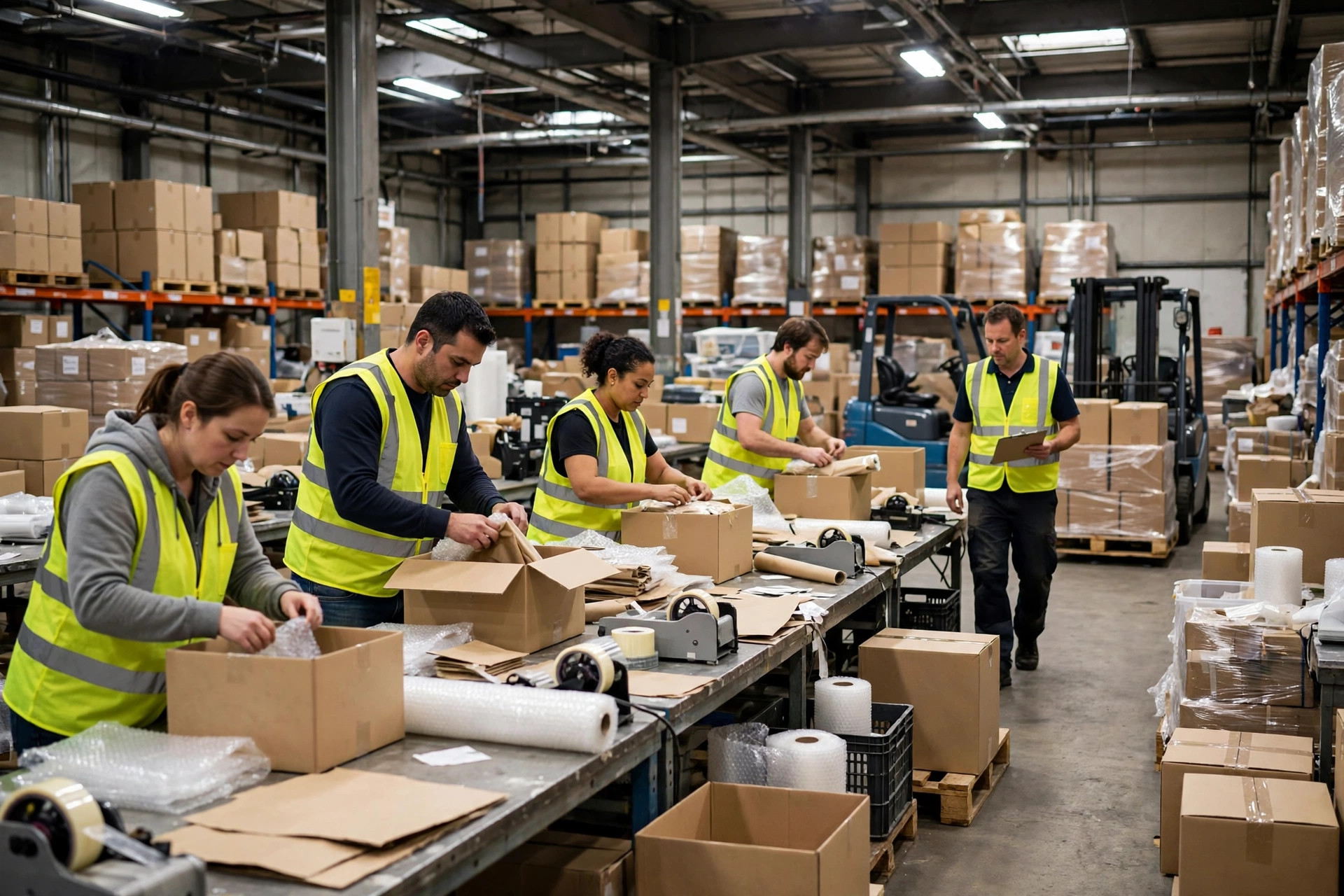
Stop four is packing and outbound. Look at whether pack benches are a mess and whether the double-check is actually happening or being skipped to go faster. Ask the packers: any wrong picks or wrong labels caught today, and are outbound trucks loading smoothly? Write down the error types and any loading delays.
Stop five is returns and exceptions. A lot of managers skip this corner because it feels unpleasant. I go there every single time, because the exceptions area tells you more about a warehouse's management than any other spot. Look at whether returns are sorted, whether they are piling up, and whether exception items have a handling deadline. Ask the person in charge: how many days has the oldest exception been sitting here, and what step is it stuck on? Write down the overdue list.
Five stops, usually forty to fifty minutes. Walking fast is not the skill. Asking sharp questions is.
The Follow-Up Loop: A Gemba Walk Without Closure Is Wasted
The biggest trap in any warehouse gemba walk is a notebook full of problems that goes into a drawer and never comes out. I fell into it myself, so now I have a rule: every problem is assigned the same day it is found.
My routine has three moves. First, list it the same day: problem, owner, deadline. Missing any one of the three means it is not assigned. Second, post the list on the team board, not locked in my drawer, so everyone can see progress. Third, next week's walk starts by reviewing last week's list: done items get crossed off, unfinished ones get asked about face to face, and anything unfinished two weeks running gets escalated to me.
Here is the counterintuitive part: a walk that finds very few problems does not necessarily mean the warehouse is well run. It often means people have stopped speaking up. Workers go quiet for two reasons: speaking up changed nothing before, or speaking up got them scolded. I now deliberately ask one extra question on every walk: "What else is keeping you up at night?" At first nobody answered. After a few months, pickers started telling me which location labels were unclear and which steps were awkward. The real value of a walk is getting the floor to talk.
One more rule: never discipline someone on the spot during a walk. One public scolding and nobody will tell you the truth again. No matter how big the problem, I write it down and talk to the responsible person privately afterward. Face is the currency of floor management. Do not spend it in front of a crowd.
Night Shifts, Peak Season, and Three Ways a Walk Goes Wrong
The routine above works for normal weeks, but nights and peak season need a different approach.
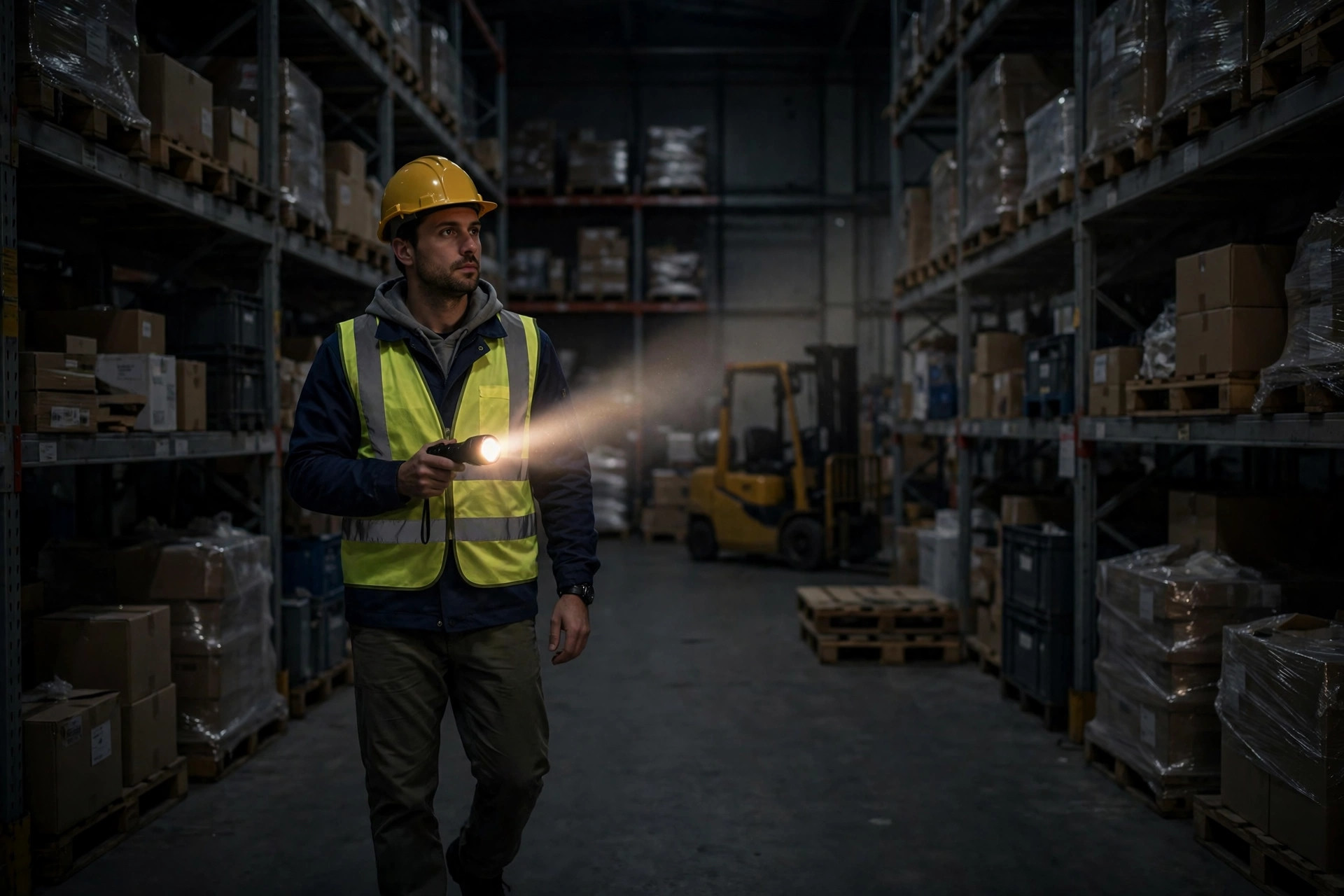
For night shifts, I walk around handover, the half hour when shifts change. Nights break down in two places: bad handovers and short staffing. At handover I check three things: whether the day shift's exceptions were actually handed over, whether the night's workload matches its headcount, and whether the night lead has emergency contacts for the night. Once I found three day-shift exceptions passed on verbally, never written down, and the night lead had no idea they existed. After that, handover of exceptions had to be written and signed. Verbal does not count.
In peak season I double the frequency to twice a week, and the focus shifts from "see everything" to "watch the bottleneck." The bottleneck moves daily: receiving today, packing tomorrow, outbound queuing the day after. Before the walk I check the day's workload and backlog, and I go to the bottleneck first. Peak season is also when I make a point of asking the temp workers. Temps are the least likely to speak up and the most likely to make mistakes, and asking them "which step feels most awkward" often surfaces problems the permanent crew has gotten used to and stopped mentioning.
Whatever the season, one thing never changes: problems found get assigned the same day and posted on the board. In peak season, problems pile up three times faster, and a list left for a week becomes so long nobody wants to look at it.
Now the three anti-patterns. First, looking at equipment but not people. Some managers walk the floor staring at racks, machines, and numbers, never asking whether pickers are exhausted, whether night rosters are fair, or whether new hires have anyone guiding them. Warehouses are run by people. Ignore the people and you only ever see the surface.
Second, walking the same route at the same time every week. Crews learn the pattern fast, and everything looks perfect on walk day and goes back to normal the day after. My stop order is fixed, but where I linger and what I dig into changes, and now and then I show up at a night handover instead.
Third, turning the walk into a scored inspection. The moment teams get ranked, the goal stops being "fix problems" and becomes "look good on the score." Everything you hear turns into polished talk, and the real problems go underground. A gemba walk is a tool for finding and fixing problems, not a stick for beating people with.
One last word for fellow managers: with floor walks, consistency beats method. My five stops are nothing magical. What works is walking every week, following up every time, and closing the loop visibly. Stick with it for a quarter and the shift changes: fewer fires, more prevention, smoother night handovers, faster onboarding, and even steadier retention. The floor does not improve on its own. You have to go look.
By Chen Feng, Warehouse Operations Manager