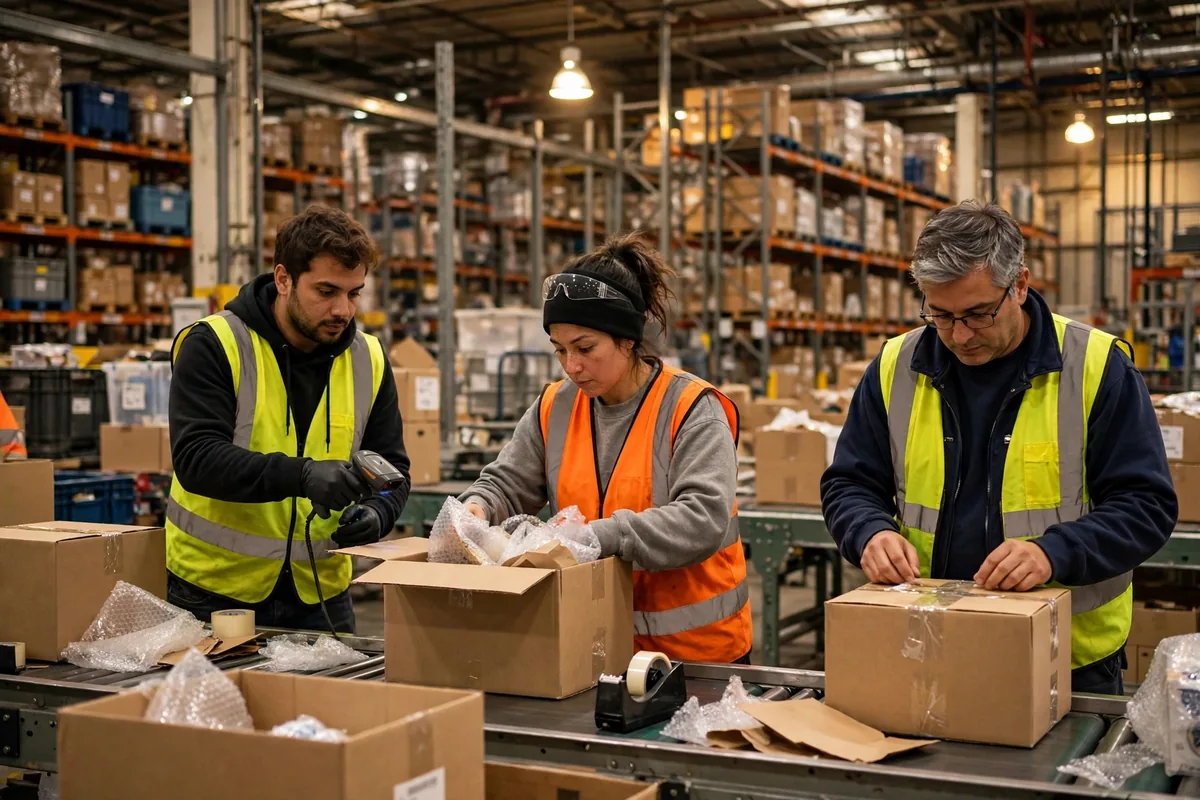
It is 6:50 on a Tuesday morning. The lights are on across the floor, and the first inbound truck is already backing into the dock. I stand by the whiteboard with a marker in my hand, and about forty people gather around me. Some of them are still holding their coffee. This is the warehouse supervisor morning meeting, and it is the moment when the whole warehouse decides how the day will go.
I have run morning meetings for years, and my experience is this: a good meeting can do the work of an hour. A bad one can ruin the first hour of the day. The worst I ever saw was a warehouse where the morning meeting ran forty minutes, mostly complaints, and by the time everyone scattered, the inbound truck had been sitting there for half an hour with nobody unloading it. That is not a meeting. That is a way to burn a morning.
Our rule now is simple: fifteen minutes, no more. Not because fifteen is some magic number. It is because if the meeting is longer than that, people stop listening and start waiting for it to end. I will say this plainly: the morning meeting is not a place for discussing things. It is a place for announcing decisions and assigning tasks. Discussion belongs elsewhere, one on one, after the meeting.
The Numbers We Look at First
We do not open with words. We open with four numbers, written on the whiteboard before anyone arrives.
The first is today's order volume: how many orders need to go out, and how that compares with yesterday. If today is heavier than yesterday, everyone needs to know it before they touch the first carton. The second is the labor gap: how many people are out sick or on leave, and how many people we are short. I never hide this number. If we are short three people, I say we are short three people, then I say where the cover comes from. Hiding it does not make the gap disappear; it only makes people feel blindsided at ten o'clock when the backlog shows up.
The third is yesterday's exceptions: orders held for damage, a shipment that came up short, a returns pile that was not cleared. The fourth is equipment status: which forklift is down, which dock door is stuck, which scanner is not charging. These four numbers tell you everything about what today will look like. Everything else can wait.
I learned this the hard way. Years ago I opened a meeting with a long speech about the importance of accuracy, and a veteran picker raised his hand and said: "Boss, just tell us how many orders and who is missing." He was right. A morning meeting is not the place for speeches. People came to work, not to hear a lecture.
How the Warehouse Supervisor Morning Meeting Splits Fifteen Minutes
Here is the split we have used for two years, and it works. The first three minutes are the numbers. I read them out, and anyone who did not see the whiteboard can hear them. The next five minutes are task assignments: which zone gets the extra people, who covers the inbound dock, who handles the priority orders that must ship first. I assign names, not teams. "Team A" is nobody's responsibility. "Xiao Wang, you take the priority orders" is.
The next four minutes are safety and changes. One safety point a day, no more. Today it might be that the floor is wet near dock five, so watch your step. Tomorrow it might be a reminder that the new pallet jack has a different brake. One point, repeated once, and everyone remembers it. Ten points and nobody remembers any of them.
The last three minutes are for raising problems, and this is where the discipline matters most. Anyone can raise a problem, but they have to name it in one sentence, and the answer has to be either "I will handle it" or "come see me after the meeting." The moment someone starts telling a long story about what went wrong yesterday, I stop them, kindly but firmly. Not because their story does not matter, but because forty people are standing there listening to one person's story, and their own work has not started yet.
How to Keep the Warehouse Supervisor Morning Meeting From Turning Into a Complaint Session
Every morning meeting has this risk, and it creeps up slowly. One day someone complains about the scanners. The next day someone complains about the cold. By the third week, the meeting has become a complaint session, and people start dreading it. I have seen it happen in my own warehouse, and the fix took real work.
The first fix is to separate complaints from the meeting. Complaints are real, and they need a place to go, just not this place. We put a whiteboard by the break room door. Anyone can write a problem there at any time. I read it every afternoon, and I fix what I can, or I write back why it cannot be fixed yet. Once people saw their notes actually got read and answered, the complaints in the meeting dropped by themselves.
The second fix is to protect the new people. A new picker who has been on the job for three days will not speak up in front of forty people, no matter what you say. So I stopped expecting it. After the meeting, the team leads walk their new people through the day's work one on one. The meeting tells everyone the plan. The follow-up makes sure the new people understand it.
The third fix is to rotate who runs the meeting. Once a month, a team lead runs it instead of me. They learn how hard it is to keep fifteen minutes on track, and the rest of the team sees that the meeting is not my show. It belongs to the warehouse. That change alone made people take it more seriously.
One more thing I insist on: the meeting ends on time even if we have not finished everything. If the clock hits fifteen minutes, I stop, and what is left moves to a smaller conversation after. The first time I did this, people were surprised. After a week, they got used to it, and the meeting started finishing early. A meeting that always ends on time teaches people to be concise. A meeting that always runs over teaches them that nobody respects the clock.
Here is the honest truth. A warehouse supervisor morning meeting is not about the meeting. It is about setting the rhythm of the day. When people walk out of it knowing how many orders there are, who is missing, what changed, and what they need to do first, the warehouse runs itself for the next few hours. When they walk out confused, you will spend the whole morning answering the same questions one by one. Fifteen minutes in the morning saves you two hours of firefighting later. That is the whole secret, and it has nothing to do with how good a speaker you are.
If your morning meeting is running long, try this tomorrow: write the four numbers on the board before anyone arrives, assign names instead of teams, and end on time no matter what. Give it two weeks. If the day still starts in chaos, the problem is not the meeting. It is the plan behind it.
By Chen Feng, Warehouse Operations Manager