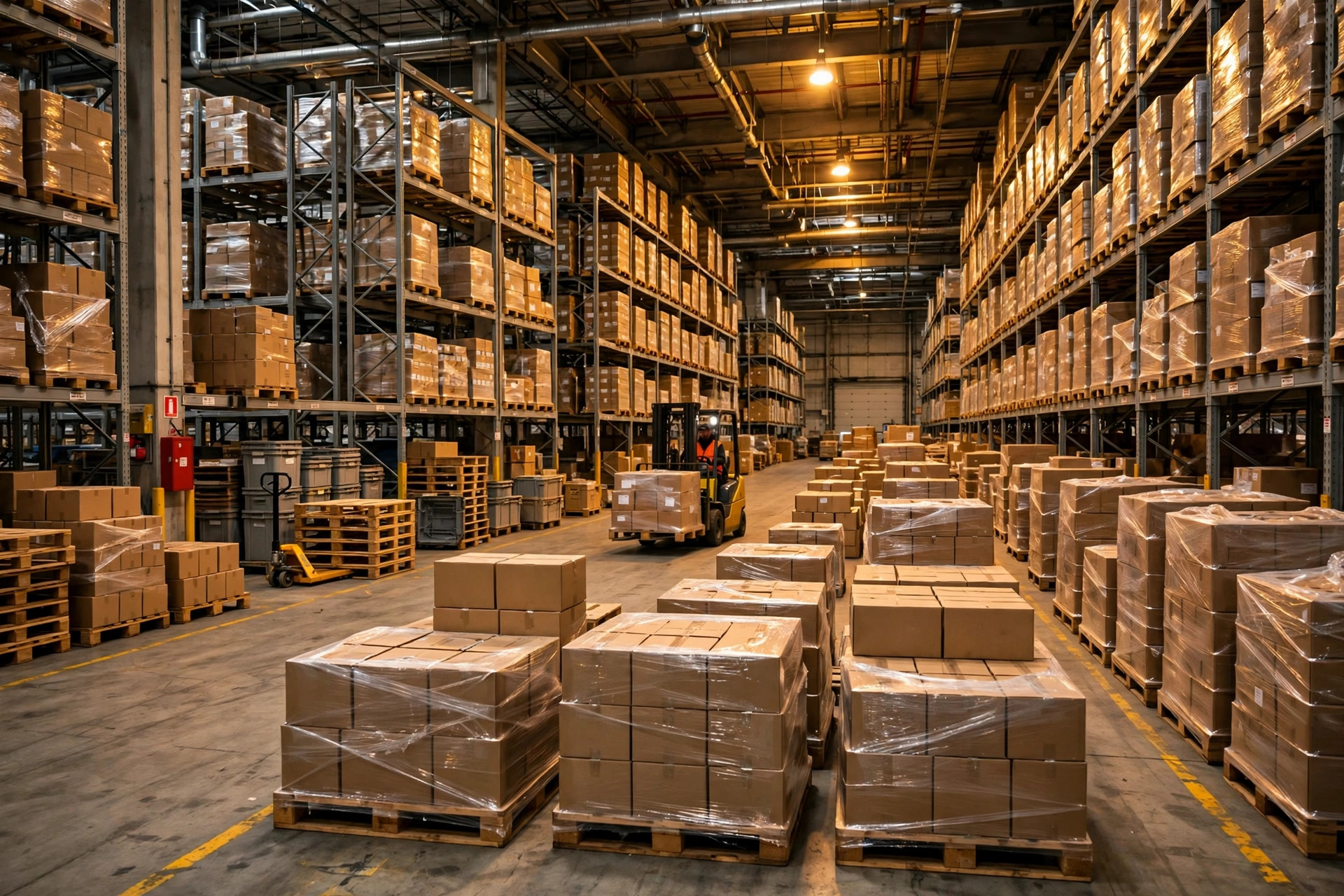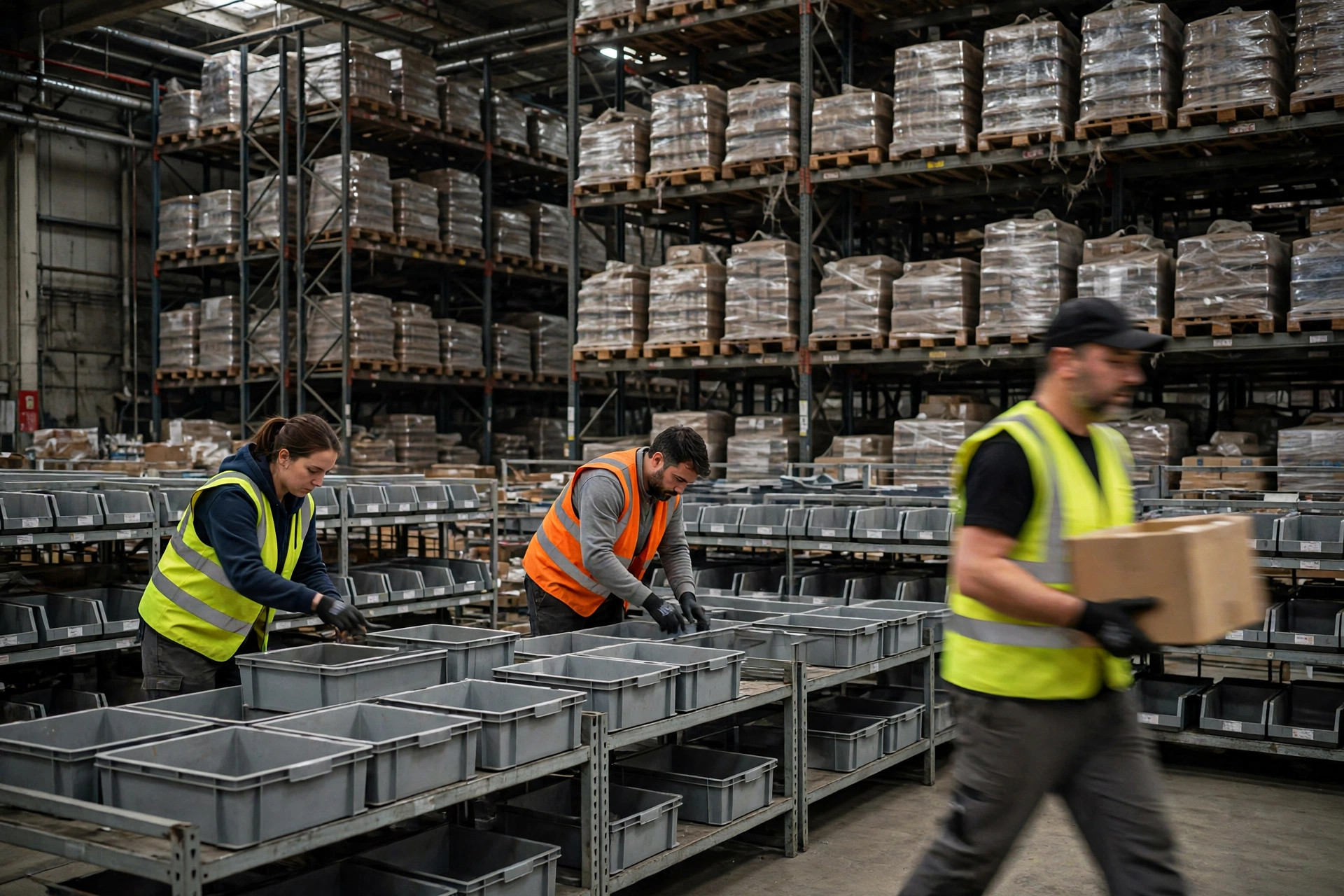
Slow-mover slotting is the quietest waste I have seen in a warehouse: prime locations, paid for with picking speed, silently occupied by stock that barely moves. Take a finished-goods warehouse with 1,200 slots. Its golden picking zone holds 240 slots close to packing, no climbing, four minutes to pick an order. In 2024, while reviewing the books of a third-party warehouse in Dongguan, I found 61 of those 240 slots holding goods untouched for half a year: old-model water bottles, phone cases for discontinued models, gift boxes left over from a promotion two years earlier. A quarter of the golden zone was tied up, while genuine bestsellers had been pushed to a distant second floor, and pickers walked an extra two kilometres a day. You do not need decimal-point precision to see the direction of this bill. A golden slot is an asset priced by picking efficiency, and storing motionless stock in it means paying rent every day to keep idle goods comfortable.
Slow-Mover Slotting, Priced in Picking Minutes
Do not price the opportunity cost by rent per slot. Price it in picking labour. In that Dongguan warehouse, a golden-zone order took four minutes and a far-zone order took nine, a gap of five minutes per order. The warehouse shipped 800 orders a day, and about 300 of them had to be picked from the far zone simply because slow stock occupied the golden zone. That is 1,500 extra minutes a day, or 25 labour hours, roughly three pickers' full shifts, before counting extra forklift travel and the rework that follows a higher mispick rate. Run the arithmetic in reverse and the case for moving the goods is just as clear: freeing 61 slow slots for fast-moving products saves enough labour hours each day to cover the downgrade move itself, with room to spare.
There is also a hidden bill. When golden-zone stock turns slowly, count discrepancies stay buried: the book figure and the physical figure can disagree for months without anyone noticing, until a customer order exposes the shortage and the emergency fix costs several times a normal pick. I have seen a warehouse sitting on a batch of promotional freebies near their expiry edge in the golden zone; after a customer complaint forced a full return, freight and compensation together exceeded the value of the goods themselves. Slow stock is not the problem. Slow stock in the most expensive location, losing money without making a sound, is the problem.
How to Define a Slow Mover: Days Idle and Pick Frequency
Definition cannot rest on gut feeling. It needs two hard lines. The first is days idle: anything with no outbound movement for 90 consecutive days goes on a watch list, and anything idle for 180 days goes straight onto the downgrade list. The second is pick frequency: anything picked fewer than five times in the past 90 days counts as slow, even if it occasionally ships in one large batch. One shipment of 100 units and daily shipments of one unit mean very different things for slot value, and a definition that treats them alike will misprice the slot either way. Both lines must be applied together. Days idle alone will wrongly catch seasonal goods, and frequency alone will miss a spare part that ships twice a year in large quantities.
Before applying either line, unify the data. Outbound movements for the same product across different slots and batches must be combined, or the system will split one slow product into several small numbers that each look alive. In March 2025, a small-appliance warehouse in Guangzhou fell into exactly this trap: the same electric kettle sat in four slots, each showing one or two movements in 90 days, so the system judged it normal, when total outbound volume was under 20 units. Combined, it went straight onto the downgrade list. Without a combined view, every classification that follows is self-deception.
| Indicator | Fast mover | Slow mover | Downgrade line |
|---|---|---|---|
| Picks in 90 days | 30 or more | Fewer than 5 | Fewer than 5 goes on watch |
| Consecutive days idle | Within 30 days | Over 90 days | 180 days downgrades directly |
| Typical shipment size | Steady small batches | Occasional large batches | A large batch does not offset low frequency |
Slow-Mover Slotting in Three Tiers: High, Far, Consolidated
Downgrading is not a single kick to the far corner of the warehouse. It works in three tiers, because moving cost and retrieval cost rise together and the right tier depends on the chance of the product selling again. Tier one is high: move the goods from ground-level golden slots to level three or above in the same zone. A forklift retrieval takes two or three minutes longer, but the goods stay on the picking route, which suits products idle for 90 days that may sell again within three months. Tier two is far: move them to a deep storage area, farther from packing, where a pick takes five to eight minutes longer, which suits products idle for 180 days with an uncertain return date. Tier three is consolidated: carve out a dedicated slow-stock area, managed and counted as one block, which suits long-tail products that cannot be cleared yet. Moving cost rises with each tier, and so does retrieval cost, so do not throw everything to the farthest corner on day one. Set the tier by the probability of resale, not by impatience.
Getting the tier wrong costs money in the other direction. One warehouse moved its entire stock of seasonal fans to the consolidated area as soon as winter arrived, then had to move the whole batch back when spring sales returned; the two moves together cost more than the golden-zone rent saved over the winter. The right approach is to downgrade seasonal goods by one tier only, keep them high, and move them back two weeks before peak season. Downgrading saves slot opportunity cost, not moving cost itself, and the cost of each move belongs in the same calculation.
Clearing Cadence and the Exceptions You Do Not Touch
After downgrading, set a clearing cadence, or the consolidated area will eventually fill up too. My rule is to run the downgrade list once a quarter: products still motionless after two consecutive quarterly reviews enter a clearance assessment. Assessment does not mean immediate disposal. It means asking three questions: is there an unfulfilled customer order waiting for this product? Is it a specified spare part for a major customer? Does a contract carry a minimum stock commitment for it? If any answer is yes, the product stays. Only the remainder goes forward for disposal, and disposal itself is a separate topic from downgrading; the two should not be blurred into one decision.
The exception list should be written down and posted next to the downgrade procedure. Seasonal goods work backwards from peak season: anything within 60 days of peak does not downgrade, and anything already downgraded moves back two weeks early. Critical spares are judged by the consequence of a stockout, not by days idle: a motor for a discontinued machine may ship once a year, but without it the customer's whole line stops, and that kind of product keeps its slot. Long-tail essentials follow the same logic: some low-priced small parts ship rarely, yet they are necessary components of a complete shipment, and clearing one means voluntarily giving up the whole order. These exceptions usually account for under twenty percent of slow stock. Protect them, and downgrade the other eighty percent without sentiment.
The counterintuitive point is that the biggest resistance to downgrading is rarely the moving cost. It is the thought that the goods might be needed one day. Once the bill is laid out, the comparison flips: an empty golden slot waiting for the next bestseller beats a golden slot holding a maybe. An empty slot is not waste; it is receiving capacity held ready for the next fast-moving product. The real waste is letting motionless goods occupy the most expensive locations year after year while the whole warehouse walks further and spends more to work around them.
The conclusion can be calculated: run the two hard lines once a quarter, move everything idle for 180 days out of the golden zone, and the picking hours saved will usually cover a full year of downgrade moves. Start with the golden zone where slow stock takes the largest share, count how many slots are keeping idle goods, and multiply that number by the extra picking minutes each day. That product is the monthly bill you are currently paying for slow stock.
By Lao Zhou, Logistics Cost Analyst