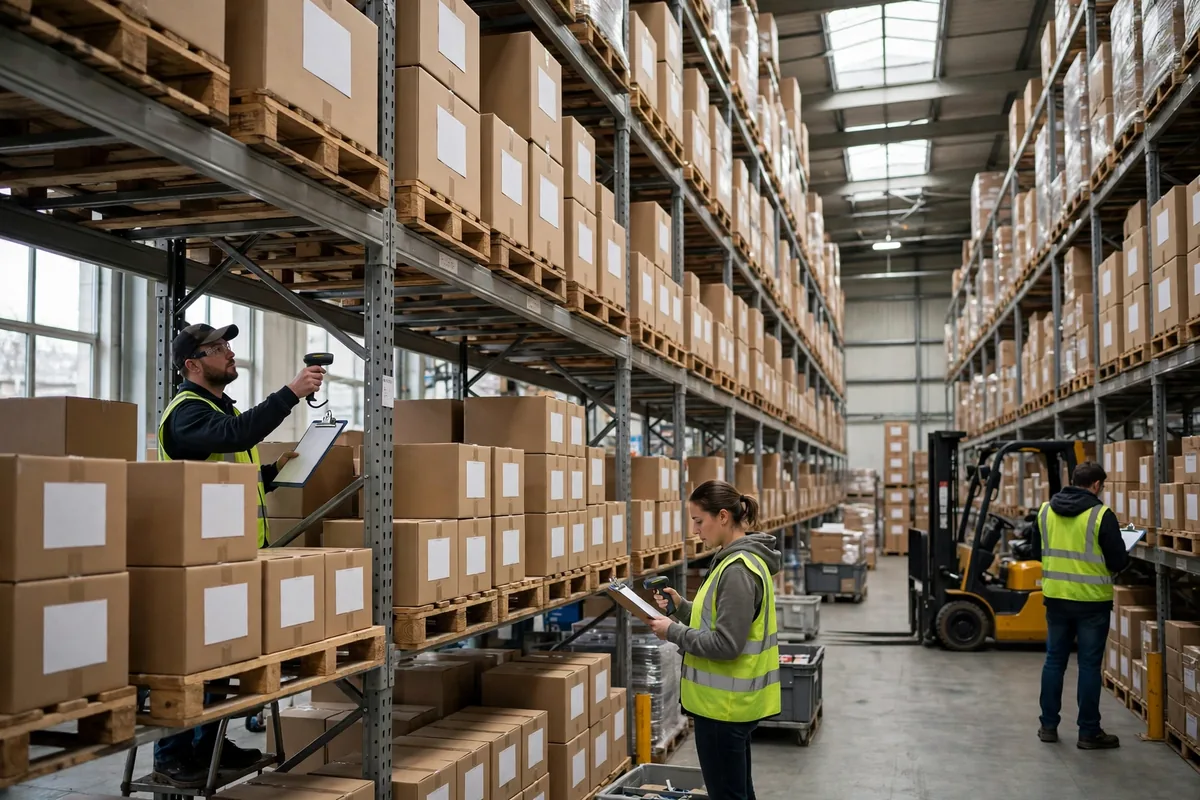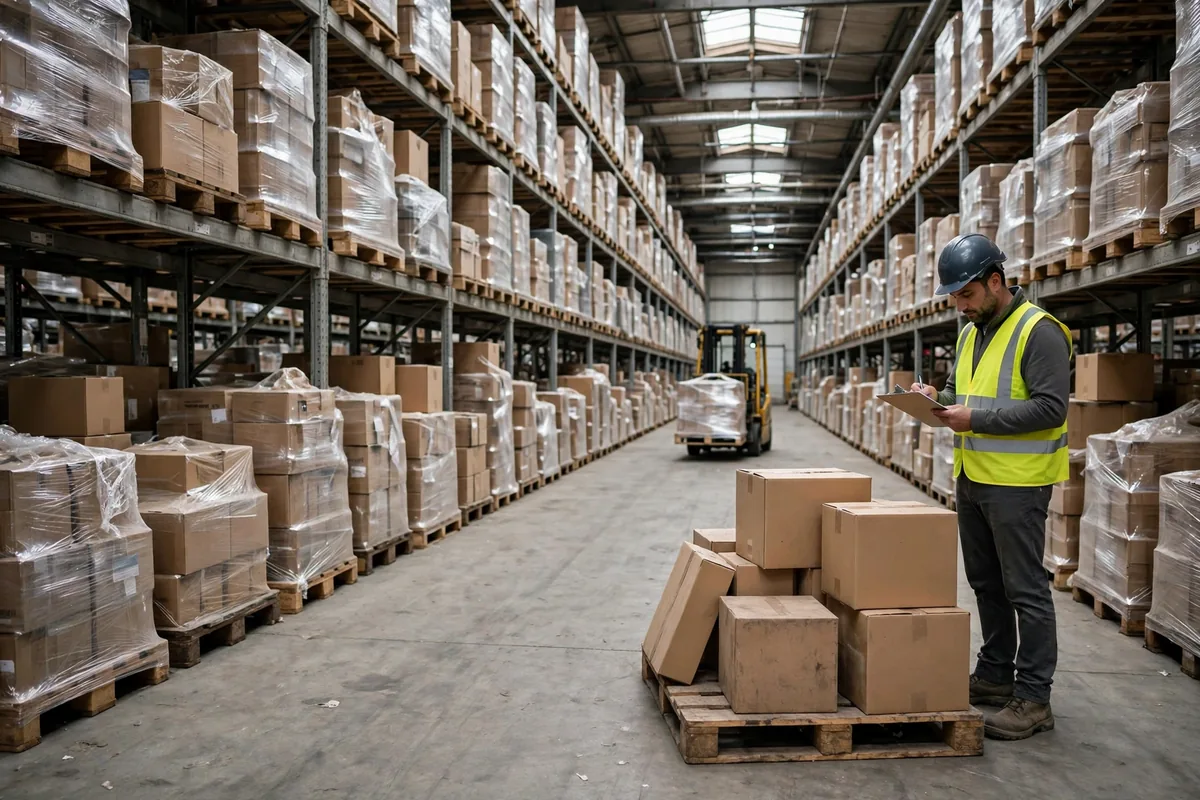
Let me start with a bill, because that is how warehouse sku duplicate codes always reveal themselves. Last autumn I visited a third-party warehouse in eastern China whose manager kept telling me the cycle counts never reconciled. We spent two days on it. The counters were not careless and the system was not broken. The problem was quieter than that: one product lived in the system under three different codes. The names differed by a word, one record carried the color and another did not, and each had its own barcode. Whoever received the goods just picked whichever code appeared on the paperwork that day. The stock on the shelves was real and roughly right, but the system saw three separate products, each drifting in its own direction. One code showed a surplus of several hundred units, another showed a shortage, and nobody could add them up with confidence.
That is the part people get wrong about this problem. It is not a one-time cleanup cost. It is a monthly charge, collected quietly by every part of the operation. Counting takes longer because the counter has to work out which of the three codes matches the physical goods in front of them, and when the outer carton has changed, they have to stop and ask a supervisor. Picking goes wrong in a subtler way: the picker grabs the right product but the wrong code, the system logs an error anyway, and the order goes through verification, return, and re-pick. By month end, finance sees one code running low and orders more, while the twin code sits untouched in a location nobody is watching. You pay twice for the same goods, once in a replenishment order you did not need, and again in storage for stock that is not moving. Worst of all, when a customer asks how much is actually available to sell, none of the three numbers is safe to quote.
Where Warehouse SKU Duplicate Codes Actually Cost You Money
I break the cost into four buckets, because once it is split up, the argument for fixing it stops being abstract. The first bucket is counting labor. A location that should be counted once appears three times on the count sheet, and every ambiguous carton costs a conversation. Across a mid-sized warehouse, that extra verification time adds up to a serious labor bill every month. The second bucket is picking rework. A wrong-code pick is not a wrong-product pick, but the system treats it the same way, so the full correction routine runs anyway and the delivery window slips. The third bucket is dead and written-off stock. A code that has not moved in months will not tell you on its own that its twin is selling fine next door; by the time someone notices, the packaging may have changed and the stock may only move at a discount or not at all. The fourth bucket is the most expensive and the hardest to see: distorted decisions. Purchasing buys against the short code, sales refuses orders against the overstocked code, and cash gets squeezed from both sides at once.
For that eastern China warehouse, I ran a rough tally covering only the visible items: extra counting hours, error rework, dead-stock handling, and unnecessary replenishment tied up in cash. Over a year, for a mid-sized operation, it came to enough to pay two experienced warehouse staff for a full year. That figure left out customer claims and lost orders entirely. The manager had treated duplicate codes as a master-data annoyance, something to live with. In reality it compounds like interest. The longer you leave it, the larger the base it charges against.
How Duplicate SKU Codes Are Born
Duplicates rarely arrive in a single dramatic mistake. They leak in through three openings, usually at the same time. The first is uncontrolled code creation. A new customer arrives, operations is in a hurry to receive goods, and a code gets created on the spot, copying the name from the customer's paperwork and skipping fields that look optional. The next time the same product arrives, a different person creates the code, writes the name slightly differently, and the system finds no match, so a second code is born. The second opening is two numbering systems running in parallel: the customer uses their own item numbers, the warehouse uses its own, and a cross-reference table translates between them. When that table goes stale, or when the person maintaining it changes, the translation drifts. The third opening is packaging and specification changes that never go through a change process. A product gets new packaging or a new case quantity, the old code is never frozen, and the new code goes live alongside it, with old and new cartons mixed on the same shelves.
Returns deserve a special mention, because they catch even careful warehouses. Goods come back, and the return paperwork carries a different code from the original outbound order. Receiving staff, trying to keep the dock clear, book the goods in under the code on the return note. The goods are right and the code is wrong, and from that day the batch carries two identities. Next time an order calls for the old code, the picker cannot find it, reports a shortage, and the stock sits one location over under its other name.
Cleaning Up Duplicate Codes Without Stopping the Warehouse
Cleanup has an order, and getting it wrong creates a second mess. Step one is to stop the bleeding: no new code goes live without one person checking it, with name, specification, and barcode all present, and with a search for similar existing names run first. That single rule cuts new duplicates dramatically. Step two is merging, done in waves, never all at once. Start with the fast-moving, error-prone products, pull their codes together, verify against physical goods, outer cartons, and inbound and outbound history, clear any in-flight orders first, and keep a mapping from old codes to new ones so history stays readable. Step three is locking the door: packaging changes, customer number changes, and return receipts all go through the same change process, updating every link in the chain at once.
Here is the judgment most teams get backwards: faster and more complete is not always better. A warehouse cannot stop taking orders while you merge codes, and an aggressive merge will scramble orders that are already being picked. Rank products by how often they cause errors, fix the daily offenders first, the occasional ones next, and leave long-dormant codes for last, handling them together with dead-stock clearance. There is also a trade-off on history worth deciding deliberately. Do not rewrite historical records under the new code. Keep the mapping and restate reports through it. Rewriting history looks tidy, but it leaves you unable to explain an audit trail, while a mapping keeps every old transaction traceable.
Before you start, count three numbers: how many suspected duplicate groups you have, how many errors each group causes in a typical month, and what one error costs in labor and rework. Multiply them, and you have the monthly price of warehouse sku duplicate codes in your operation. After cleanup, count the same three numbers for three months. The difference, minus what the cleanup itself cost in staff time, is the return on the work. Warehouse sku duplicate codes are dangerous mainly because nobody has priced them, so they keep being treated as a small defect. Put a number on them, and approval gets easy, and progress gets measurable. Warehouse sku duplicate codes, once priced and merged, leave you with shorter count sheets, fewer picking errors, and purchasing that no longer buys and hoards the same product at the same time.
By Lao Zhou, Logistics Cost Analyst