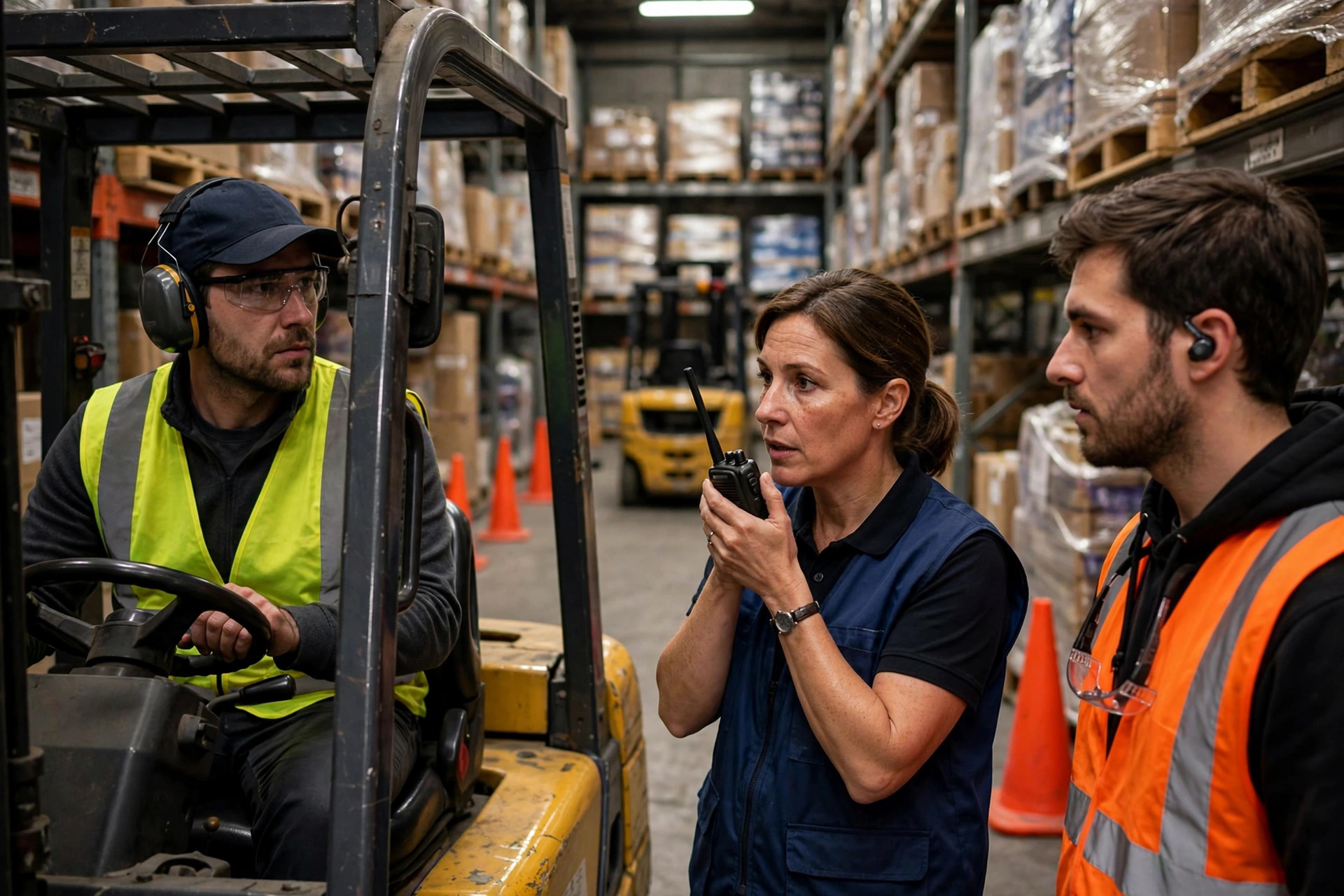
Here's my rule of thumb: if your daily volume swings 3x between peak and trough, run 12-hour two-shift. If it's flat year-round, run 8-hour three-shift. Get this wrong and you'll quietly burn enough money to buy two forklifts — every year.
I watched this play out at a 120,000-square-foot 3PL in Fontana in 2023. They were on 8-hour three-shift going into peak season and the night shift was perpetually understaffed. When volume spiked, the hour where the evening shift handed off to the night shift turned the packing stations into a parking lot. They switched to 12-hour two-shift: hiring went from three cohorts to two, handoffs from three a day to two, and they survived peak. The price showed up three months later — picking errors ticked up half a point, and nearly every mis-pick happened in the back half of a shift.
The handoff tax nobody budgets for
Most shift-plan math counts wages and skips the handoff. A real handoff — reconciling open orders, counting work in progress, walking the equipment, passing along exceptions verbally — eats 20 to 40 minutes. Three-shift hands off three times a day; two-shift twice. At 30 minutes a handoff, one position loses over 180 hours a year to the gap between the two models. Multiply that by 40 people and sit with the number.
It's not just time. Every handoff is a game of telephone. "Don't touch that pallet until customer service confirms" survives two retellings far better than three. Peak season lives and dies on these seams: what the last shift knew and the next shift didn't, on a pallet that already shipped.
Somebody always asks: why hand off at all, why not let shifts run fully independent? Everyone who tried it regrets it. A warehouse is a continuous operation — one shift's tail is the next shift's head. Unhanded exceptions are buried landmines.
The real cost of a 12-hour day
The temptation of 12-hour two-shift is hiring: two cohorts instead of three, a decent night premium, and people actually sign up. Equipment utilization looks great too — near-seamless 24-hour coverage with no lines stopping for shift change.
But only count half the ledger and it'll bite you. Hours 9 through 12 are the physiological trough. Mis-picks, small forklift dings — that's when they happen. That Fontana site later ran the numbers: the error rate in the last four hours was more than double the first eight. On heavy manual jobs it's worse; a loader doing 12 hours straight carries genuinely higher injury risk, and the workers' comp bill always arrives eventually. Just a matter of when.
Then there's the trap a lot of operators walk into: overtime law is state-by-state. California pays 1.5x after 8 hours in a day and 2x after 12 — run 12-hour shifts in California and the last four hours of every day are all time-and-a-half. That cost model looks nothing like Texas or Arizona. Before you finalize anything, find out where your state's overtime line sits. Don't borrow another state's math.
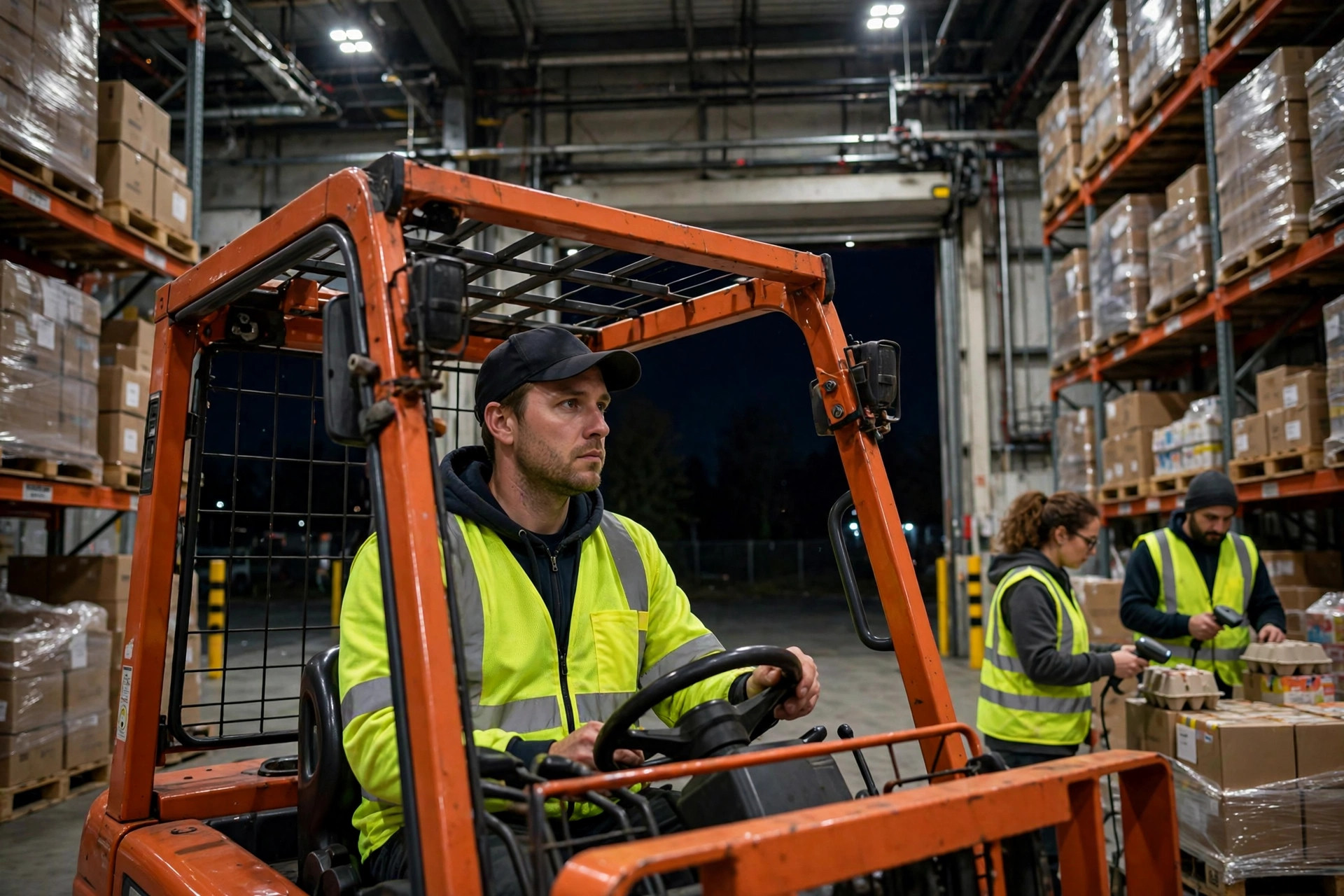
Three-shift has its own failure mode, by the way. The middle shift — say 2pm to 10pm — is brutally hard to staff. The pay barely beats day shift, you're home too late for dinner with the kids, and the people who take it are usually in transition. Turnover on that shift runs the highest in the building. Plenty of three-shift operations quietly collapse on the middle shift.
My call: read the volume curve first
Forget the consultants' "best practices." Pull your last 12 months of hourly outbound volume and plot it:
If peaks run 2x or more over troughs and the volume is tidal — go 12-hour two-shift for the four peak months, and consider dropping back to three-shift in the slow season. For tidal volume, the hours saved on handoffs and the hiring energy saved are worth more than the error-rate bump.
If volume is flat year-round, swinging under 50% — run 8-hour three-shift and don't look back. Your error rate and your injury rate will thank you. That kind of operation wins on steadiness, not bursts.
Stuck in the middle? Try a hybrid: 12-hour days to eat the daytime peak, 10-hour nights to cover the overnight, or two-shift on core picking with three-shift on support roles like receiving and putaway. There's no universal answer — only the version that fits your building.
Pilot before you commit. Run one crew on the new pattern for a month, keep another on the old one, and compare four numbers: units per labor hour, error rate, absenteeism, and quit intent. A month of data ends every argument. That Fontana site piloted first — the pilot crew's error rate did rise, but throughput per hour was up 12% and absenteeism dropped. The math won, and rollout met zero resistance.
Design the night premium as a ladder, not a flat bump. Straight time for the first eight, 1.25x for hours nine and ten, 1.5x for eleven and twelve. It lines up with states like California that mandate daily overtime, and psychologically the back four hours feel "worth it" to the crew. Premiums cost money, but an empty night shift costs more — one idle hour on a packing line burns several days' worth of premiums.
And don't forget the "small stuff" that decides night-shift success: the bus and the meal. A 12-hour night shift ends at dawn when the buses stop running. We ran a shuttle covering the three neighborhoods where most of the crew lived — a few thousand dollars a month, and night-shift turnover got cut in half. It's not on the shift plan. It lives in people's heads.
One more counterintuitive point: 12-hour two-shift usually means 3-to-4-day workweeks, with several full days off every month. Say that out loud when you recruit. "Four on, three off" beats an extra dollar an hour for a lot of young workers. A shift pattern isn't just a cost model — it's a recruiting pitch. And before you flip the switch, loop in your insurance broker: a change in injury rates under 12-hour shifts flows straight into next year's workers' comp rate, and an early conversation saves real money.