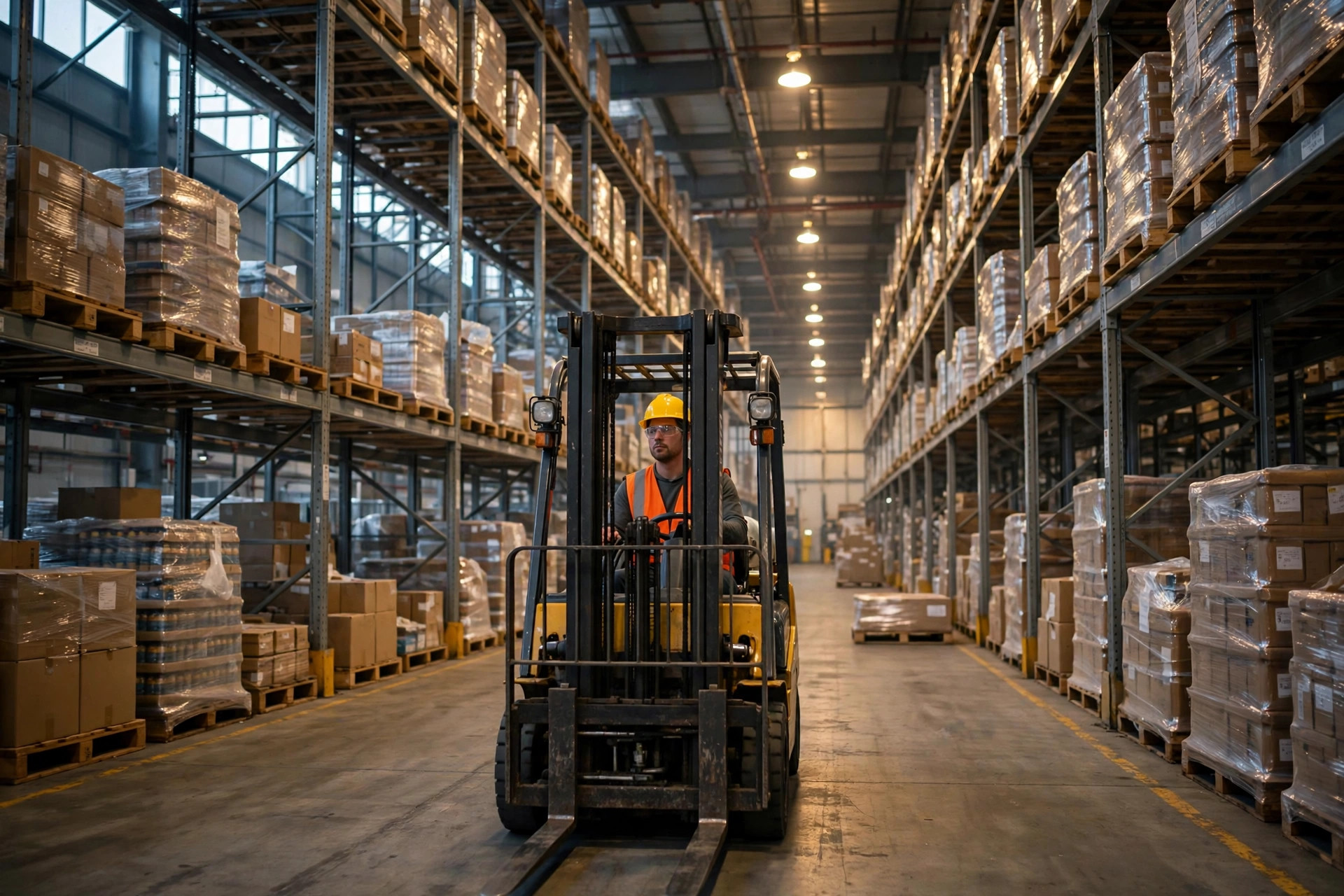
Last November. Peak season. Tuesday, 5:30 in the morning, night shift thirty minutes from clocking out.
One of our packers — three months on the job — was crouched on the floor cinching a steel strap around an overweight carton. The strap snapped back and caught him just under the left eye. He wasn't wearing safety glasses. Not much blood. Three stitches. OSHA recordable, no way around it.
Let me be straight with you: before that morning, our PPE program was "we handed it out." Hard hats hung on forklift steering wheels. Safety glasses lived in lockers. One pair of gloves per person, worn until they turned black. Every box checked on paper. Swiss cheese on the floor.
What the inspector looks at first
The second wake-up call came in spring 2024, when a 3PL warehouse down the road got an OSHA visit. The inspector walked the floor first — eyes on three things: anyone without a hard hat in forklift zones, anyone in sneakers at receiving, anyone doing strap work without eye protection. Then back to the office for three pieces of paper: the hazard assessment, the PPE issuance log, the training records. Three serious citations.
I won't invent the dollar figure — I don't remember it exactly. But I looked up the 2026 numbers: a serious violation runs up to $16,550 per item; willful or repeated, up to $165,514. Check OSHA's website for the latest. One citation costs more than half our annual PPE budget. That got my attention.
I'll skip the legalese and say it in plain English. The core of OSHA's PPE rule is 29 CFR 1910.132: the employer assesses hazards by job, assigns PPE to match the risk, then trains people on use and replacement. Sections 133 (eyes and face), 135 (head), 136 (feet), and 138 (hands) fill in the details. Those three papers the inspector asks for? Assessment, issuance, training. Get those right, keep the floor clean, and you'll be fine.
Two dead ends we tried first
Our first attempt: buy the best of everything for everyone. Top-shelf cut-resistant gloves, premium goggles, one full kit per person. Result? Pickers said the gloves were too thick to grip a scanner — off they came. Goggles fogged up — around the neck they went. Money spent. Protection: zero.
Second attempt: fines. Fifty bucks every time someone got caught without gear. Result? The veterans revolted. "Eight years without this stuff and I'm fine." Morale tanked right before peak. Fining your own people is the dumbest management move there is. Don't do it.
What we do now starts with a table. This is taped to our break room wall — gear by job, no more one-size-fits-all:
| Job | Hard hat | Safety glasses | Gloves | Safety shoes | Hi-vis vest |
|---|---|---|---|---|---|
| Picker | — | As needed (strapping/unboxing) | Cut-resistant, thin | Required | Required |
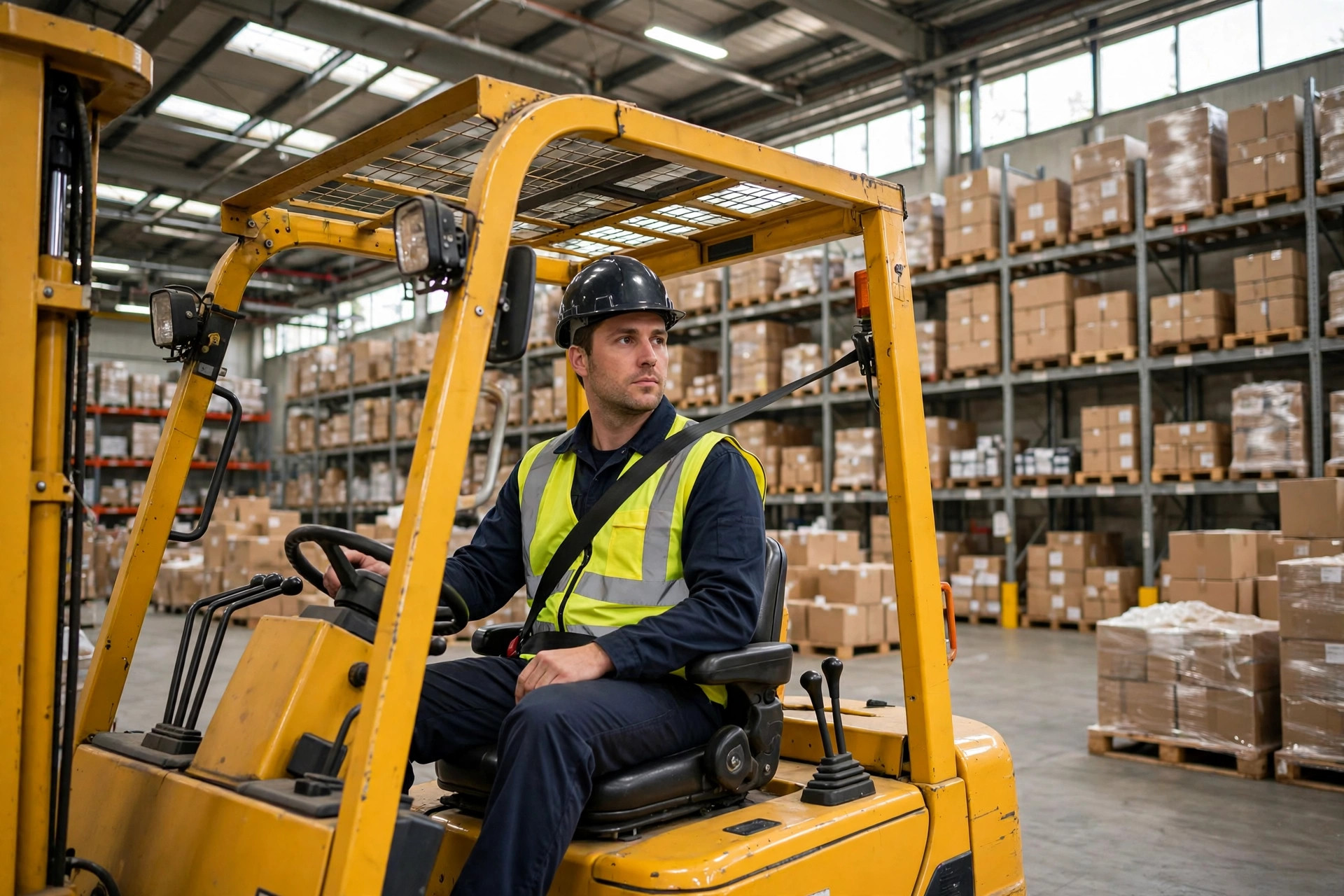
| Forklift operator | Required | — | General duty | Required | Required |
| Receiving | Required | As needed | Cut-resistant | Required | Required |
| Packer | — | Required (strap work) | General duty | Required | Required |
| Maintenance | Required | Required | Insulated/cut-resistant | Required | Required |
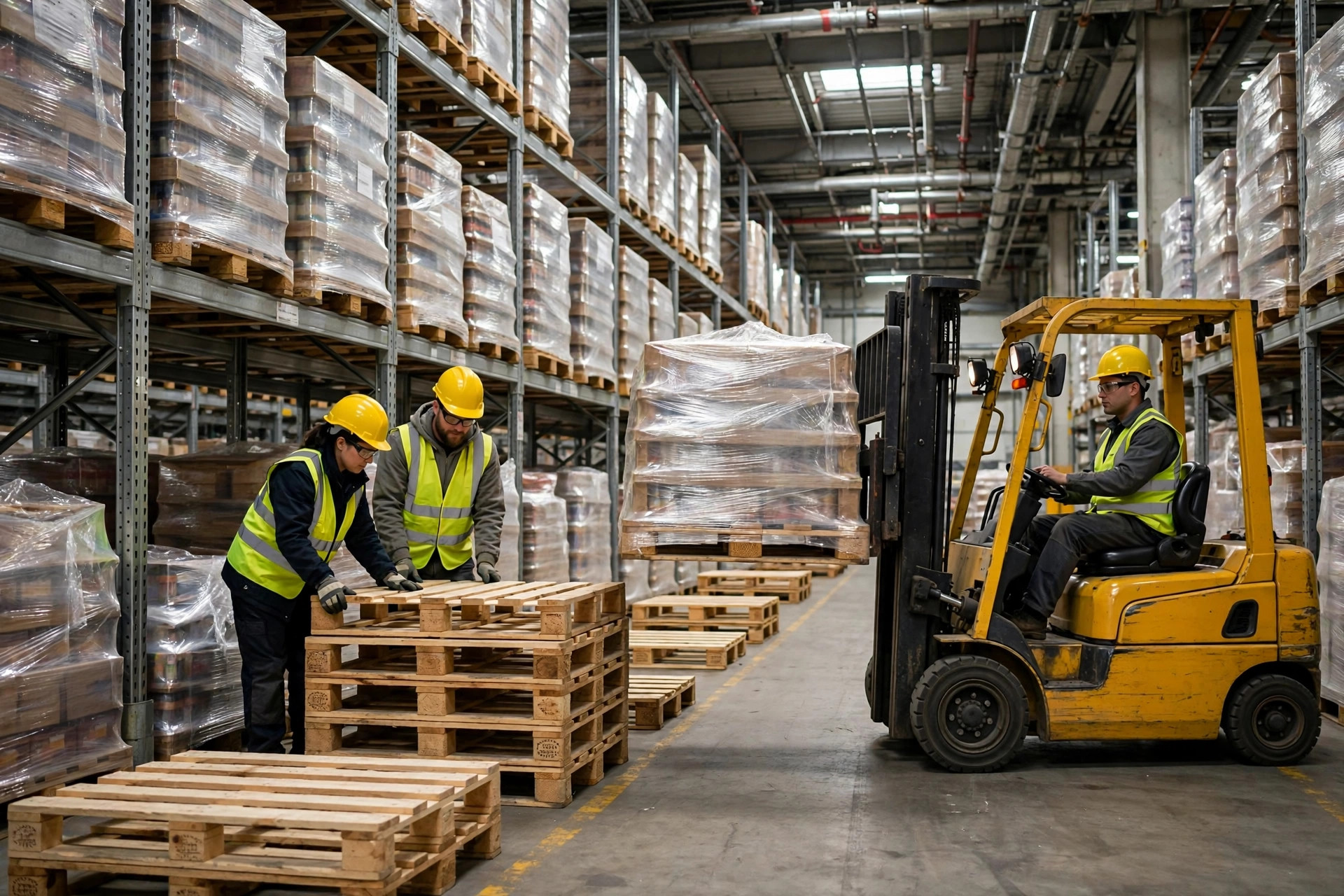
The "as needed" cells matter most. We used to go all-or-nothing, and all-or-nothing gets you nothing. Now it's task-based: strapping a carton means glasses on; regular picking doesn't. People think it's reasonable, so compliance went up.
Here's the counterintuitive part: the most expensive PPE isn't the best PPE. The PPE people actually wear is. That's the trade-off nobody puts on the slide — protection rating versus comfort. Buy the maximum cut-resistance glove and your picker takes it off within the hour. Protection equals zero. Buy the thinner one, a notch lower on paper, and it stays on for the full shift. The thinner one wins on total protection. Our buying rule now: the veteran crew test-wears for a week and votes. Fails the vote, we don't buy it, no matter the brand.
The buying list, replacement cycles, and the math
Our current buying list:
- Safety shoes: one pair per person per year, roughly $90-$140, steel or composite toe. The big-ticket item.
- Hi-vis vests: two per person per year, $8-$15 each; torn vest or faded reflective tape means immediate replacement — no waiting for the cycle.
- Safety glasses: anti-fog, $5-$12 a pair; scratched lens means swap, and leads keep a box of 20 on hand.
- Hard hats: $15-$30, replaced every three years; dropped or cracked means instant retirement.
- Gloves: thin cut-resistant for picking, $8-$15 a pair, two pairs a month; heavy-duty $20-$35 as needed.
- Ear protection: noise zones only, separate line item.
The math: 200 people, roughly $280-$350 per person per year, so $56k-$70k a year for the whole building. Sounds like a lot? One serious citation tops out at $16,550. One crushed toe — medical bills, lost time, comp premium hike — blows past that without trying. You do the math.
Getting people to actually wear the stuff — our playbook, fines excluded:
First, let the veterans vote on new gear. A week of test wear, then a vote. Hard to skip wearing something you picked yourself. Second, on day one, the lead hands new hires their PPE personally, piece by piece, showing how each fits. Wear it on day one and it becomes habit. Third, the pre-shift huddle: the lead takes thirty seconds to scan shoes, vests, hats. Thirty seconds, no big deal. Fourth, put gear compliance on the lead's scorecard, not the worker's. Dock the lead's rating and suddenly the lead cares more than you do. Fifth, summer-weight everything. July in the Inland Empire, pushing 100 degrees in the building — hand out non-breathable vests and nobody on earth wears them. Don't fight human nature.
One more story. Last summer, a driver hopped out of his cab in the yard without a vest. Our receiving guy told him to put one on. Nearly came to shouting. "I'm just signing the BOL." "Forklifts backing up can't see you. Vest first, signature second." He put it on, grumbling. Now there's a sign at the receiving gate: "Vest on before you step out. Paperwork second." Drivers know the drill. No more arguments.
My advice to fellow managers: when OSHA walks in, the inspector's first look is the floor — bare heads, sneakers in the aisles. Perfect paperwork won't save a sloppy floor. So walk your floor right now and look at what your people are actually wearing. Costs nothing. Takes ten minutes.
By Chen Feng, Warehouse Operations Manager