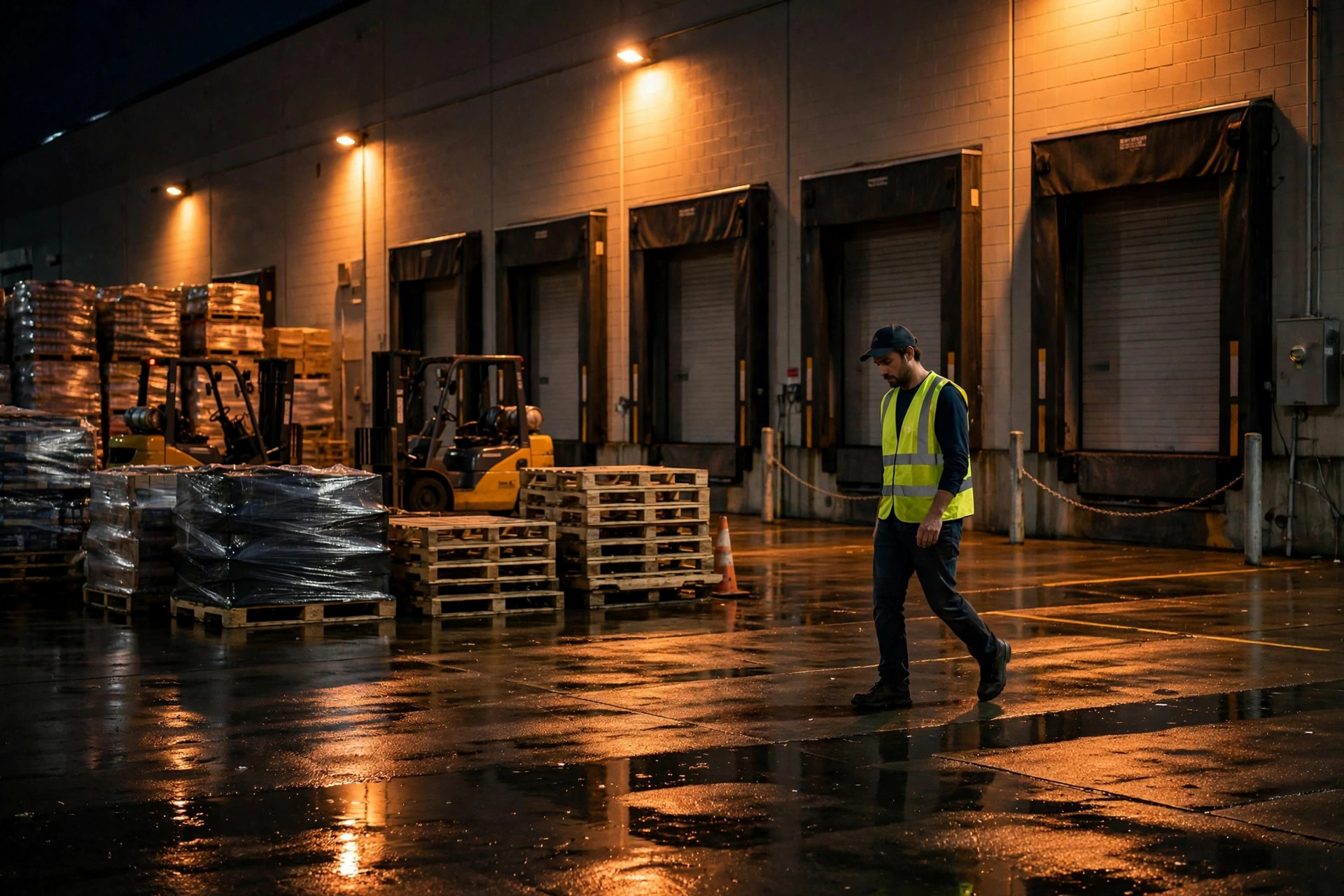
I'll tell you something, and I'm saying this after fifteen years of running freight: the scariest part of my job isn't the highway. It's those fifteen minutes backing into a warehouse dock, where people and forklifts all squeeze into the same strip of concrete.
Two winters ago, I was unloading at a big warehouse east of Los Angeles. I backed into the dock, dropped the trailer door, and was about to hop down when a horn blared behind me — a forklift shot past my cab door, missing my leg by maybe three feet. It was carrying two pallets stacked high, and the driver was craning his neck to see around the load. The freight was blocking his forward view completely, and he never saw the picker standing at the edge of the dock, head down over a clipboard. The forklift blew past behind the kid, the wind scattered his paperwork, and he landed flat on his backside. The driver sat there shaking for ten minutes afterward.
That day taught me a lesson I carry everywhere now: in a warehouse, pedestrian separation isn't decoration. It's what keeps people alive. So today I'm writing as a driver — about the hard rules OSHA lays down for forklifts and pedestrians, and a few cheap fixes that actually work.
Forklifts and People Mixing: Getting Hit Is No Joke
First, some numbers to wake everybody up. OSHA estimates roughly 85 forklift-related deaths a year in the United States, plus about 34,900 serious injuries. And research from the US occupational safety institute finds that nearly one in five forklift accidents involves a pedestrian. Read that again: a big share of the victims aren't drivers. They're people on foot — walking through a warehouse when a few tons of steel comes at them.
I've seen it play out another way, too. An old buddy of mine, Chen, was unloading in Texas one night when half the dock lights were out. A forklift came around a blind corner just as Chen walked around his cab to grab the paperwork. The driver honked. Chen didn't hear it. He dodged the truck but went down hard and broke his arm — three months off work. That load paid a few hundred bucks in freight. The medical bills and lost wages would have bought a decent used car.
So here's my advice to warehouse owners: the dock and the floor are where pedestrian-forklift mixing is worst. Drivers, forklift operators, pickers, receivers — everybody crammed together. And "we've never had an accident here" just means your luck hasn't run out yet.
OSHA's 4 Hard Requirements: Pedestrian Safety Is Written Into the Rules
The OSHA standard for forklifts is 29 CFR 1910.178. When it comes to people and trucks sharing space, four requirements are non-negotiable — get caught breaking them and you're getting fined:
First: no training, no driving. Section 1910.178(l) says only trained and evaluated operators may drive a forklift, with re-evaluation every three years. Plenty of small warehouses hand the keys to whoever's free. That's a time bomb with a long fuse.
Second: slow down and sound the horn at intersections and blind spots. Section 1910.178(n)(4) is explicit — at cross aisles and anywhere vision is obstructed, the driver must slow down and honk. The horn isn't decoration. It's the signal that tells a pedestrian "I'm coming through."
Third: load blocking your view? Drive in reverse. Section 1910.178(n)(6) — if the load blocks your forward view, you travel with the load trailing, meaning backwards. That driver I saw craning his neck past two pallets? Textbook violation, the kind inspectors love to cite.
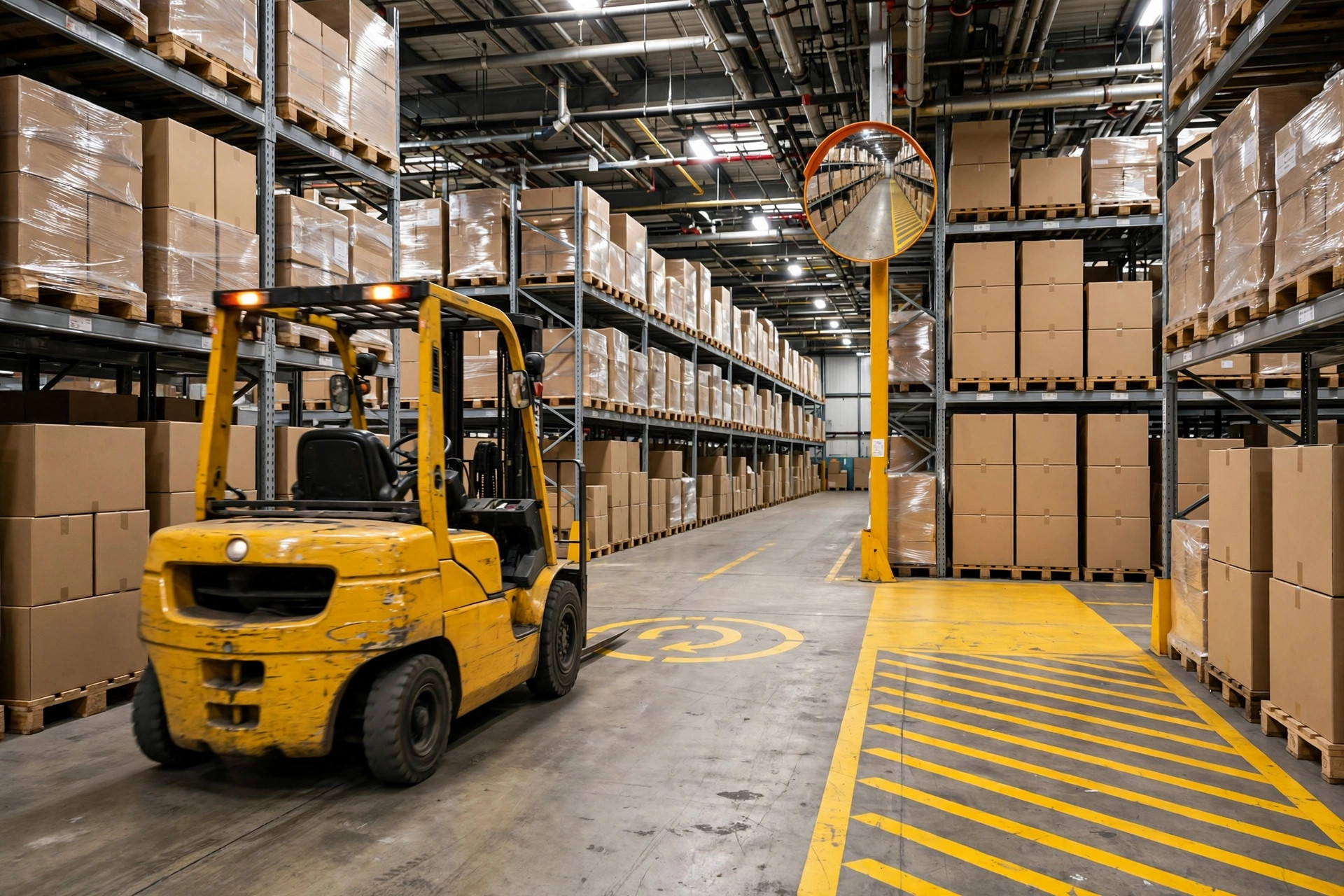
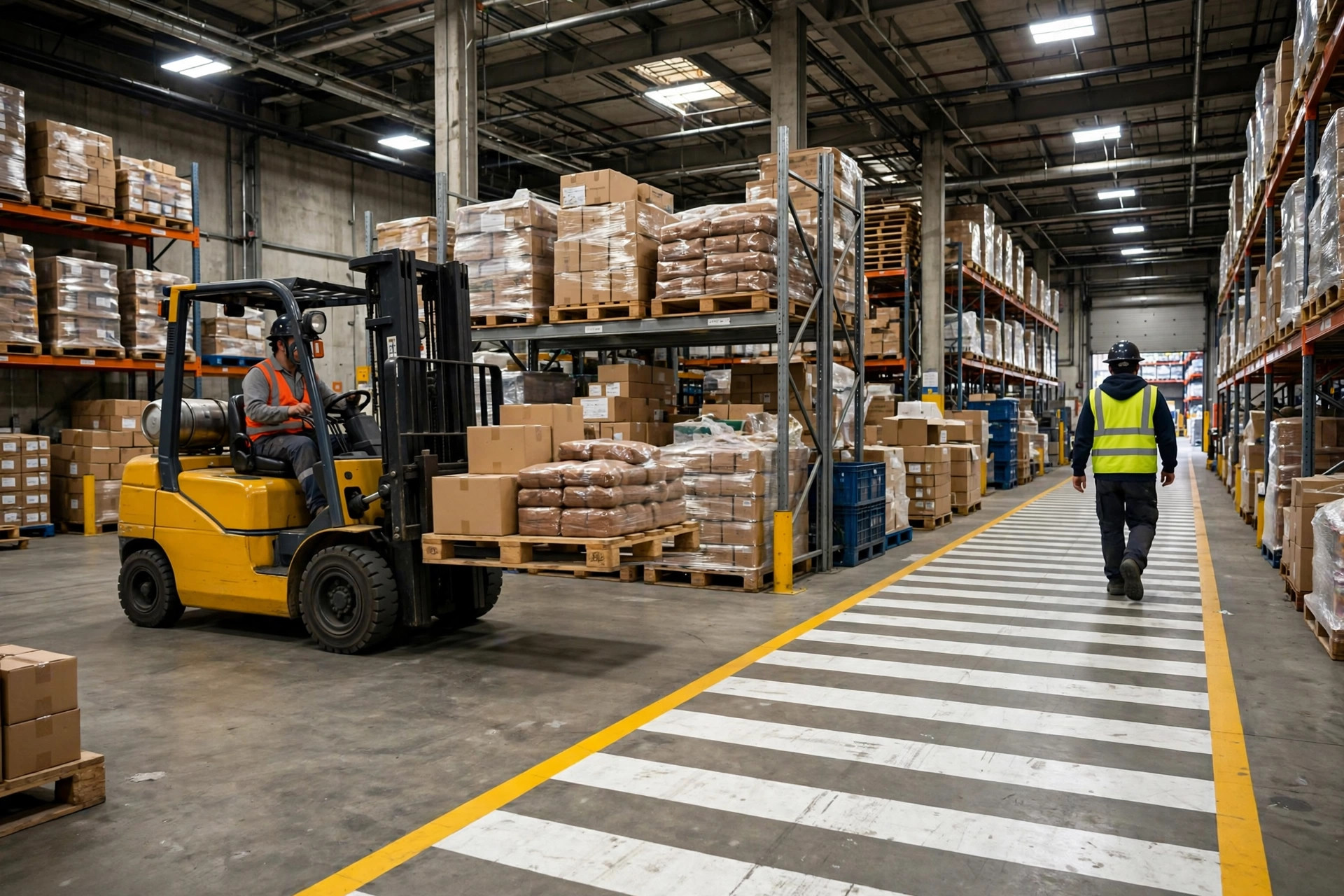
Fourth: separate people from trucks — and mark it on the floor. Section 1910.176(a) requires permanent aisles and passageways to be clearly marked and kept free of obstructions. OSHA's own guidance goes further, naming exactly what it wants to see: pedestrian walkways, guardrails or protective barriers, floor striping, convex mirrors at blind intersections, posted speed limits. Pedestrian separation isn't a suggestion. It's what OSHA tells you to do.
One more while I'm at it: 1910.178(m)(2) — nobody stands or walks under the raised part of a forklift, loaded or empty. People break this one every year, and every year it costs somebody.
4 Cheap Fixes: Build Pedestrian Separation Into the Daily Routine
Everybody nods at the rules. The question is what you actually do on Monday morning. Here are four things I've seen work in real warehouses, and none of them costs much:
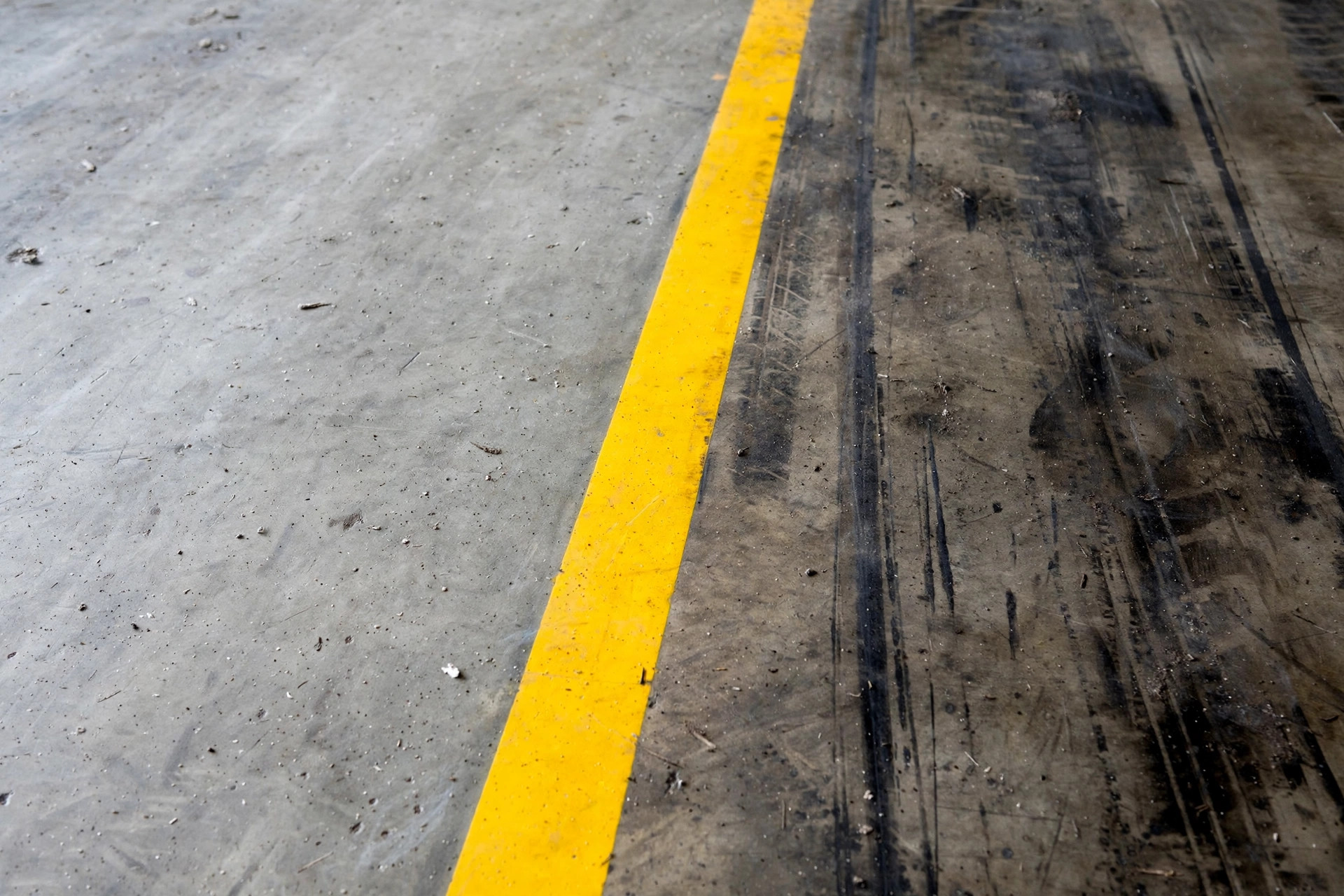
Paint the floor. Yellow lines for pedestrian walkways. Truck lanes on one side, people on the other, no ambiguity. A few buckets of floor paint and a weekend's labor covers a small warehouse. Then enforce it: people inside the lines, trucks outside. Cross the line, get written up. A line nobody enforces is just yellow paint.
Put up physical barriers. Steel guardrails or plastic bollards at dock edges and busy crossings. Don't underestimate a few rails — when a forklift goes wrong, a barrier buys you a second, and a second is everything. I've seen a warehouse with yellow-and-black rails along the dock edge, and drivers walked the dock holding the rail without even thinking. Habit becomes safety.
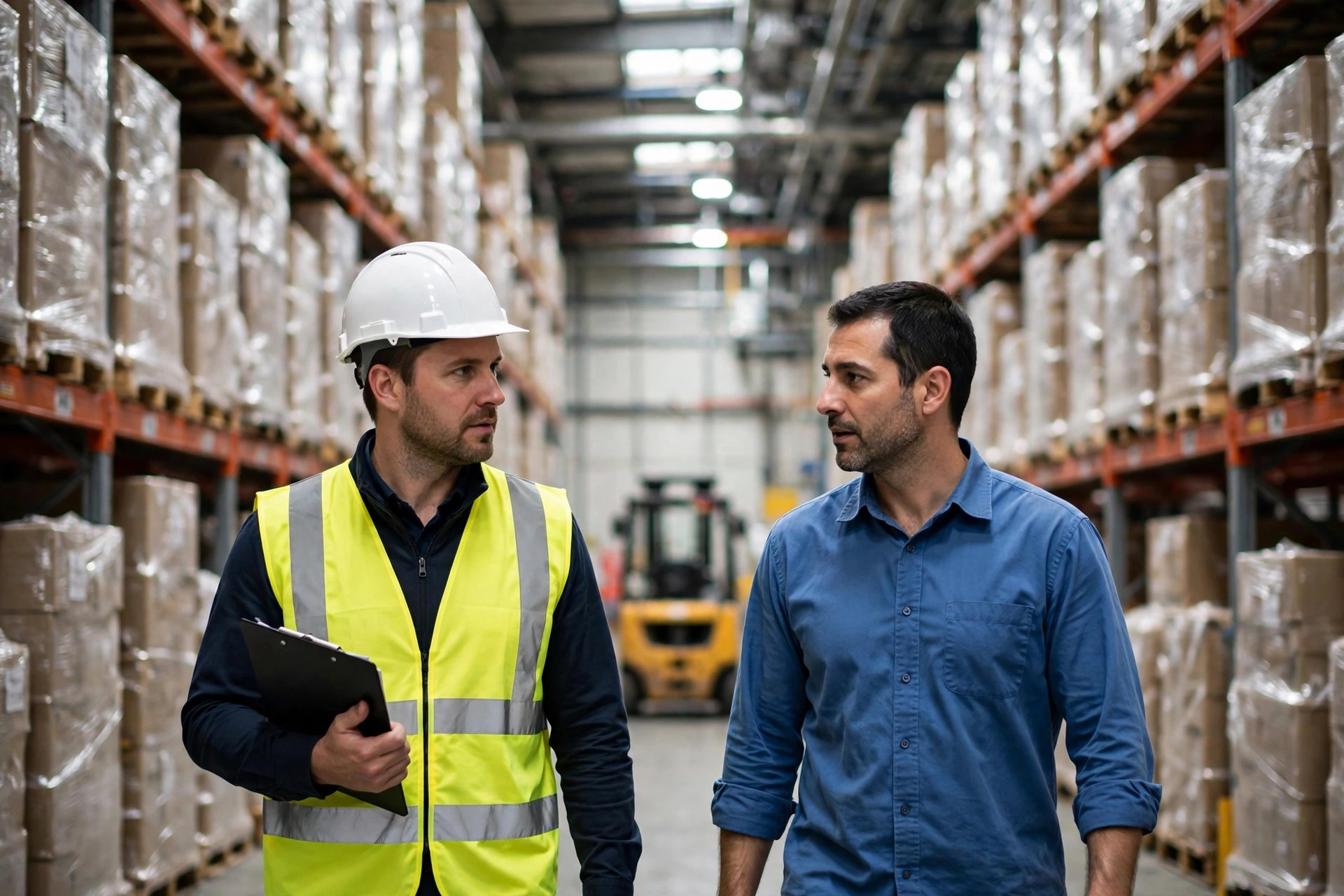
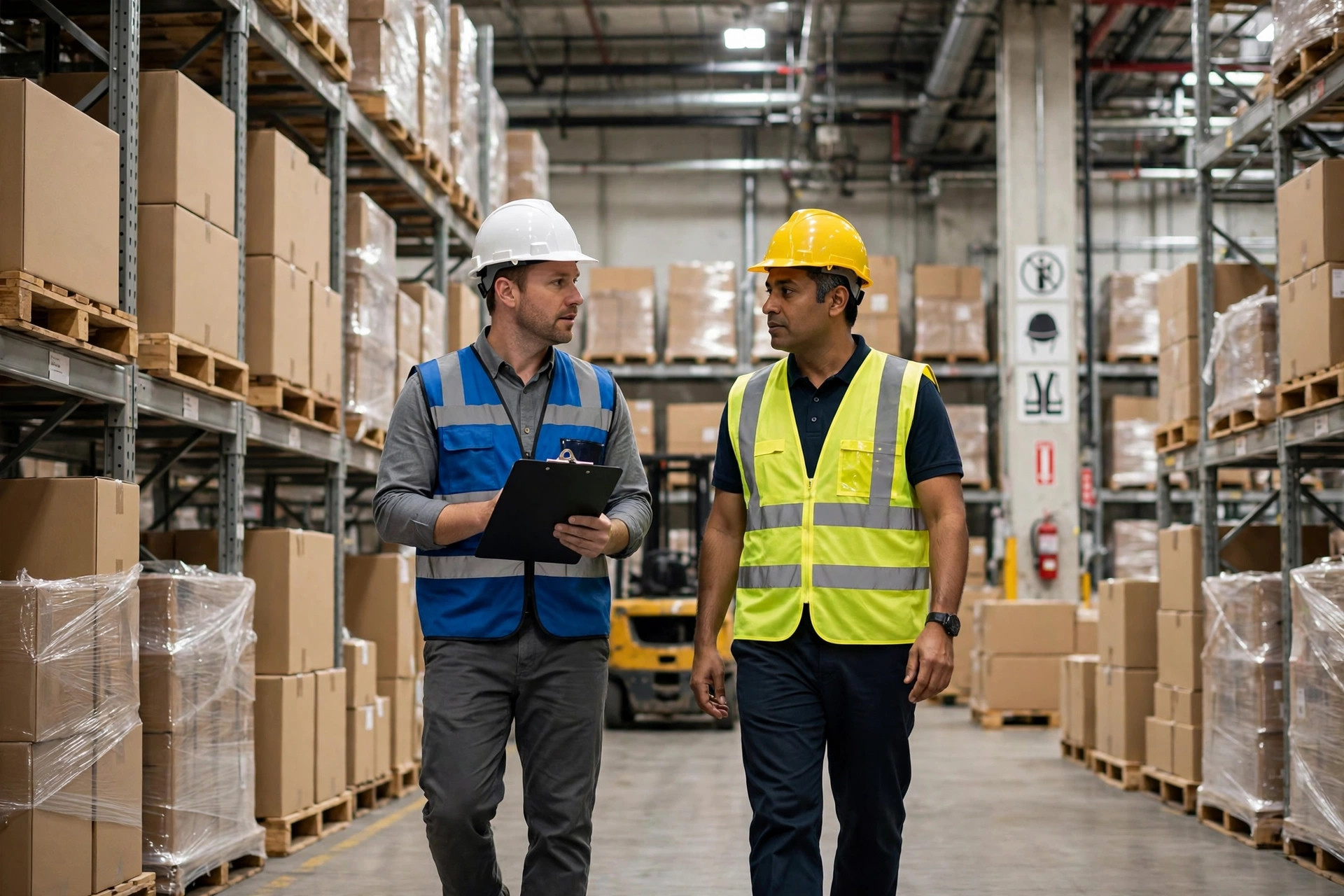
Hi-vis vests plus speed limits. Everyone in the operating area wears a reflective vest, and forklifts get a posted speed limit. OSHA doesn't set a hard number, but the rule says speed must fit conditions — around 5 mph is the common practice indoors. Vest plus slow speed: insurance for both sides.
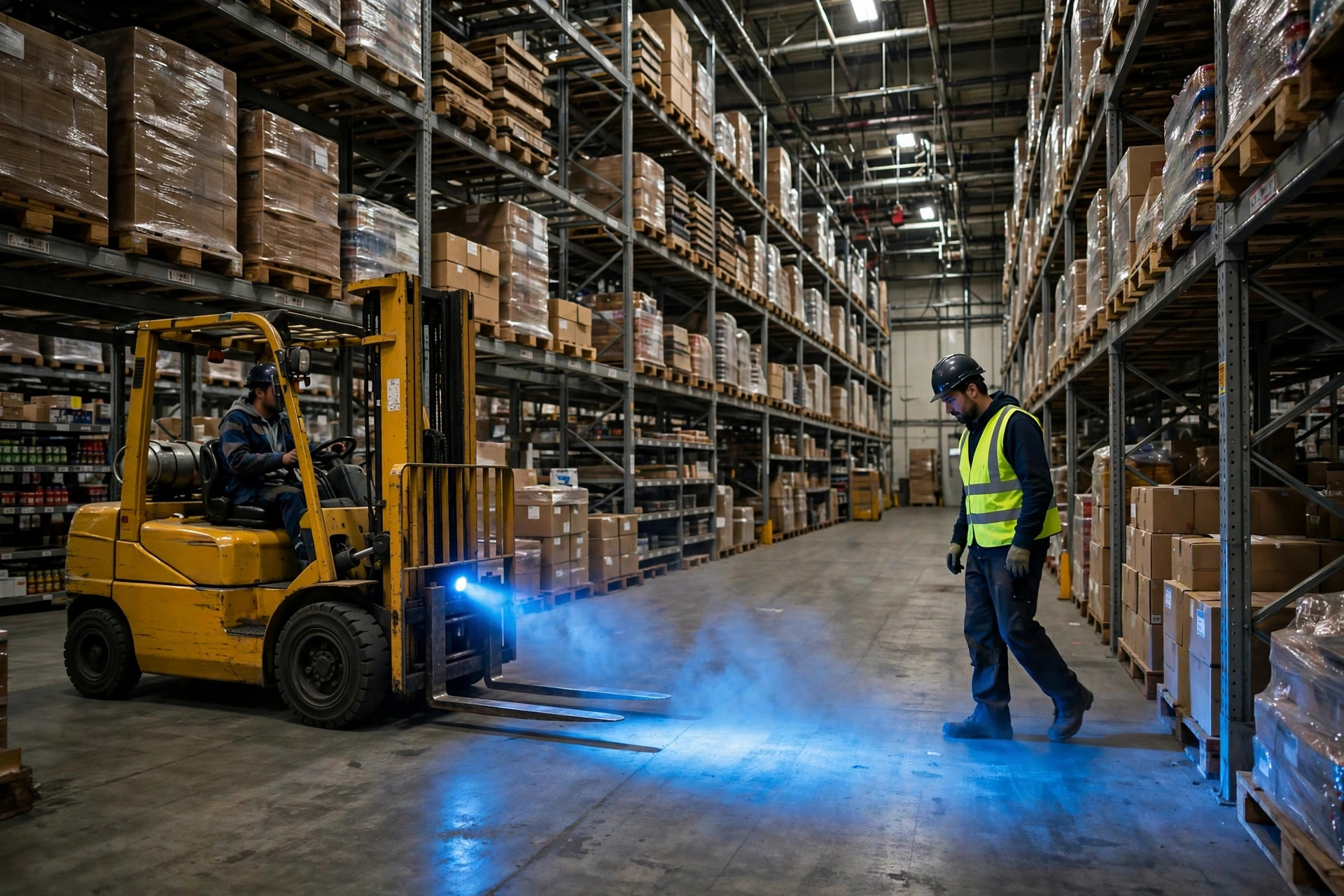
Mirrors, blue lights, backup cameras. Convex mirrors at blind corners. Blue warning lights on forklifts that throw a spot on the floor when reversing — pedestrians see it coming from far off. Backup cameras if you can swing it. All of it together costs less than the rounding error on a single accident.
Do the Math: One Accident Buys a Lot of Guardrails
Let me run the numbers the way a driver sees them. One pedestrian accident — medical bills, lost-time compensation, the OSHA fine, the lawyers, the shutdown for investigation — adds up to six figures in dollars, easy. A proper set of guardrails, floor striping, and a few mirrors runs a few thousand dollars for a mid-size warehouse. One accident would pay for doing pedestrian separation right ten times over.
And some costs never show up on a spreadsheet: a seriously hurt worker, your reputation, your insurance rates, your crew's morale — all of it takes the hit. So the math is simple. Safety spending is the highest-return investment in any warehouse, and it's not close.
One Last Thing
After all these years on the road, here's what I've learned: on the highway you fear the curve you can't see; in a warehouse you fear the person you can't see. Pedestrian separation doesn't wait for an OSHA inspector to show up. Paint a line today, bolt down a rail tomorrow, lean on that horn the day after. Your life is yours — and so is the other guy's. A little more caution now, a lot less regret later.
By Shifu Zhao, Trucking Veteran (15 yrs)