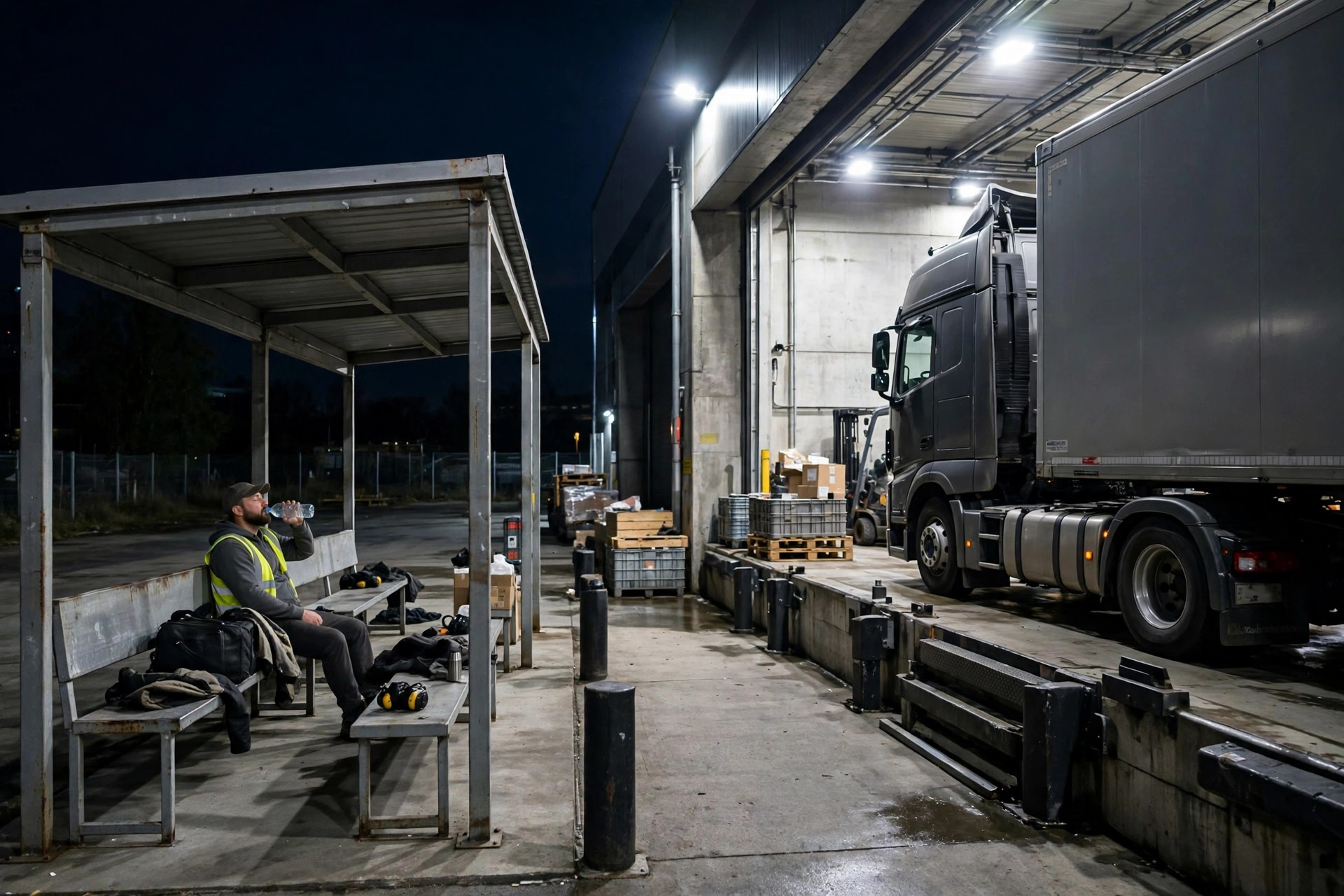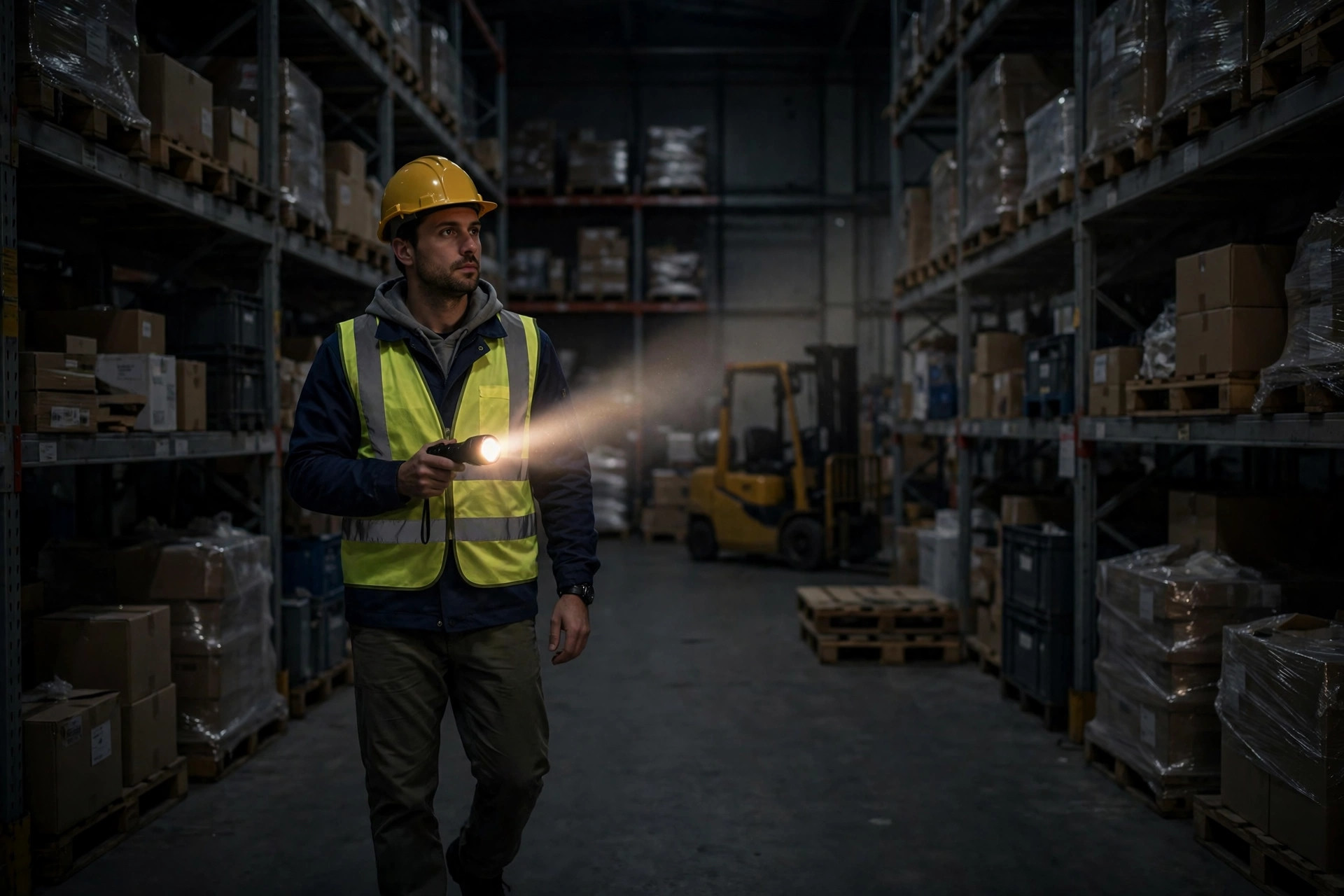
Let me tell you something about night shift. After all these years running night roads, what scares me most is not an empty highway. It is a warehouse at night with nobody watching. During the day, there are plenty of eyes around, and a small problem gets shouted out right away. At night, one supervisor runs a dozen people, and when equipment stops, freight goes wrong, or someone calls out, the supervisor carries all of it alone. The night supervisor's job looks like working nights. In reality, it is three things: take a proper handover, see what is actually happening, and handle surprises. Miss one, and the night goes wrong.
I knew a night supervisor, Lao Li, who listened to the day shift handover for two minutes and signed off. The day shift said a shipment at dock door 3 was not finished loading. He never asked which order, how much was left, or what time the cutoff was. At eleven at night, the driver arrived, the freight was not loaded, and the driver had another stop to make. The warehouse scrambled to find documents and freight, worked until one in the morning, the truck left, and one line on the order was still wrong. The next morning, the day shift found the accounts did not match and spent half a day fixing it. Lao Li later told me that the two minutes he saved at handover came back at night with interest, plus half a day on top.
Night shift handover: ask four things before you sign
Before a night supervisor signs the handover, four things must be clear. First, which jobs are unfinished, how much is left, and what time the cutoff is. Second, which equipment has a fault and whether it can survive the night. Third, whether staffing is short, who called out, and who the backup is. Fourth, what time tomorrow morning's first outbound truck arrives. With those four clear, the night has a floor under it. Without them, the whole night is surprises.
My down-to-earth method is a handover book with four boxes: unfinished work, equipment, staffing, and tomorrow morning's outbound. Fill every box before signing. The day shift thinks it is extra trouble? A night incident is more trouble. The handover book is not paperwork. It is the night supervisor's battle map.
Night shift rounds: not a walk, but three things to look at
Night rounds are often misunderstood as taking a walk around. Let me tell you, a walk is useless. You need to look at three things. First, people: who is on post, who looks exhausted, and how far each person's work has gotten. Second, freight: spot-check two orders picked or loaded at night, instead of letting the morning shift find errors and rework them. Third, equipment: forklifts, conveyors, and cold storage temperatures. At night, when equipment stops, nobody is coming to fix it, so the supervisor has to judge whether it is a small fault or a big one. Small faults get handled on the spot. Big faults get reported immediately and the schedule gets adjusted. Never just push through.
The rhythm of rounds matters too. One round in the first half of the night, one in the second half, and one before the early-morning handover. Three or four in the morning is when people doze off most easily, and it is also when incidents happen most easily. That round cannot be skipped.
Surprises: stabilize first, then reroute
The four most common night surprises are equipment stopping, freight going wrong, staff shortages, and drivers arriving early or late. The rule for all of them is the same: stabilize first, then reroute. Equipment stops: lock the affected orders and move them to another line instead of letting the whole warehouse wait on one machine. Freight goes wrong: lock the order and recheck it instead of letting wrong freight get loaded. Staff is short: move a multi-skilled worker to cover instead of making one person do two jobs under time pressure. A driver arrives early: talk through the cutoff time, load what can be loaded, and agree on a time for the rest. Never load the wrong order just to save time.
| Surprise | Stabilize first | Then reroute |
|---|---|---|
| Equipment stops | Lock the affected orders | Move them to another line, do not let the warehouse wait |
| Wrong pick | Lock the order and recheck | Wrong freight never leaves on a truck |
| Staff shortage | Move a multi-skilled worker to cover | No rushing, no one person doing two jobs |
| Driver early or late | Agree the cutoff time | Load what can be loaded, schedule the rest |
The night supervisor's logbook: write it clear at night, rework less by day
Let me tell you something. Night supervisors keep one more ledger that many people dismiss: the logbook. What happened at night, how it was handled, and what the result was, if none of it gets written down, the day shift has to ask all over again, and time gets wasted on "what exactly happened last night?" The logbook is not for the boss. It is for the next shift.
How should it be written? My rule is to record only four things: time, event, action, and result. What time equipment stopped, which machine, how it was handled, and what time it recovered, write it down. What time freight went wrong, which order, whether the order was locked, and what the recheck showed, write it down. What time staff went short, who covered, and until what time, write it down. Write too much and nobody reads it. Write too little and it counts as not written. With those four items complete, the day shift understands everything in five minutes.
One more detail. The logbook belongs at the handover spot, not in the supervisor's pocket. On the handover table, the day shift sees it at first glance. In a pocket, the day shift has to ask the supervisor for it, and once the supervisor goes home, the logbook goes home too. Write it clear at night and rework less by day. That saying sounds plain, but the time it saves is real.
Here is an old saying for night supervisors. A quiet night is not good luck. It is a handover asked properly, rounds done properly, and surprises handled with a routine. Get those three right and the night holds steady. Get them wrong and something will go wrong sooner or later, with rework in the morning. An incident itself is not the scary part. The scary part is stepping into the same hole night after night.
By Shifu Zhao, Trucking Veteran (15 yrs)