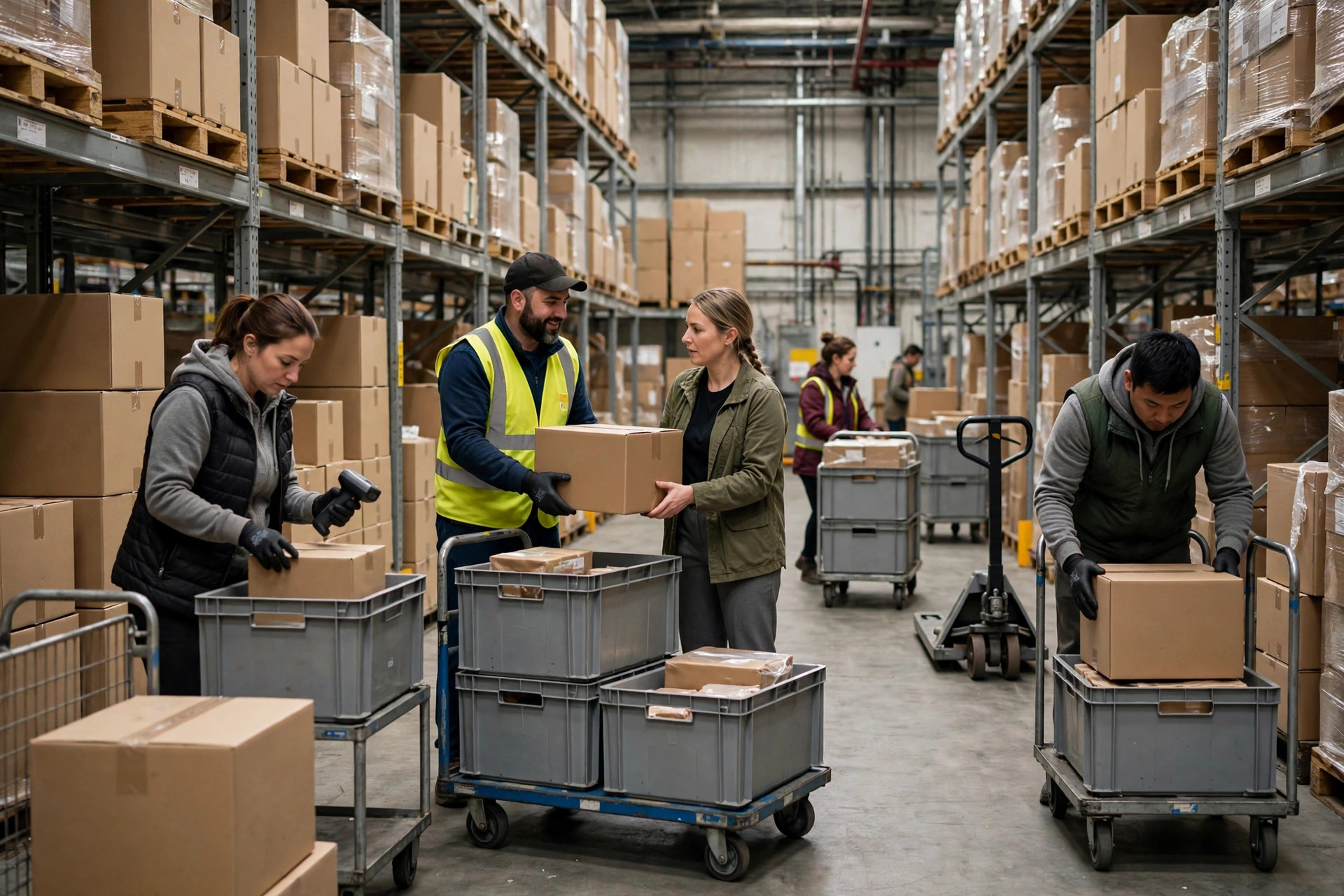
Six in the morning, peak season, the pre-shift meeting had just broken up.
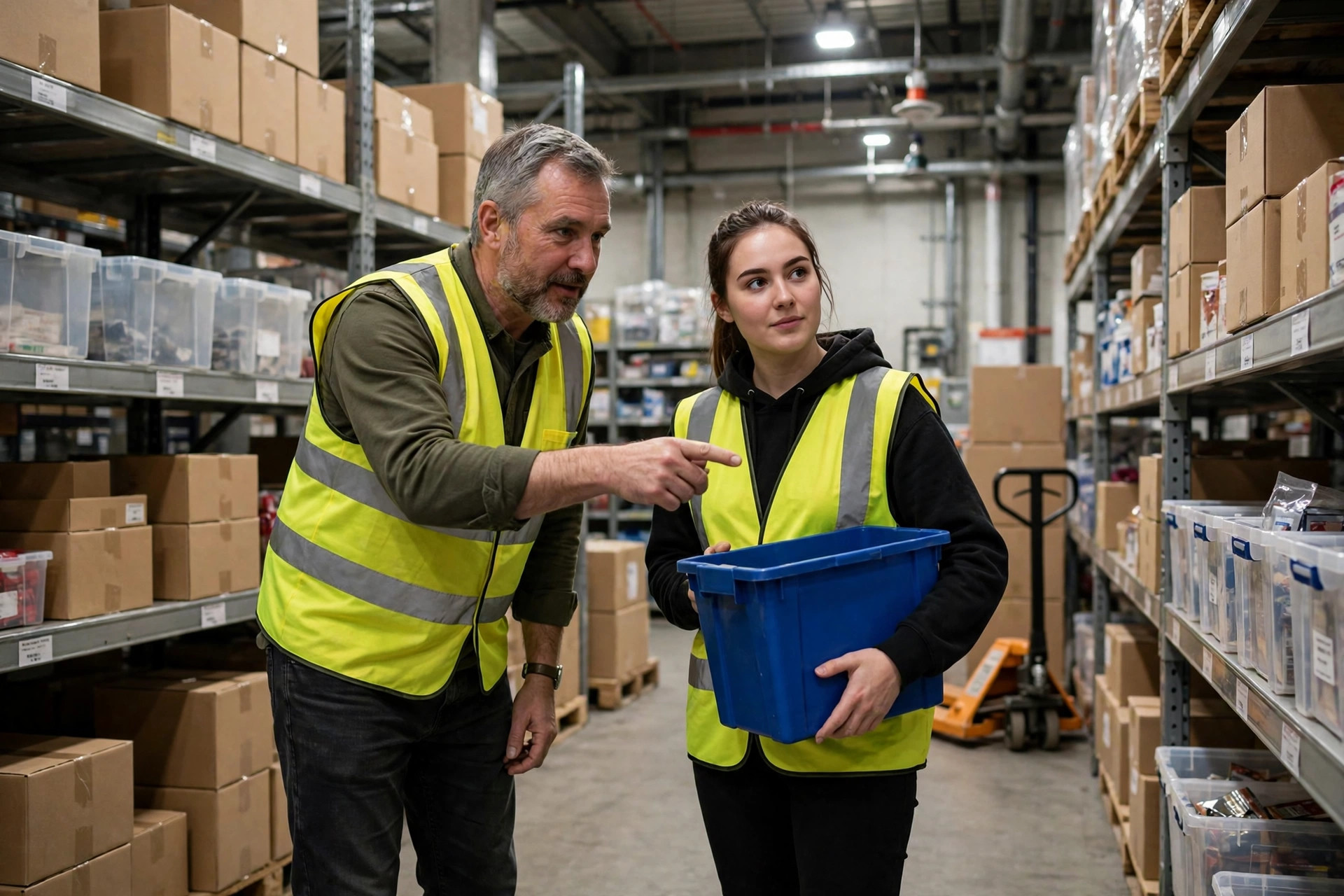
I was heading toward receiving when I spotted a group of new hires standing outside the training room — high-vis vests not yet handed out, name badges handwritten. That is the most dangerous moment in any new hire onboarding. One kid stood there looking left and right, and nobody paid him any attention. I asked the shift lead: who's with these folks today? He scratched his head: we're slammed with orders, let them watch some videos for now.
Honestly? My stomach dropped. Of this batch, how many would still be here in three days?
That was back when our building had just grown past two hundred people. When peak season hit, hiring felt like fighting a fire — dozens of people coming through the door in a single week. And our process? Three hours of slides in the morning — company culture, safety policy, attendance rules, all crammed in at once. Then in the afternoon we'd toss them onto the floor: go shadow Lao Wang. And that was the end of it.
Later I went back through the records for that batch. Within the first week, a good chunk of them were gone. Several never even got their hands on a pick cart properly. Money spent, people gone, and the rest of us had to cover the peak volume with overtime. That's when it clicked for me: what decides whether a new hire stays isn't the first month, or even the first week. It's the first 72 hours. If those three days make them feel grounded, they'll grit their teeth through the hard parts later. If nobody pays attention to them for three days, an extra dollar or two an hour won't keep them.
Day 1: New Hire Onboarding Starts With Making Them Feel Safe
Here's what Day 1 looks like in our building now.
People arrive at nine. First, the paperwork — badge, locker, emergency contact. Thirty minutes, done, no dragging it out. Then safety gets exactly three sentences: you yield to forklifts, here's where the red e-stop button is, and that's the door you run to in a fire. Three sentences, then we walk the floor and point at each thing in person. I'll be honest — after a three-hour slide deck on safety, a new hire remembers less than they do from those three sentences.
Then comes the most important move of Day 1: we assign a buddy. Not the shift lead — the steadiest, most even-tempered veteran on the line. I give the buddy one instruction: don't let them sit idle today, and don't let them feel like an outsider.
At lunch the buddy eats with them and the rest of the crew. Don't underestimate that meal. The first name a new hire learns is their buddy's. The first moment they think "someone here has my back" usually happens over that lunch.
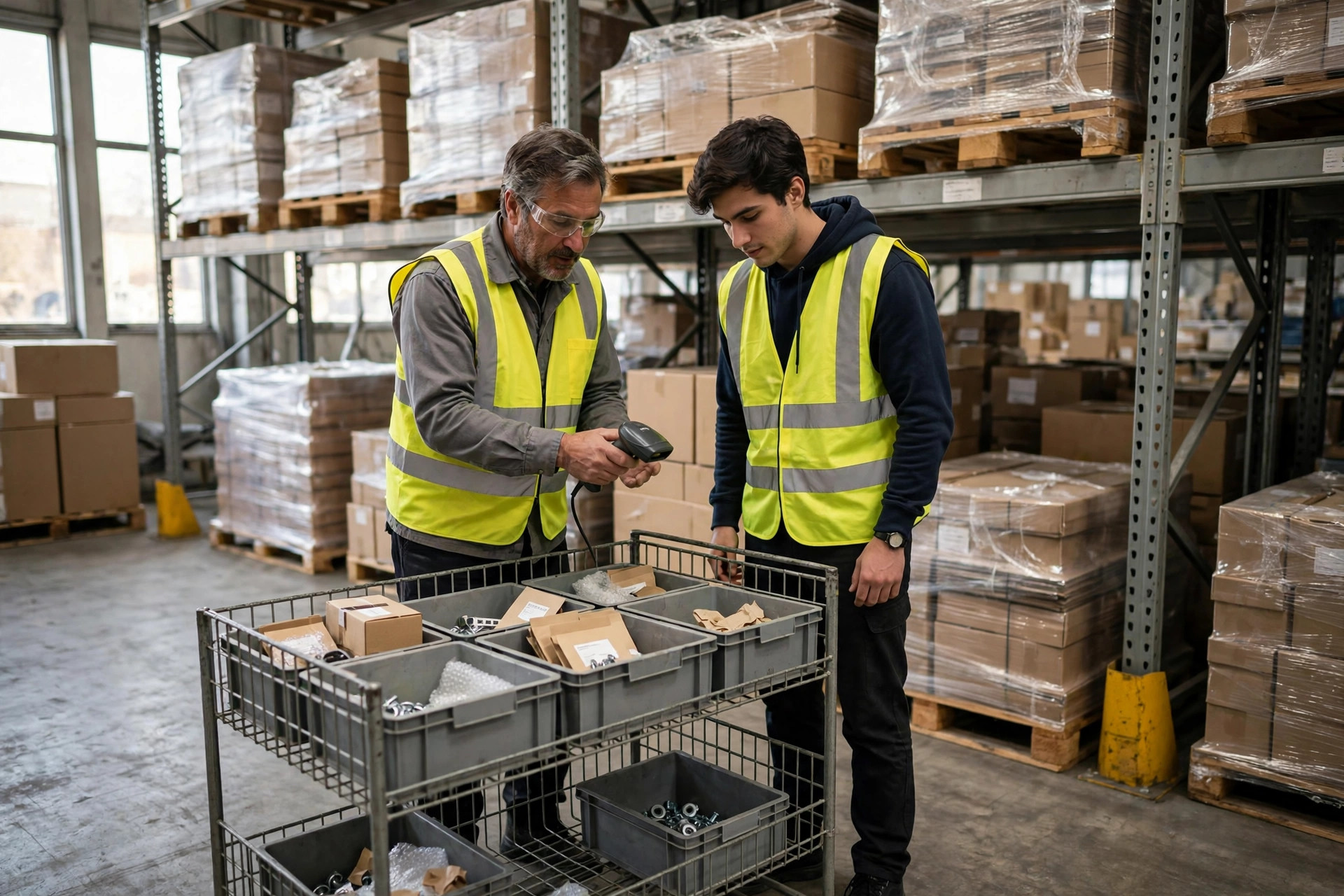
In the afternoon, the buddy walks them through the full flow — picking, verifying, packing — and has them try each step with their own hands. How to hold the scanner, how to seal a carton, which side the label goes on. The buddy does it once, the new hire copies. By end of shift, they've personally scanned at least a dozen cartons. The buddy asks one question: you coming back tomorrow? If yes, your vest is waiting.
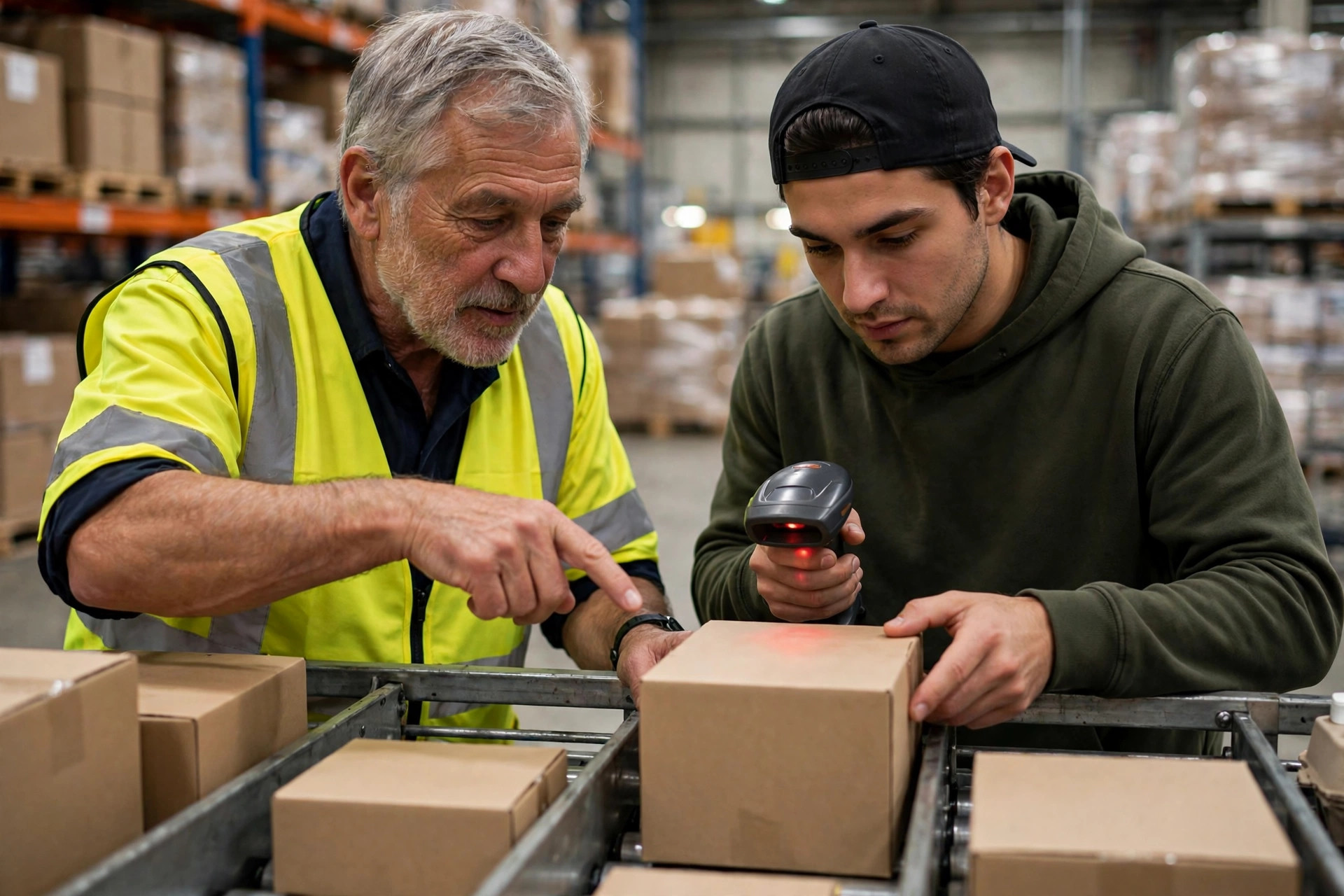
That question sounds casual, but it's a pulse check. If the new hire hesitates, the buddy tells me the same day, and I can catch them for a word the next morning. A lot of warehouses burn Day 1 entirely in a conference room. We do the opposite: on Day 1, they break a sweat. They go home and tell their family "I worked in the warehouse today," not "I watched slides for three hours."
Day 2: Hands On, But Never Alone
Day 2 starts with paired picking. The new hire does the work, the buddy watches. One rule for the buddy: no jumping in to help. Speak up only when a mistake is about to happen. Why? Day 1 was "I'll show you." Day 2 has to be "you do it, I've got your back." Getting that balance right is the buddy's whole job.
The rhythm: a full picking run with the buddy in the morning, more of it in the afternoon. During breaks, the buddy chats — where do you live, how do you get here, what did you do before. That might sound like small talk, but when a new hire starts telling you about their family, it means they trust you.
Before clocking out, the buddy asks three questions: which part felt the most natural today? Which part felt the most awkward? Do you want to try packing tomorrow? From the answers, the buddy learns whether this person is quick, whether they're afraid of hard work, and which station interests them. That gets passed to me at shift handoff, and I start building a mental map of every new hire.
Day 3 of Onboarding: The Conversation Beats the Test
On the third morning, they work solo for half a shift. The buddy watches from a distance — timing, logging errors, but never interrupting. This is when the new hire is most nervous and most fired up, because they know they're being evaluated. In the afternoon, I or the shift lead sit down with them for fifteen minutes.
The conversation covers exactly three things. First, specific praise: "That small-parts picking run this morning — zero errors. Plenty of veterans can't do that." Second, the plan for the next week, spelled out: which shift, which line, which buddy. Vagueness kills — "we'll figure it out" tells them "you don't matter to us." Third, real-life questions: does the shift work for you, how's the commute, where do you eat. What we can fix, we fix on the spot. What we can't, we give a timeline.
By the end of that talk, it's decided: which line they're on, who their buddy is, what time they show up. In 72 hours, a new hire goes from "standing in the doorway with nobody paying attention" to "has a station, a buddy, and a schedule." That's our golden three days.
Longer Training Is Better? Not on My Floor.
Here's the uncomfortable truth: the longer you drag out new hire training, the faster people leave.
I've seen plenty of warehouses park new hires in a training room for three to five days, thinking "sharpen the axe before chopping wood." And the result? They sit there, their back aches, their mind races, and by day five they haven't touched a single carton. On day six they don't come back. A warehouse is a physical place. Asking someone who can't sit still to sit for three days just tells them this job isn't what they signed up for.
My logic runs the other way: the sooner they touch the work, the sooner they belong. The cartons they scanned on Day 1, the orders they picked on Day 2, the half-shift they ran solo on Day 3 — that's their evidence that they belong in this building. No slide deck gives them that. A buddy does.
And here's another one people don't believe: most of the time, new hires don't leave over pay. The warehouse across the street paying a dollar or two more sounds tempting, but what actually pushes someone out the door is day one with nobody noticing them, day two with nobody teaching them, and day three with nobody asking whether they're coming back. You can feel in three days whether a place treats you like you matter. Pay is numbers on paper. Being treated like you matter is every single day.
Fellow warehouse folks, one last honest reminder: if you're too busy for those three days, at least assign one solid veteran to own them start to finish. And when you pick the buddy, don't pick the fastest picker — pick the steadiest one with the best temper. The first person a new hire meets decides their entire impression of your building. Ignore those three days, and you're just training people for the warehouse across the street. It's a two-minute walk.
By Chen Feng, Warehouse Operations Manager