The property manager called at 4 a.m. to tell me our warehouse was raining indoors. My first thought: there goes the whole year's profit.
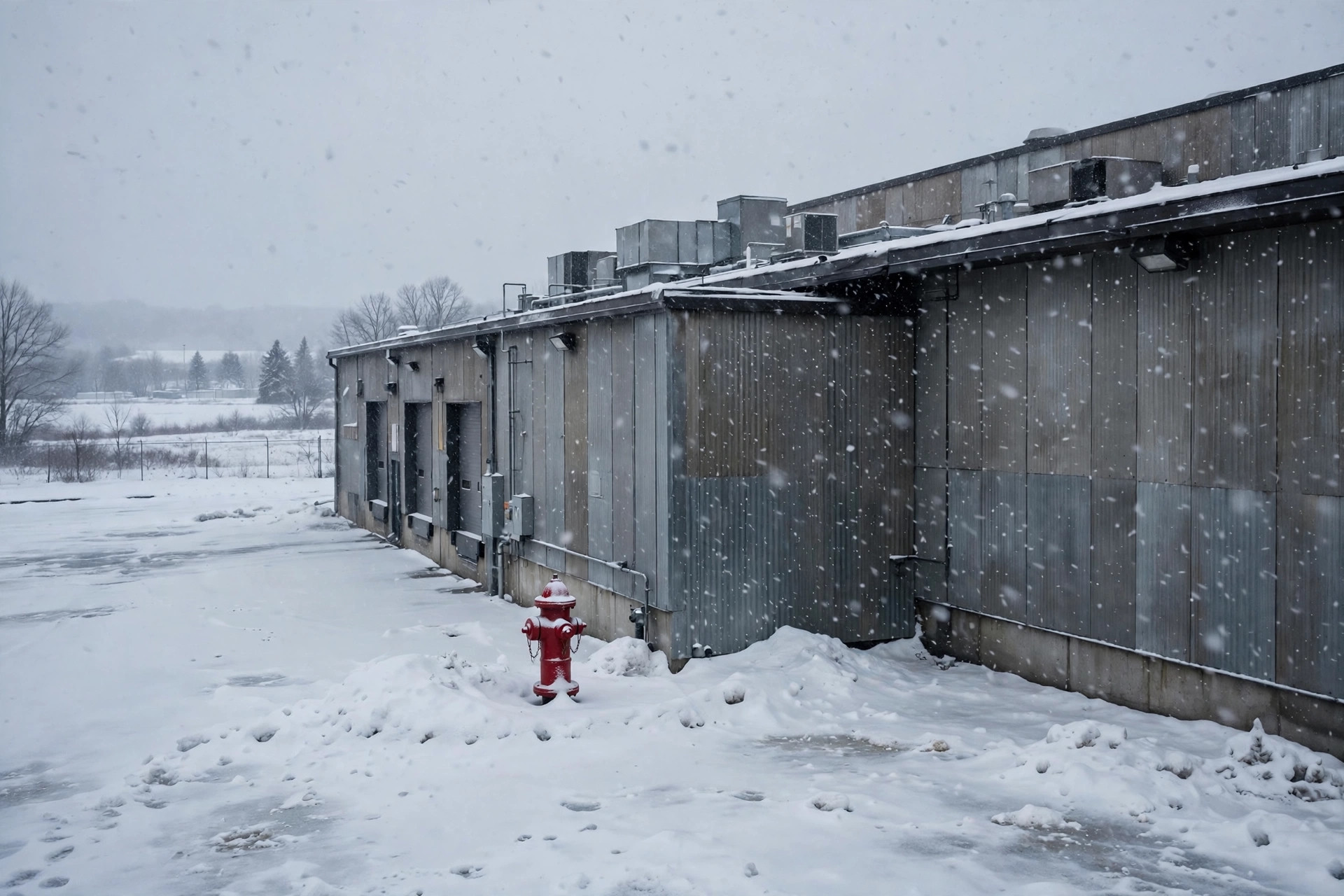
It was January 2024, during that brutal Midwest cold snap — twenty-some degrees below zero outside. Our little 32,000-square-foot warehouse had three sprinkler mains burst over the loading dock, and water poured down the racks all night long. The next morning the floor was a sheet of ice, a dozen pallets sat in standing water, and the forklift slid around like it was on a skating rink.
I still remember the bill line by line: emergency pipe repair, a little over $9,000; water extraction and drying, $6,000; two pallets of customer goods written off; and over $10,000 in damage claims from the customer. Just under $40,000 gone — which, for a small operation like ours, is roughly the entire year's net profit. The part that hurt most? That customer didn't renew the following year. They said they had "concerns about our risk management." That sentence cost more than the $40,000.
While the fire protection contractor was fixing the pipes, he dropped this gem casually: "With a wet pipe system like yours, you've got to babysit it all winter. Switch to dry pipe and you'll never worry again."
I asked what a dry pipe conversion costs. "All in, starting around $150,000," he said.
A hundred and fifty grand. We're a small warehouse — we can't afford to burn money like that.
Dry vs Wet: What Is the Actual Difference
Let me explain it in one sentence, no jargon: in a wet pipe system the pipes are full of water all the time, so when a sprinkler head breaks, water comes out instantly — fast, cheap, simple to maintain. In a dry pipe system the pipes hold pressurized air, with water held back behind a valve; when a head breaks, the air has to vent first, then water flows in — slower, pricier, and fussy.
Dry pipe is standard in unheated places like freezers and outdoor yards. Sounds like it was invented for winter, right? But the big-company logic behind it doesn't work for us little guys, for three reasons.
First, the price. A full conversion runs $150,000 and up — that's two years of rent for us. And dry systems need extra annual inspections, so maintenance costs run higher than wet pipe forever after. You spend the money, winter feels safe, and your cash flow freezes first.
Second, it's fussy. The pipes hold compressed air, air holds moisture, and moisture condenses into water at the low points of the piping — which freezes when winter hits. Every fall you're supposed to drain every low point, and if you miss one, the whole conversion was pointless. In January 2025, the 200,000-square-foot facility next door — full dry pipe, top-of-the-line everything — burst a pipe anyway, because nobody drained the low points properly. They spent six figures and froze exactly like the rest of us. I almost laughed out loud. Caught myself — not classy. But honestly, it felt like vindication.
Third, it's slower. In a real fire, a dry system has to push all the air out before water arrives, so suppression starts tens of seconds later than wet pipe. A firefighter told me: never underestimate those tens of seconds. Once a fire gets going, those seconds are everything.
So here's my possibly unpopular take: a dry pipe system is not a freeze-proof miracle — it just moves the freezing risk from "the water pipe" to "the low-point drain you forgot," while emptying your wallet along the way. For a small warehouse, wet pipe plus scrappy insulation costs a fraction of a conversion and works just as well.
Our Scrappy Fix: Small Money, Big Result
After the burst, we put together a budget winterization kit for under $5,000 total. Last winter: zero incidents.
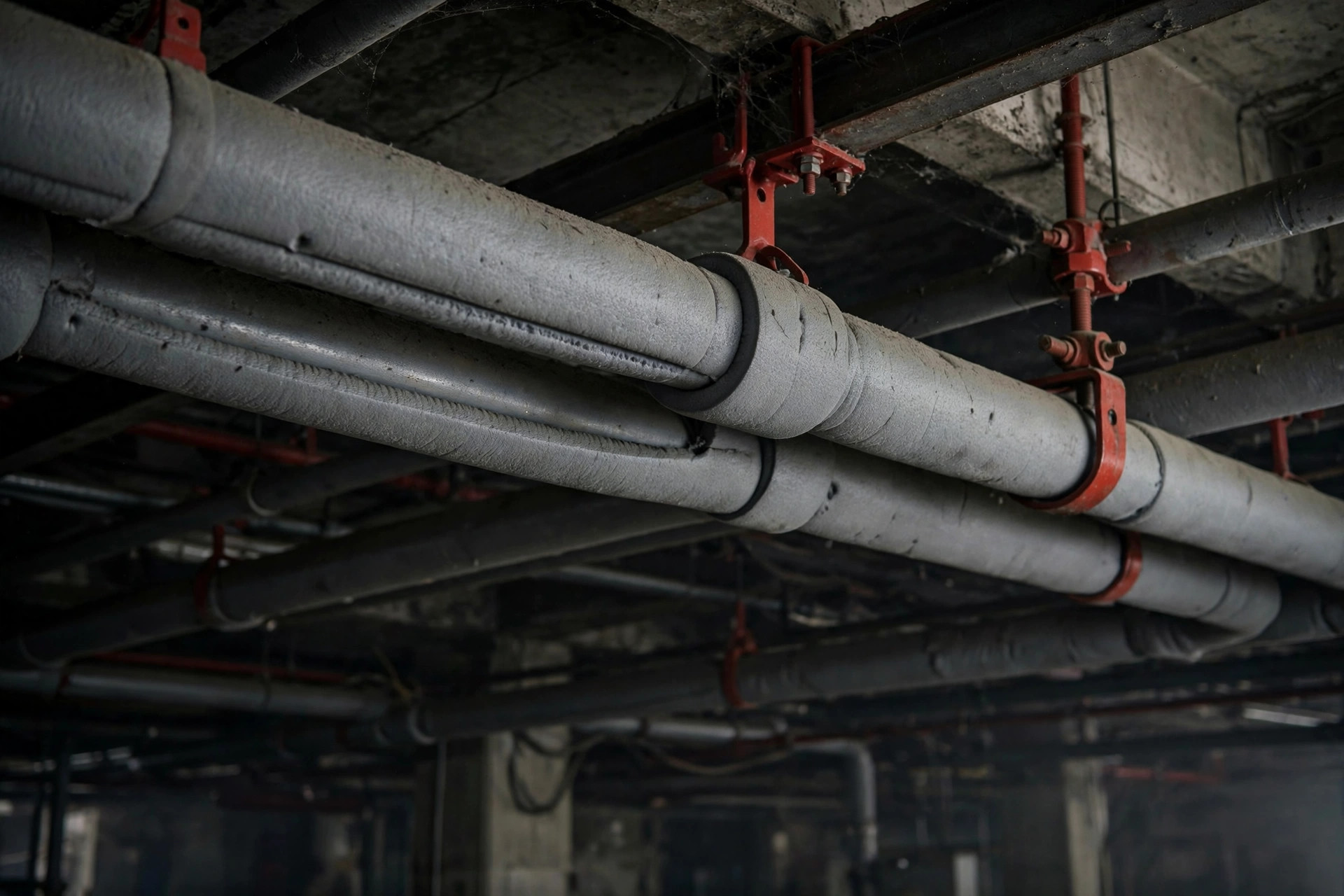
Step one: wrap the pipes. We insulated every risky run — over the dock, along exterior walls, under the roof — with foam pipe insulation sleeves. You can buy them at any home improvement store for a few dozen bucks a roll. Two of us knocked it out over two weekends. Pro tip: stagger the seams, and don't skip the elbows and valves — eight times out of ten, the freeze starts exactly where someone got lazy and left a gap.
Step two: heat trace cable. On the few runs we couldn't shield from cold air, we strapped on electric heat trace — cable that warms up automatically when the temperature drops. Get the kind with a built-in thermostat so it doesn't waste power. We installed about 200 feet, and our winter electric bill went up by less than $200. Two hundred bucks for a whole winter of peace of mind. That's a trade I'll make every time.
Step three: watch the temperature. The fire contractor told me the rule of thumb: a wet pipe system hates it when ambient temperature sits below 40°F (4°C) for long stretches. We stuck $30 temperature sensors with phone alerts in the cold corners. When one beeps, we know exactly which spot is dropping. Thirty bucks beats getting woken up by the property manager at 4 a.m., a hundred times over.
Do the Math: One Burst vs One Prevention
One burst, as itemized above: just under $40,000, not counting the lost customer.
One prevention: insulation materials and our own labor, under $3,000; heat trace plus electricity, under $1,000; sensors, a few hundred; a professional pre-winter inspection, $800. Total: under $5,000.
| Option | Cost |
|---|---|
| One burst: repair + drying + claims | ~$40,000 |
| One prevention kit: insulation + heat trace + inspection | Under $5,000 |
| Full dry pipe conversion | $150,000+ |
Forty thousand versus five thousand versus a hundred fifty thousand. A kid could do this math.
The Pre-Winter Checklist — Just Copy Ours
Every November, before the cold arrives, we do these five things without fail:
- Walk every exposed pipe run. Patch or replace any insulation that's torn or slipped.
- Power-test all heat trace cable and check every thermostat. Replace the dead ones.
- Inspect the seals on the dock doors and roll-up doors — cold air sneaks in through those gaps.
- Call your insurer and ask: does the policy have a "freeze-damage exclusion for inadequate maintenance" clause? If yes, keep maintenance records that satisfy it.
- Tape the emergency contact list on the office wall: fire protection contractor, pipe repair, insurance broker. When something actually goes wrong, nobody has time to dig through a phone book.
One last thing: big companies can afford dry pipe conversions and full-time inspectors — that's their way of doing things. We small warehouses don't have that budget, so we do the scrappy stuff properly: wrap it tight, keep the heat trace on, watch the temperature. You'll get through winter just fine.
Small warehouses have their own way of surviving.
By Xiao Ma, Small Warehouse Owner