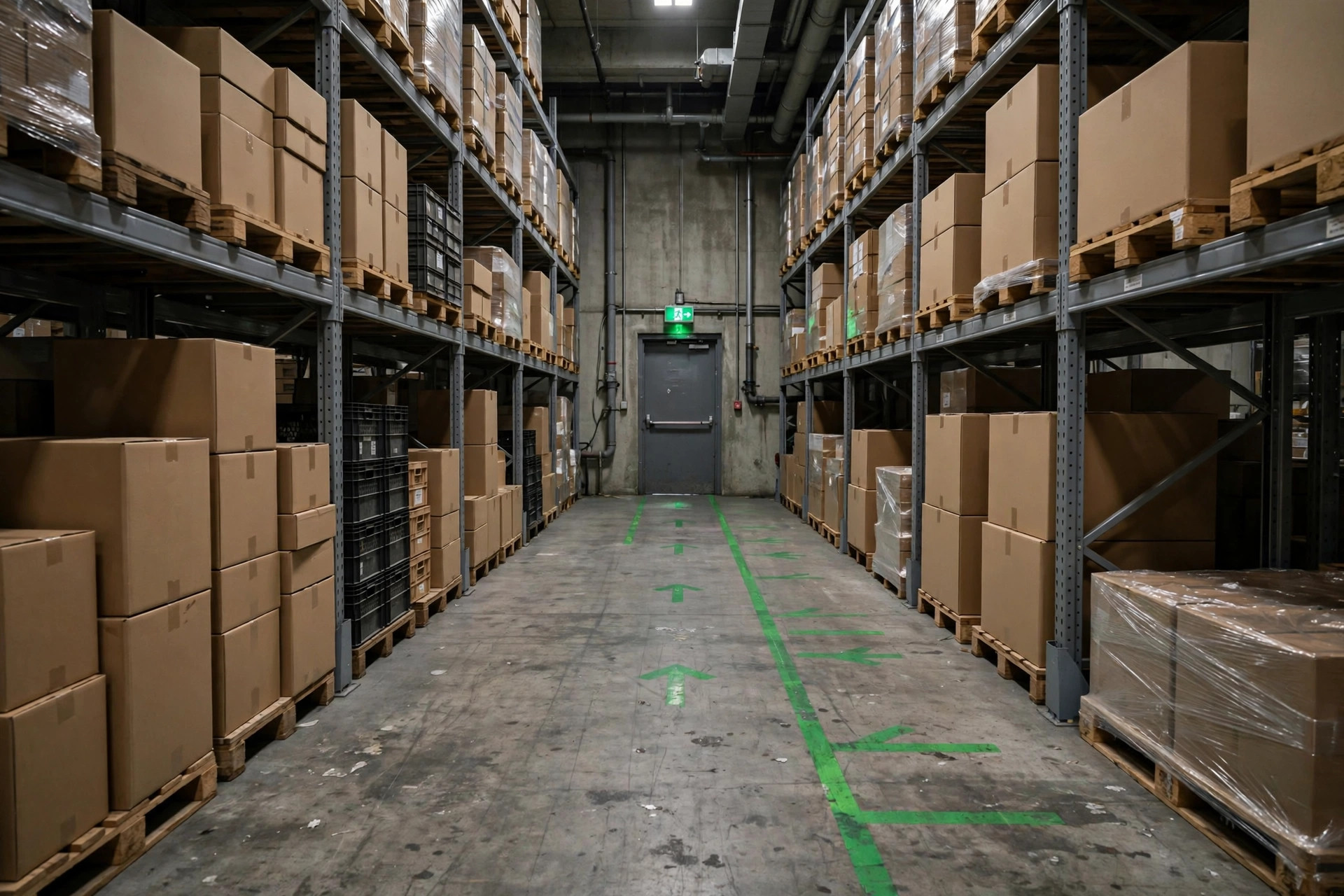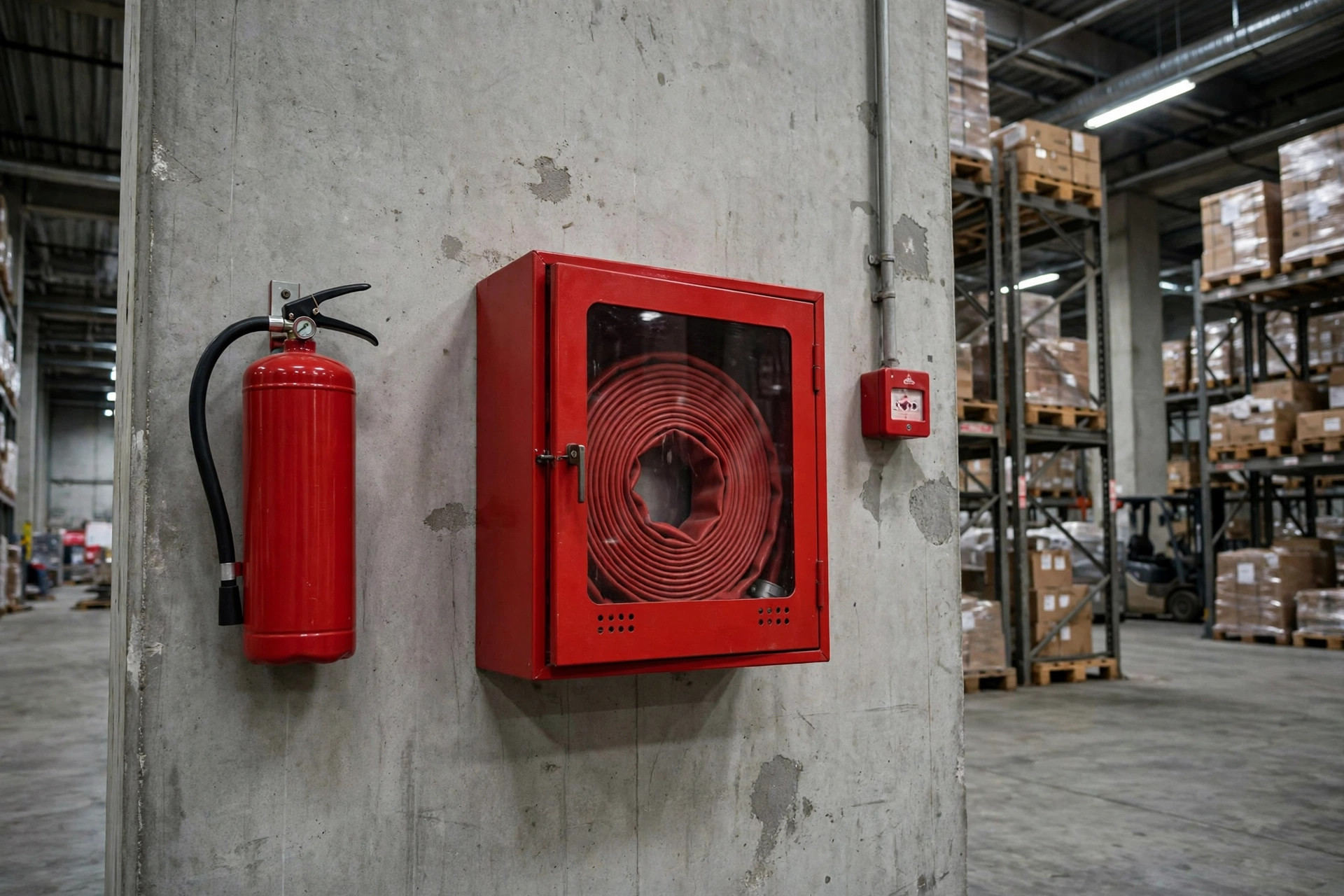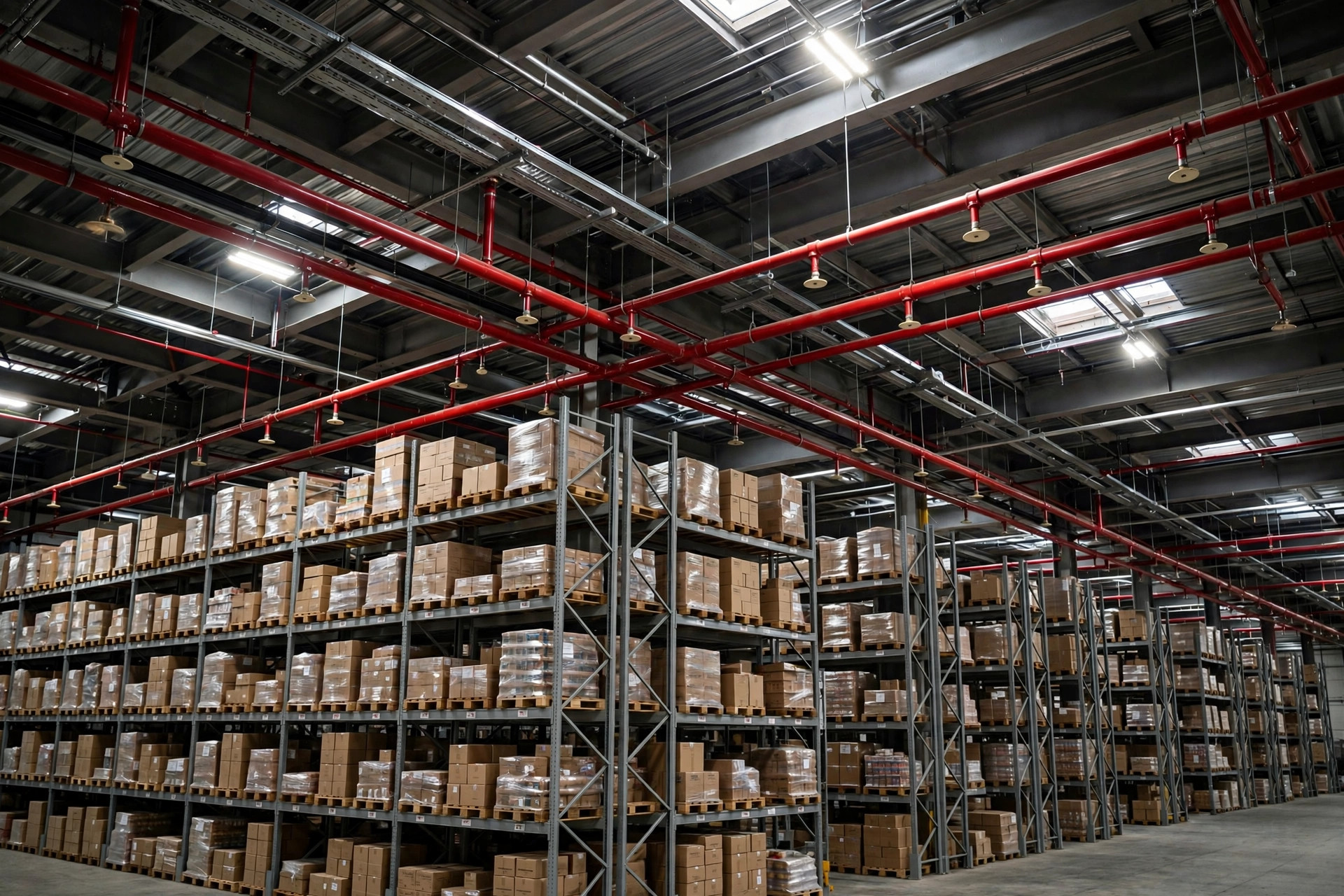
Back in the fall of 2022, an e-commerce client of mine signed a lease on 120,000 square feet in Ontario, California, to store plastic home-storage bins. Great location, fair rent, 32-foot clear height with room for four levels of racking. The owner bought me coffee the day the lease was signed and said he'd found a steal. Two months later, the fire marshal showed up for a routine inspection, walked the floor, and his expression changed: the building's sprinkler system was designed for Class III commodities. Plastic products sit in a higher hazard class. Until the mismatch was fixed, the warehouse couldn't operate at full capacity.
The retrofit proposal landed fast — in-rack sprinkler piping, a fire alarm upgrade, fire-rated compartmentation in parts of the building. Price tag: $370,000, with a three-month construction window, not counting the cost of temporarily relocating inventory while the work was done. Annual rent was just over $900,000. One retrofit ate nearly half a year of rent. He wasn't unlucky. He just skipped one question before signing: what commodity hazard was this building's fire protection actually designed for?
What was this building's sprinkler system designed to protect?
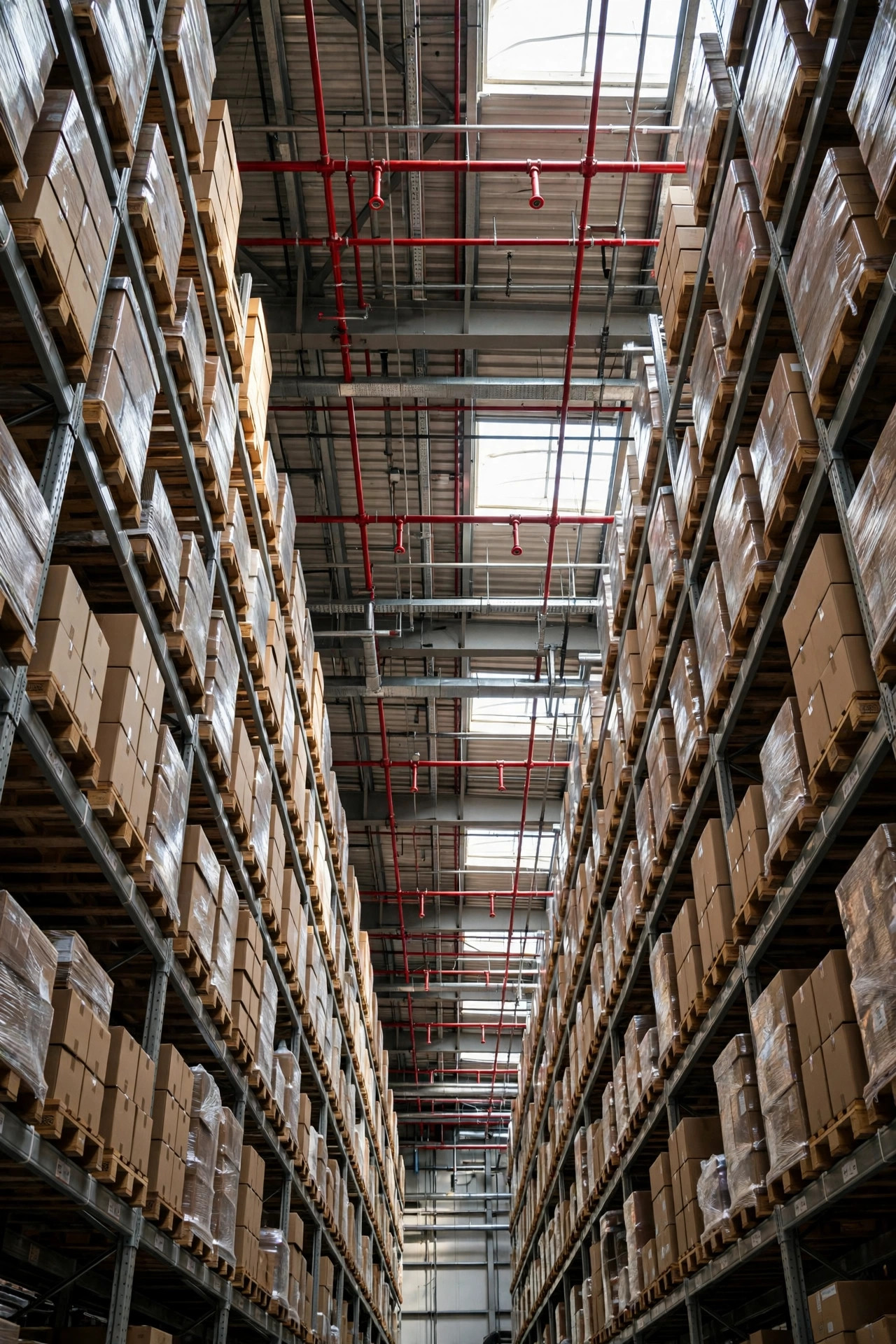
Here's the misconception I see all the time: people look up, see red sprinkler pipes on the ceiling, and assume fire protection is handled. It isn't. A sprinkler system is not a generic appliance. It is engineered around the fire hazard of a specific type of commodity.
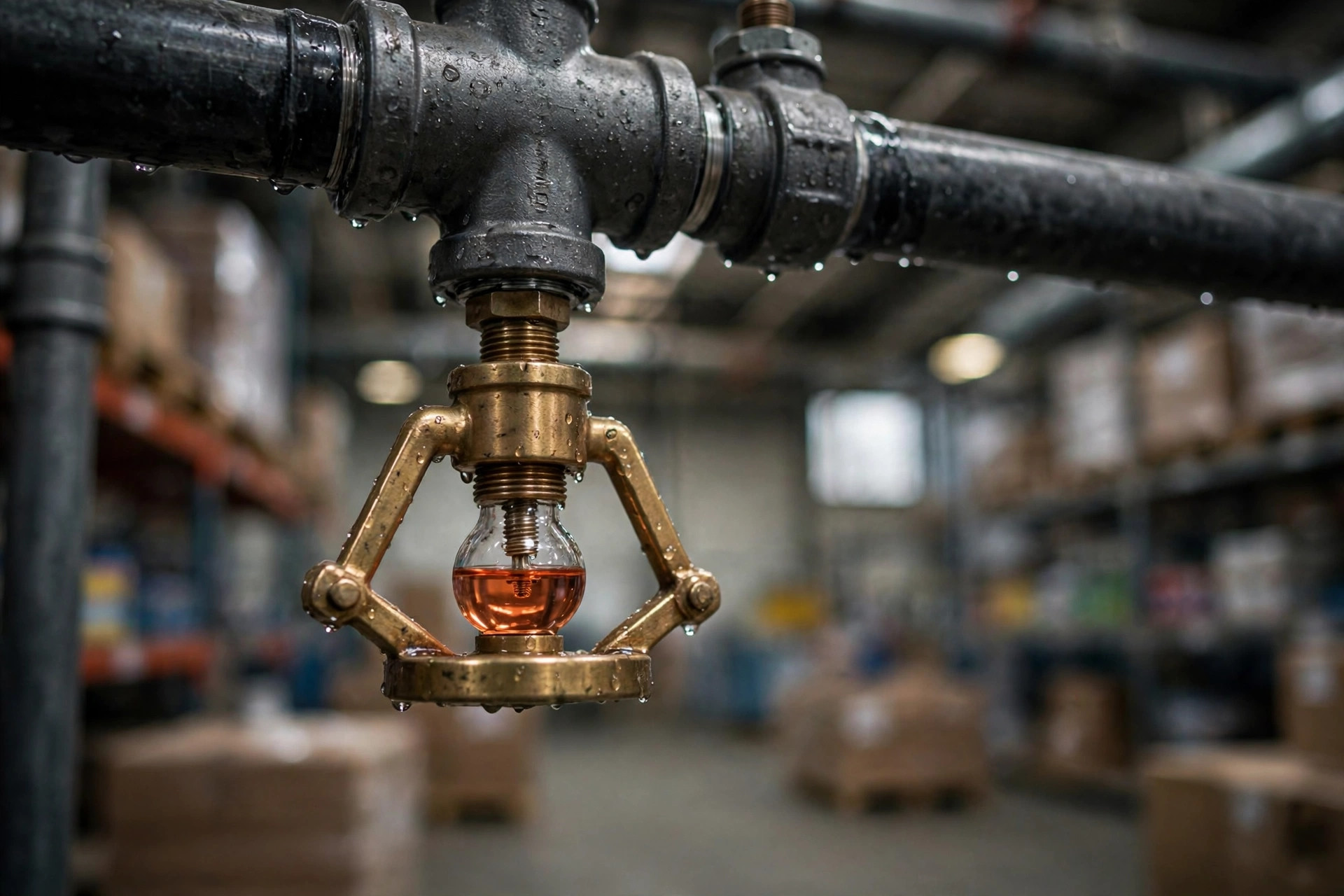
In the US, warehouse fire design starts with NFPA 13, which classifies commodities from Class I through Class IV, with plastic products sitting in their own higher-hazard category. Metal parts in cartons or glassware burn slowly — low hazard. Plastics burn fast and hot, releasing far more heat — high hazard. Move up one hazard class and everything in the sprinkler design changes: density, water supply, sprinkler head selection, pipe sizing. A system designed for Class III cannot control a plastics fire. The fire department isn't being difficult when it rejects the mismatch. Physics is.
Then there's the permit most tenants have never heard of: high-piled storage. Rack your goods above a certain height — many jurisdictions draw the line around 12 feet (3.6 meters), though you should confirm the current threshold with your local fire department — and you need a separate permit for it. With 32-foot clear height and four levels of racking, you're almost certainly inside that permit's jurisdiction. The permit spells out what commodities, what arrangement, and what heights were approved. Change the commodity, and in principle you re-apply.
The nastiest surprise is aerosols. Hairspray, insecticide, spray paint — the fire code treats these as high hazard among high hazards, and some sprinkler designs can't cover them at all. In 2021 I watched an auto-parts distributor in Los Angeles move into a building vacated by an apparel tenant. Previous tenant stored clothing. New tenant stored aerosol-based maintenance products. The fire department shut the operation down in the first week, and a full trailer of goods sat baking in the sun for two weeks. The detention charges and customer penalties cost ten times what he'd saved on rent.
What the fire marshal and your insurer are each really checking
The fire marshal checks design match. During inspection, they hold the building's original fire protection documents — the approved commodity classification, storage height, sprinkler density. If your goods exceed that design, there are two options: retrofit, or reduce inventory and lower your stacking height. There is no third option. And retrofits are never as simple as swapping a few sprinkler heads. Undersized mains mean replacing pipe runs. Insufficient water supply means adding a fire pump and tank. In-rack sprinklers mean running pipe inside existing racking — and the racks have to be emptied first, so labor and downtime routinely cost more than the hardware itself. In that $370,000 quote I mentioned, equipment was barely half the bill.
Your insurer checks something else: premium and payout. Higher-hazard commodities mean higher premiums — that's the open rule. The sharper edge is at claim time. If the insurer discovers the goods you actually stored exceeded the hazard class on your policy, the payout can be reduced or denied outright. I know a 3PL that took on a plastic-toys client without updating its policy, lost a section of the warehouse to a fire, and spent two years fighting the carrier. Nobody reads a policy when signing it. Every word matters when filing a claim.
Four things to do before the lease is signed
First, get the fire acceptance records and sprinkler design documents from the landlord. They have them. If the landlord can't produce them or starts hedging, walk away. A serious landlord will volunteer what commodity classification the building was approved for.
Second, read the Certificate of Occupancy. It states the approved use and storage classification of the building. Your goods have to fall inside it. Plenty of older warehouses still carry a Certificate of Occupancy issued a decade or more ago, approved for commodity mixes that have nothing to do with today's e-commerce inventory.
Third, take your product list straight to the local fire marshal. Don't treat this as asking for trouble — fire marshals love pre-lease questions. They would far rather resolve it on paper than post a stop-work order after your racks are full. Lay out your product mix, packaging, stacking heights, and rack types all at once, and ask one question: can this building, as currently designed, hold my goods? Many marshals will also tell you whether the building has a history of correction orders — more reliable than anything the landlord says.
Fourth, put fire responsibility in the lease. Who pays for the retrofit, how long the work takes, whether you can exit the lease if the building can't pass inspection, how rent works during the transition — all of it in writing. The default split is usually landlord for the base building, tenant for changes driven by their own commodities. But "default" is the cheapest word at a negotiating table. Every dollar settled before signing saves ten after.
Location, rent, and clear height are what people shop for. Fire design is the invisible clause hiding in the ceiling. The one thing you can do tomorrow: request the Certificate of Occupancy and the sprinkler design documents for every building on your shortlist, and check them line by line against your product list. If they don't line up, don't sign yet.