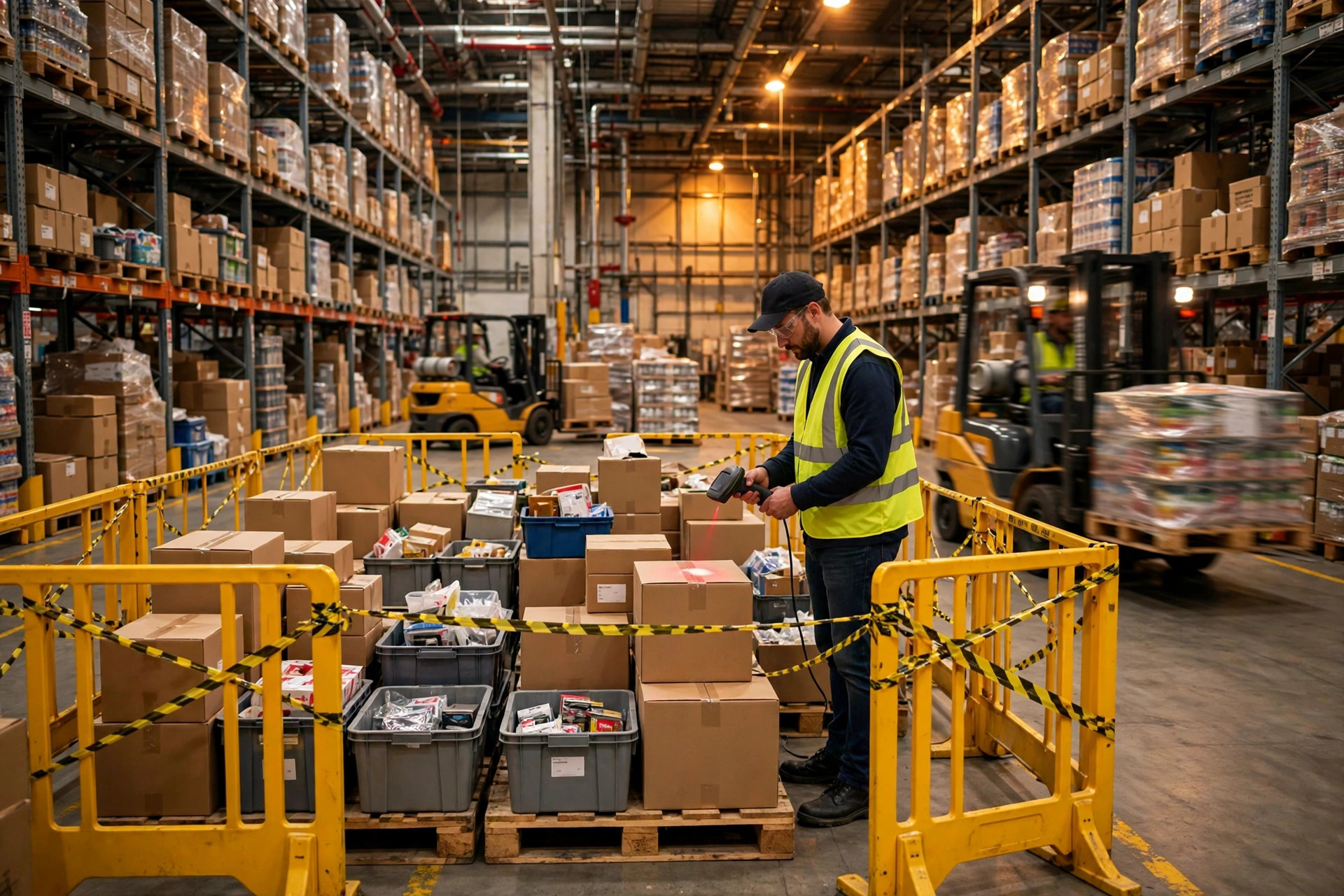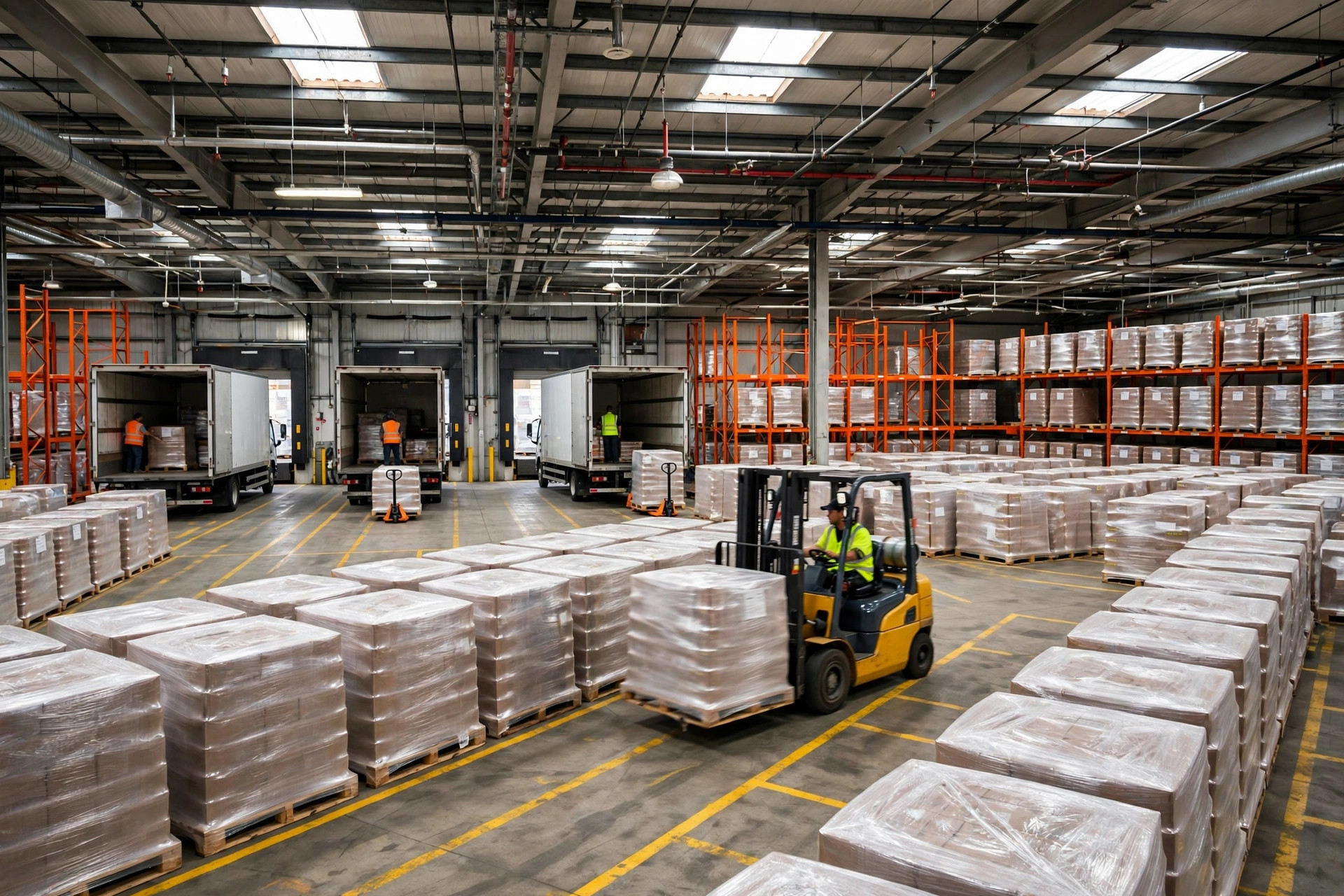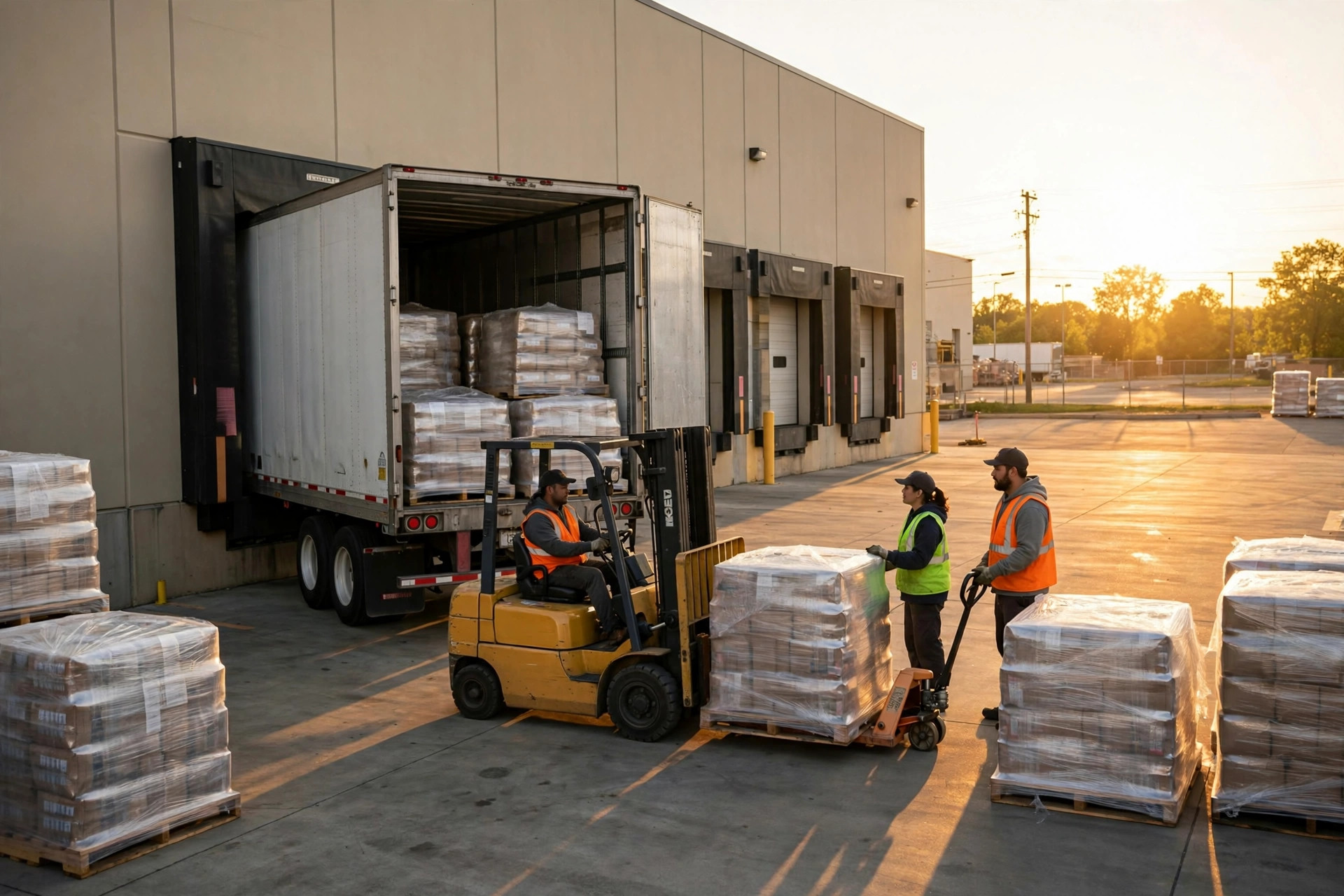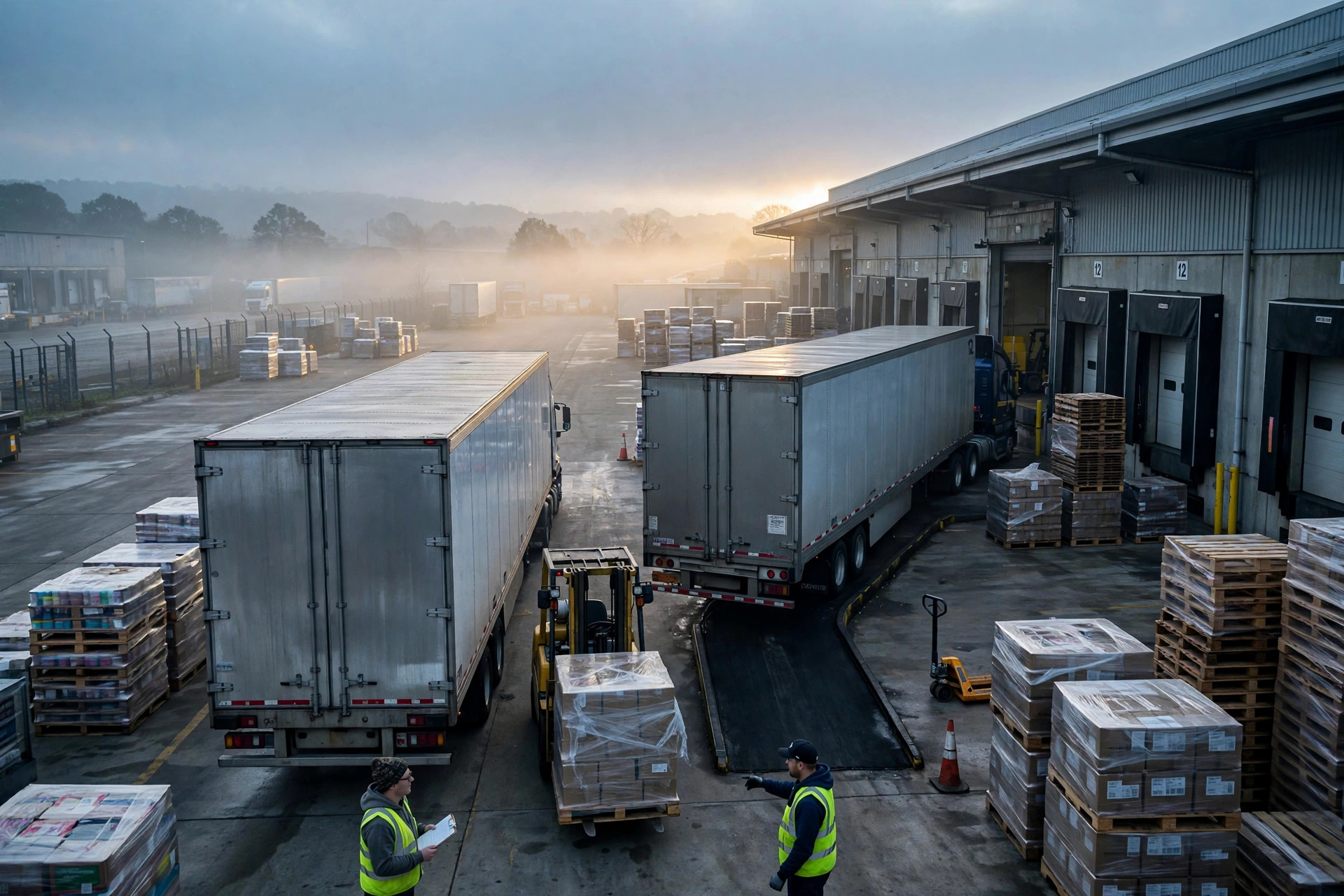
Let me tell you what I saw outside Memphis a couple of falls ago. Got to a transfer yard before sunrise — three trailers, three different states on the plates, backed into three dock doors side by side. Forklifts running pallets from trailer to trailer, a dispatcher with a clipboard calling out order numbers, and when the middle trailer was full, doors shut and it rolled straight to Atlanta. Never spent a night in a warehouse. Not one pallet touched a rack. It was my first real look at merge in transit in the wild — I just didn't know the name for it yet.
I walked up and asked the dispatcher: why not stage it overnight? He laughed. "This is a merge point. Freight shows up, freight leaves. We don't store anything here."
I've been driving trucks for fifteen years, and that morning stuck with me. Because half the shippers I talk to use the word "cross dock" for everything, and it muddies every conversation about money. Cross dock, pool distribution, merge in transit, transload — four cousins that look alike and do completely different jobs. Get the family tree wrong, and the whole plan is wrong.
Meet the Four Cousins: Cross Dock, Pool, Merge in Transit, Transload
Here's the plain-English version, the way I'd explain it leaning on a trailer at 5 a.m.:
Cross dock (the classic). Freight comes in from one or a few suppliers, gets broken down, and goes right back out to many customers. One in, many out. No storage. This is the grocery and retail replenishment game — high velocity, in and out the same day.
Pool distribution. One shipper, one truckload, one region — the truck rolls to a regional break-bulk point, and the load gets split onto small trucks for final delivery. One in, many out, but for a defined territory. Think chain-store restocking.
Merge in transit. The mirror image. Freight comes in from multiple suppliers, gets combined at a merge point, and ships out as one order to one customer. Many in, one out. This is for orders that only make sense as a complete set.
Transload. Same freight, different equipment. Container comes off a ship, freight gets moved into a dry van for the domestic leg. Nothing about combining or splitting orders — just changing the ride.
See the difference? Classic cross dock is about splitting. Merge in transit is about combining. I can't tell you how many shippers have told me "we want to do cross dock" and then described an order where three suppliers' freight has to arrive as one delivery to one customer. That's not a cross-dock job. That's merge in transit. Name it wrong, and you'll price it wrong, staff it wrong, and wonder why it keeps breaking.
The Dell Story: Fulfilling Orders Without Really Warehousing
Everybody in supply chain knows the Dell story, but it never stops being the best illustration of merge in transit done right.
Dell sells you a computer. The tower gets assembled in Texas. The monitor is built by Sony over in Malaysia. The keyboard comes from somewhere else again. You place one order for all three. The old-school way: all three legs ship into a Dell distribution center, get received, put away, picked, packed, and shipped out — a full tour of the warehouse, with warehousing fees, labor, and tied-up inventory capital at every stop.
What Dell actually did: each supplier ships its piece to a merge point near the customer. All three pieces arrive, get consolidated into one shipment, and go straight to the customer's door the same day. The "warehouse" in this setup is basically a loading dock with a roof. Almost nothing sits in inventory.
Here's the counterintuitive part, and it's the hook most people miss: one of the biggest companies in the world fulfills multi-source orders by barely warehousing at all. What they save is the entire warehousing cost stack plus inventory carrying cost. What they give up is slack — if any one of the three legs runs late, the whole order waits. Dell can play this game because its inbound timing is nailed down to the hour. Before a smaller company copies the playbook, the honest question is: are your suppliers that reliable? If the timing isn't tight, merge in transit just means merge in waiting.
The Math: When "Many Into One" Beats the Classic Cross Dock
Shippers care about one thing: the money. Same freight, three ways to move it, three completely different cost structures.
Option one: every supplier ships direct. Three LTL bills, three deliveries, three receiving appointments for the customer. Expensive freight, and the customer does receiving, inspection, and reconciliation three times.
Option two: the classic hub play. All three legs come into a facility, get received, staged, consolidated, and shipped out. You pay for an extra handling touch and the facility time, and the freight sits for a few days. The upside: inventory buffers the timing. If one leg is late, the rest can still move.
Option three: the merge play. The three legs meet at a merge point and leave as one shipment. No receiving, no putaway, no storage, no picking — just one consolidation fee and one linehaul bill.
There's published research worth citing here, with the caveat it deserves: the freight-network company Warp published a study of 58,224 shipments moving through its network (wearewarp.com — their own research, vendor numbers, take it as directional). Dwell time dropped 60–75% versus traditional warehouse-routed freight. And the damage rate came in at 0.81% against an industry average of 1.24%. That last number is the one that surprises people. The common wisdom says every extra transfer adds damage risk. The data says the opposite: fewer touches and less time sitting around means less damage, not more. Damage tracks touches and dwell time, not what you call the operation.
So when does merge in transit actually beat the classic cross dock? Fifteen years of watching this stuff has given me three rules, and I'd say all three have to hold:
One: the order is a set. The customer needs the complete package — one missing piece means a refused delivery, a complaint, or a chargeback. Office equipment rollouts, new-store opening kits, multi-component installations. Orders that only make sense whole.
Two: two or more origins, and separate shipping is clearly more expensive. When two or three suppliers each shipping LTL adds up to a full truckload anyway, the consolidation math turns positive fast.
Three: inbound timing can be held to about a day. This is the hard gate. Freight with volatile timing — ocean legs, suppliers who routinely miss in peak season — shouldn't be playing the merge game. Miss one of the three, and the old-school hub approach with its inventory cushion, or just direct shipping, is the safer money.
And the trade-off nobody puts in the brochure: the merge play's worst enemy is waiting. One late leg holds the whole truck and the whole order. A classic hub operation with inventory on hand doesn't care — what's late stages tomorrow, what arrived today ships today. So the tighter the delivery deadline and the flakier the suppliers, the more the classic approach beats the merge play. Don't trade away a big customer's on-time delivery to save a consolidation fee. Lose one anchor customer and every dollar you saved goes right back out the door, with interest.
A word for each side of the dock door. Shippers: next time somebody says "cross dock," ask one question first — am I splitting one load into many, or combining many loads into one? Get that answer before you talk price, or the whole proposal will be built on the wrong job. Warehouse and transfer-yard operators: if you want the merge business, three things have to be airtight — inbound appointment accuracy, physically separated merge and staging areas, and shortage alerts pushed by the hour, not by the day. A merge point lives or dies on knowing exactly which pallet belongs to which order. The minute freight gets mixed up, everything falls apart.
Fifteen years behind the wheel taught me one thing about this business: consolidation is a timing game, not a freight game. If all three legs can hit the same dock on the same day, you win. If the timing can't be trusted, don't force the merge. There's an old saying back home — more haste, less speed. In this trade it runs the other way: get the timing right first, then you can afford to be fast.
By Shifu Zhao, Trucking Veteran (15 yrs)